

The GAPS diet is a nutritional and lifestyle protocol from Dr. Natasha Campbell-McBride, built around the idea that gut health affects the rest of the body. It has three connected parts: food, supplements, and changes to your home and daily habits. If you’re searching what is the GAPS diet after hearing it mentioned for eczema, speech difficulties, or something else entirely, that’s the short version.[1]
Here’s how I found it. One of our children was two and could say only a few words. She screamed and cried with an intensity and frequency that went beyond what I had experienced with my other children. I was already an experienced mother, and the difference was significant enough that I knew something was wrong. I came across gut health and the GAPS diet, read a little, and moved on. A few months later, another child developed eczema. I started researching again, and there they were: gut health and GAPS. This time I kept reading.
We began GAPS in July 2024, shortly after I gave birth to our fifth child. I now have six children, work full time, and homeschool. GAPS has become part of our family’s story, including some very difficult weeks and changes I’m grateful for.
This post covers the basics: what GAPS means, what the food looks like, and how Intro, Full GAPS, and life after GAPS fit together. There’s a lot to take in at first. Understanding a few distinctions makes the rest easier to follow.
What Is the GAPS Diet? Gut and Psychology Syndrome, Explained
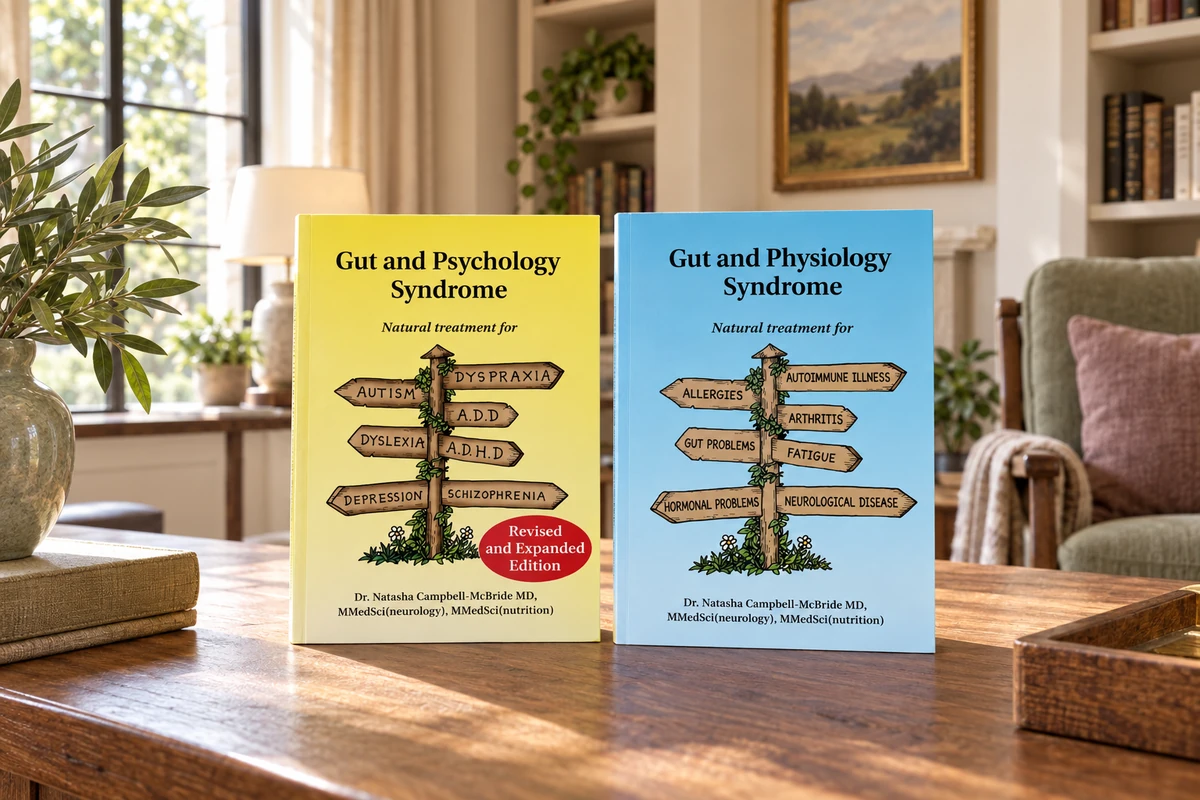
GAPS stands for Gut and Psychology Syndrome and Gut and Physiology Syndrome. These are the titles of Dr. Natasha Campbell-McBride’s books and the names behind her approach to the relationship between digestive health, the brain, and the rest of the body. Her first GAPS book was published in 2004, followed by the physiology book in 2020. The name Gut and Psychology Syndrome diet comes from that first book. GAPS’s own program overview lays out that timeline and the protocol’s stated components in her own words.[1]
Dr. Natasha traces GAPS back to the Specific Carbohydrate Diet (SCD), developed by Dr. Sidney Valentine Haas. Sidney and Merrill Haas published their work in 1951. Elaine Gottschall found Haas’s work in 1958 while seeking help for her daughter, then published Breaking the Vicious Cycle in 1994. Dr. Natasha describes adapting SCD through her own clinical work until those changes became the GAPS Diet.[9]
Detoxification practices belong to the home and daily-habit part of GAPS. That’s why you’ll hear people discussing meat stock in one conversation and water filters or probiotics in another.
The connection between what was happening in the gut and what we were seeing elsewhere in the body gave me a reason to look more closely.
I’m a mother explaining what I’ve learned and sharing what happened in our home. When I describe our experience, it’s our experience. When I explain how GAPS is structured, I keep the books and program guidance behind that explanation.
The Gut Connection GAPS Describes
In the GAPS explanation, the gut’s microbes and lining affect digestion, the absorption of nutrients, and the substances that pass into the body. GAPS describes its food and lifestyle changes as a way to support that environment, and you’ll often see the phrase “heal and seal” used for this idea. That explains the emphasis on nourishment, food preparation, and gradual introductions rather than just removing one ingredient.[2]
The GAPS Science Foundation publication library collects GAPS-related studies and case reports. Our family experience appears separately below so readers can distinguish our observations from published research.[8]
GAPS Diet Basics: What the Food Looks Like
The food at the center of GAPS diet basics includes meat, fish, eggs, vegetables, homemade stocks and soups, and fermented foods. Fruit, nuts, seeds, and certain dairy foods have a place too, with the choices depending on the phase and your individual tolerance.[3] For a single shopping reference, use the GAPS Diet food list.
Grains, refined sugar, many processed foods, and certain starchy foods are excluded from the standard diet. That means more than switching from white bread to whole grain bread or buying an organic version of the same cereal. Wheat, rice, ordinary pasta, and potatoes still count as excluded ingredients, whatever the packaging says.[3]
Two things matter together here: what’s in the food, and how it’s prepared. A soft, cooked vegetable in soup and a raw vegetable on a salad plate can belong at different points in Intro. An ingredient appearing on a Full GAPS list doesn’t make every recipe containing it suitable for Stage 1.
The same applies to labels such as “gluten-free” or “grain-free.” They tell you something about a food, but they don’t tell you whether it fits GAPS. A gluten-free loaf may use rice flour or potato starch. Checking the ingredients is more useful than relying on the words on the front of the bag.
Intro GAPS: Six Stages, Not Six Weeks
The Introduction Diet, usually shortened to Intro, moves through six stages. GAPS lays out the complete stage-by-stage instructions in detail, including a free walkthrough of the Introduction Diet that goes further than any single blog post can. The food choices and preparation methods begin with a narrower range and gradually expand. Early meals center on foods such as homemade meat stock, soups, cooked meat or fish, and thoroughly cooked suitable vegetables.[4] For the exact progression, continue with the stage-by-stage Intro guide.
As Intro progresses, more ingredients, textures, and cooking methods become available. Eggs, avocado, roasted or grilled foods, and raw produce enter at different points. The sequence matters, which is why a general overview like this one belongs alongside those complete stage instructions rather than standing in for them.[4]
Six stages doesn’t mean six days or six weeks. There’s no automatic switch to the next stage because the calendar says it’s time.[4] This was especially important in our family. We moved slowly, with much of our pace guided by our child with eczema and whether we felt she was ready to move forward.
We followed the plan together, but the first weeks felt different for each of us. The full account is in Our GAPS Journey.
Full GAPS: A Wider Range, Not the Finish Line
Full GAPS gives you a wider range of foods and more ways to prepare them. Meat, fish, eggs, vegetables, fruit, properly soaked, sprouted, or fermented nuts and oily seeds, and suitable dairy foods can all contribute to meals. Vegetables may be cooked, raw, or fermented, and there’s more room for baking with flour ground from properly prepared nuts or oily seeds. GAPS’s own description of the Full GAPS Diet covers the complete allowed and non-allowed foods list, along with named variations like No Plant, Ketogenic, and More Plant GAPS, if you want the long version.[3][5] For an everyday meal-building guide, read what to eat on Full GAPS.
That variety makes a difference when you’re looking for something to cook. You may be able to choose a salad, a baked dish, or a bread recipe that wouldn’t fit early Intro. The everyday focus is still on substantial meals. Having more baking options doesn’t turn baked goods into the foundation of the diet.
The word Full can be misleading at first. It means the fuller range of GAPS foods, not that you’ve finished GAPS or returned to eating everything. Full does not mean done. Absolutely not. The food restrictions still apply, and dairy has its own separate introduction guidance.[3][6]
When I share recipes here, I want the phase to be easy to find. You should be able to see whether a recipe is intended for a particular Intro stage, Full GAPS, or post-GAPS without having to work it out from a photograph.
One Plate on Each Phase
It’s easier to picture the diet when you can picture a plate. On early Intro, that might be soup with cooked meat and vegetables, with the ingredients and preparation matched to the current stage. Intro is not a plan to live on cups of clear stock alone.
For someone established on Full GAPS, a day might include eggs with cooked vegetables for breakfast, chicken soup for lunch, and fish with vegetables for dinner. A suitable fruit, homemade cultured dairy, or another food from your current plan could become a snack. Choose from the foods you’ve introduced and can comfortably eat.
Eggs belong in GAPS, but their preparation changes across Intro, and an egg allergy still matters. The same attention applies to dairy and nuts. A food being on a general list doesn’t settle whether it belongs in your own meal today.
Intro, Full GAPS, and Post-GAPS: The GAPS Diet Guide in One Table
These are the three distinctions worth keeping in mind when you’re browsing this GAPS diet guide, or any recipe on it:
| Phase | Main Difference | Recipe Details to Check |
|---|---|---|
| Intro GAPS | Six stages with gradual food introductions | The stage, ingredients, and cooking method |
| Full GAPS | A wider range of foods within GAPS | Ingredients, dairy preparation, and individual needs |
| Post-GAPS | The transition beyond GAPS dietary restrictions | Which foods have been reintroduced and how the recipe fits |
Coming off GAPS is a separate transition after Full GAPS. A post-GAPS recipe can include something that doesn’t belong in an Intro meal, so those labels have a real purpose.[1]
Keeping them clear is part of making this blog useful. You might arrive looking for an early Intro soup today and come back for different recipes later. I want you to be able to find food for the phase you’re actually in.
Choosing a Starting Point
Although its name sounds like everyone’s first step, Intro is not the only starting point. Some people begin with Full GAPS and consider Intro later. Individual needs and practical circumstances, including access to cooking and the demands of preparing the food, affect that decision.[6] The first-week GAPS guide turns that choice into a practical starting plan.
There are also approaches such as No Plant, Ketogenic, and More Plant GAPS within the wider program. Those names refer to different approaches, not extra Intro stages. You don’t need to understand every variation before you can understand the difference between Intro and Full GAPS.[6]
We chose Intro. The day before we began, we did our large Stage 1 shopping trip and cleared the foods that didn’t fit GAPS out of our home. We had decided to follow the diet closely, and we changed what was available in the kitchen to match that decision.
Time, Cost, and Enough Food
GAPS asks for a longer commitment than a weekend reset. For most people, the 2020 coming-off chapter recommends at least two years on strict GAPS. Coming off begins after digestion has remained normal for at least six months, with foods introduced gradually rather than on a fixed calendar date.[1][6] The post-GAPS transition guide covers that process separately. The Full GAPS chapter also describes people with milder conditions beginning introductions at about a year, others staying strict for many years, and some continuing permanently. It says health problems should be gone and the person well for at least six months before considering coming off.[10]
The expense and the cooking deserve thought before you start. A cart full of specialty ingredients, supplements, and new equipment can become expensive quickly. Work out what the meals you will repeat cost and which equipment they need. Buying something because it appears in someone else’s kitchen is different from needing it for yours.
Enough food matters just as much as the food exclusions. Replacing a familiar meal with a cup of stock can leave someone hungry and underfed. Unwanted weight loss, a child eating less and less, or symptoms becoming severe are reasons to get individual help rather than keep narrowing the menu on your own. A baby’s feeding needs also require a separate plan. Adult Intro instructions do not replace milk feeding or age-appropriate feeding guidance.
I know how strong the hope behind a decision like this can be. Making room for support, food preparation, and the needs of each family member is part of taking that decision seriously.
Supplements and Home Changes in Our House
These are the products and home changes our family used, not a shopping list or supplement schedule for someone else. I’m including them to give you a complete picture of our experience.
Food gets much of the attention because everyone has to eat, several times a day. But it was only part of what we changed. Our family also used Smidge probiotics, cod liver and butter oils, TRS spray, Aalgo seaweed baths, other detox baths, and filtered water from a Berkey.
The supplement side of GAPS includes probiotics, fatty acids, and other support chosen for individual needs. Amounts and suitability need to be considered individually.[7]
Making Room for the Cooking
With work, homeschooling, and children to care for, the practical side matters to me. A meal plan needs to make sense when someone is hungry and there are other things happening. Check who can cook, where the finished food will be stored, and which portions need to be set aside for tomorrow.
My first-week GAPS guide walks through choosing real meals, working out portions, and building the shopping list. Read each recipe’s preparation and storage instructions before buying its ingredients, especially when the method is new to you.
Our First Six Weeks
I can’t talk about beginning GAPS without saying that our first six weeks were horrible. I hadn’t understood how difficult they could be. Some of us needed a lot of rest, and the children with eczema and speech difficulties had a particularly hard time between weeks two and six.
About six weeks into Intro, our almost-2-year-old’s eczema had cleared. The constant screaming had become more manageable, and within the following months it stopped. We heard more and more words while also doing exercises through Agents of Speech. Elsewhere in the family, we felt less groggy, and two of the little ones who had struggled with eating gained what we considered a healthy amount of weight.
There’s more to that account than a short paragraph can hold: the earlier steroid use, stopping it abruptly, the food changes, the picky eating, and the different experiences within the same family. I’ve kept those details together in Our GAPS Journey so you can read the whole story.
This is our family’s account, not a promise of what GAPS will do for yours. If you found this page while searching for answers for your own family, I understand why you want someone to explain GAPS plainly. I hope this gives you a clearer starting point: what the food involves, how the phases differ, and why the everyday experience matters alongside the instructions. For more on the daily cooking and costs, read my GAPS diet review.
Frequently Asked Questions About the GAPS Diet
What Does GAPS Stand For?
GAPS stands for Gut and Psychology Syndrome and Gut and Physiology Syndrome, the titles of Dr. Natasha Campbell-McBride’s two books on the subject. Together they describe her approach to the link between digestive health, the brain, and the rest of the body.[1]
Is the GAPS Diet the Same as Keto or Paleo?
Not exactly. Official GAPS guidance describes Full GAPS as similar to paleo and ketogenic protocols, while distinguishing it by dairy and macronutrient ratios. It also treats Ketogenic GAPS as a separate named approach rather than the definition of standard GAPS.[3][6]
How Long Does the GAPS Diet Take?
For most people, the 2020 coming-off chapter recommends at least two years on strict GAPS. Coming off begins after digestion has remained normal for at least six months and proceeds through gradual food reintroduction.[1][6]
Where Can I Read GAPS-Related Research?
The GAPS Science Foundation publication library collects published studies and case reports. This article also labels our family experience as personal observation.[8]
Your Next Step
To choose your starting point, read my Intro GAPS vs. Full GAPS comparison.
References
- Campbell-McBride, N. Gut and Physiology Syndrome (2020), Introduction, “What Is GAPS?”; Chapters 11–14; Chapter 19, pp. 210–211.
- Campbell-McBride, N. Gut and Physiology Syndrome (2020), Chapter 2, “Appropriate Digestion and Absorption of Food,” pp. 25–26.
- GAPS Diet. “Full GAPS Diet: Recommended Food List and Foods to Avoid List.”
- GAPS Diet. “GAPS Introduction Diet Survival Guide: Six Stages of GAPS Intro.”
- Campbell-McBride, N. “GAPS Diet Recipes for Chronic Physical and Mental Illness,” section “Seeds on the GAPS Diet.”
- Campbell-McBride, N. “GAPS Diet: Full Spectrum of the GAPS Diet.”
- Campbell-McBride, N. “Supplements for GAPS Diet Patients.”
- GAPS Science Foundation. “Publication Library.”
- Campbell-McBride, N. Gut and Physiology Syndrome (2020), “The GAPS Nutritional Protocol,” the Specific Carbohydrate Diet, Haas, Gottschall and the development of GAPS.
- Campbell-McBride, N. Gut and Physiology Syndrome (2020), “Following the Full GAPS Diet,” individual duration paths and being well for at least six months, read alongside “Coming off the GAPS Diet,” the majority two-year guidance and six months of normal digestion.

31 responses to “What Is the GAPS Diet? A Clear Guide to the Basics”
[…] the introduction of a new food.[2] If you want the full protocol map before going further, What Is the GAPS Diet? A Clear Guide to the Basics lays out Intro and Full GAPS side by […]
[…] that many food intolerances improve as digestion and the gut lining improve. That is the aim of the GAPS approach, rather than a promise that any particular allergy will […]
[…] for you right now? If you want the overall map of how GAPS stages and food choices fit together, What Is the GAPS Diet? A Clear Guide to the Basics lays that […]
[…] Compatible sourcing and preparation habits can be useful during GAPS. The broader Weston A. Price food categories become relevant as foods return under the GAPS transition conditions; they do not change the book’s initial sequence and one-food-at-a-time progression. The Coming Off GAPS guide lays out those readiness conditions and first foods. Corrado calls the longer-term pattern the “Well” diet. If you want the overall protocol laid out from the start, the GAPS basics guide covers the full picture. […]
[…] family has followed GAPS since July 2024. The GAPS basics guide explains that part of our family’s approach, and the recipe collection gives you concrete food […]
[…] opens things up further, including salads and more baking, while keeping the same exclusions. My guide to the GAPS basics walks through that whole protocol if you want the bigger […]
[…] remain in the rotation as new foods come in. For the overall protocol and how Intro fits into it, What Is the GAPS Diet? A Clear Guide to the Basics covers the full […]
[…] you’re still sorting out which foods belong to which stage, the basics guide on the GAPS diet lays out the whole protocol before you get into the cost side of […]
[…] you’re still mapping out the stage order itself, the GAPS diet basics guide covers that from the start. Here, the focus is kitchen handling: what to make, how to store it, and […]
[…] daily household choices sit alongside it. For the full picture of how those pieces fit together, What Is the GAPS Diet? A Clear Guide to the Basics walks through the whole […]