

Stock, fermented vegetables, and yogurt are some of the most talked-about foods on GAPS, and they also appear on histamine lists online. That’s confusing when a food you associate with healing seems to leave you feeling worse. Different sites disagree about what to remove and for how long, and a general histamine and GAPS food list can’t actually tell you the histamine content of the batch sitting in your fridge.
The more useful starting point is your own experience. It helps to record what you ate and how much, along with how it was prepared and stored. Then add what happened afterward. That’s information a chart can’t give you. This post walks through the real distinctions that make the topic manageable, so it doesn’t turn into an ever-growing list of forbidden foods.
What Histamine Actually Does
Histamine is a normal substance your body makes on its own. It plays a role in immune responses, stomach acid production, and nervous system function. It’s also present in certain foods, especially where fermentation, aging, or microbial activity has taken place.
Diamine oxidase, usually shortened to DAO, is one enzyme involved in breaking down histamine from food. Histamine intolerance describes reactions that occur when the histamine load exceeds the body’s ability to clear it. DAO is one part of that process, not the only detail to record.
The symptoms people describe in this context include flushing, itching, headaches, and digestive discomfort. Those symptoms aren’t specific enough to point to a single cause on their own. A 2024 review of histamine intolerance[1] lays out that same range of symptoms, and shows why the food, preparation, storage, portion, timing, and full symptom pattern matter together.
In the 2020 book, histamine sits within a wider group of biogenic amines. Campbell-McBride describes histamine from histidine, serotonin and tryptamine from tryptophan, tyramine from tyrosine, and phenylethylamine from phenylalanine. She discusses microbial production alongside the body’s own production. Her gut-focused account includes DAO, MAO and other enzyme systems controlling excess amines, and a damaged intestinal lining allowing amines through without the usual handling by enterocytes.[5]
The 2020 chapter gives a wider range of possible biogenic-amine symptoms: headaches, vertigo, nausea, vomiting, diarrhea, abdominal pain, low blood pressure, a fast or abnormal heart rhythm, itchy rashes, eczema, wheezing or breathlessness, a runny nose or sneezing, and menstrual problems. It also describes increased blood-vessel permeability, rapid tissue swelling and anaphylactic reactions.[5] These are the author’s symptom examples, not a way to identify the cause from a symptom alone.
Histamine, Allergy, and Mast Cell Reactions Aren’t the Same Question
These terms get lumped together online, but they describe different things. A food allergy is an immune response to a specific food. Suspected histamine intolerance points to a different proposed mechanism. Mast cell activation conditions have their own separate clinical criteria.
The overlap makes the reaction pattern more useful than the label alone. A food allergy does not become safe to test at home because the same food appears on a histamine chart.
The official GAPS food-allergy guidance keeps dangerous anaphylactic-type allergy separate from its discussion of intolerance and die-off.[2] Trouble breathing, throat or tongue swelling, or collapse needs emergency help. Call 911 and follow the person’s prescribed allergy emergency plan rather than starting a food record.[8]
Histamine and GAPS: Why the Food Lists Disagree
Histamine isn’t a fixed number stamped on an ingredient name. Storage, processing, microbial activity, and the specific product all change the amount present. One measured sample doesn’t describe every version of that food you’ll ever eat.
Some lists combine foods that contain histamine with foods described as histamine liberators or DAO blockers. Keep those categories separate when comparing lists because they describe different mechanisms.
A multisociety guideline[3] on suspected reactions to ingested histamine favors an individualized approach over broad exclusion lists. It also points out that a serum DAO result alone doesn’t confirm the diagnosis.
Do not combine every online exclusion into one shrinking list. Build a positive menu of complete meals alongside the foods you are tracking, and give every temporary exclusion a review date.
GAPS Foods That Deserve a Closer Look
A handful of GAPS foods keep coming up in histamine discussions. Some are staples of the diet, and others already sit outside it.
| Food or preparation | What’s worth writing down |
|---|---|
| Fish | Species, how it was processed, and your purchase-to-plate timeline |
| Fermented vegetables | Which vegetables, the fermentation method, and how much you ate |
| Yogurt or kefir | The milk source, culture, process, and portion |
| Aged cheese | The exact cheese and product, not just “cheese” |
| Leftover cooked food | Original cooking date, cooling method, storage, and reheating |
| Cured or smoked meat | The exact product and its ingredient list |
| Wine or other alcohol | Type, amount, and what else you ate with it |
That last row deserves a note. Full GAPS allows a few specific alcohol choices occasionally, like dry wine. The list excludes cured or smoked meats and places separate conditions on fish products; it does not exclude every preserved fish product. Record the type, amount, and meal context if alcohol is part of the pattern you are reviewing.
Plant foods like tomatoes, spinach, eggplant, and avocado show up on plenty of histamine lists too. Their presence on a list doesn’t prove they’re causing your symptoms, and it’s not a reason to clear every fruit and vegetable off your plate.
The book’s examples of foods that can increase histamine include fermented, pickled, preserved, salted, smoked or canned foods; mature cheese; leftovers; shellfish; vinegar; acidic fruit; berries, especially strawberries; papaya; nuts; chocolate; tomatoes; tea and coffee; beans and pulses; wheat germ; alcohol; raw egg white; and yeast-containing foods. It also names benzoates, sulfites, nitrites, MSG/glutamate and food dyes. Its lower-histamine examples include fresh meat, fish, eggs and vegetables, fresh milk, freshly fermented yogurt, some fruit, butter, herbal teas and fresh herbs. These are approximate amine examples, not a GAPS allowed-food list; the GAPS food rules and the person’s phase still apply.[5]
Food Freshness and Histamine: What Storage Changes, and What It Doesn’t
Handling is one practical part of this you can make clearer. Know when you bought meat or fish, keep it properly chilled on the way home, and cook or freeze it promptly following safe food-handling guidance.
If you’re trying to sort out a reaction to leftovers, separate a freshly made meal from one that’s sat for several days. Count from the original cooking date, not from the day you reheated it.
Freezing can slow further microbial activity, but it doesn’t erase histamine that’s already formed. The FDA’s guidance on histamine-forming fish[4] is direct about this: once histamine accumulates, washing, freezing, or heating won’t remove it.
That’s a reason to pay attention to a food’s handling history, not a reason to assume freezing or cooking automatically makes something low in histamine. Fish-related histamine poisoning is also its own food-safety issue, separate from a chronic intolerance.
Meat Stock, Bone Broth, and Histamine
Campbell-McBride distinguishes meat stock from long-simmered bone broth. Her 2020 book recommends meat stock for at least the first year, and for some people several years, before bone broth. Early Intro stock is made with meat on the bone and its connective tissue.[5]
If histamine is a concern for you, the batch’s history matters more than the word “stock” or “broth” by itself. Write down the meat you used, anything added, cooking time, how it cooled, and the portion you drank, rather than logging every batch the same way.
A shorter simmer does not erase the rest of the handling history. Cook the meat fully, cool the stock promptly, portion it, and refrigerate or freeze it without leaving a large pot warm for hours.
If a batch causes a reaction, do not keep increasing it because stock matters on GAPS. Pause that batch and review the meat, additions, simmer time, cooling, storage, portion, and timing.
Fermented Foods and GAPS Food Tolerance
Fermented foods vary enormously from each other. Yogurt culture, kefir, sauerkraut, and a vegetable medley all involve different ingredients and different organisms doing the work, so it’s not accurate to treat every ferment as having one histamine level.
In the 2020 book’s discussion of coming off No-Plant GAPS, Campbell-McBride prefers well-matured fermented vegetables for sensitive people and describes last year’s sauerkraut as easier to tolerate.[5] That is her recommendation in that specific transition. Fermentation time alone does not establish the histamine content of an individual jar. Use a complete fermentation method, with the ingredients, salt, storage, and condition of the batch recorded.[3][7]
Introduce ferments gradually according to the GAPS sequence. If a particular food appears to cause a reaction, pause that food and review it. If you are building an amount that has been tolerated, do not increase it while symptoms are unsettled. The allergy exception above still applies.[5][6]
Campbell-McBride says biogenic amines can contribute to reactions during fermented-food introduction and describes histamine-intolerance symptoms as part of die-off in many people. Her instruction is to keep that reaction at a manageable level while introducing fermented foods gradually.[5] The dangerous-allergy and emergency branch above remains separate.
Keeping GAPS Practical When Foods Are Limited
In the histamine section of Gut and Physiology Syndrome, Campbell-McBride recommends moving through Intro slowly and adjusting it to the individual. For someone very sensitive to biogenic amines, she describes beginning without fermented foods and then trying tiny amounts of whey, yogurt, kefir, sour cream, or sauerkraut juice. This is a gradual introduction, not a direction to remove meat stock.[5]
If you’re limiting foods, keep a positive plan next to the exclusion list. What’s breakfast? What gives you enough at lunch? Which vegetables, proteins, and fats are working for you right now? If you want the overall map of how GAPS stages and food choices fit together, What Is the GAPS Diet? A Clear Guide to the Basics lays that out.
A smaller ingredient list can make a meal easier to read, but a menu that keeps shrinking becomes harder to nourish a household with. Keep complete breakfasts, lunches, and dinners visible on the positive list, especially for children, pregnancy, or unwanted weight loss.
Any restriction needs a clear reason and a date to revisit it. Temporary shouldn’t quietly turn into permanent just because nobody circled back to check.
In the official histamine FAQ, Campbell-McBride describes changing the gut flora as the route toward resolving the condition, rather than maintaining permanent avoidance. She initially names alcohol, black tea, canned or smoked foods, leftovers, beans and lentils, fermented vegetables, mature cheeses, cocoa and nuts as culprit foods to leave out. The 2020 book adds the very-sensitive-person exception: initially begin without fermented foods, then try tiny amounts as tolerance develops. Keep that individual route with the chapter’s slow Intro guidance.[5][9]
A separate FAQ answer uses tomato, eggplant or spinach as tolerance examples before trying fermented vegetables. It gives no fixed recovery time. This is a tolerance discussion, not a new Intro stage chart or permission to introduce a raw food early.[9]
Low FODMAP Is a Different List
Low-FODMAP advice concerns particular fermentable carbohydrates. Histamine advice concerns a different substance and a different set of questions entirely, so a food can be low in one category and still be worth watching for the other.
GAPS has its own food rules alongside both of those questions. Rice, for instance, may appear on a low-histamine or low-FODMAP menu, but it remains outside Intro and Full GAPS.[5]
Don’t combine all three lists by keeping only what every single one agrees on. That approach tends to produce a menu far narrower than any one of the three ever intended, and it makes an already hard situation harder. Write down the actual combination of restrictions instead of relying on one label for all three lists.
Medicines, Supplements, and Probiotics
Medicines, supplements, and other health circumstances can matter to an assessment. Keep a running list of what you take and anything that’s changed recently. Don’t stop antihistamines or other prescribed medicine because an article online claims it affects DAO.
DAO supplements do not make an allergen safe to eat and do not guarantee that a meal will be tolerated. Keep them separate from the food record so their timing and effect are visible.
Probiotics vary by strain and formulation. The 2020 book introduces probiotic foods from Stage 1 and discusses supplement amounts separately, starting small and increasing gradually. Record the exact product, organisms, added fibers, amount, and timing so you can follow the sequence.[5]
The 2020 histamine chapter names Lactobacillus casei and Lactobacillus bulgaricus as organisms that can produce histamine and that a histamine-sensitive person probably should avoid. It discusses Lactobacillus rhamnosus, Bifidobacterium infantis, Bifidobacterium longum, Lactobacillus plantarum and possibly Lactobacillus reuteri in relation to reduced biogenic-amine production. Campbell-McBride explicitly says the research is limited and individual reactions differ. Keep those qualifications with the names when reviewing a culture or supplement label.[5]
What to Write Down
For a short stretch, record the meal, the approximate portion, how it was prepared and stored, any symptoms, and the timing. Note relevant medicines and anything else that changed that day too.
“Flushing after this meal” is a useful observation. “This food released histamine” is an interpretation, and it may need more digging before you treat it as fact. Keep your notes clear enough that other explanations aren’t accidentally ruled out.
If a reaction was severe, keep that food outside an ordinary gradual reintroduction until the dangerous-allergy question has been settled. The source treats that branch separately.
Cooking Fresh Without Cooking Constantly
If your plan favors freshly made food, keep the actual cooking simple. Portion ingredients to the meal in front of you, and use safe freezing and thawing methods for anything you won’t cook right away.
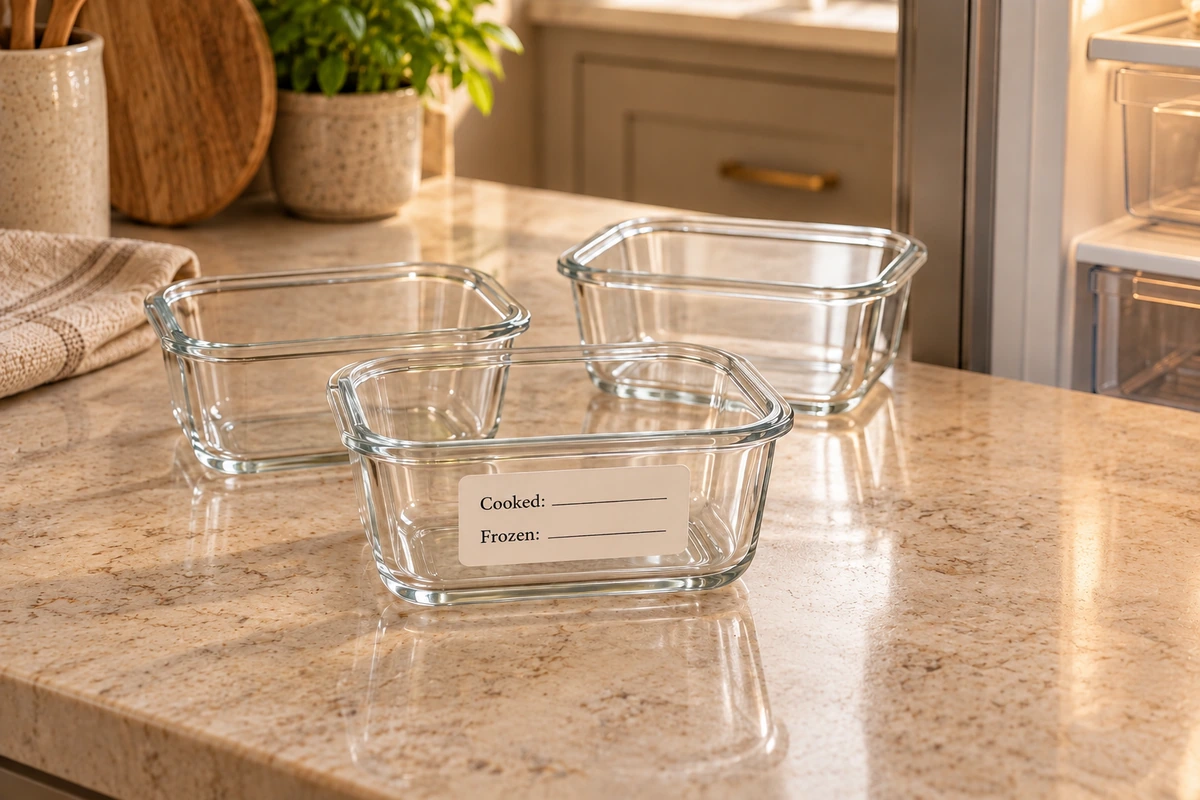
For cooked batches, cool them promptly and freeze them in single portions instead of leaving a big pot in the fridge for a week of servings. Label the ingredients and date so a future meal has a clear history. The Die-Off & Reaction Log is listed in my shop for keeping these details together. An ordinary notebook works for starting your record today.
Don’t let the chase for perfect freshness get in the way of eating enough. A plan has to work with your schedule, your storage space, and your actual resources, not an ideal version of your kitchen.
Frequently Asked Questions About Histamine and GAPS
Is Meat Stock High in Histamine?
It depends on the batch, not the word “stock” itself. Preparation, cooling speed, and storage time all affect it, and a shorter simmer isn’t a guarantee of low histamine. Record the details of the batch that concerns you rather than judging stock as a category.
Does Freezing Food Get Rid of Histamine?
No. Freezing slows further histamine formation, but it doesn’t remove histamine that’s already there. FDA guidance establishes that point for histamine-forming fish. Freezing a particular meal does not establish that it will be low in histamine or suitable for a person who has reacted to it.
Can I Follow a Low-Histamine Version of GAPS?
The 2020 book recommends an individualized, slow progression through Intro for histamine sensitivity. Very sensitive people may initially leave out fermented foods, then begin tiny introductions as described in the histamine section. Keep complete meals on the menu while you work through those introductions.[5]
Is This Histamine, an Allergy, or Something Else?
The symptoms genuinely overlap, which is exactly why guessing from a list isn’t a reliable way to sort it out. Keep the dangerous-allergy branch separate. For ordinary tolerance questions, use the food, handling, portion, timing, medicine, and symptom record to review the pattern.
Start With One Meal
If no urgent symptoms need attention, pick the last meal that seemed to cause a reaction. Write down its handling history: when you bought or made each part, when it was cooked, how it cooled, how it was stored, and the portion you actually ate. Review that single record before changing anything else about the diet.
References
- Histamine Intolerance: Symptoms, Diagnosis, and Beyond. 2024 review.
- Campbell-McBride, Natasha. Food Allergy. Dangerous anaphylactic-type allergy exception.
- Guideline on management of suspected adverse reactions to ingested histamine. Multisociety guideline, 2021. doi:10.5414/ALX02269E.
- U.S. Food and Drug Administration. Final Compliance Policy Guide for Scombrotoxin (Histamine)-Forming Fish and Fishery Products. 2024.
- Campbell-McBride, Natasha. Gut and Physiology Syndrome. 2020. Histamine discussion; “How to come off the No-Plant GAPS Diet”; meat stock and soups; probiotic supplementation.
- Campbell-McBride, Natasha. Official GAPS FAQs. “Die-off reaction,” questions 1–4.
- Katz, Sandor Ellix. The Art of Fermentation. 2012. Vegetable fermentation, submersion, salt, and storage.
- NHS. Anaphylaxis: symptoms and emergency response.
- Campbell-McBride, Natasha. Official GAPS FAQs, “Diseases and Symptoms,” question29, histamine intolerance and initial culprit foods; “Food reactions, food allergies, leaky gut,” question19, individual timing and tolerance examples.

Leave a comment