

Coming off the GAPS diet is its own phase, not an afterthought once Full GAPS ends. Full GAPS already offers more variety than Intro, but it still excludes grains and certain starchy foods. Post-GAPS is where those foods may begin returning, based on your situation and tolerance.
That prospect can feel exciting and unsettling at once. You’ve spent months, maybe years, learning which foods work and watching how your body reacts. Undoing that system, even for a good reason, takes some adjusting.
You don’t need to swap out your whole menu overnight. Think of the post-GAPS transition as widening a way of eating you already trust, not replacing it. Keep what works. Add new foods on purpose. Give each one time to show you what it does.
Full GAPS vs. Post-GAPS: What’s the Difference?
Intro moves through six stages toward the wider Full GAPS food list. Coming off GAPS starts a different expansion, one that includes foods that stay outside Full GAPS even at its most generous.
The GAPS outline[1] names this as a separate, later stage, distinct from both Intro and Full GAPS. That’s why a recipe with potatoes, rice, buckwheat, or ordinary sourdough can sit right next to recipes labeled GAPS, even though they belong to different stages entirely.
A post-GAPS recipe can be exactly what you need later without fitting your current Full GAPS menu. A gluten-free recipe can still include starches or grains that never had a place on GAPS at all. “Gluten-free” and “GAPS-legal” answer two different questions, and mixing them up is an easy way to end up eating something you didn’t mean to.
Use the Intro GAPS vs. Full GAPS comparison and the stage-aware food list to identify the phase you are in now. This guide begins after those phases. If you need the full map first, start with the GAPS diet basics guide.
How Do You Know You’re Ready for the Post-GAPS Transition?
The 2020 Gut and Physiology Syndrome chapter on coming off GAPS says the strict diet should be followed for at least two years for most people, with at least six months of normal digestion before foods outside GAPS are introduced.[2]
A date on the calendar does not establish readiness by itself. In Chapter 19 of her 2020 book, Dr. Natasha Campbell-McBride says the transition begins only after the strict GAPS period and at least six months of normal digestion are both in place. Active digestive symptoms mean the second source condition has not been met yet.[2]
Readiness isn’t a household-wide event, either. One family member might be ready months before another. There’s no need to treat one person’s food expansion as something everyone else has to match that same week.
The goal is an appropriately wider diet for the person in front of you. It’s not a race to the finish line, and it’s not a reason to stay more restricted than necessary without review.
The book also describes two longer-term paths. Some people with milder problems may gradually move beyond the strict food list. Others may keep Full GAPS as a permanent way of eating and return temporarily to Intro, Liquid GAPS or No-Plant GAPS when problems arise. The chapter describes these different possibilities; it does not assign a future outcome from a calendar alone.[2]
Reintroducing Foods After GAPS: The Order
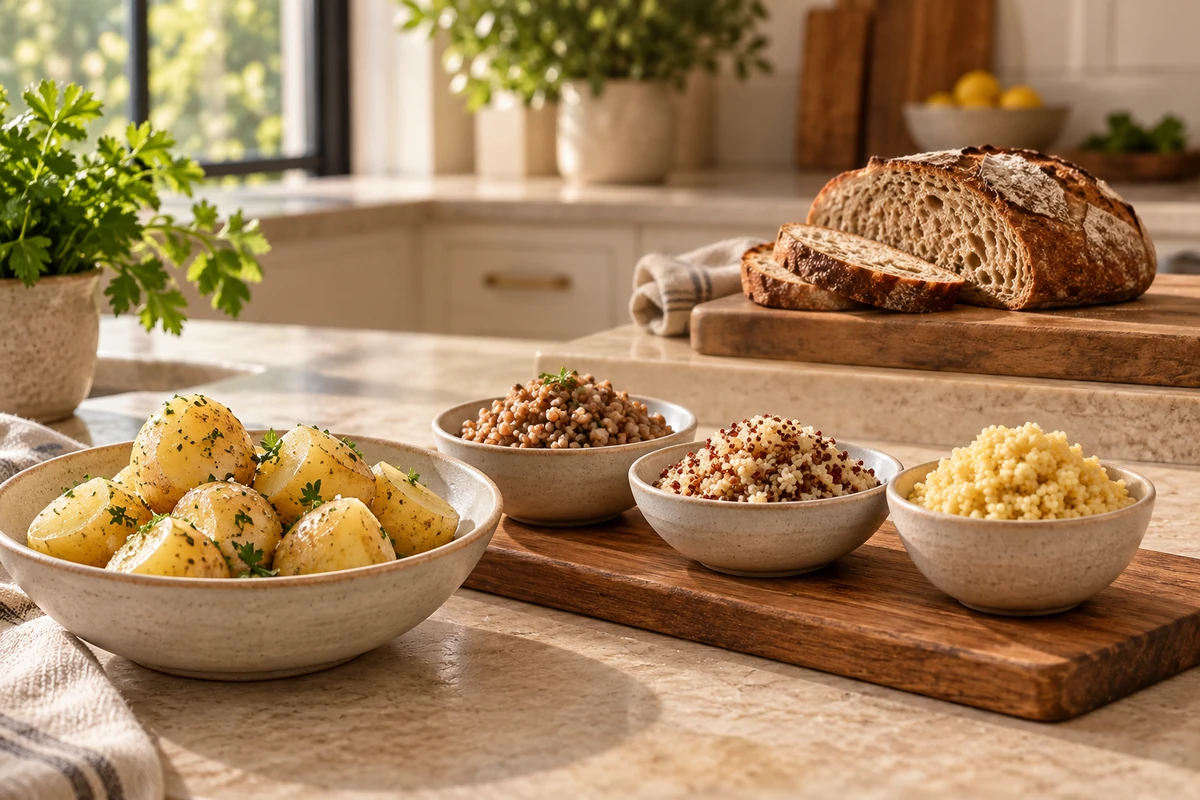
The source-defined sequence begins with new potatoes and fermented gluten-free grains such as buckwheat, millet, and quinoa. Homemade sourdough follows only after those foods are tolerated. Unfermented gluten-free grains, other starchy vegetables, properly prepared grains, and legumes come later.[2]
Start with one new food, prepared simply. A plain cooked potato next to a meal you already know is easy to read. A restaurant dish carrying a new sauce, dairy, and multiple starches at once is not. Keep the rest of the meal familiar and filling. A new food is an addition, not a reason to cut back everything else that day. For familiar meal ideas, use the Full GAPS meal-building guide.
Potatoes
Potatoes switch categories entirely during this transition. Both Intro and Full GAPS leave them off the list, but new potatoes are part of the first source-named group alongside fermented buckwheat, millet, and quinoa.
Follow the preparation in your individual transition plan and start with a small portion. A well-cooked, plain potato is a very different introduction than fries, chips, or a packaged potato dish with a long ingredient list. Watch the whole plate, not just the potato. Butter, cream, and sauces might already be familiar, or they might be another new variable stacked on top. The chapter also says that anyone sensitive to nightshades should introduce tomato, eggplant, and peppers before trying potato.[2]
If potatoes do not sit well, stop that introduction and return to the familiar foods that were working. One response to potato does not establish how every later starch will go, and it is not a reason to push a larger serving.
Gluten-Free Grains
Buckwheat, millet, quinoa, and rice show up in a lot of post-GAPS discussions. “Gluten-free” doesn’t mean these were ever Full GAPS foods. It describes a different property of the grain entirely, and it’s easy to conflate the two labels.
The GAPS chapter specifies fermented gluten-free grains first. Introduce one grain at a time, beginning with buckwheat or quinoa and leaving millet until last because the book says it can be harder to digest. Keep the small starting portion and serving with fat from the GAPS transition guidance.[2] For fermentation, use the complete “Soaking Grains” method in Chapter 8 of Sandor Ellix Katz’s The Art of Fermentation. It explains water, optional live cultures and longer soaking for fermentation; its timings vary with the preparation. At this gluten-free transition step, choose a gluten-free preparation and starter, with only dairy you have already introduced if you use whey.[7]
Introduce the grain in a simple dish first. A loaf or a mixed breakfast bake can quietly stack several new foods at once. Once the grain earns a stable place in your rotation, there’s more room to branch into recipes built around it.
Sourdough and Other Bread
Ordinary sourdough bread generally starts with grain, often wheat or rye. Fermentation does not make ordinary wheat or rye sourdough grain-free or suitable for a gluten-free diet.
Within GAPS transition guidance, sourdough usually enters the picture only once you already tolerate new potatoes and gluten-free grains. It goes in gradually, not as a stand-in for the nut-based bread you used during Intro.
In Gut and Physiology Syndrome, Campbell-McBride reports that some people diagnosed with celiac disease recovered enough to eat ordinary pasta or sourdough occasionally after at least four to five years of strict GAPS.[3] This is her reported clinical experience, not a date at which a reader can know gluten is safe. If you have diagnosed celiac disease, keep following your clinician-guided gluten-free plan rather than using elapsed time or feeling well to try gluten on your own.[6]
Dairy Has Its Own Progression
Some people have already brought certain cultured dairy foods into their GAPS routine. Others have avoided dairy entirely, so the post-GAPS dairy conversation looks different depending on which camp you’re in.
Keep the actual product clear in your head:
- Ghee
- Butter
- Homemade yogurt and sour cream
- Kefir
- Fresh and aged cheese
- Milk
These are genuinely different in composition and preparation. Tolerating one does not automatically mean you will tolerate all the others. GAPS’s own Dairy Introduction Structure[4] gives the program’s order for working through that list.
Fermentation changes the amount of lactose in a dairy product, but it does not remove the milk protein. Raw milk may enter later according to the GAPS Dairy Introduction Structure; it is not a required milestone for a household that is not introducing dairy.
The Intro and Full GAPS food list helps you preserve the familiar baseline while foods outside GAPS are introduced. It is not the post-GAPS sequence. Chapter 19 and the trial planner below supply the transition order and method.[2]
The One-Food-at-a-Time Method
Introduce one food at a time and begin with a small amount. The GAPS chapter says to watch for a reaction for 2 to 3 days before offering another portion, then increase gradually if digestive problems or the person’s usual symptoms do not return. Serve these starchy additions with generous natural fat. The process can take several months.[2]
Keep a short note of the food, portion, preparation, and what happened during the 2 to 3 day observation window. Add other changes that could matter, such as an illness or a disrupted routine. The log keeps the sequence clear. It does not prove the cause of every symptom by itself.
| Source Step | Food and Preparation | Familiar Meal | Observation | Stop and Review |
|---|---|---|---|---|
| First group | One new potato preparation or one fermented gluten-free grain prepared by the complete source method | A meal whose other foods are already familiar | Wait 2 to 3 days for a reaction before another portion; increase gradually if the source conditions are met | Pause the new food and return to the familiar baseline if digestive problems or the person’s usual symptoms return |
| Your next trial | [One source-named food] / [complete preparation] | [Familiar meal] | [Dates and response] | [Your stop-and-review note] |
Source Order: Begin with new potatoes or fermented buckwheat, millet, or quinoa, one food at a time. After those are tolerated, the chapter places homemade wheat or rye sourdough next. Unfermented gluten-free grains, other starchy vegetables, and properly prepared grains and legumes come later. Within the fermented-grain group, the source starts with buckwheat or quinoa and leaves millet until last.[2]
If a trial brings back digestive problems or the person’s usual symptoms, stop the new food and return to the familiar GAPS meals that were working. A dangerous anaphylactic-type allergy is outside ordinary staged reintroduction, so avoid that food rather than deliberately trialing it again.[5]
If Symptoms Return During the Post-GAPS Transition
It’s genuinely disappointing when a food you were looking forward to brings discomfort back with it. Before you draw conclusions, look at what actually changed. Was the food itself new? Was the portion bigger than planned? Was the preparation different? Did several new ingredients sneak in at once without you fully realizing it?
Go back to the familiar meals that were working. Do not strip the diet down to almost nothing because one trial did not go well; the aim is to preserve a nourishing baseline while you decide what to try next.
There’s no upside to pushing through a genuinely concerning reaction just to reach a particular label. The goal is more comfort and a workable range of food, not a perfect scorecard.
Life After GAPS: A Wider Plate
As a new food earns its place, let it join meals you already know. A suitable potato can sit next to meat and vegetables; a newly introduced grain can accompany a familiar main dish. A wider list adds options without requiring every new food at every meal.
Keep the meals and skills that still work: stock, soups, vegetable preparation, and tolerated fermented foods. Notice which additions make the kitchen easier as well as which ones expand the menu. Revisit restrictions gradually so the plan continues serving the person following it.
In our house, attempts to bring foods back have not sat well. The reactions we reported included diarrhea, constipation, headaches, brain fog, disrupted periods and weight gain. That is our family’s experience. It is why I want the food notes and the familiar meals to stay practical while we work out what fits.
Campbell-McBride is also clear that widening the food list is not a return to the highly processed diet she describes. She asks readers to use the years on GAPS to build food habits for life. The skills you already use for shopping and cooking can remain useful as the range of foods changes.[2]
Eating Away from Home During the Transition
Restaurants and gatherings introduce several variables at once: a new sauce, unfamiliar oils, mixed seasonings. They’re often easier to navigate once you’ve tried a few new foods in simpler preparations at home first.
Ask about the actual ingredients when a dish is new. A label such as homemade, traditional, or sourdough does not tell you whether it fits your present transition step. If you have celiac disease, keep your gluten-free plan when ordering; ordinary wheat or rye sourdough still contains gluten.[6]
Choose meals you can reasonably understand, and keep a suitable option on hand when it’s practical. You don’t have to make the first restaurant meal a test of everything you missed. If different people in your household are at different points in the transition, plan the outing around what each person actually needs that day. One person’s successful reintroduction doesn’t make an excluded ingredient right for someone else at the table.
FAQ: Coming Off the GAPS Diet
How Long Does the Post-GAPS Transition Take?
There is no fixed transition timeline. For the majority of people, the source begins only after at least two years on the strict GAPS Diet and at least six months of normal digestion. The reintroduction itself stays gradual, and its length depends on how each new food goes.[2]
What Food Do You Reintroduce First When Coming Off GAPS?
The first source-named foods are new potatoes and fermented gluten-free grains: buckwheat, millet, and quinoa. Introduce one food at a time in a small amount. Within the grain group, begin with buckwheat or quinoa and leave millet until last because it can be harder to digest.[2]
Can You Eat Sourdough Bread During the Post-GAPS Transition?
Sourdough comes later in the general GAPS transition, after new potatoes and fermented gluten-free grains are tolerated. The book’s separate celiac discussion reports occasional gluten tolerance in some people after at least four to five strict years; it does not give every reader with celiac disease a gluten-trial date. Keep your individual gluten-free plan.[3][6]
What Happens if Symptoms Return During the Post-GAPS Transition?
Look at what actually changed, including the food, portion, and preparation, before assuming the whole transition failed. Return to familiar meals and pause the new food. A dangerous anaphylactic-type allergy stays outside ordinary staged reintroduction, so avoid that food rather than testing it again.[5]
Do You Have to Reintroduce Dairy if It Wasn’t Part of Your GAPS Routine?
No. Dairy has its own separate progression, and there’s no requirement to reach any particular dairy product, including raw milk, as a milestone.[4]
The Coming Off GAPS course is listed in my shop for this transition. For the nightshade question, the new-potato and nightshade guide keeps the sensitivity-dependent order in one place.
Your Next Step
Once the thresholds in Dr. Natasha Campbell-McBride’s “Coming off the GAPS Diet” chapter are met, use its source order and the planning row above. Choose one source-named food and record the complete preparation, the familiar meal around it, the observation dates, and what would make you pause and review the trial.[2]
References
- GAPS Diet. “GAPS Outline.”
- Campbell-McBride, N. Gut and Physiology Syndrome (2020), Chapter 18, “GAPS Liquid Fasting,” concluding discussion of the diet spectrum and long-term paths; Chapter 19, “Coming off the GAPS Diet,” pp. 210–211; and Chapter 21, “Fermented Grains,” p. 245.
- Campbell-McBride, N. Gut and Physiology Syndrome (2020), A–Z section “Coeliac (celiac) disease,” p. 417.
- GAPS Diet. “Dairy Introduction Structure.”
- Campbell-McBride, N. “Food Allergy.” Dangerous anaphylactic-type allergy boundary.
- National Institute of Diabetes and Digestive and Kidney Diseases. “Eating, Diet, & Nutrition for Celiac Disease,” gluten-free treatment and eating-out guidance.
- Katz, S. E. The Art of Fermentation, Chapter 8, “Soaking Grains,” whole-grain fermentation with dechlorinated water and optional live cultures. Grain eligibility and introduction order here follow the GAPS transition guidance.

5 responses to “Coming Off the GAPS Diet: A Direct Guide to the Post-GAPS Transition”
[…] least six months, with foods introduced gradually rather than on a fixed calendar date.[1][6] The post-GAPS transition guide covers that process […]
[…] and at least six months of normal digestion before introducing foods outside the diet. Read the complete coming-off guide before planning that first […]
[…] they do not change the book’s initial sequence and one-food-at-a-time progression. The Coming Off GAPS guide lays out those readiness conditions and first foods. Corrado calls the longer-term pattern the […]
[…] Coming off GAPS entirely is a separate, later process. That’s reintroducing foods that sit outside GAPS altogether, not the jump from Intro into Full.[4] […]
[…] Non-GAPS foods are introduced only after digestion has remained normal for at least six months. Coming off GAPS is a separate, gradual process, and the source says not to rush […]