

Scroll through GAPS recipes long enough and you’ll run into the word Paleo constantly. Roasted meat, cauliflower mash, squash soup, grain-free pancakes: a lot of GAPS-friendly meals started life as Paleo recipes. That overlap is useful. It’s also where GAPS vs Paleo mix-ups happen, because the two labels are not interchangeable.
A Paleo recipe might call for sweet potato, tapioca, or maple syrup. A Full GAPS recipe might call for cultured dairy or a legume that standard Paleo doesn’t allow. Those differences matter most when you’re shopping straight from a recipe card instead of a full food list.
I find the comparison easiest to work through with actual ingredients and actual meals, not general descriptions of either diet. Once you know where GAPS and Paleo meet and where they split, you can borrow recipe ideas with a lot more confidence.
Two Different Kinds of Diet, Not Two Versions of the Same One
GAPS and Paleo don’t just have different food lists. They’re different kinds of thing to begin with.
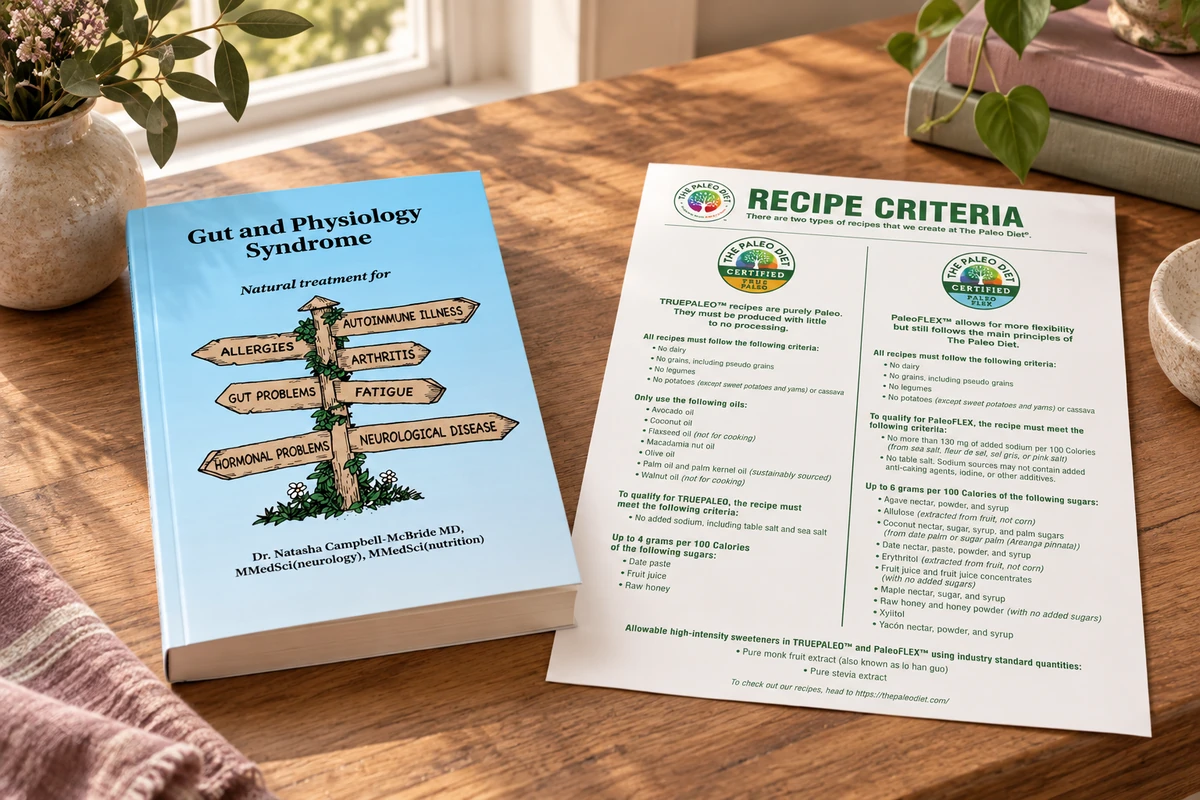
GAPS is a structured nutritional protocol developed by Dr. Natasha Campbell-McBride. Its dietary routes include the six-stage Introduction Diet[1], followed by Full GAPS, or starting directly with Full GAPS. Coming off GAPS is a separate later transition. For the majority, the 2020 book calls for at least two years on the strict GAPS Diet and at least six months of normal digestion before introducing foods outside GAPS; some people need longer or remain on Full GAPS permanently.[4][2]
Paleo is an ancestral-style food pattern built around meat, fish, eggs, vegetables, fruit, nuts, and seeds, while leaving out grains, legumes, and dairy. According to The Paleo Diet organization[3], it’s built around nutrient-dense foods rather than one rigid formula. Other Paleo authors, recipe sites, and branded programs each run their own variation, so “Paleo” on a recipe title doesn’t guarantee one fixed set of rules.
The Paleo Diet organization’s 85/15 principle describes everyday flexibility within that food pattern.[3] It is not an equivalent to the six GAPS Intro stages, which sequence specific foods and preparations. Keep the Intro versus Full GAPS comparison nearby if you are deciding which GAPS route you are actually following.
The official Full GAPS page[2] describes Full GAPS as similar to Paleo, ketogenic, and primal approaches, with important differences in dairy and macronutrient ratios. If you’re still getting oriented, What Is the GAPS Diet? A Clear Guide to the Basics shows how Intro and Full GAPS fit together.
GAPS vs Paleo at a Glance
Here’s the shorthand version, side by side. Use it to orient yourself, then check the exact ingredient in the Intro and Full GAPS food list before you shop.
| Detail | GAPS | Paleo |
|---|---|---|
| Main structure | Six-stage Intro followed by Full GAPS, or Full GAPS first; coming off is a separate later process | A food pattern with variation across authors and programs |
| Grains | Excluded on Intro and Full GAPS | Generally excluded |
| Dairy | Specific cultured dairy introduced by stage and tolerance | Generally excluded |
| Legumes | Select legumes allowed on Full GAPS, properly prepared | Generally excluded, including peanuts |
| Starchy roots | Potatoes and sweet potatoes excluded | Sweet potatoes and yams often included; other roots vary |
| Sweeteners | Raw honey has a place from early Intro on; most other sweeteners excluded | Honey and other sweeteners appear, depending on the version |
| Cooking methods | Intro introduces foods and methods in stages | No stage-by-stage sequence |
| Stock and ferments | Central to the protocol | May appear, without a required progression |
Where GAPS and Paleo Recipes Actually Overlap
There’s real overlap in ordinary meals. Plain meat or fish with the right vegetables works on both. Eggs, fresh herbs, avocado, olive oil, and a lot of fruit and nuts show up in both collections, depending on your GAPS stage and your own tolerance.
That overlap makes Paleo recipes a genuinely useful source of ideas once you’re on Full GAPS. The Full GAPS meal guide gives you a GAPS-first starting point. You might find a new seasoning combination, a different way to prepare a vegetable, or a main dish built around something already in your kitchen.
Start with the main dish and work outward. What’s in the marinade? Is there a flour coating? Does the sauce use a sweetener or a starch? What’s served on the side? A simple roast might fit your menu even when its suggested sweet-potato side doesn’t.
For early Intro, preparation is often the deciding detail. GAPS’s Stage 1 works with cooked vegetables, fibrous stalks removed. Raw vegetables don’t enter the picture until Stage 5, starting with lettuce and peeled cucumber before carrot, tomato, onion, and cabbage. A raw salad and a cooked vegetable can use nearly identical ingredients, but they don’t belong at the same point in the GAPS sequence.[1] See the stage-by-stage Intro guide for the complete progression.
Five Things to Check Before You Borrow a Paleo Recipe
Once you’ve picked a recipe, run it through these five checks before it goes on your shopping list. Keep the foods-to-avoid and label-trap guide beside you for the ingredient details.
Cultured Dairy
Standard Paleo recipes leave dairy out, so dairy itself usually will not block a Paleo recipe from GAPS. Check what the recipe uses in its place. Coconut milk can fit Full GAPS, but it does not enter the GAPS Intro list until Stage 6. A commercial non-dairy milk may also contain gums, starches, or sweeteners that do not fit.[1][2]
GAPS separately allows certain homemade cultured dairy foods according to the phase and the person eating them. That difference matters in the comparison table, but it does not turn a dairy-free Paleo recipe into a poor GAPS choice.[1][4]
Beans, Lentils, and Peanuts
Standard Paleo recipes generally exclude legumes, so this is often a quick check. Still read every option in the ingredient list. A recipe page may offer peanut butter, soy sauce, chickpea flour, or another non-Paleo variation alongside the main version.
The ordinary Full GAPS food list excludes soy, cannellini beans, butter beans, chickpeas or garbanzo beans, and commercial baked beans. Its permitted legumes include properly prepared lentils, white navy or haricot beans, lima beans, split peas, and fresh green peas. The 2020 book also gives a separate double-fermentation preparation that can use a broader mixture of beans, lentils, or dried peas after enough digestive healing. That exception depends on the complete preparation and individual tolerance; it does not make ordinary chickpea flour, canned beans, or every fermented legume a match for GAPS.[4] Nut butter, including peanut butter, enters Intro at Stage 3. Check the exact named ingredient and its preparation instead of assuming that every option in a Paleo post fits the same GAPS phase.[1]
Sweet Potatoes and Other Starches
Sweet potatoes turn up constantly in Paleo breakfasts, sides, and baking. They’re excluded on both Intro and Full GAPS, which makes this one of the most useful differences to keep in mind while you’re scanning a recipe.
Cassava, tapioca, and arrowroot show up across the wider Paleo recipe world, too. They give grain-free breads and sauces a familiar texture, but grain-free doesn’t mean starch-free, and it doesn’t mean GAPS-compatible.
Paleo definitions vary here by author. The Paleo Diet organization’s own recipe standards allow sweet potatoes and yams while excluding regular potatoes and cassava. Other Paleo writers draw the line differently. It’s more useful to know which specific ingredient is in front of you than to expect one fixed rule across every Paleo recipe.
For a savory side, it’s often easier to choose a different preparation altogether. Suitable cauliflower mash or roasted squash can stand in rather than trying to make an excluded starch behave like an allowed one.
Honey and Other Sweeteners
Honey has a place on GAPS from early on. Filtered water with raw honey is part of GAPS’s Stage 1, and Stage 6 gradually increases raw honey alongside the introduction of sweet baked goods. Maple syrup, coconut sugar, and similar sweeteners are a different story. They’re common in some Paleo recipes but aren’t automatic substitutes on GAPS.[1][4]
A front label reading “naturally sweetened” doesn’t settle anything. Check which sweetener was actually used, including any hidden syrup or sugar in a sauce, nut butter, dried fruit, or chocolate ingredient.
The Paleo Diet organization’s own recipe standards actually split their recipes into two tiers. The stricter tier limits its listed sugars to raw honey, date paste, and fruit juice. The more flexible tier also permits maple syrup, coconut sugar, and a longer list of alternatives. Both tiers separately allow pure monk fruit and pure stevia extracts in standard quantities.[3] Those are that organization’s internal categories. They don’t change what’s on the GAPS food list.
Swapping a sweetener changes more than compliance, too. Liquid honey adds moisture differently than a granulated sugar does. Without a tested substitution from the recipe’s author, don’t expect an equal-volume swap to bake up the same loaf or cake.
Grain-Free Baking
Baking is where shared labels get the most misleading. A bag of Paleo flour blend might combine almond flour with several starches. Another recipe might lean entirely on cassava. A coconut-flour recipe often needs far more eggs than an almond-flour version, because the two flours behave nothing alike.
On GAPS, the flour type is only part of the decision. Stage 3 brings in pancakes made from nut butter, egg, and squash, well before any bread. Stage 4 bread requires fermented nut or seed flour. For Full GAPS baking, follow Chapter 21, “Baking at Home,” pages 268–273 of Gut and Physiology Syndrome. The Full GAPS chapter calls for fermented baking flours; the recipe chapter also gives specific whole-nut, precooked-cashew and sprouted-seed methods. Use the complete method for the ingredient and form, rather than treating soaking and grinding alone as preparation for every flour.[4] Sweet baked goods generally are a Stage 6 addition. A suitable Full GAPS muffin isn’t automatically an early-stage breakfast.
The easiest path is usually finding a recipe already built around the ingredients you can use, rather than swapping the flour, the binder, the dairy, and the sweetener in someone else’s recipe all at once. Too many untested changes at one time tends to leave you with an expensive bowl of batter and nothing for breakfast.
Worked Example: Checking a Paleo Beef Roast
The Paleo Diet’s Slow Cooker Beef Roast with Red Wine is a useful real example because the main dish looks close to Full GAPS at first glance.[5] Here is the whole decision before anything goes on the shopping list.
| Part of the Recipe | GAPS Check | Decision |
|---|---|---|
| Beef, onion, garlic, rosemary, basil, oregano, bay leaves, and parsley | These ingredients can fit Full GAPS. | Keep this part of the idea. |
| Extra-virgin olive oil used for browning and slow cooking | Gut and Physiology Syndrome reserves cold-pressed virgin olive oil for ready-served food and salads and uses stable fats such as ghee, butter, coconut oil, and animal fats for cooking.[4] | Do not use the cooking method as written. |
| One cup of beef bone broth | The GAPS program uses meat stock and does not recommend bone broth for at least the first year, and for some people several years.[4] | The liquid does not fit the standard early Full GAPS route. |
| One cup of sulfite-free red wine | The Paleo recipe specifies sulfite-free wine, but does not say it is dry. The 2020 GAPS book says alcoholic drinks are best avoided and permits a small amount of dry wine only on rare occasions.[4] | Do not turn a rare option into the default liquid for a weekly roast. |
| Suggested roasted-cauliflower side | Cauliflower can fit Full GAPS. | Keep the side if it fits the person eating it. |
Final decision: do not use that Paleo roast as written for a standard early Full GAPS dinner. Rather than rewriting its fat and liquid ratios on the fly, use the WFLI Full GAPS slow-cooker pot roast with turnips and carrots. It gives you the same practical dinner shape without an untested chain of substitutions.
A Shared Label Still Needs Its Own Ingredient List
Some recipes carry multiple diet labels because they genuinely offer separate versions inside one post: one flour option for Paleo, a different one for GAPS, different milk or sweetener choices for each. Read the instructions for the version you’re actually making. Don’t treat every listed alternative as though it belongs in the same bowl.
Other recipes are just inconsistent. A pudding labeled dairy-free might still list butter in the ingredients. Read the actual list carefully any time a food needs to be excluded, even when the title sounds like a match.
Once you’re settled into Full GAPS, the recipe overlap with Paleo gets much wider. The core exclusions and your own tolerance still apply, but there is more room to work with in textures, methods, and combinations.
Using Paleo Recipes to Widen Your GAPS Menu
The real payoff of this comparison is the extra range of ideas it opens up. A Paleo collection can hand you a new fish dinner, a different vegetable side, or a fresh way to use meat you already cook regularly. A GAPS-specific collection adds stock-based meals, cultured foods, and dishes built around the Intro progression that Paleo sites don’t cover at all.
Pick a few dishes whose core ingredients already fit before you shop, then check the sauce and side dish. Keep the free Intro + Full GAPS Food List nearby so you can compare the exact ingredient and stage without relying on memory.
Frequently Asked Questions
Is Paleo the Same as the GAPS Diet?
No. Paleo is a general ancestral-style food pattern with no formal stages. GAPS follows a structured protocol: Intro and Full GAPS are different starting routes, and coming off the diet is a separate later process. The two overlap heavily in ingredients, but the underlying structures are not the same.
Can You Use Paleo Recipes on the GAPS Diet?
Often, yes, especially once you’re on Full GAPS. Check the recipe’s dairy, legumes, starchy roots, sweeteners, and preparation method against your GAPS stage before you shop. Paleo recipes commonly include sweet potato, tapioca, or non-honey sweeteners that GAPS excludes, so those five checks catch most mismatches.
Are Sweet Potatoes Allowed on the GAPS Diet?
No. GAPS excludes sweet potatoes and regular potatoes on both the Introduction Diet and Full GAPS. Sweet potatoes and yams are common in Paleo recipes, which makes this one of the most useful differences to remember when you’re scanning a recipe.
Is the GAPS Diet Dairy-Free?
Not entirely. GAPS introduces specific cultured dairy foods, like homemade yogurt, kefir, and sour cream, by stage and individual tolerance, starting in small amounts on Intro Stage 1. Standard Paleo excludes dairy altogether, which makes this one of the clearest splits between the two diets.[1][3]
One Next Step
Use the worked roast example above as your pattern. Take one Paleo recipe you already saved and record one decision for its main ingredient, cooking fat, liquid or sauce, preparation method, and side. If several parts need untested substitutions, choose a GAPS recipe that already fits your ingredients instead of rebuilding the formula while you cook.
References
- GAPS Diet. “GAPS Introduction Diet Survival Guide: Six Stages of GAPS Intro.”
- GAPS Diet. “Full GAPS Diet: Recommended Food List and Foods to Avoid List.” See also “Full Spectrum of the GAPS Diet.”
- The Paleo Diet. “Is It Paleo?”; “The Paleo Diet Recipe Standards” (2025); “Explaining the 85/15 Principle.”
- Campbell-McBride, N. Gut and Physiology Syndrome (2020), Chapter 11, “What We Shall Eat and Why,” food, alcohol, fats and oils; Chapter 13, “GAPS Introduction Diet,” starting-route guidance and six stages, pp. 167–176; Chapter 14, “The Full GAPS Diet,” pp. 177–178; Chapter 19, “Coming off the GAPS Diet,” p. 210; Chapter 21, “What We Shall Eat and Why, With Some Recipes,” meat stock versus bone broth, “Fermented Legumes” and “Double-Fermented Beans,” and “Baking at Home,” pp. 268–273.
- The Paleo Diet. “Slow Cooker Beef Roast with Red Wine.” Ingredient list, method, and suggested roasted-cauliflower side used for the worked comparison.

Leave a comment