

This starter-culture beet kvass uses three large beets, four cups filtered water, one teaspoon mineral salt, and two tablespoons of a completed GAPS ferment. Choose homemade sauerkraut brine or completed beet kvass as the starter, then keep every beet cube submerged while the jar ferments.
The source calls the finished yield about one quart, but three large beets plus four cups water cannot fit safely into a one-quart jar with a weight and headspace. Preserve the measured formula and use a vessel large enough for it; treat “about one quart” as the stated finished yield, not the vessel size.
In our family of eight, this is the beet kvass formula I would choose when a finished starter is already open in the refrigerator. It is still its own recipe: the lower salt amount and measured two-tablespoon starter distinguish it from plain no-whey beet kvass.
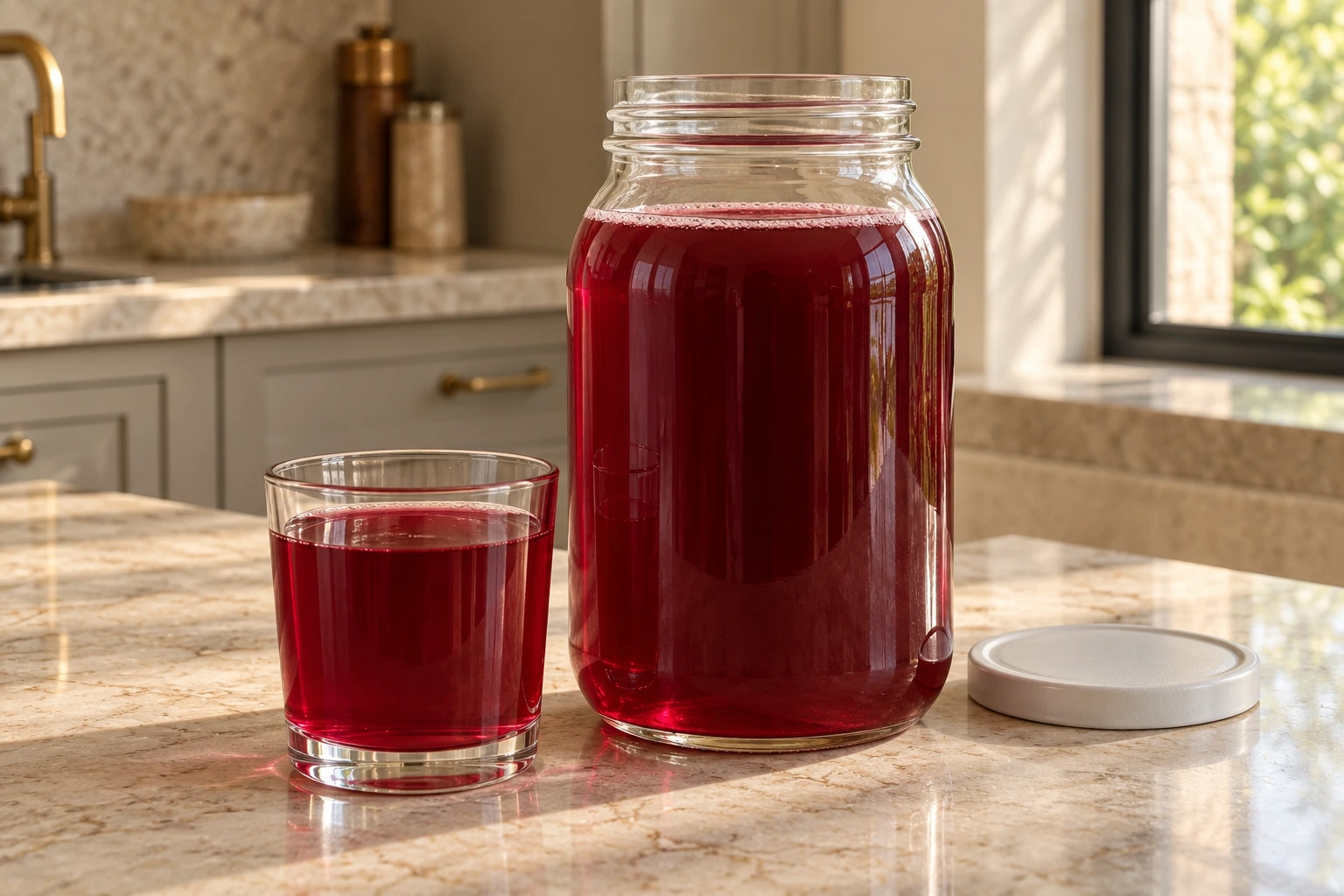
GAPS Placement: Full GAPS; on Intro Stage 1 use only strained fermented liquid and begin gradually with 1 to 2 teaspoons
Prep Time: 5 minutes
Fermentation: 4 to 7 days, until pleasantly tart
Yield: 4 servings, about 1 quart
What Starter-Culture Beet Kvass Tastes Like
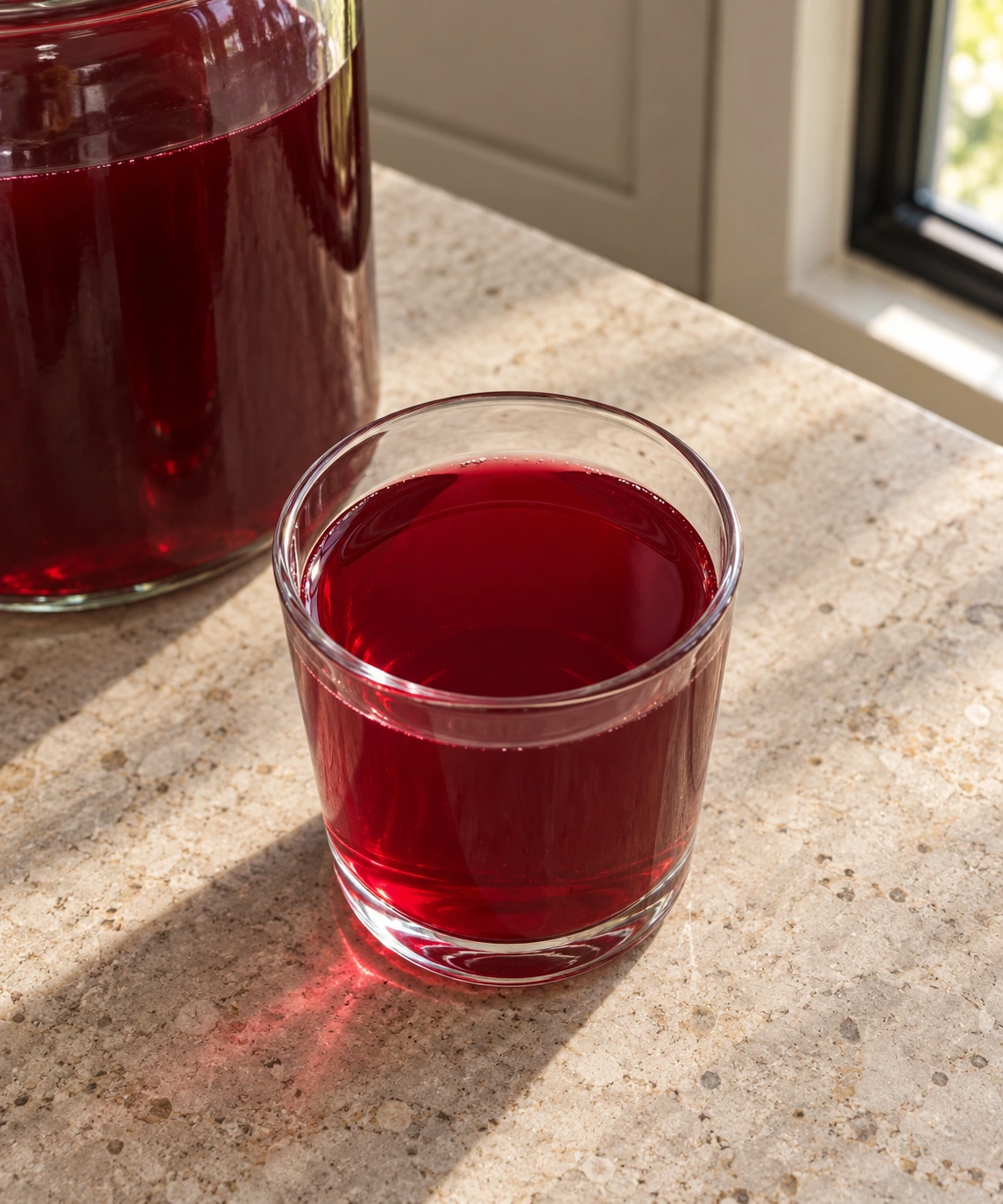
The finished kvass is earthy, salty, and cleanly sour. It has a clear deep ruby color and no fruit, garlic, ginger, lemon, herbs, or sweetener. The starter helps establish the fermentation branch but does not turn the drink into sauerkraut juice or a refill of plain kvass.
For a three-ingredient batch with no starter, use plain beet kvass without whey. This card preserves the lower one-teaspoon salt and measured two-tablespoon starter.
For a fruit finish, use the separate raspberry beet kvass or strawberry beet kvass. For a savory aromatic jar, use ginger-garlic beet kvass. Each link keeps its own starter, salt, solid cut, timing, and finishing method.
Prepare The Beets And Vessel
Cut three large red beets into roughly one-inch cubes. Place them in a clean wide-mouth glass fermentation vessel sized for the entire formula. Do not force the ingredients into a one-quart jar simply because the source names about one quart as the final yield.
Wash the vessel, weight, closure, whisk, bowl or pitcher, knife, board, strainer, and refrigerator jar. Rinse away residue and let the equipment drain. Choose the weight and closure before filling so the solids can be submerged immediately.
Separate Fermentation Capacity From Finished Yield
The fermenting vessel holds solids and liquid at the same time. Three large beets take up substantial space before four cups water are added, and the weight plus pressure-aware headspace require even more room. That is why the fermentation vessel must be larger than the source’s about-one-quart finished yield.
After fermentation, the beet cubes and weight come out. The strained liquid can then fit a smaller refrigerator jar. Vessel capacity describes what the active ferment needs; yield describes the liquid you expect to keep. Treating those as the same number would crowd the primary jar.
Choose One Completed Starter
Use two tablespoons homemade sauerkraut brine or two tablespoons completed beet kvass. Choose one. Both must come from a finished GAPS-compatible ferment without additives or an unrelated seasoning profile.
The photographed branch uses completed beet kvass. Sauerkraut brine is the alternative. Do not combine them or replace the measured amount with an unmeasured splash.
A completed starter means a ferment that has already reached its own proper endpoint. Do not use raw cabbage soaking water, unfinished beet water, a commercial vinegar, or an unrelated probiotic liquid. The starter choice changes the route, but its amount remains exactly two tablespoons in every 1x batch.
For the sauerkraut branch, choose additive-free homemade brine without a strong spice profile that would obscure the plain beet flavor. For the beet-kvass branch, use strained completed kvass without fruit or aromatics when you want the photographed result.
Whisk The Brine First
Whisk one teaspoon mineral salt and the chosen two tablespoons starter into four cups filtered water. Stop when the salt has dispersed and the liquid looks uniform. For the completed-kvass branch, the brine may be pale ruby before it reaches the beets.
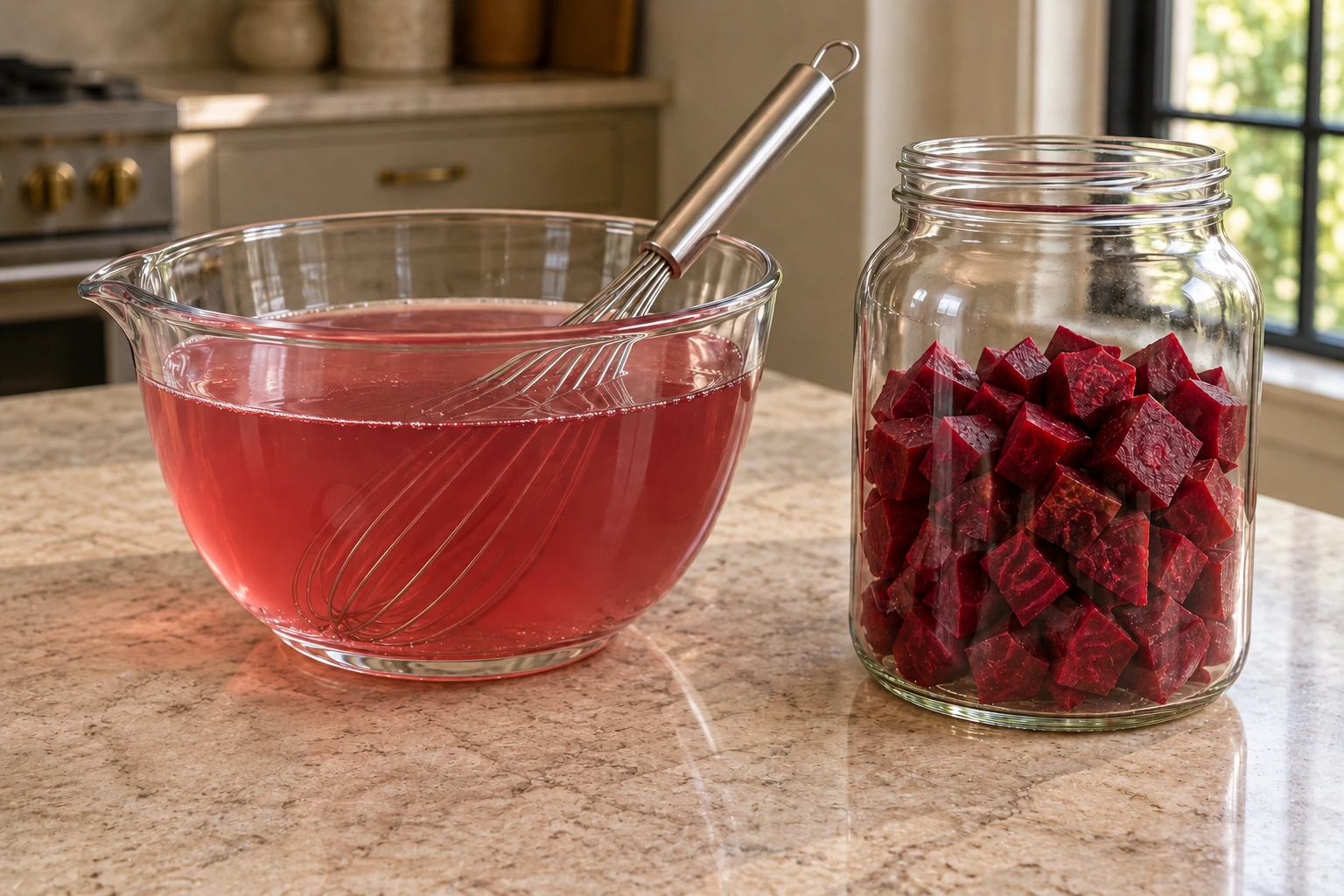
Mixing the brine before filling distributes the small salt amount and starter evenly. Do not leave an extra bowl of salt or starter beside the finished brine; both measurements belong in the liquid.
Pour Over Beets And Submerge
Pour the mixed brine over the beet cubes. Set a clean glass, ceramic, or uncoated stainless fermentation weight over the beets so every cube remains below the liquid. Leave practical headspace for the vessel and closure.
Fit an airlock or another self-venting, pressure-aware closure. The measured ingredients may require a vessel larger than one quart because the beets displace water and the ferment still needs a weight and headspace.
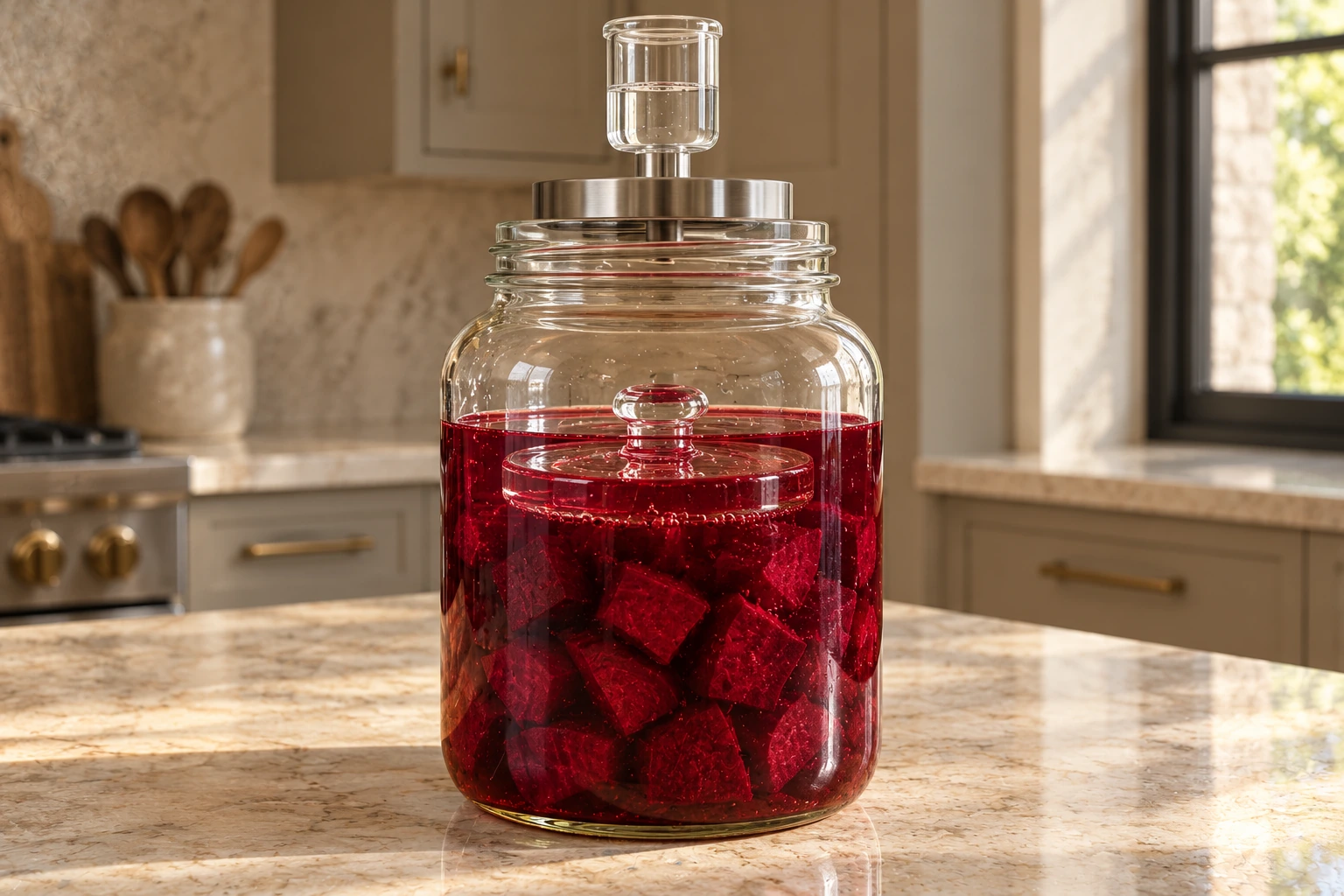
Ferment Four To Seven Days
Keep the jar at room temperature out of direct sunlight. The source window is four to seven days. Use that range to decide when to begin tasting rather than treating day four or seven as an automatic answer.
The liquid should deepen to ruby and develop a clean sour aroma. Taste with a clean utensil. Refrigerate when it is pleasantly tart. A taut lid, stopped bubbling, or routine burping does not control the endpoint.
Keep every cube below the liquid. If one escapes, adjust the clean weight with a supported clean utensil and restore the closure. Fuzzy growth, putrid odor, or an unrelated surface color is not the tart endpoint.
Let Room Temperature Set The Pace
Keep the vessel away from direct sun, a hot range, a cold draft, or another location with sharp temperature swings. A warmer room may move toward tartness near day four, while a cooler room may need the later part of the seven-day window. Keep the ingredient measurements fixed.
Visible bubbles can show activity, but they do not replace taste. A jar can bubble before the flavor is ready, and visible activity can slow while sourness continues to develop. Use a clean sample and refrigerate at a pleasant tart endpoint.
Strain And Refrigerate
Remove the weight and strain the kvass through a fine uncoated stainless strainer securely nested over a wide glass bowl. Transfer the liquid to a clean glass jar, cover, and refrigerate. The source permits up to one month refrigerated.
Label the refrigerator date, use clean glassware, and return the covered jar promptly after pouring. The one-month source window does not make this a shelf-stable pantry drink.
Starter-Culture Beet Kvass for Full GAPS
Ingredients
Equipment
Method
- Whisk the mineral salt and one chosen completed starter into the filtered water until uniformly dispersed.
- Place the beet cubes in a clean glass fermentation vessel sized to the measured batch. Pour the mixed brine over them and keep every beet cube fully submerged under a clean weight.
- Fit a pressure-aware airlock or self-venting closure and ferment at room temperature out of direct sunlight.
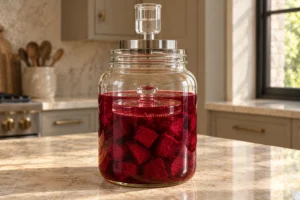
- Ferment 4 to 7 days, until the liquid is deep ruby and tastes pleasantly tart.
- Remove the weight, strain through a securely nested fine stainless strainer, transfer to clean glass refrigerator jar or jars sized for the finished yield, cover, and refrigerate.
Notes
- Full GAPS: Use after beet kvass and the chosen starter are introduced and tolerated.
- Intro Stage 1: Use only strained fermented liquid, beginning with 1 to 2 teaspoons.
- Vessel: Three large beets plus four cups water do not fit safely in a one-quart ferment jar; choose a larger vessel. About one quart is the source yield.
- Fermentation: 4 to 7 days until pleasantly tart; not cook time.
- Storage: Refrigerate up to 1 month.
- Yield: This recipe makes four servings, about one quart in total. A doubled batch makes eight servings, about two quarts.
- Scaling: Numeric ingredients scale. Use a vessel large enough for scaled solids, liquid, weight, and headspace.
Tried this recipe?
Let us know how it was!The Physical Cues That Matter
The brine is uniform. Salt and starter are dispersed in the four cups water before filling the jar.
The vessel fits the formula. Three large beets, four cups water, weight, and headspace need more room than a one-quart container.
Every beet cube stays submerged. The clean weight remains below the liquid throughout fermentation.
The closure releases pressure. Use an airlock or another pressure-aware system without routine opening.
Pleasant tartness is the endpoint. Use the four-to-seven-day window for observation and taste for readiness.
Full GAPS And Intro Stage 1
The complete starter-culture kvass belongs on Full GAPS after beets and the chosen completed starter are introduced and tolerated.
On Intro Stage 1, use only strained fermented liquid and begin gradually with 1 to 2 teaspoons. Keep beet solids out of the Stage 1 portion. That introduction amount is not the four-serving Full GAPS yield.
This recipe does not claim that beet kvass detoxifies, treats the liver, corrects electrolytes, reduces inflammation, cures digestive symptoms, or provides a medical result.
Serving And Storage
Serve the strained kvass cold in a small glass. Its simple earthy-sour flavor fits beside meals and makes a clear comparison point for fruit or aromatic kvass.
Keep it covered and refrigerated for up to one month. Use clean glassware and assess aroma, appearance, and flavor before serving. Do not store it at room temperature after the fermentation endpoint.
Label the refrigerator date so the source window is visible to everyone using the jar. Pour from the jar or use a clean ladle rather than drinking directly from the storage container, and return it promptly to the refrigerator after each serving.
Frequently Asked Questions
Which Starter Should I Use?
Choose two tablespoons homemade sauerkraut brine or two tablespoons completed beet kvass. Use one, not both.
Does This Fit In A One-Quart Jar?
No. Three large beets plus four cups water, a weight, and headspace require a larger vessel. One quart is the stated finished yield.
Why Is The Salt Amount Lower?
This formula uses one teaspoon mineral salt together with a measured completed starter. Do not import the salt amount from another kvass recipe.
How Long Does It Ferment?
Ferment four to seven days and refrigerate when pleasantly tart.
Can I Use Whey?
Not in this formula. The measured choices are sauerkraut brine or completed beet kvass.
Can I Add Fruit Or Ginger?
No. Fruit and aromatic kvass have separate formulas and posts.
How Long Does It Keep?
The source permits up to one month refrigerated.
Recommended Equipment
Use a wide-mouth glass fermentation vessel large enough for the measured batch, a glass, ceramic, or uncoated stainless weight, a pressure-aware airlock or self-venting closure, a wide glass mixing vessel, a complete stainless whisk, a stainless knife and stable board, a fine stainless strainer nested over a glass bowl, and a clean one-quart refrigerator jar.
Build A Reliable Fermentation Routine
The upcoming Crock & Jar: Ferments for GAPS Families course brings starter choices, salt, submersion, pressure-aware closures, vessel sizing, temperature, surface changes, and sensory endpoints into one repeatable system. Check the WFLI shop for the course and current fermentation guides.

Leave a comment