

This plain-water lemon electrolyte drink is the simplest branch of the electrolyte series: filtered water, fresh lemon or lime juice, and natural unprocessed salt. It has no coconut water, commercial drink mix, flavored powder, bottled juice, or refined sweetener.
The finished glass should be almost clear with a light citrus haze. It tastes tart first and gently mineral second. The salt should sharpen the fruit rather than make the water taste like seawater. Start at the lower salt measure, stir until every crystal disappears, and taste before deciding whether the glass needs the upper end of the range.
I keep recipes like this practical because drinks should not create another pile of work in an already busy kitchen. Between homeschooling, feeding eight people, and leaving for second shift, I need the measuring cue, the taste cue, and the stopping point to be obvious.

Why This Is a Full GAPS Drink
This glass uses ordinary Full GAPS foods: filtered water, fresh lemon or lime, and natural unprocessed sea or mineral salt. It is written for Full GAPS because that is the scope of the accepted source packet. It is not presented as a supplement formula or as a replacement for a specific medical rehydration plan.
The ingredient boundary matters. Use filtered water or plain mineral water. Squeeze the citrus yourself. Choose natural salt without anticaking agents, added flavors, or a mineral premix. Those choices keep the recipe recognizable and prevent a simple drink from quietly turning into a packaged electrolyte product.
Choose Lemon or Lime
Use one medium juicy lemon or lime. Lemon gives a round, familiar tartness. Lime tastes sharper and more aromatic. Either fruit works with the same water and salt measurements, so choose one for the glass rather than combining both.
Fruit size and juiciness vary. Roll it firmly before cutting. It should feel slightly softer beneath your palm after several passes. If a small or dry fruit yields very little juice, use another half or a second fruit within the accepted one-and-a-half-to-two-fruit range.
Measure the Water and Salt
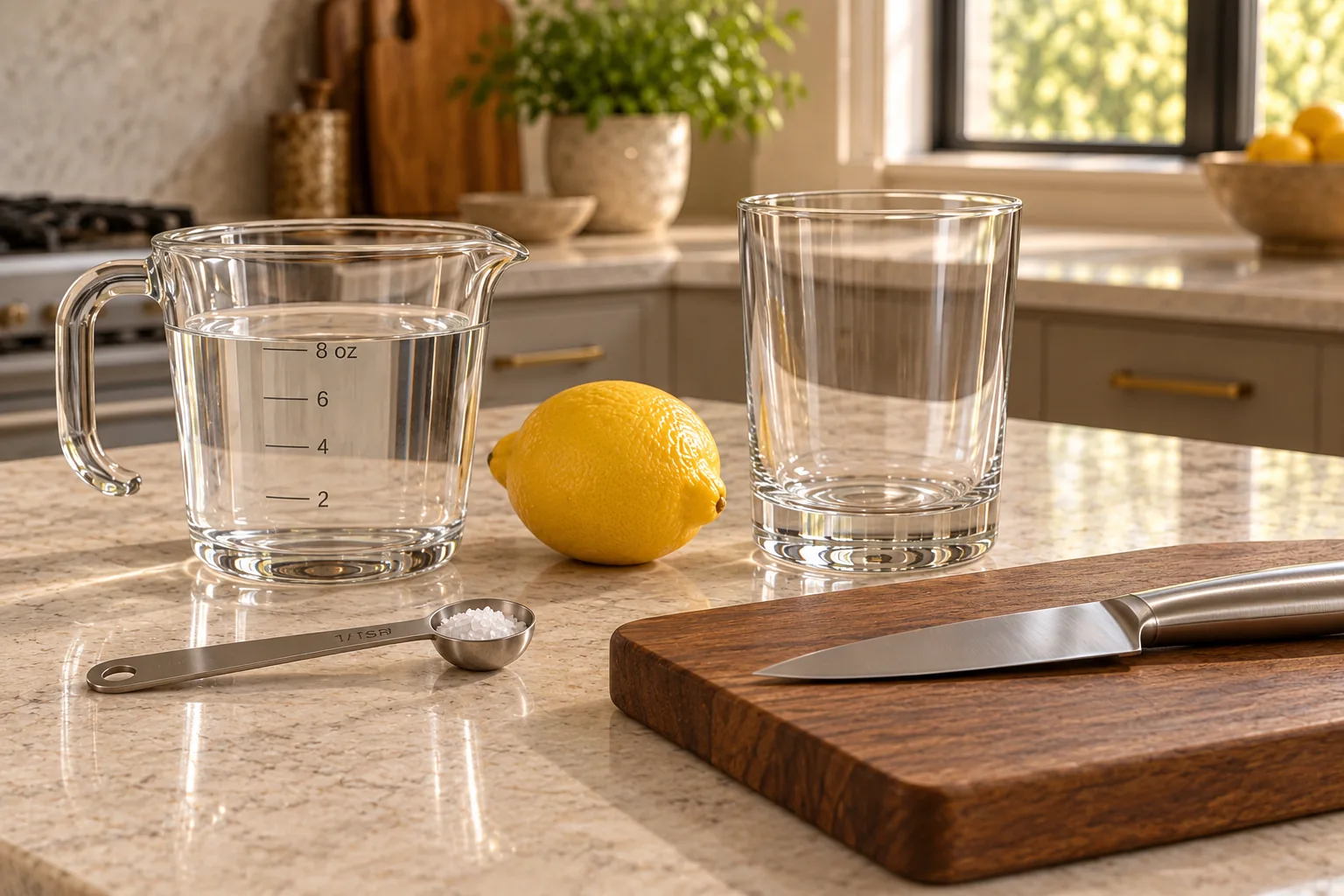
Pour eight ounces filtered water into a clear glass or glass jar. A ten-to-twelve-ounce vessel leaves room for the citrus and stirring. The clear glass also lets you see whether salt crystals remain on the bottom.
Measure one-eighth teaspoon natural unprocessed sea or mineral salt for the photographed route. The accepted source allows up to one-quarter teaspoon, but the lower amount is the sensible place to begin because salt crystals and spoon sizes are easier to control than a vague pinch.
Roll and Juice the Citrus
Roll the lemon or lime against a firm counter or wooden cutting board while pressing steadily. Stop when it feels softer inside. Cut it in half and squeeze both halves into the water, catching any seeds.
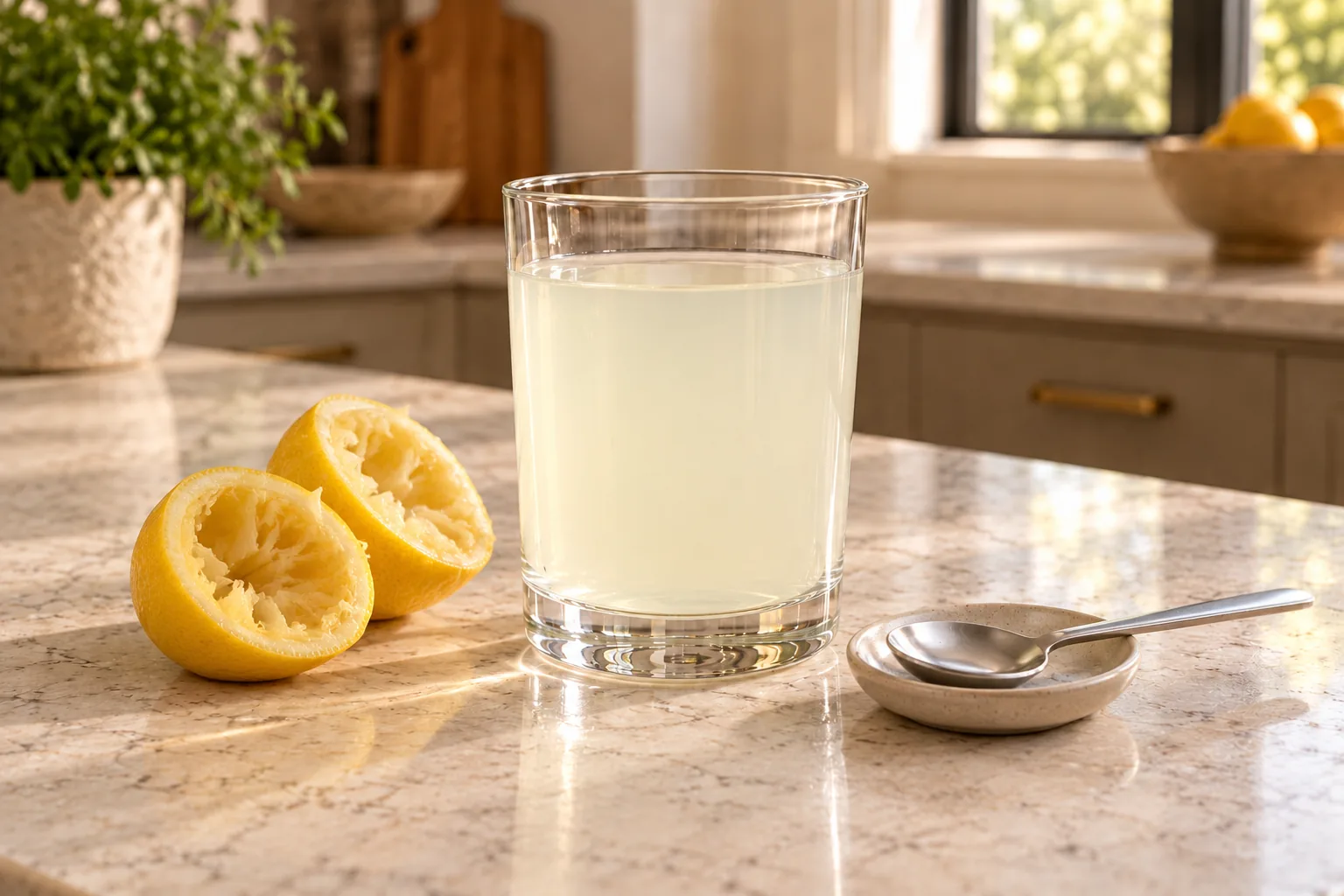
The water will change from completely clear to faintly cloudy. That light haze is the physical cue that fresh juice has dispersed through the glass. Pulp is normal, but the drink should remain thin and pourable.
Stir Until the Salt Disappears
Add the measured salt and stir all the way to the bottom of the glass. Fine salt dissolves quickly; coarse crystals take longer. Continue until you cannot see or feel grains beneath the spoon.
Taste only after the salt has dissolved. The drink should be bright, tart, and lightly mineral. If it tastes aggressively salty, dilute it with more filtered water rather than adding sweetener to hide the mistake. If it tastes flat, confirm that the fruit was juicy before moving from one-eighth teaspoon toward the upper one-quarter-teaspoon limit.
Drink It Fresh
This recipe makes one glass. Fresh citrus tastes cleanest soon after squeezing, so mix it when you plan to drink it. The glass does not need ice, garnish, a straw, or a blender.
The final liquid remains almost clear with a soft yellow or green cast depending on the fruit. A layer of salt on the bottom means it needs more stirring. A thick or opaque drink means something outside this formula was added.
Plain-Water Lemon or Lime Electrolyte Drink for Full GAPS
Ingredients
Equipment
Method
- Pour 8 ounces filtered water into a clear 10-to-12-ounce glass or glass jar.
- Roll 1 lemon or lime against a firm counter or approved wooden board until it feels slightly softer. Cut it in half and squeeze the juice into the water, catching any seeds. If the fruit is small or dry, use another half or a second fruit.
- Add 1/8 teaspoon natural unprocessed sea or mineral salt.
- Stir all the way to the bottom until no salt crystals remain. Taste only after the salt dissolves; add more salt only within the 1/4-teaspoon maximum. Drink fresh.
Notes
Tried this recipe?
Let us know how it was!When to Serve It
Use this as a fresh between-meal drink. At meals, warm homemade meat stock remains the more useful GAPS companion. That keeps the recipe in its practical lane: a small citrus-and-salt glass between meals, rather than a cold drink used to wash down food.
For a working or homeschooling day, mix it when you are ready to use it. The one-glass measurement is faster and more reliable than guessing at a pitcher. If several people want one, measure each glass separately until you have deliberately tested a larger batch.
Temperature changes the taste more than people expect. Cool water makes the lemon taste crisp and the salt less obvious. Room-temperature water makes both the citrus and mineral note easier to notice. Either is workable; choose the temperature you will actually drink and keep the formula unchanged.
Set the glass beside you between breakfast and lunch or between lunch and dinner rather than forgetting it in the refrigerator. Because it takes only a few minutes, there is no advantage to making it hours early. Freshly cut citrus should smell bright as soon as you lift the glass. If it smells dull or stale, make a fresh serving.
Full GAPS Placement and Adaptations
This recipe fits Full GAPS after fresh lemon or lime and natural salt are appropriate and tolerated. Lemon and lime share the same formula. Using one fruit for a standard glass and up to two small or dry fruits is also part of the accepted range.
The source also mentions a little raw honey or a splash of freshly pressed fruit juice. Those are optional serving adaptations, not measured ingredients in this exact card. Leaving them outside the card protects accurate scaling. If you add either one, use raw honey or juice you press yourself, and understand that you are changing the taste and nutrition of the photographed unsweetened glass.
What Not to Add
Do not add electrolyte powder, potassium chloride, magnesium chloride, calcium powder, baking soda, refined sugar, maple syrup, artificial sweetener, flavor drops, food dye, bottled juice, or a commercial sports drink. None belongs to this exact three-ingredient formula.
Do not use processed table salt with additives. The recipe calls for natural unprocessed sea or mineral salt. Do not use store-bought lemon or lime juice; squeeze the fruit fresh so the ingredient is easy to verify.
Storage
Mix and drink the glass fresh. If you must hold it briefly, cover and refrigerate it, then stir again and use it the same day. Fresh citrus aroma fades as it sits, and salt may settle if the glass is left undisturbed.
This is not a shelf-stable bottled drink. Do not leave it at room temperature for the week. The separate salted lemon concentrate has its own measurements and storage method and belongs in its own post.
Troubleshooting the Drink
It tastes too salty. Check that you used one-eighth teaspoon rather than one-half teaspoon. Add filtered water to dilute the glass.
It tastes too sour. A very large lemon can dominate eight ounces of water. Add a small amount of filtered water, or use a smaller fruit next time.
It tastes flat. Roll the fruit firmly and squeeze it completely. A dry fruit may require another half or a second fruit within the accepted range.
Salt remains on the bottom. Keep stirring. Coarse natural salt takes longer to dissolve than fine salt.
The drink is cloudy. A faint citrus haze and a little pulp are normal. Thick cloudiness points to an ingredient outside this formula.
The salt seems stronger after the glass sits. Natural salt can settle. Stir from the bottom again before drinking. Do not add more salt until the original amount has fully dispersed.
The lemon smells weak. Use a fresh, heavy fruit with taut skin. A lemon that feels unusually light for its size often has less juice, so plan on the accepted extra half or second fruit.
I used lime instead of lemon. That is supported. Expect a sharper aroma and a slightly greener citrus finish.
Recommended Equipment
- Clear ten-to-twelve-ounce drinking glass or glass jar
- Glass liquid measuring cup
- Stainless-steel one-eighth-teaspoon measure
- Stainless-steel knife
- Walnut or another approved wooden cutting board
- Citrus juicer with approved food-contact material, optional
- Stainless-steel teaspoon
- Neutral ceramic spoon rest
Frequently Asked Questions
Can I Use Lemon or Lime?
Yes. Use one medium juicy lemon or lime. If it is small or dry, use one and a half to two fruits.
Why Does the Salt Have a Range?
The accepted source gives one-eighth to one-quarter teaspoon. Begin with one-eighth teaspoon, dissolve it fully, and taste before using more.
Can I Add Raw Honey?
The source allows a little raw honey as an optional adaptation, but it is not part of this exact unsweetened card because no measured amount was supplied.
Can I Use Bottled Lemon Juice?
No. Squeeze fresh fruit for this recipe. Bottled juice is a different product and may contain ingredients outside the formula.
Can I Make a Pitcher?
This card is measured for one eight-ounce glass. Use the working 2× button for two servings rather than guessing at a large batch.
Is This the Same as the Coconut Water Drink?
No. This formula contains no coconut water and uses a different water, citrus, and salt ratio. Each drink has its own post and card.
Should the Drink Taste Salty?
It should taste gently mineral, not briny. If salt is the first and strongest flavor, dilute the glass and recheck your measuring spoon before making the next one.
Can I Use Warm Water?
Use cool or room-temperature filtered water for the clearest fresh-citrus flavor. This is a fresh between-meal drink rather than a warm stock served with food.
More Full GAPS Drinks
For a coconut-water version, use the Coconut Water Electrolyte Drink. For a fermented option, see Starter-Culture Beet Kvass.
For more measured everyday drinks, visit the Well Fed & Lived In shop for the upcoming Drinks Cookbook.


Leave a comment