

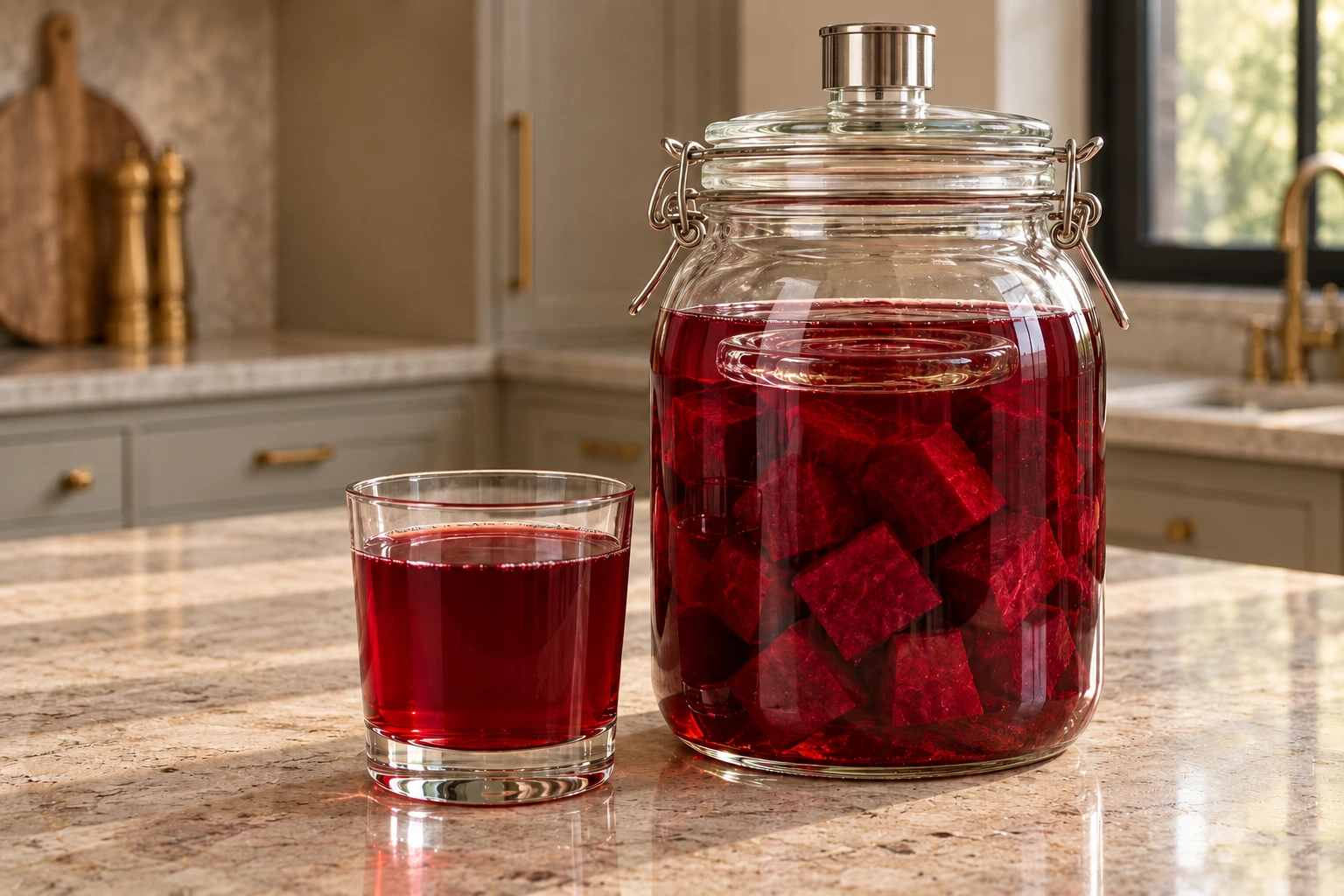
This plain beet kvass uses only three medium beets, mineral salt, and filtered water. There is no whey, sauerkraut brine, fruit, sweetener, onion, cabbage, or seasoning. The result is a deep ruby fermented drink with an earthy beet flavor and a clean tart finish.
The simple ingredient list makes technique especially important. Large beet chunks stay under the liquid, a pressure-aware closure releases fermentation gas, and flavor-not a rigid calendar or taut lid-tells you when the kvass is ready for the refrigerator.
In our family of eight, ferments are easier to keep in the routine when every jar has one clear identity. This is the plain two-quart beet version. Raspberry, strawberry, ginger-garlic, and starter-culture kvass belong in their own posts because their measurements and fermentation paths are different.
GAPS Placement: Full GAPS; on Intro Stage 1 use only strained liquid and begin gradually with 1 to 2 teaspoons
Prep Time: 5 minutes
Fermentation: Begin checking around day 4 or 5; continue until pleasantly tart
Yield: About 2 quarts
What Plain Beet Kvass Tastes Like
The finished liquid is earthy, salty, and sour rather than sweet. Its color deepens from bright beet red to a translucent ruby as the jar ferments. The sourness should be pleasant enough to sip in a small serving, without a rotten, putrid, or harsh chemical smell.
This version tastes more savory than fruit kvass. That is useful when you want a plain ferment whose beet, salt, and sour notes can stand beside meals without competing with them.
Cut Large Beet Chunks
Scrub three medium beets and cut them into pieces about one inch across. Do not grate them or dice them finely. Large chunks are the measured preparation for this formula and are easier to keep below a fermentation weight.
Place the beet chunks in a clean two-quart wide-mouth glass vessel. The vessel needs enough room for all three beets, the water, a glass weight, and about two inches of headspace.
Prepare A Clean Fermentation Setup
Wash the vessel, weight, closure, knife, and cutting board before you begin. Rinse away soap residue and let the equipment drain. A clean setup does not mean sterilizing the vegetables or adding a commercial culture; it means removing old food residue and giving this measured beet-and-salt ferment a clear start.
Choose the weight and closure before the beets enter the jar. The weight must fit through the opening and sit broad enough across the beet pieces to hold them below the liquid. The closure must fit the vessel and release gas on its own. Solving those two details before filling prevents an improvised object or rigid lid from becoming part of the ferment later.
Add Salt And Filtered Water
Add two tablespoons mineral salt. Fill the vessel with filtered water while leaving about two inches below the rim. Stir or gently move the jar only until the salt has dispersed; do not add whey or another starter.
Filtered water matters because this formula depends on fermentation. Use the water source you already rely on for ferments and avoid adding a flavored liquid that would turn this into a different kvass.
Keep Every Beet Below The Brine
Set a clean glass, ceramic, or uncoated stainless fermentation weight over the beet chunks. Every solid should remain below the liquid. A beet corner sticking into the air is a cue to adjust the weight before fermentation continues.
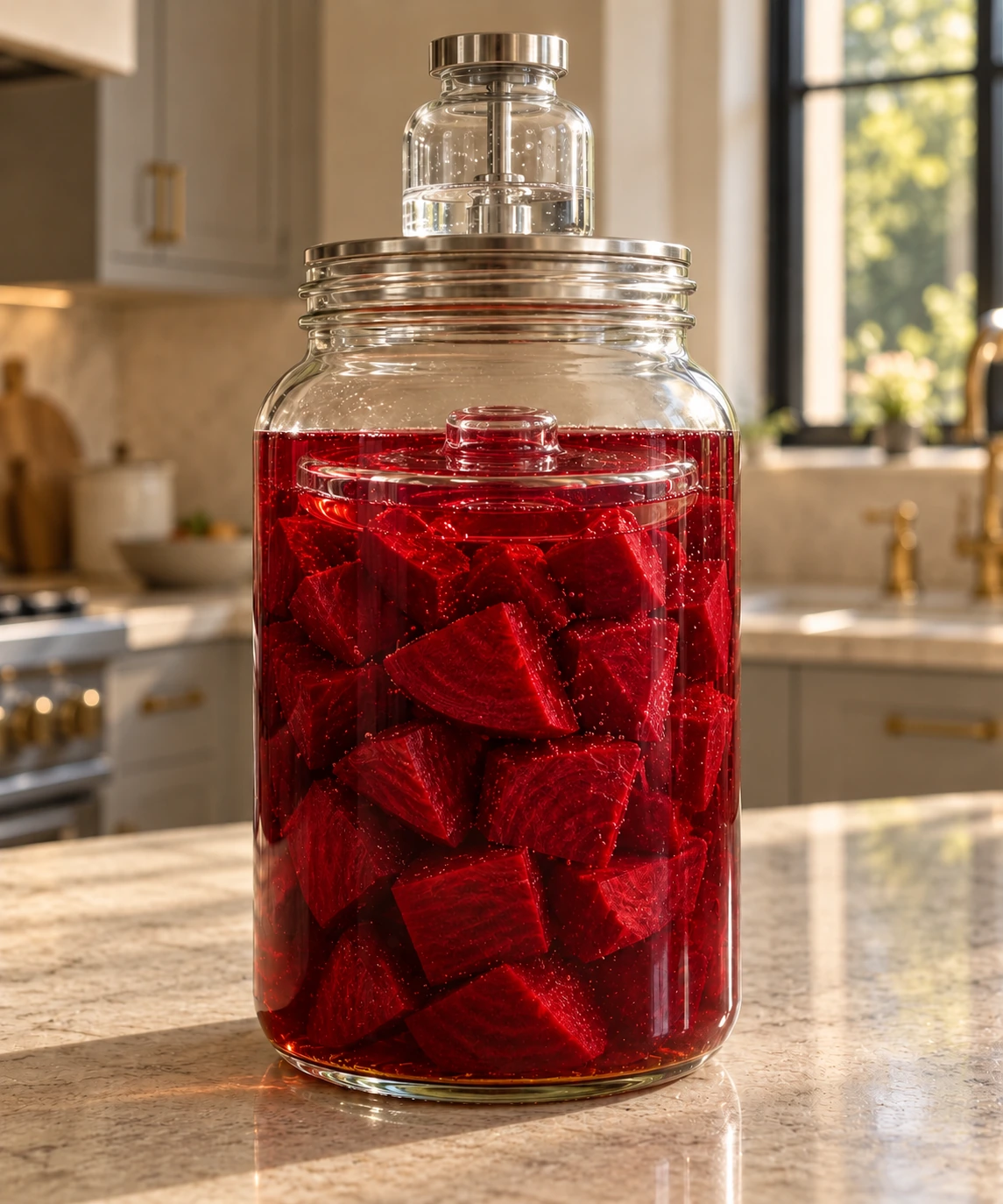
Fit the vessel with an airlock or another clean self-venting, pressure-aware closure. Fermentation creates gas. The closure must release pressure without routine opening, and the jar should remain out of direct sunlight at room temperature.
Place the jar where it can stand undisturbed but still be checked easily. A tray beneath the vessel can catch an accidental overflow without touching the food. Keep the jar away from direct sun, a hot range, a cold draft, or another spot where the temperature swings sharply through the day.
Do not push the weight down with a hand once fermentation is underway. If a solid escapes, use a clean supported utensil or clean tongs to reposition the weight, then restore the pressure-aware closure. The goal is full submersion with as little unnecessary opening as possible.
Use Flavor As The Endpoint
Begin checking around day four or five. The calendar tells you when to start observing, not when every kitchen must stop. Temperature, beet size, and the activity of the jar change the pace.
Look for a deeper ruby color, small signs of fermentation activity, and an aroma that is earthy and sour. Taste with a clean utensil. Refrigerate when the liquid tastes pleasantly tart. Do not use a taut lid, stopped bubbling, or daily burping as the completion rule.
A warmer room may move through the source window quickly; a cooler room may take longer. More or fewer bubbles do not make the calendar more reliable than flavor. Check the weight and liquid level visually, then use a small clean sample to judge the change from salty beet water to a balanced sour ferment.
Fuzzy growth, putrid odor, or a color that is clearly unrelated to the deepening beet red is not the pleasantly tart endpoint. Do not stir questionable surface growth into the drink or use a health claim to explain it away. A jar that fails the sensory check is not ready for this recipe’s refrigerator step.
Strain And Refrigerate
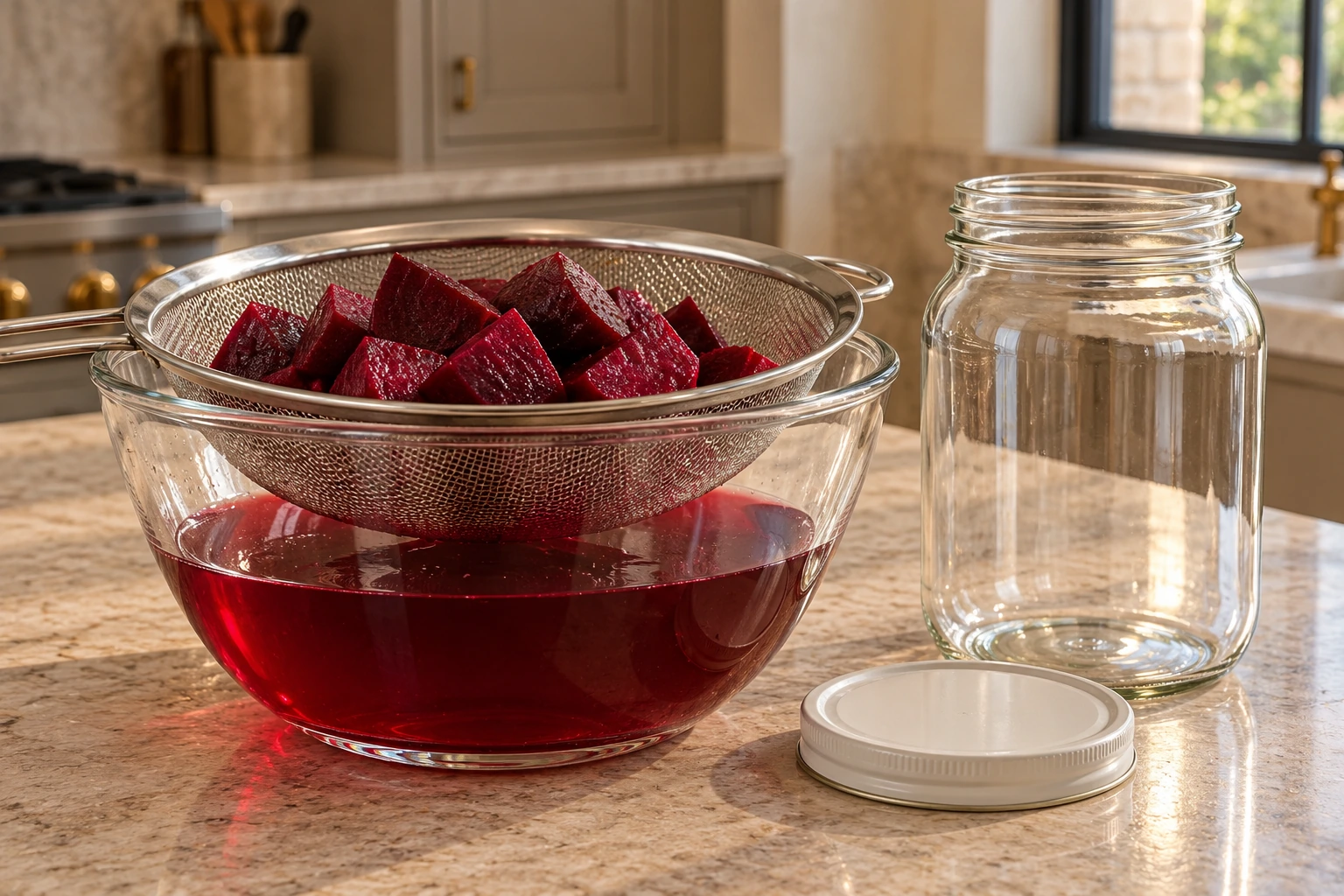
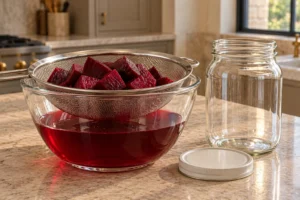
When the flavor is ready, lift out the weight and strain the kvass through a fine uncoated stainless-steel strainer securely nested over a glass bowl. Transfer the strained liquid to a clean glass jar, cover it, and refrigerate.
This card ends after the first measured batch. Reusing the beets with an unmeasured refill or adding a second-batch starter would create another formula and is not folded into this post.
Plain Beet Kvass Without Whey for Full GAPS
Ingredients
Equipment
Method
- Place the roughly 1-inch beet chunks in a clean wide-mouth glass fermentation vessel sized to the batch.
- Add the mineral salt, then add filtered water while leaving about 2 inches of headspace. Disperse the salt without adding whey or another starter.
- Set a clean glass, ceramic, or uncoated stainless fermentation weight over the beets so every solid remains below the liquid.
- Fit an airlock or another self-venting, pressure-aware closure. Ferment at room temperature out of direct sunlight.
- Begin checking around day 4 or 5. Continue until the liquid is deep ruby and tastes pleasantly tart. Use flavor as the endpoint rather than a taut lid, stopped gas, or routine burping.
- Remove the weight, strain through a fine stainless-steel strainer securely nested over a glass bowl, transfer to a clean glass jar, cover, and refrigerate.
Notes
- Full GAPS: Use once plain beet kvass is introduced and tolerated.
- Intro Stage 1: Use only strained fermented liquid, beginning gradually with 1 to 2 teaspoons.
- Fermentation time: Begin checking around day 4 or 5 and continue until pleasantly tart. Fermentation time is not cook time.
- Storage: Keep covered and refrigerated. The source does not provide a verified duration.
- Yield: This recipe makes about two quarts (eight cups). A doubled batch makes about four quarts (sixteen cups).
- Scaling: Use a vessel large enough for the scaled solids, liquid, weight, and headspace. Do not crowd a 2x batch into one two-quart jar.
Tried this recipe?
Let us know how it was!The Physical Cues That Matter
The pieces are large. Roughly one-inch beet chunks belong in this jar, not shreds or tiny dice.
The solids stay submerged. The weight sits below the liquid and keeps every beet corner away from surface air.
The closure releases pressure. Use an airlock or another self-venting, pressure-aware system rather than a rigid jar opened on a schedule.
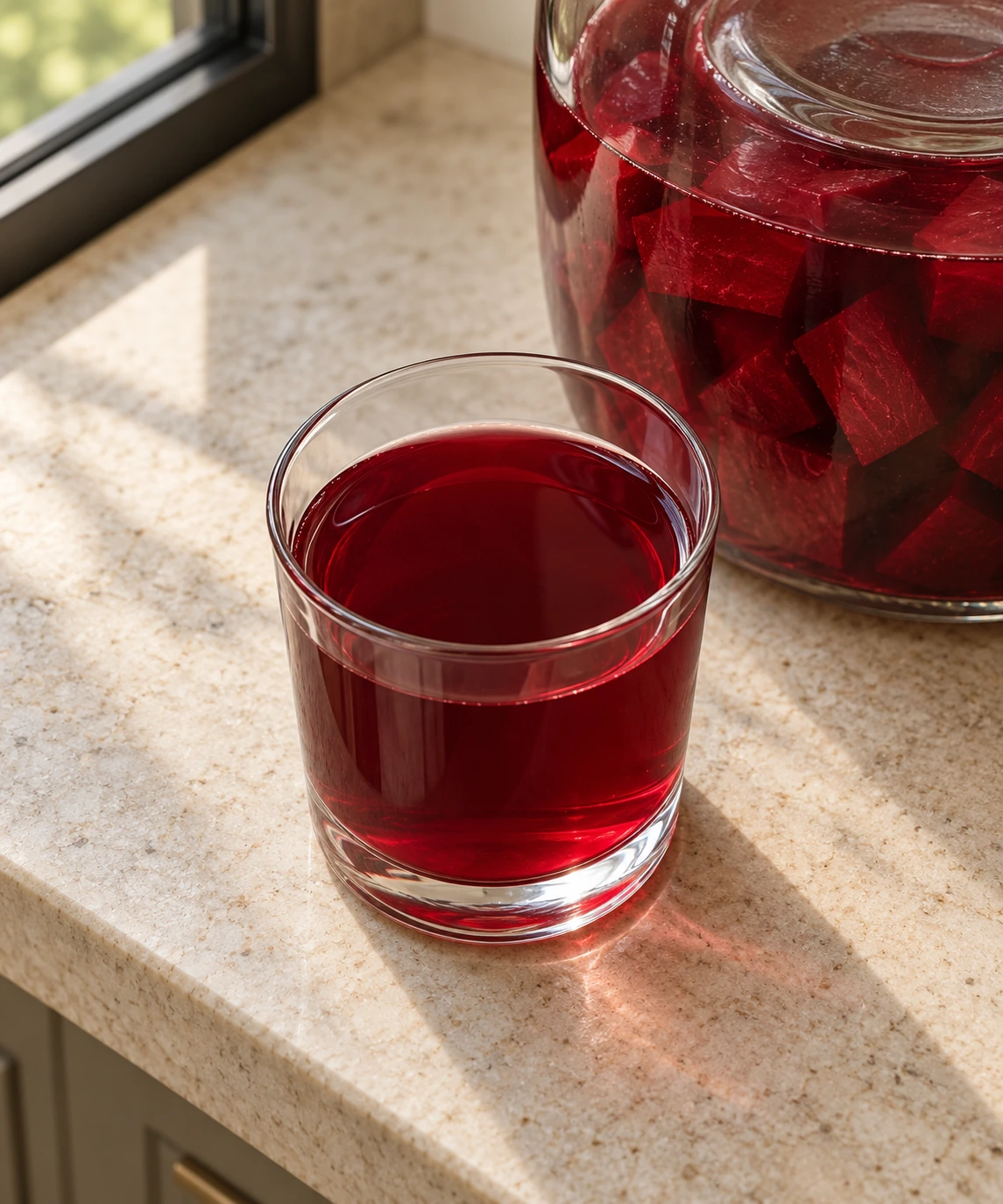
The color deepens. The liquid becomes a clear, saturated ruby as beet color moves into the brine.
The flavor becomes pleasantly tart. Sour taste is the endpoint; the date only tells you when to begin checking.
Full GAPS And Intro Stage 1
The complete drink belongs on Full GAPS once beet kvass is introduced and tolerated. This is a fermented vegetable liquid, and the finished jar remains distinct from unfermented beet juice or a fruit-sweetened kvass.
On Introduction Diet Stage 1, use only the strained fermented liquid and introduce it gradually at 1 to 2 teaspoons at a time. That is an introduction amount, not the Full GAPS serving size. Keep the beet solids out of the Stage 1 portion.
This post describes food preparation and stage placement. It does not turn beet kvass into a liver tonic, detox treatment, electrolyte therapy, probiotic cure, cancer treatment, or medical intervention.
Serving And Storage
Serve the kvass cold in a small glass or use a measured splash with a meal. Its savory tartness works best as a fermented drink rather than a sweet beverage.
Stirring in fruit, honey, herbs, citrus, or another starter at serving time makes the drink harder to compare with the plain batch you just fermented. Taste this version on its own first. When you want a flavored kvass, use the separately measured raspberry, strawberry, or ginger-garlic formula so its ingredient order, ferment window, and refrigerator instructions remain clear.
Keep the strained kvass covered and refrigerated. This exact source formula does not supply a refrigerator duration, so this post does not invent one. Use clean glassware and utensils and assess aroma, appearance, and flavor each time.
Frequently Asked Questions
Does Plain Beet Kvass Need Whey?
No. This formula uses three medium beets, two tablespoons mineral salt, and filtered water only.
Why Should I Not Grate The Beets?
Large one-inch chunks preserve the exact preparation and are easier to keep submerged under a fermentation weight.
Do I Need To Burp The Jar?
Use an airlock or another self-venting, pressure-aware closure. Routine opening is not the controlling technique.
When Is The Kvass Ready?
Begin checking around day four or five and refrigerate when the liquid tastes pleasantly tart. Room temperature changes the timing.
What If A Beet Floats Above The Liquid?
Adjust the clean fermentation weight so every solid returns below the brine. Submersion is a core fermentation control.
Can I Add Fruit Or Ginger?
Not to this formula. Raspberry, strawberry, and ginger-garlic kvass have separate measured recipes and posts.
Can I Refill The Jar For A Second Batch?
This card covers one measured first batch. A refill changes the measured liquid and starter relationship, so it belongs in a separate formula.
Recommended Equipment
Use a clean two-quart wide-mouth glass fermentation vessel, a glass, ceramic, or uncoated stainless fermentation weight, an unbranded pressure-aware airlock or self-venting closure, a stable cutting board, a sharp stainless-steel knife, a fine stainless strainer, a wide glass bowl, and a clean glass refrigerator jar.
Choose equipment by function: the weight must keep solids down, the closure must release gas, and the strainer must rest securely over the bowl without being held in midair.
Build A Reliable Fermentation Routine
The upcoming Crock & Jar: Ferments for GAPS Families course is the most useful companion for this recipe. It brings vessel setup, submersion, salt, temperature, surface changes, pressure-aware closures, and sensory endpoints into one repeatable kitchen system. Check the WFLI shop for the course and current fermentation guides.

Leave a comment