

This ginger-garlic beet kvass is the savory branch of the series: large beet quarters ferment with five garlic cloves and one inch fresh ginger, with optional lemon juice and optional finished-kvass inoculation. There is no fruit or sweetener.
The formula gives two separate salting methods. Use one and only one: add one and one-half tablespoons mineral salt directly to the jar, or fill with a separately prepared 2 percent mineral-salt brine by water weight. Combining them would oversalt the ferment.
In our family of eight, this is the jar I would label most clearly because it looks like plain beet kvass but tastes much more aromatic. The garlic and ginger stay in the primary ferment and are strained out before refrigeration.

GAPS Placement: Full GAPS; on Intro Stage 1 use only strained fermented liquid and begin gradually with 1 to 2 teaspoons
Fermentation: Begin checking around day 3; continue through the 7-to-10-day source window until pleasantly tart
Yield: The source does not state a finished yield
What Ginger-Garlic Beet Kvass Tastes Like
The finished drink is earthy, salty, sour, and savory. Garlic gives it a rounded allium aroma, while ginger adds fresh warmth. Optional lemon juice brightens the jar without changing it into a fruit kvass.
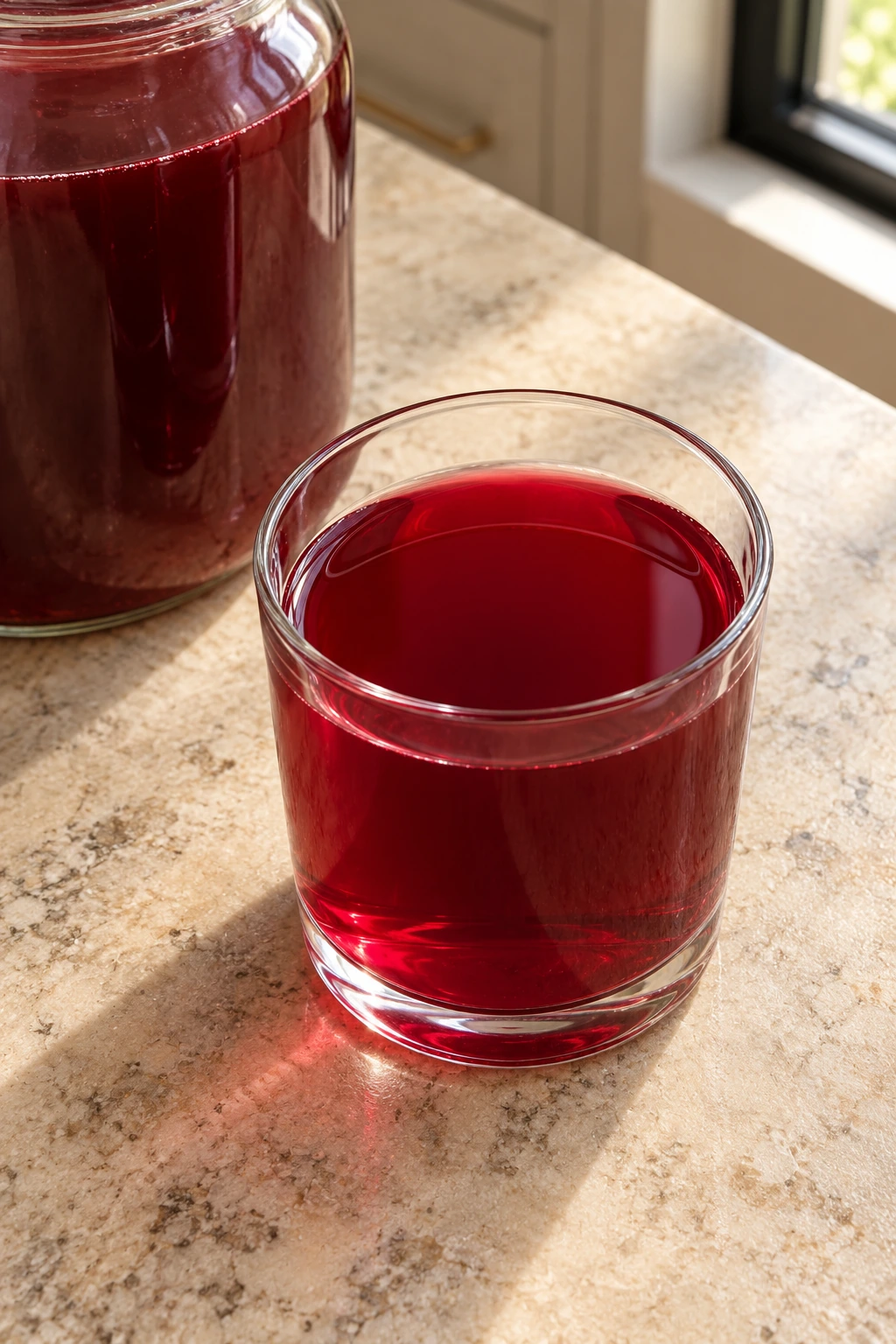
The liquid is a clear deep ruby after straining. It does not contain berry pulp, sweetness, or visible solids. Choose raspberry or strawberry beet kvass when you want a fruit finish.
For whole berries in clear kvass, use the separate raspberry beet kvass. For a blended rosy drink, use strawberry beet kvass. Those recipes keep their own starters, fruit amounts, and finishing order instead of treating garlic and ginger as interchangeable flavor add-ins.
Prepare Large Beet Quarters
Use three fist-size red beets and quarter them. These are much larger pieces than the one-inch cubes used in the plain and fruit formulas. Place the quarters in a clean glass fermentation vessel sized to the batch.
Add five peeled whole garlic cloves and one inch peeled fresh ginger cut into a few pieces. Add the juice of one lemon if using it. The photographed branch includes lemon juice but omits the optional dash of completed kvass.
Prepare The Vessel Before Mixing Salt
Wash the fermentation vessel, weight, closure, knife, board, strainer, bowl, and refrigerator jar before beginning. Rinse away residue and let the equipment drain. Choose a weight broad enough to hold the large beet quarters as well as the smaller garlic and ginger pieces below the liquid.
The vessel must have room for the measured solids, whichever salt-and-water branch you choose, the weight, and headspace. Set out the closure before filling so the pressure-aware system can be fitted as soon as every solid is submerged.
Choose One Salting Method
For the dry-salt method, add one and one-half tablespoons mineral salt to the solids, then fill with filtered water. For the brine method, prepare a separate 2 percent mineral-salt brine by the weight of the water and use that brine to fill the vessel.
Do not add the dry salt and then pour in the 2 percent brine. They are alternative ways to salt the same formula. At 2x, the dry salt doubles, while the brine remains 2 percent because a concentration does not double.
For the percentage branch, weigh the water you will actually use and calculate mineral salt at 2 percent of that water weight. A kitchen scale is part of that method. Do not estimate 2 percent with an arbitrary spoon amount, because the water volume depends on the vessel and displacement from the large beet quarters.
Understand The Optional Inoculation
The formula permits one dash of completed beet kvass as optional inoculation. The source does not measure that dash, so this article does not invent a teaspoon or tablespoon value. Omit it when you want the photographed branch.
If using it, add one dash per fermentation vessel. It does not replace the selected salting method and does not convert the batch into a different starter-culture formula.
Because the dash is intentionally unmeasured, it must stay a minor inoculation rather than becoming a pour. When scaling to two fermentation vessels, each vessel may receive its own dash. Omit it completely when you want the photographed no-inoculation branch.
Submerge Every Solid
Add filtered water according to the selected salt branch. Set a clean glass, ceramic, or uncoated stainless weight over the beet quarters, garlic, and ginger. Every solid must remain below the liquid.
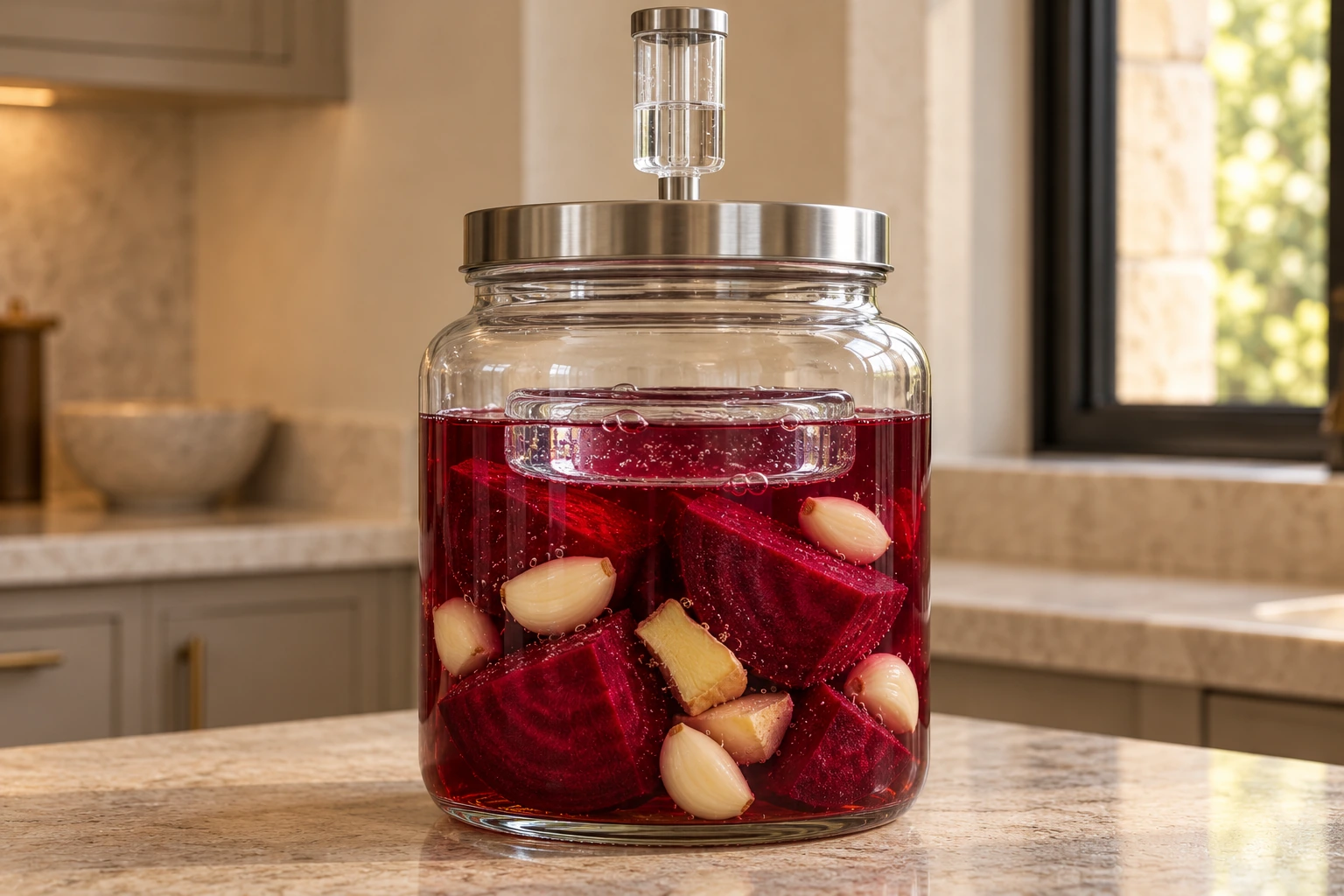
Fit an airlock or another self-venting, pressure-aware closure. Ferment at room temperature out of direct sunlight. Do not use a rigid lid that depends on routine burping.
Begin Checking Around Day Three
The source tells you to begin checking around day three and gives a broader seven-to-ten-day window. Treat those numbers as observation points. Room temperature and the activity of the jar change the pace.
The liquid should deepen to ruby and develop a clean sour aroma. Taste with a clean utensil and refrigerate when it is pleasantly tart. A taut lid, stopped bubbling, or a fixed date does not control the endpoint.
Keep the weight and liquid level under observation. Fuzzy growth, putrid odor, or an unrelated surface color is not the sour endpoint and should not be stirred into the drink.
Let Temperature Change Time, Not Salt
Keep the vessel away from direct sun, a hot range, cold draft, or another place with sharp temperature swings. A warmer room may move through the source window faster; a cooler room may need more time. Keep the selected salt method and every ingredient measure unchanged.
Visible bubbles help you notice activity, but they do not overrule flavor. The jar can bubble before it tastes ready, and visible activity can slow while acidity continues to develop. Begin tasting around day three and let a clean pleasantly tart result decide when the ferment moves to refrigeration.
Strain And Refrigerate
Remove the weight. Strain the kvass through a fine uncoated stainless strainer securely nested over a wide glass bowl. Leave the beet quarters, five garlic cloves, and ginger pieces behind.
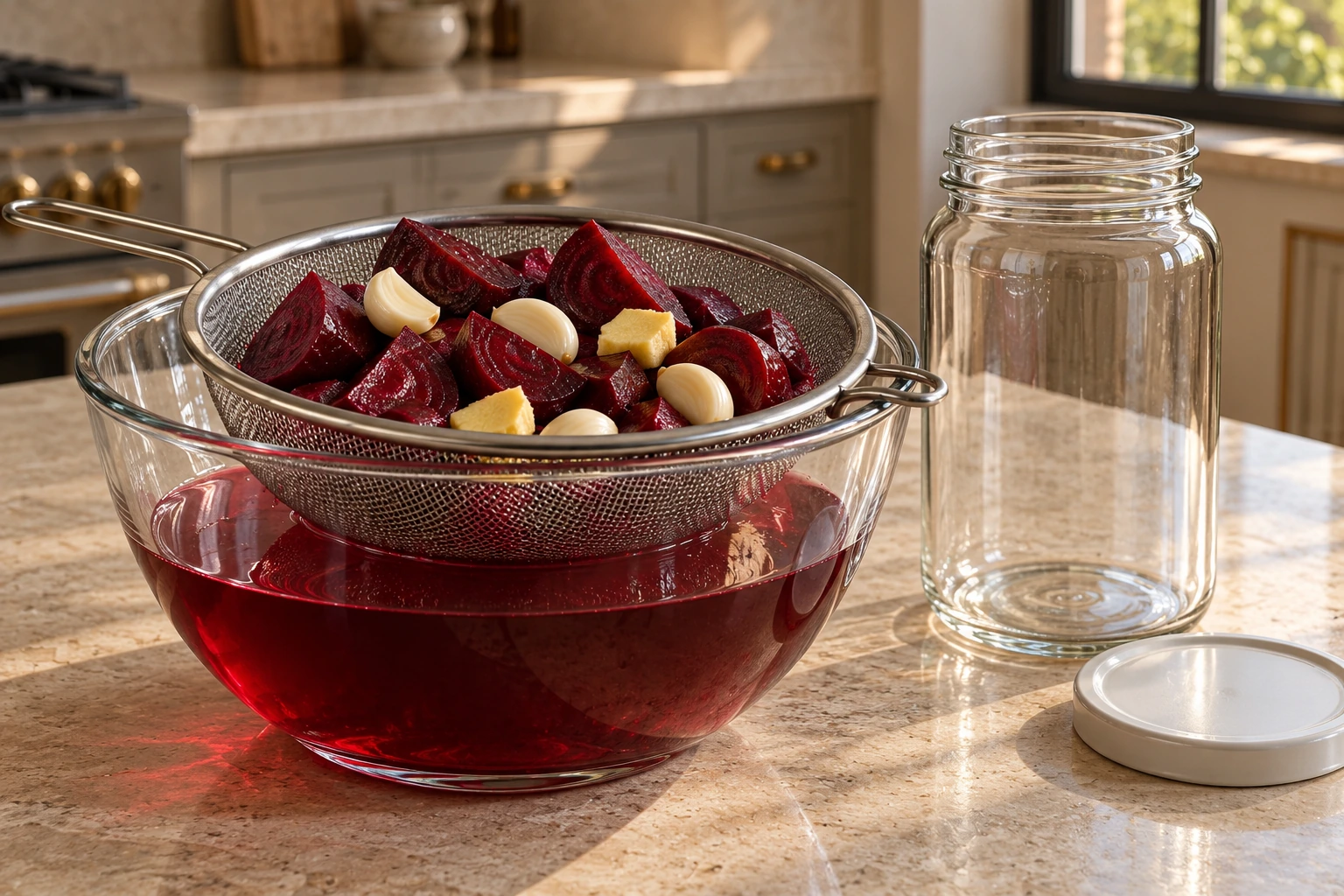
Transfer the liquid to a clean glass jar, cover, and refrigerate. The source does not provide a finished yield or refrigerator duration, so this post does not invent either one.
Ginger-Garlic Beet Kvass for Full GAPS
Ingredients
Equipment
Method
- Place the quartered beets, garlic, ginger, optional lemon juice, and optional dash of completed beet kvass in a clean glass vessel sized to the batch.
- Choose one salting method: add the measured dry mineral salt and fill with filtered water, OR prepare a separate 2 percent mineral-salt brine by water weight and fill with that. Do not combine methods.
- Set a clean fermentation weight over the beet, garlic, and ginger so every solid remains below the liquid.
- Fit a pressure-aware airlock or self-venting closure and ferment at room temperature out of direct sunlight.
- Begin checking around day 3 and continue through the 7-to-10-day window until the kvass tastes pleasantly tart.
- Remove the weight, strain through a securely nested fine stainless strainer, transfer to a clean glass jar, cover, and refrigerate.
Notes
- Full GAPS: Use after selected ingredients are introduced and tolerated.
- Intro Stage 1: Use only strained fermented liquid, beginning with 1 to 2 teaspoons.
- Salting: Use dry salt OR 2 percent brine; never both. At 2x, dry salt doubles while brine remains 2 percent by water weight.
- Fermentation: Begin checking day 3; continue through 7 to 10 days until pleasantly tart.
- Yield and storage: Source does not state a yield or refrigerator duration.
- Scaling: One batch uses one appropriately sized vessel. A 2x batch is two batches; use two vessels or one vessel sized for all solids, liquid, weight, and headspace.
Tried this recipe?
Let us know how it was!The Physical Cues That Matter
The beets are quartered. Keep the large source cut rather than converting the formula to cubes or shreds.
Only one salt method is used. Choose dry salt or 2 percent brine, never both.
All solids stay submerged. Beet, garlic, and ginger remain below the clean weight.
The closure releases pressure. Use an airlock or another pressure-aware system without routine opening.
Pleasant tartness is the endpoint. Begin checking around day three and continue as needed within the source window.
Full GAPS And Intro Stage 1
The complete ginger-garlic drink belongs on Full GAPS after beet kvass, garlic, ginger, the selected salting method, and any optional lemon or inoculation are introduced and tolerated.
On Intro Stage 1, use only strained fermented liquid and begin gradually with 1 to 2 teaspoons. Keep beet, garlic, and ginger solids out of the Stage 1 portion.
This recipe does not claim that beet kvass detoxifies, treats the liver, balances electrolytes, reduces inflammation, cures digestive symptoms, or provides a medical result.
Serving And Storage
Serve the strained kvass cold in a small glass. Its savory garlic-ginger profile fits beside a meal better than it fits as a sweet drink. Serve a small portion first so the strong aromatic profile does not overwhelm the rest of the plate.
Keep it covered and refrigerated. Because the source provides no refrigerator duration, assess aroma, appearance, and flavor each time and use clean glassware. Label the preparation date without turning it into an invented storage deadline.
Pour from the jar or use a clean ladle rather than drinking directly from the storage container. Return the covered jar promptly to the refrigerator after every pour so its temperature remains steady. Those habits protect the finished batch without adding a preservation claim or a guessed refrigerator deadline the source does not make.
Frequently Asked Questions
Should I Use Dry Salt Or 2 Percent Brine?
Choose one method. Use one and one-half tablespoons dry mineral salt, or prepare a separate 2 percent brine by water weight.
Is Lemon Juice Required?
No. Juice of one lemon is optional. The photographed branch includes it.
Do I Need Completed Beet Kvass As A Starter?
No. One unmeasured dash is optional inoculation. The photographed branch omits it.
How Long Does It Ferment?
Begin checking around day three and continue through the seven-to-ten-day window until pleasantly tart.
Why Are The Beets Quartered?
Quartering is the accepted cut for this formula and distinguishes it from the cubed kvass posts.
Can I Add Fruit Or Sweetener?
No. This is the savory ginger-garlic formula. Fruit kvass has separate measurements and posts.
How Long Does It Keep?
The source does not give a verified duration. Keep it covered and refrigerated and assess it before serving.
Recommended Equipment
Use a clean wide-mouth glass fermentation vessel sized to the batch, a glass, ceramic, or uncoated stainless weight, a pressure-aware airlock or self-venting closure, a scale when preparing 2 percent brine, a stainless knife and stable board, a fine stainless strainer nested over a glass bowl, and a clean glass refrigerator jar.
Build A Reliable Fermentation Routine
The upcoming Crock & Jar: Ferments for GAPS Families course brings salt calculations, starter choices, submersion, pressure-aware closures, temperature, surface changes, and sensory endpoints into one repeatable kitchen system. Check the WFLI shop for the course and current fermentation guides.

Leave a comment