

This small batch sauerkraut uses one cabbage and gives it a four-hour rest after packing. That pause lets the salted shreds release more juice before you press them down again and fit the lid. The finished kraut is sour, juicy, and pleasantly crunchy, with no vinegar, whey, or added sugar.
The four hours are part of the preparation, not the whole fermentation. Plan ahead for roughly one week to a month before the cabbage reaches the GAPS finishing cues. The useful part of this method is that the second pressing happens after the salt has had more time to draw moisture out.
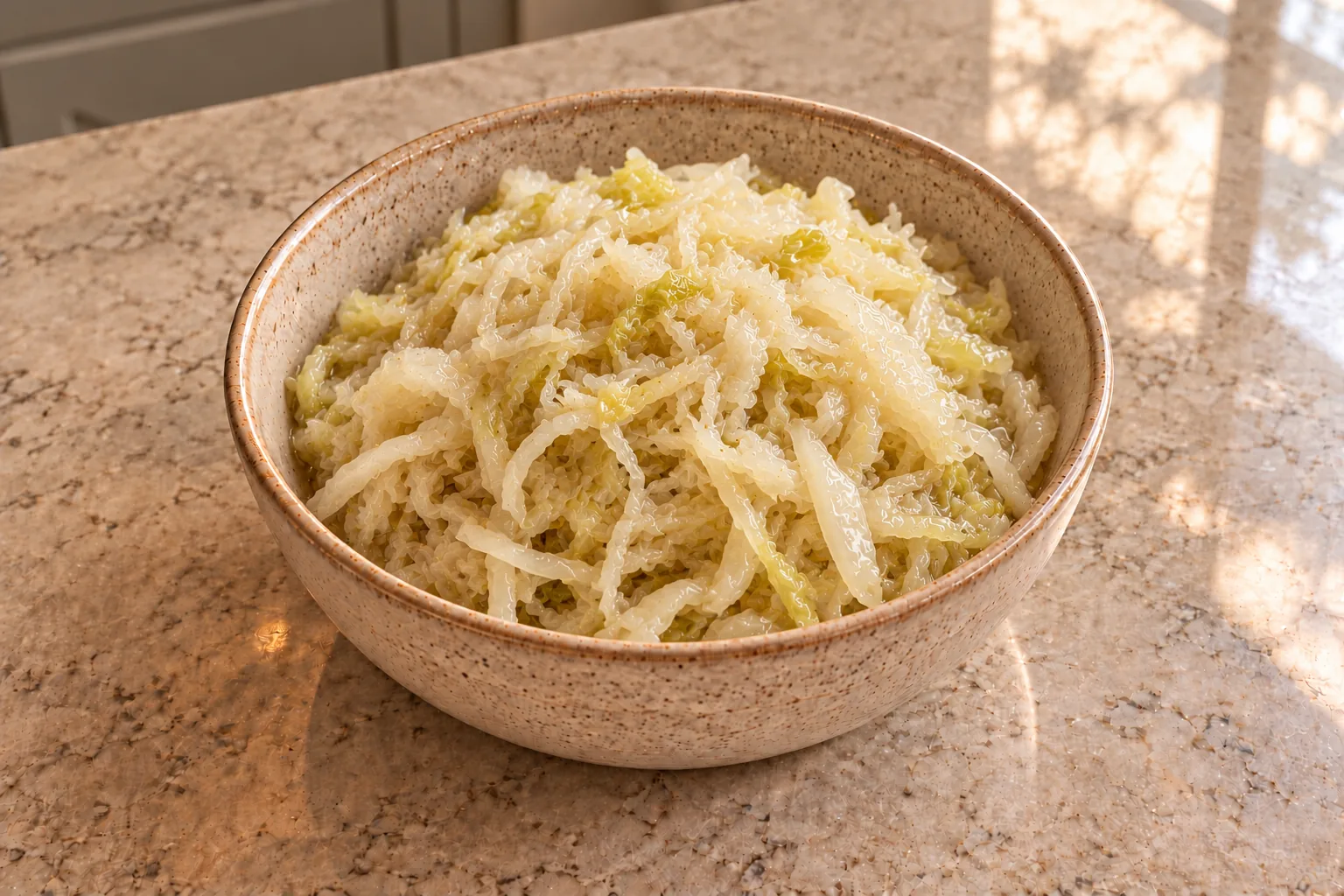
I make sauerkraut and kimchi at home, and I also know what a busy stretch of family meals feels like. With six children, homeschooling, and work, there is a place for a smaller batch that fits the jar space you have. You do not have to fill a crock to begin. One cabbage lets you work through the preparation without turning the whole counter into a line of jars.
One Cabbage, A Small Batch
Start with a head of green cabbage weighing about two pounds before trimming. Remove wilted or damaged outer leaves, then reserve one clean whole leaf. Cut away the hard core and shred the remaining cabbage into thin pieces. You can do this with a knife on a stable cutting board. A sharp knife gives you control over the cut without turning the cabbage into a puree.
Use one and a half tablespoons of plain, noniodized mineral sea salt. Mix it through the shreds so you do not leave a salty pocket in the bottom of the bowl. This is a measured spoon-based recipe. If you are making another sauerkraut by the weight of its vegetables, follow that recipe’s measurements all the way through instead of combining the two.
The reserved leaf comes from the same head; you are not buying a second cabbage for it. It will lie over the little shreds in the jar and help hold them together beneath the liquid. Set it aside clean while you work the rest of the cabbage.
The Jar And Other Tools
Have a clean wide-mouth quart glass jar ready, plus a large glass bowl, your knife and board, and a clean dish towel. A fermentation weight helps hold the cabbage down. A small clean glass jar that fits the opening can also work as a weight when used in a suitable lid arrangement. Keep the food-contact surfaces clean.
A quart jar is the starting vessel for this small batch, but the usable space is smaller than its full capacity. Leave about two inches at the top for the leaf, weight, liquid, and fermentation activity. If your prepared cabbage does not fit with that room left clear, use another small jar or a larger jar. Keep all the cabbage and its juice; simply give them enough space.
How To Make It
Knead The Salt Into The Cabbage
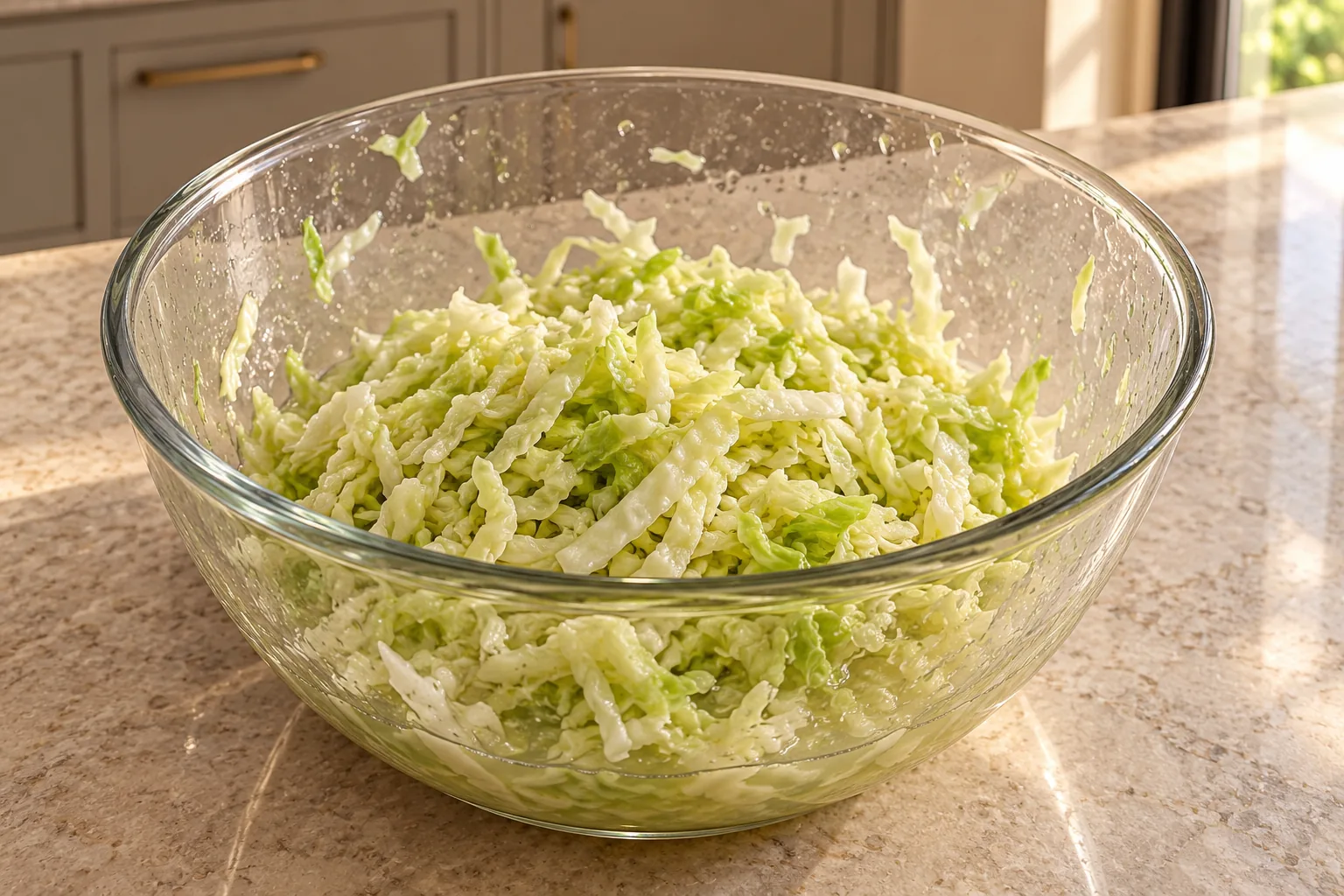
Put the shredded cabbage and salt in the bowl. With clean hands, massage and squeeze for about two to three minutes, working from the bottom as well as the top. The shreds should become more flexible and wet. When you squeeze a handful, juice should come out rather than the leaves simply springing back.
Look for liquid collecting beneath the cabbage. It will be pale and slightly cloudy, with a fresh cabbage smell. This is the liquid you want to carry into the jar. You are bruising the leaves to release their moisture, not washing that juice away.
Pack, Cover, And Rest For Four Hours
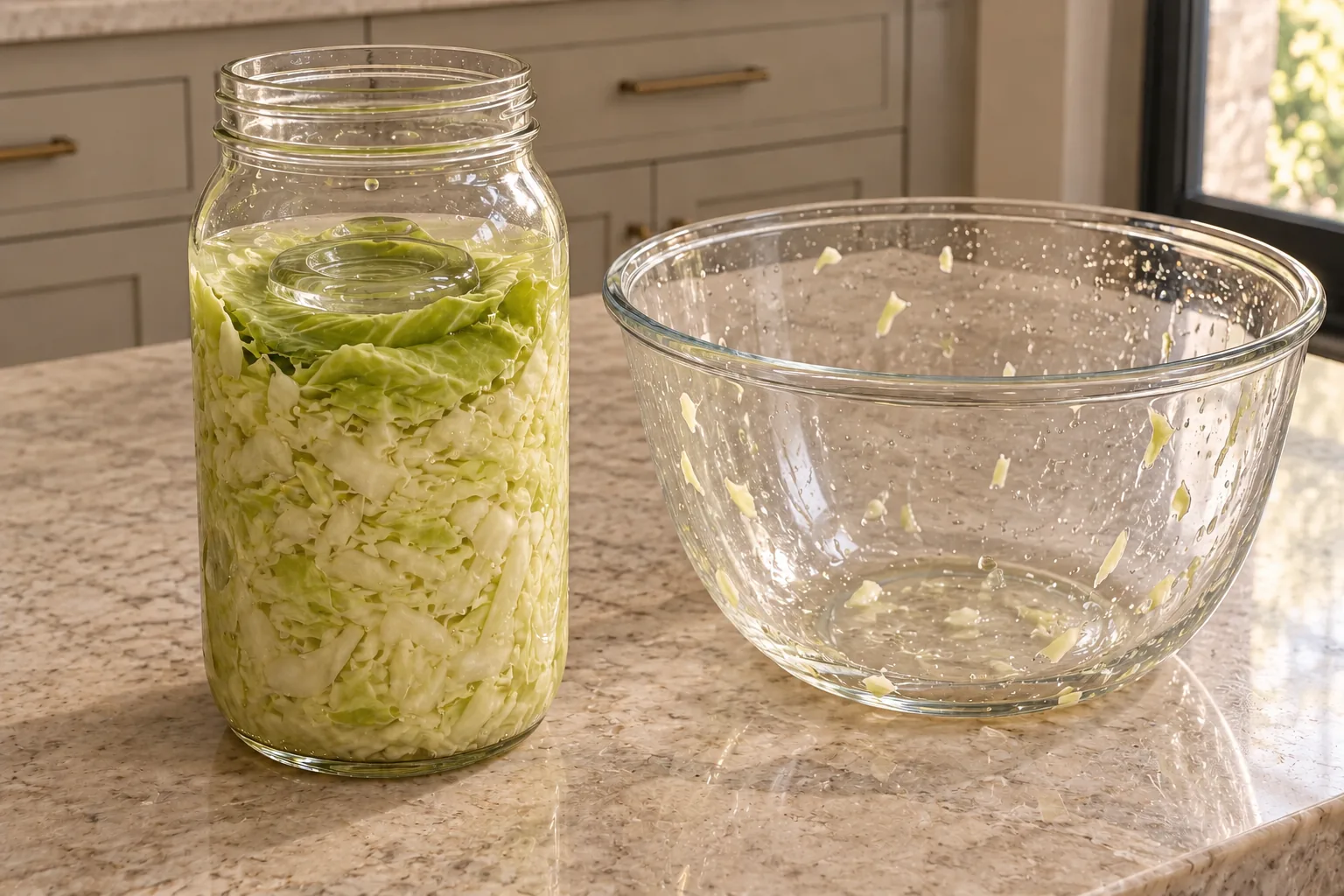
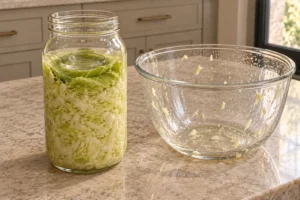
Pack the cabbage firmly into the glass jar, including every bit of juice from the bowl. Press down in layers to close large air gaps. Fold the reserved cabbage leaf over the shreds and keep the cabbage beneath its liquid with the weight if needed.
Cover the jar with the clean dish towel and leave it for at least four hours. This is the distinctive pause in this recipe: the cabbage is already in the jar. The towel is a temporary cover during that rest. It is not the lid used for the rest of the fermentation.
Press Again And Fit The Lid
After the rest, remove the towel and press the cabbage down once more. More liquid may have collected around the shreds. Look through the side of the glass: the cabbage and folded leaf should sit beneath the liquid, with room still left above it. A wet leaf poking into the air needs to be pressed back under.
Keep a fermentation weight in place so the packed cabbage stays down. If pressing still leaves the vegetables uncovered, add only a little filtered water as needed for submersion. The goal is to cover the food, not fill the headspace. Keep the juice from the jar rather than pouring it off.
Fit a lid that allows fermentation gas to escape. With an ordinary screw lid, briefly loosen it daily during the first few days to release pressure, then close it again. Continue checking as the activity slows. An airlock is another option; use it according to its instructions. Keep the jar out of direct sunlight and away from a heat source.
Let The Fermentation Finish
The cabbage will gradually change from salty and fresh-tasting to distinctly sour. Bubbles may appear while it is active, and the shreds become softer. Sandor Katz’s The Art of Fermentation explains why submersion and pressure release belong together: the vegetables stay beneath liquid while the gas from fermentation needs an escape route.
For GAPS, Dr. Natasha Campbell-McBride gives two finishing cues: a sharp acidic taste and no more gas production. Allow roughly one week to a month, depending on the room temperature. The four-hour rest, and even the first few days of bubbles, are not a reason to call it finished early. Refrigerate once it has reached those cues.
Where It Fits On GAPS
Solid sauerkraut begins at Intro Stage 3, starting with a small amount and gradually increasing toward one to two tablespoons with a meal. It continues through later Intro stages and Full GAPS. This plain cabbage recipe contains no dairy, eggs, nuts, honey, or spices.
Earlier Intro uses only the juice from the completed ferment. GAPS begins probiotic foods at one to two teaspoons a day for two to five days and then increases gradually. Add the juice to homemade chicken meat stock or soup after the food is no longer very hot. Save the fibrous cabbage itself for Stage 3.
If you prefer a larger batch, homemade green sauerkraut uses two heads and a short salted bowl rest before pounding. Red cabbage sauerkraut has its own one-hour jar wilt and a different salt amount. For small chopped pieces with a 30-minute bowl rest, try chopped sauerkraut with Himalayan salt. These are separate methods, so choose one set of directions rather than mixing their timing and salt measurements.
Serving And Refrigerating The Kraut
Keep the finished kraut covered in the refrigerator with its brine. Lift out a portion with a clean utensil and keep the remaining cabbage below the liquid. Cold slows fermentation, but the cabbage can keep becoming more sour and softer over time.
At a Full GAPS meal, a small spoonful brings a sharp contrast to homemade sausage links or other cooked meat. Add it when serving rather than leaving the raw kraut in the hot pan. You can also stir a small amount through food on the plate if that makes the sourness easier to enjoy.
For a salad, let the portion you lift out drain briefly over the jar. That keeps the salad from becoming watery while leaving the brine with the stored cabbage. If the remaining amount is awkward to keep submerged in the original jar, move it into a smaller clean glass jar with its liquid.
Frequently Asked Questions
Is This Ready After Four Hours?
No. Four hours is the packed-jar rest before the second pressing and lid fitting. Fermentation still takes much longer. Look for sharp acidity and stopped gas production before refrigeration, with roughly one week to a month allowed in your planning.
What If The Cabbage Does Not Fit?
Use another jar or a larger one. The cabbage head’s size, trimming, and packing affect the volume. Keep the salt mixed evenly through the whole batch, then divide the cabbage and juice. Leave the same headspace in every jar.
Can I Leave The Towel On Instead Of Using A Lid?
In this method the towel covers only the initial four-hour rest. After pressing again, use the fermentation lid arrangement described in the directions. Keep the vegetables submerged and give the gas a way to escape.
Does This Need Whey?
No. The recipe uses cabbage, mineral salt, and a little filtered water only if the natural juice does not cover the packed vegetables. There is no dairy starter to make or add.
Can I Make Twice As Much?
Yes. Use the card’s 2× setting to double the cabbage, salt, and reserved cover leaf. Work in a larger bowl or two bowls, then pack into enough jars to keep the same headspace. Keep the four-hour rest; making a bigger batch does not turn it into an eight-hour requirement.
More Ferments For Family Meals
The planned Kid-Friendly Ferments Recipe Card Deck will bring together fermented foods to rotate through family meals. Check the WFLI shop for current and upcoming resources. For this jar, choose a preparation time that lets you return after the four-hour rest to press the cabbage and fit its lid.
Small Batch Sauerkraut With a Four-Hour Rest
Ingredients
Equipment
Method
- Clean the jar, bowl and tools. Remove damaged outer cabbage leaves and reserve one clean whole leaf from the head. Wash the cabbage, remove the hard core, and shred the remaining leaves finely.
- Mix the shredded cabbage and mineral salt in a glass bowl. With clean hands, massage and squeeze for about 2–3 minutes until the shreds are wet and release juice when squeezed.
- Pack into a wide-mouth quart glass jar, pressing firmly to remove large air pockets. Add all the juice from the bowl. Place the reserved leaf over the shreds and keep the cabbage submerged with a weight if needed. Leave about two inches of headspace. Cover the jar with a clean dish towel and rest for at least four hours.
- Remove the towel and press down again until the cabbage and cover leaf are beneath liquid. Keep a fermentation weight in place if needed. Add a little filtered water only if pressing does not provide enough liquid to cover the vegetables. Keep the headspace clear.
- Fit a pressure-releasing fermentation lid or ordinary screw lid. With a standard lid, briefly loosen daily during the first few days to release gas, then close again; continue checking as activity slows. Follow an airlock’s instructions if using one. Keep at room temperature out of direct sunlight and away from heat, with the cabbage submerged.
- For GAPS, allow roughly one week to one month, depending on temperature, until the cabbage tastes sharply acidic and is no longer producing gas. The four-hour rest is not the full fermentation. Refrigerate the completed kraut with its brine and use a clean utensil to serve.
Notes
Tried this recipe?
Let us know how it was!

Leave a comment