

Red cabbage sauerkraut brings a sharp, salty crunch to a plate with just cabbage, mineral salt, and time. The purple leaves soften into pink-purple ribbons as they ferment. There is no vinegar dressing, whey, or added sugar here. The sour flavor develops in the jars.
This version starts the cabbage in two quart jars and gives the salt an hour to draw out moisture before you press it down. That rest does some of the work for you. The useful thing to watch is the liquid: once the cabbage is packed, every shred needs to stay underneath it.
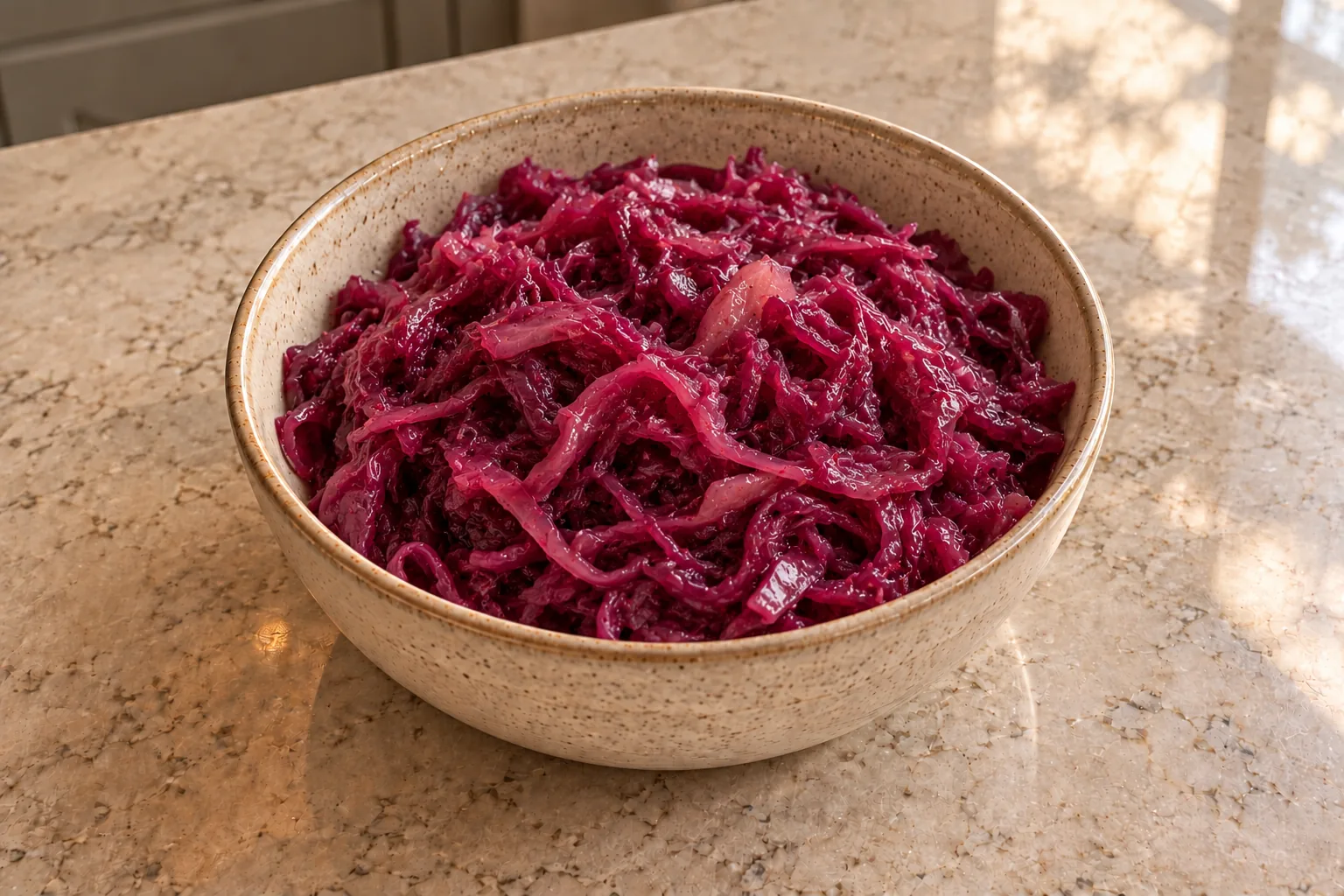
Sauerkraut and kimchi are two of the ferments I make at home. With six children, homeschooling, and second-shift work, I appreciate being able to prepare something ahead instead of starting every part of a meal at dinnertime. A jar of fermented cabbage gives you that ready-to-serve addition, but the fermentation still needs its own time. It is worth starting before you reach the end of the jar in your fridge.
What You Need
Red cabbage: Use one fresh head with firm leaves. Remove damaged outer leaves and the hard core, then slice the cabbage into thin strips. Keep a couple of clean outer leaves for covering the shreds in the jars. A knife works well; you do not need to blend or puree the cabbage. The small differences in the strips are part of its texture.
Mineral sea salt: The batch uses two tablespoons total, divided evenly between the two jars. Salt draws liquid from the cabbage. Use plain salt without a seasoning blend. Cabbage heads vary in size, so this is a head-based recipe rather than a precisely weighed two-percent formula. Keep that distinction in mind when comparing it with another sauerkraut recipe instead of swapping its salt instructions halfway through.
Filtered water, only if needed: First give the cabbage its full wilt and pressing time. It may release enough juice on its own. If you still cannot keep the packed cabbage covered, add just enough filtered water to maintain submersion. Do not fill the empty headspace to the rim.
Jars And Tools
Have two clean, wide-mouth quart glass jars ready, along with a knife, cutting board, measuring spoon, and a smooth wooden pounding tool that fits through the mouths. Glass fermentation weights help hold the folded cover leaves down. Use a lid arrangement that releases fermentation gas, such as a fitted fermentation airlock. If you use ordinary screw lids instead, release the pressure as described below.
Quart describes the size of the jars, not a promise that every cabbage will produce exactly two quarts of finished kraut. A smaller head leaves more room. A very large one may require an additional clean jar rather than packing the cabbage into the space needed for the weight and expanding brine.
How To Make Red Cabbage Sauerkraut
Slice And Salt The Cabbage
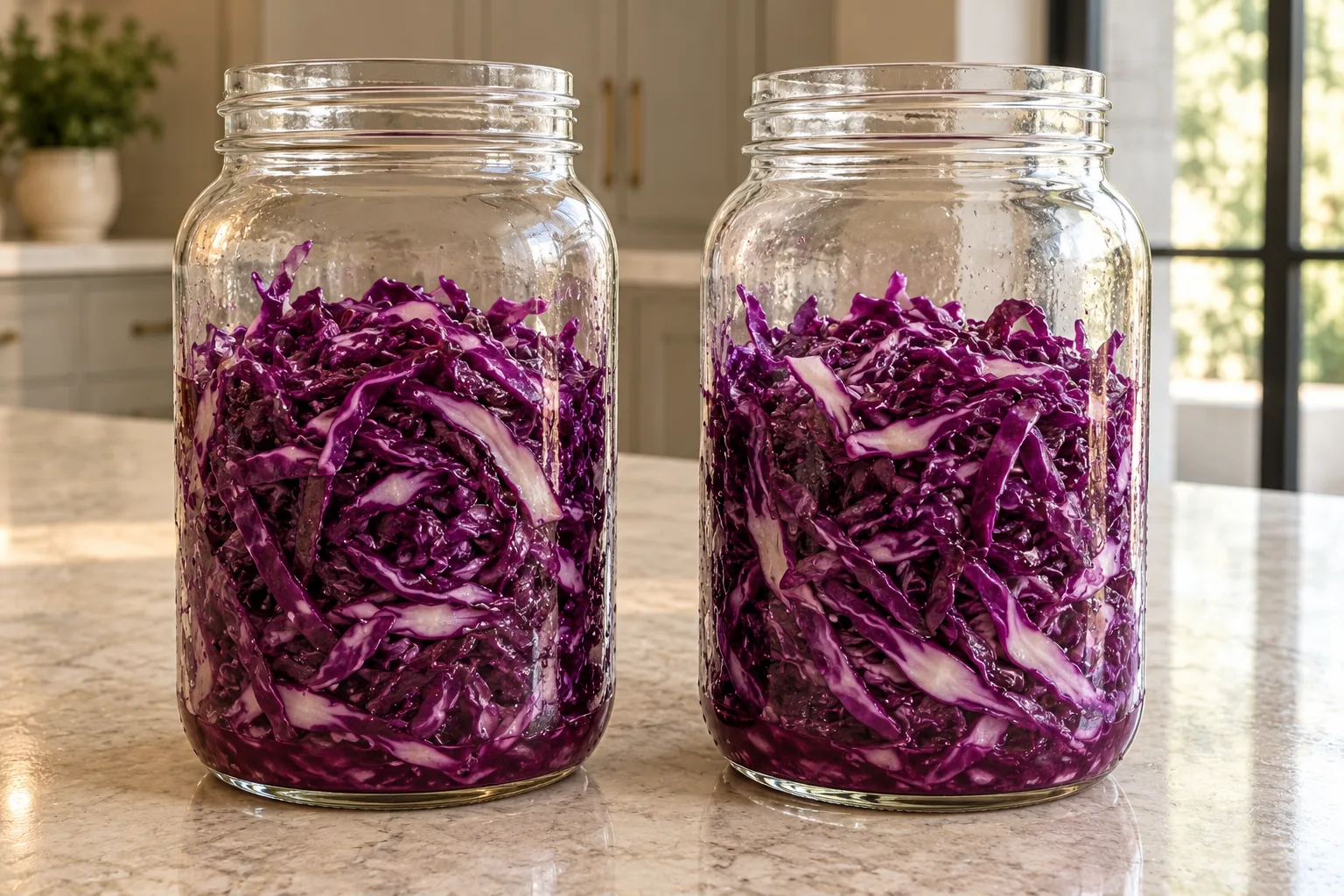
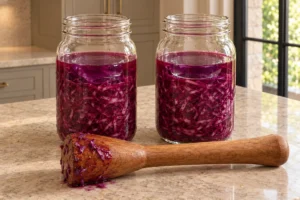
Divide the thinly sliced cabbage evenly between the jars. Sprinkle half the salt into each one, cover, and shake to spread it through the shreds. At first, the cabbage is springy and the pale ribs look firm. Let it stand for one hour. The shreds should begin to slump, and you may see purple moisture collecting against the glass.
Press Until The Juice Rises
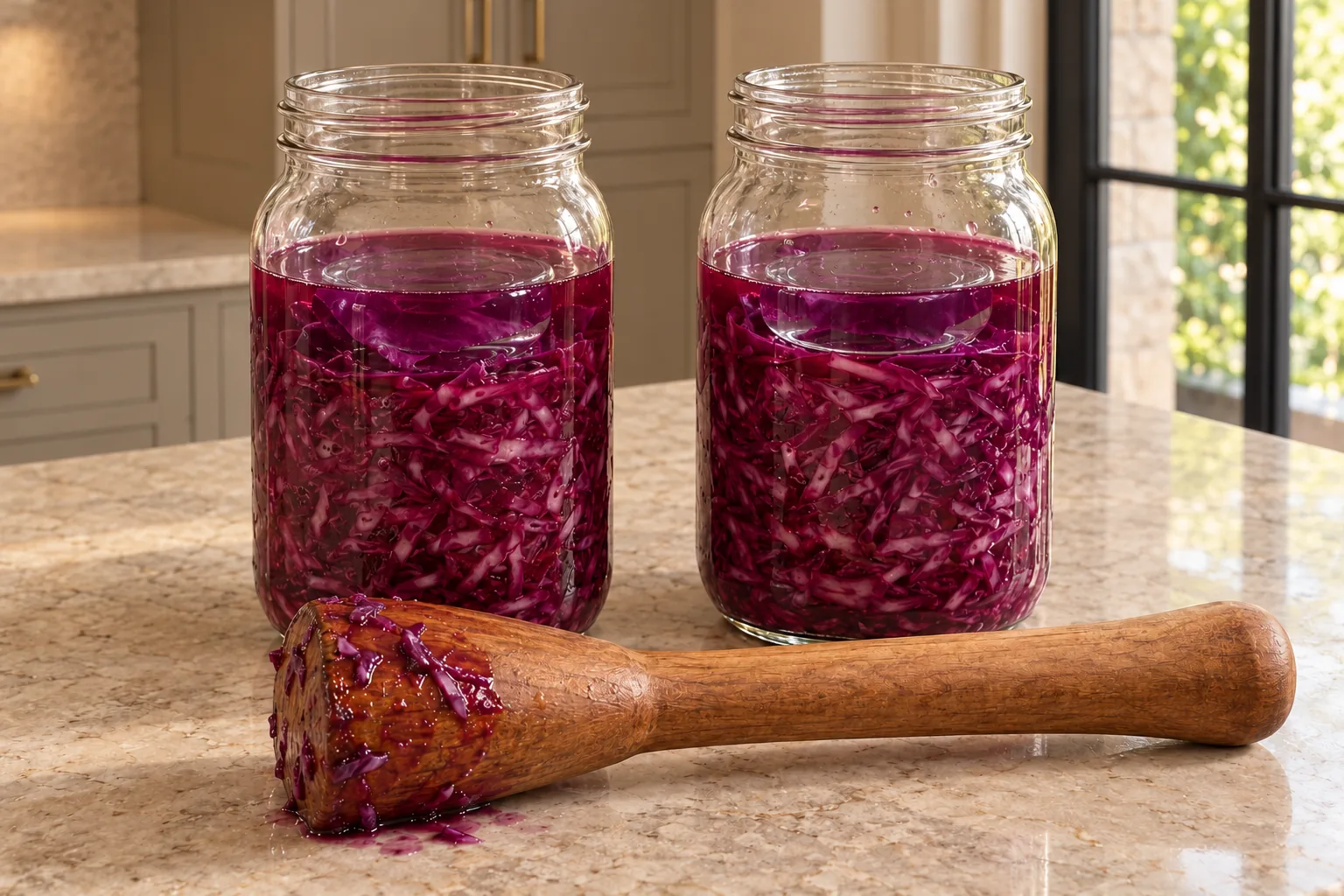
Uncover the jars and press the cabbage firmly with the wooden tool. Work around the jar instead of making a single hole down the middle. The cabbage should settle lower, the large air gaps should disappear, and juice should rise around the compressed shreds. If you can see dry pockets through the side, press those areas again.
Fold a reserved leaf over the shreds and add a glass weight. The leaf catches the loose pieces; the weight keeps it down. Leave about two inches of room below the rim. Look at the jar from the side as well as the top so you can see that the leaf and cabbage are under liquid, not merely shiny with moisture.
Let The Cabbage Ferment
Fit the lids and place the jars in a tray out of direct sunlight. Keep them at room temperature. The tray catches any brine that escapes as gas develops. With ordinary screw lids, briefly loosen them to release pressure daily during the first few days, then continue checking for pressure as fermentation slows. Close them again after releasing the gas. With a fermentation airlock, follow its operating instructions.
The aim is to keep the cabbage submerged while allowing gas to escape. It does not need to be stirred or aired out. Sandor Katz explains this distinction in The Art of Fermentation: the vegetables ferment under their liquid, while a closed jar still needs a way to release the gas it produces.
For the GAPS preparation described by Dr. Natasha Campbell-McBride, allow roughly one week to a month, depending on the room temperature. The finished cabbage has a distinctly sharp, acidic taste and is no longer producing gas. A three-day calendar reminder is not the finishing test. Warmer and cooler kitchens will not necessarily finish together.
Where It Fits On GAPS
The cabbage itself begins at Intro Stage 3, introduced in a small amount and gradually increased toward one to two tablespoons with a meal. It continues through later Intro stages and Full GAPS. This plain version contains no dairy, eggs, nuts, honey, or spices.
During the earlier Intro stages, use the juice from the completed ferment rather than the fibrous cabbage. The GAPS starting guidance is one to two teaspoons a day for two to five days, then a gradual increase. Add it to meat stock or soup once the food is no longer very hot. Our chicken meat stock gives you a simple place to use that small spoonful. The cabbage solids do not become an early-stage food by chopping them more finely.
For Full GAPS meals, use the kraut beside meat, eggs, or vegetables, or fold a little into a finished salad. This is still a vegetable recipe, so it is not a No-Plant GAPS substitute. Green cabbage can be used in the same method if that is what you have; the finished color will be pale rather than purple. For a separate two-head batch with a shorter bowl rest, try homemade green sauerkraut. Its salt amount and optional covering brine are different, so keep each recipe’s measurements together.
Serving And Storage
Keep the finished kraut covered in the refrigerator with its brine. Use a clean utensil to take out what you need and press the remaining cabbage back beneath the liquid. Refrigeration slows fermentation; it does not make an opened jar keep indefinitely. The texture and sourness can continue changing in storage.
For a Full GAPS meal, the tart cabbage works well beside homemade sausage links. Put the kraut on the plate after cooking the sausages so you keep its cool crunch. It can also brighten a bowl of soup after the soup has cooled enough for the fermented addition. A small amount is usually easier to distribute through a meal than a large mound on its own.
Keep the brine when serving. It is useful for the earlier Intro route described above, and it keeps the rest of the cabbage covered. Do not drain the entire jar just because you want a less-wet spoonful for a salad. Lift that portion out and leave the remaining liquid with the stored kraut.
Frequently Asked Questions
Does It Need Whey Or A Starter?
No. This is a salt-and-cabbage ferment. Adding whey would change both the ingredients and its dairy-free character. You do not need to prepare another fermented food before starting this batch.
Why Is There So Little Juice At First?
Freshly sliced cabbage has not yet released the moisture held in its leaves. Give the salted cabbage its one-hour rest, then press firmly. Older or drier cabbage may still need a little filtered water. Add only what is needed to cover the packed vegetables, while keeping the headspace clear.
Do I Have To Burp The Jars?
An ordinary tightly closed jar needs pressure release. Briefly loosen the lid, let the gas escape, and close it again. That is different from leaving the vegetables exposed to air. A properly fitted airlock gives the gas a release path without this same daily lid-loosening step.
How Do I Know It Is Ready?
Look for the GAPS finishing cues together: a sharp sour taste and no more gas production. The first salty, cabbage-like flavor changes as the batch ferments. Use the roughly one-week-to-one-month window for planning, and the actual batch for the decision to refrigerate.
Can I Double It?
Yes. The recipe card doubles the cabbage and salt together. Use more jars with the same headspace rather than forcing twice the cabbage into the original two. The time required for fermentation does not double just because you make more jars.
Keep Ferments In Your Meal Rotation
If you want more fermented foods to serve alongside everyday meals, the planned Kid-Friendly Ferments Recipe Card Deck belongs on your list. Check the WFLI shop for current and upcoming resources. Start this batch ahead of when you need it, then keep the finished jar where it is easy to reach at mealtimes.
Red Cabbage Sauerkraut for GAPS
Ingredients
Equipment
Method
- Clean the jars and tools. Remove damaged outer cabbage leaves, reserving two clean leaves for covering. Cut out the hard core and slice the remaining cabbage into thin strips.
- Divide the cabbage evenly between two wide-mouth quart glass jars. Divide the measured salt evenly between them. Cover and shake to distribute it.
- Leave for one hour so the cabbage wilts and begins releasing purple juice. The shreds should look less springy and start settling in the jars.
- Uncover and press firmly to compact the cabbage, remove large air pockets and raise the liquid. Fold a reserved cabbage leaf over each jar and add a glass fermentation weight. Keep all cabbage below liquid, with about two inches of empty headspace. If needed after pressing, add just enough filtered water for submersion.
- Fit fermentation lids and stand the jars in a tray at room temperature out of direct sunlight. With ordinary screw lids, briefly loosen daily during the first few days to release pressure, then close again; continue checking as activity slows. With an airlock, follow its instructions. Keep the cabbage submerged.
- Allow roughly one week to one month, depending on temperature. For GAPS, finish when the cabbage has a sharp acidic taste and no more gas is coming from it. Do not use three days as automatic completion.
- Refrigerate the completed kraut covered with its brine. Use a clean utensil to serve and keep the remaining cabbage submerged.
Notes
Tried this recipe?
Let us know how it was!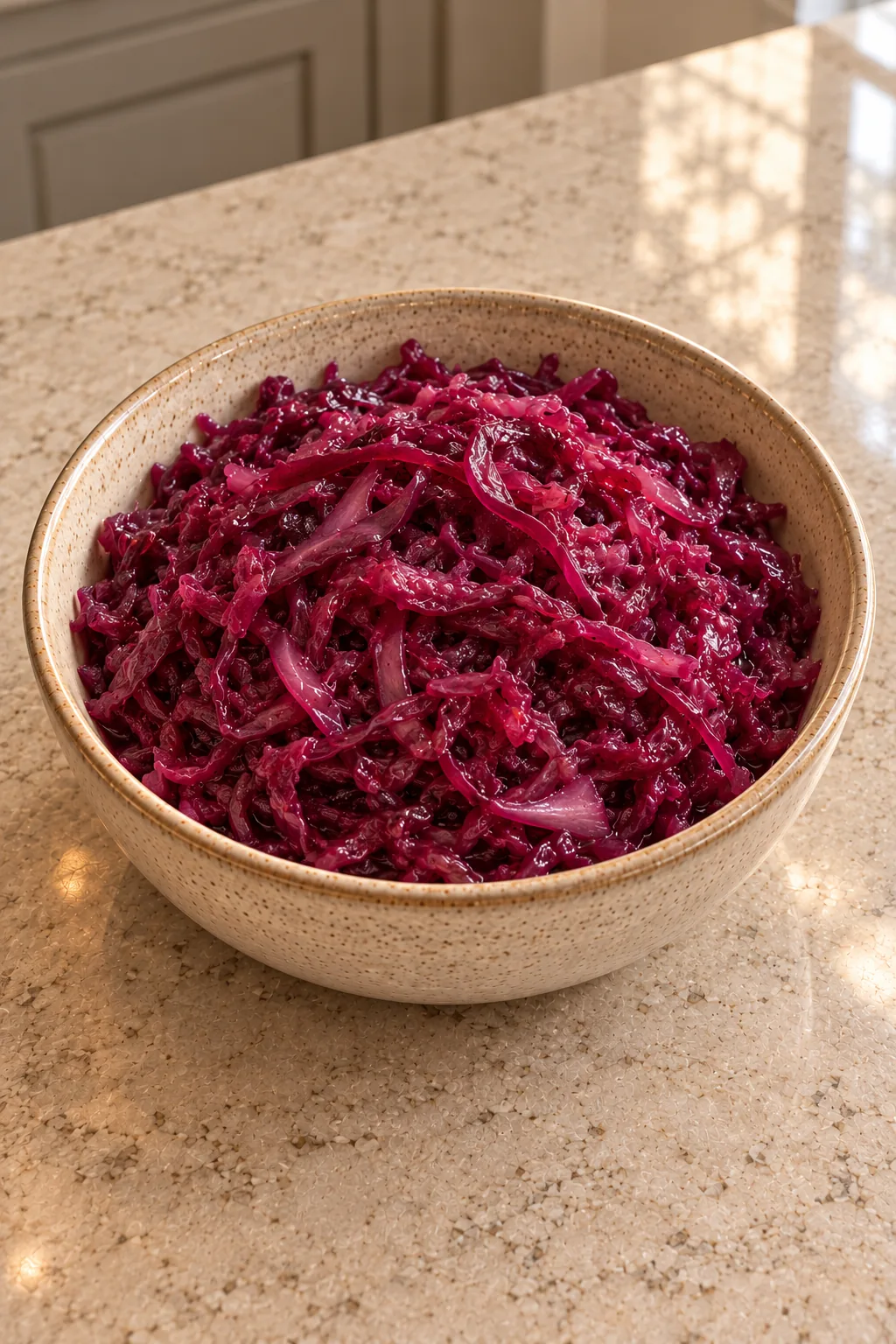

Leave a comment