

This salted cocoa frosting uses equal parts coconut oil, raw honey, and pure organic cocoa. Homemade vanilla and a measured pinch of mineral salt round out the flavor. A few minutes of rest changes the freshly mixed frosting from glossy and loose to softly thick and spreadable.
Choose this formula when you want a smoother, softer topping than the firm 2:1:1 frosting. The equal-parts ratio must stay together: one-quarter cup each oil, honey, and cocoa, followed by one-half teaspoon homemade vanilla and one pinch mineral salt.
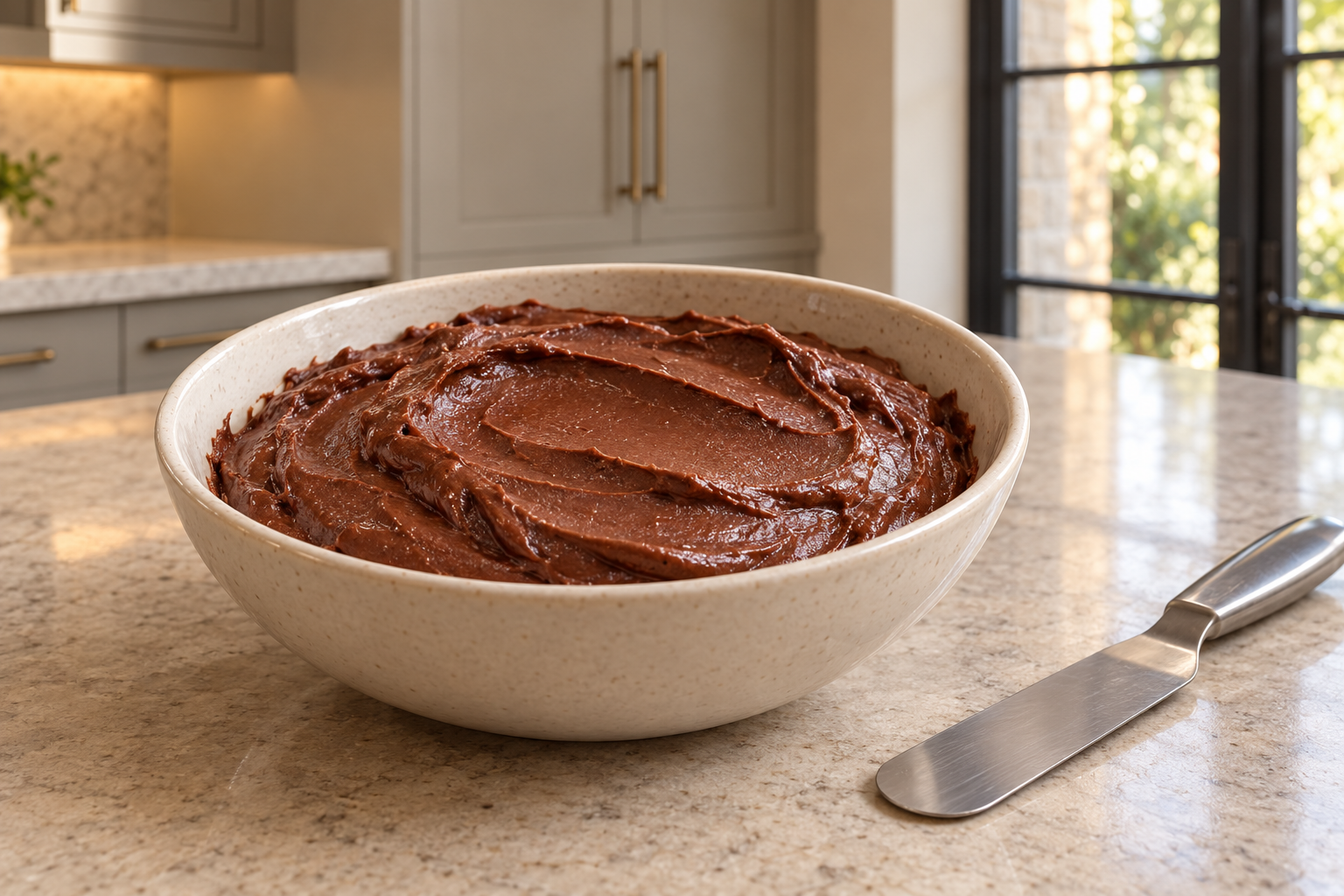
What Makes This Equal-Parts Frosting Different
The coconut oil, honey, and cocoa are measured in equal one-quarter-cup amounts. That balance gives the frosting more movement than the cocoa-heavy 2:1:1 formula. It should spread in broad strokes and hold a low rounded fold after resting, without forming a tall stiff peak.
The resting step matters. When the cocoa mixture first comes together off heat, it is warmer and glossier. As the coconut oil cools, the frosting gains body. Waiting a few minutes lets you judge the intended texture before making any unnecessary adjustment.
In our family, cocoa is an occasional later-Full-GAPS food, so keeping the formulas clearly separated makes the decision easier. A softer frosting, a firm frosting, and a pourable sauce may look similar in a storage container, but their ratios and kitchen jobs are different.
This card keeps the salted vanilla formula intact. It does not borrow the plain three-ingredient branch, the coconut-milk ganache, or the firm cocoa-forward ratio. Use the matching recipe when the dessert needs a different endpoint.
Measure Equal Parts Before Heating
Measure one-quarter cup coconut oil, one-quarter cup raw honey, and one-quarter cup pure organic cocoa powder. Set out one-half teaspoon homemade vanilla extract and one pinch mineral salt.
Level the cocoa rather than packing it. Measure the coconut oil in its current state, then soften it gently in the saucepan. The honey should be measured once; do not replace what clings to the measuring cup with an extra pour.
The vanilla amount is larger than the quarter-teaspoon used in the firm frosting, and the salt is a pinch rather than a measured quarter-teaspoon. Those details belong to this exact formula. Averaging them creates a third recipe rather than improving either one.
For a larger batch, use the WPRM 2× control before you begin. Double all five ingredients together so the cocoa, fat, sweetness, vanilla, and salt stay in proportion.
Soften the Coconut Oil Over Low Heat
Place the coconut oil in a small stainless-steel saucepan over low heat. Warm only until it becomes liquid. The surface should look clear and calm, with no bubbling, sizzling, smoke, or browned residue.
Turn off the heat as soon as the last opaque piece disappears. The saucepan and oil should not become hot. Gentle heat protects the raw honey from being added to an overheated pan and prevents the frosting from looking thinner than it will after cooling.
If the oil is already liquid because the kitchen is warm, place it in the saucepan and use only enough low heat to make the texture uniform. Do not keep heating it simply because the source mentions the stove.
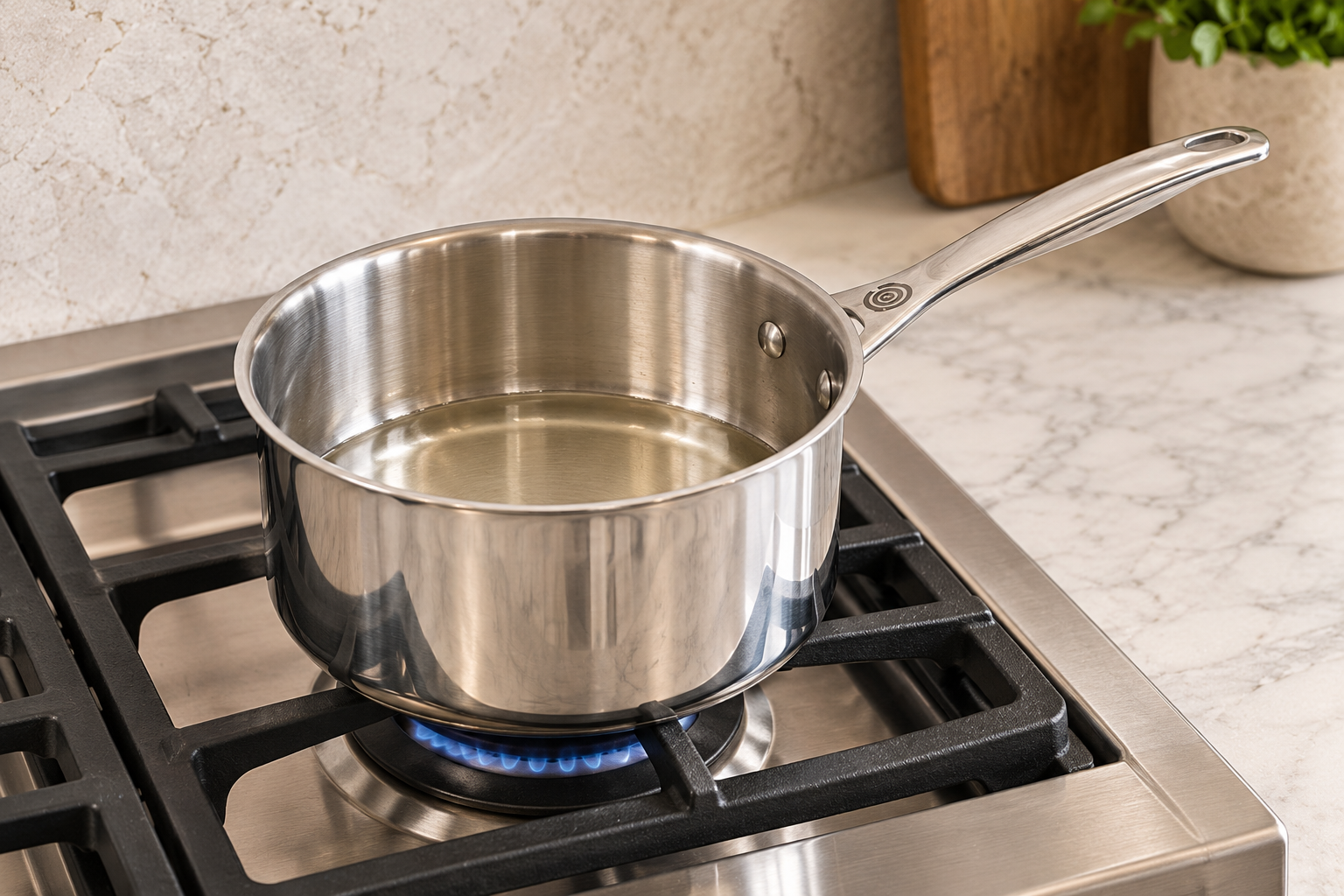
Stir Everything Together Off Heat
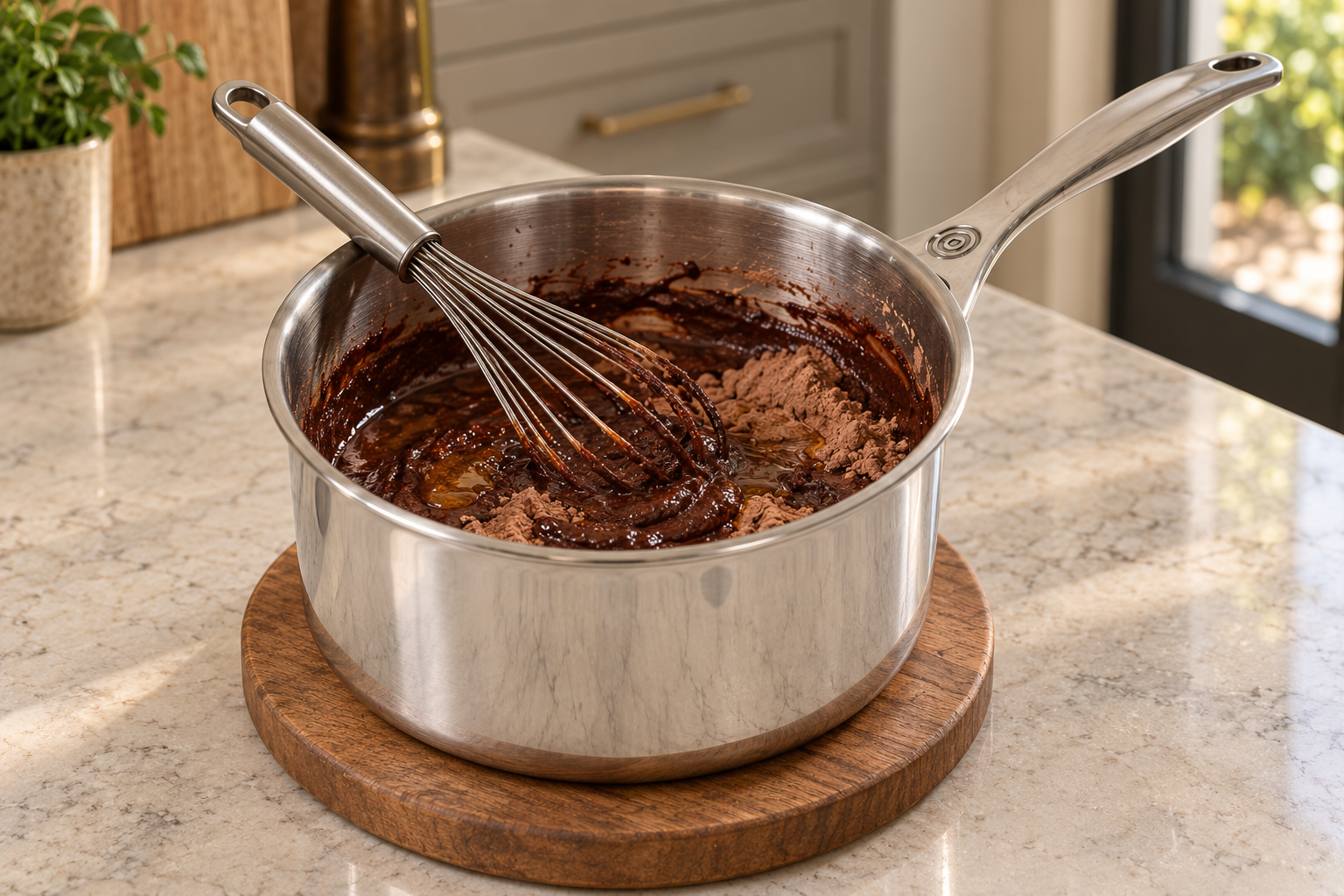
Remove the saucepan from the burner and place it on a heat-safe support. Add the raw honey, cocoa, homemade vanilla, and mineral salt.
Begin whisking slowly. The first stage may show dry cocoa patches, amber honey streaks, and darker wet areas. Keep the saucepan off heat while you bring those separate textures together.
Scrape the bottom and sides. Continue until no powder remains, no clear coconut-oil ring circles the pan, and no honey streak sits under the darker mixture. The color should be even from edge to center.
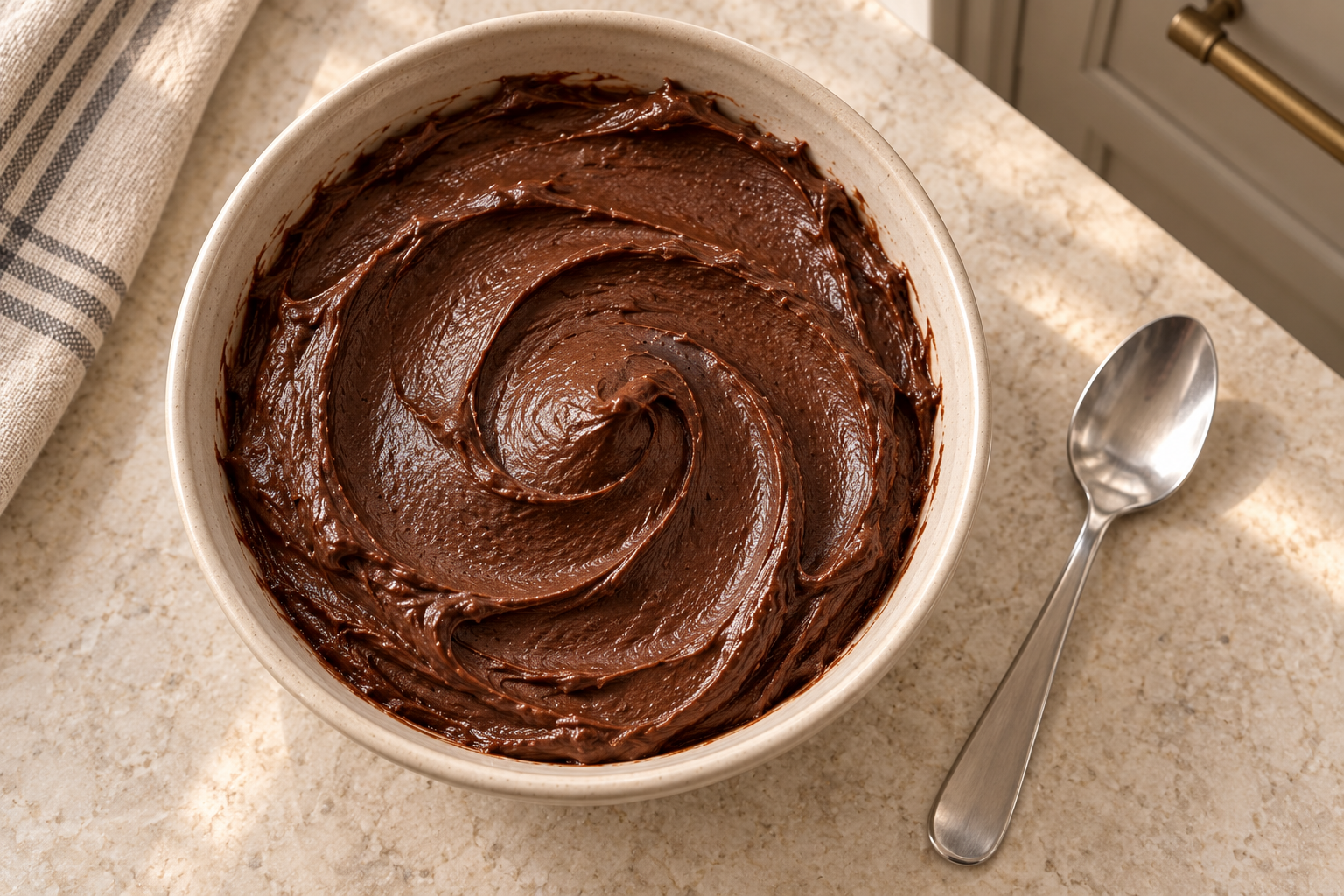
Let the Frosting Rest and Thicken
Leave the finished mixture off heat for a few minutes. The source gives a physical change rather than an exact clock time: the frosting should thicken enough to spread without running away from the utensil.
Stir once after the rest. A spoon or spatula should leave a broad rounded trail. The trail may soften, but it should remain visible. The frosting should still move easily when pushed across a cooled dessert.
If the mixture is still too loose, let it cool longer. Do not add extra cocoa. If it has become firmer than you want, let the covered saucepan or bowl stand at room temperature and stir again rather than adding milk, water, or honey.
Use a Completely Cooled Dessert
Spread the frosting only after the cake, bar, cookie, or other Full GAPS dessert has cooled through the center. Warm food melts coconut oil and can turn a correctly thickened frosting back into a glossy sauce.
Transfer the frosting to a bowl if that makes spreading easier, or work carefully from the cooled saucepan. Place small amounts across the surface and join them with short strokes. This avoids dragging crumbs through one large mound.
The frosting remains softer than the firm cocoa frosting. It should make smooth broad folds and low rounded ridges instead of tall peaks. That is the correct endpoint for this equal-parts formula.
What the Finished Frosting Should Look Like
The color is deep cocoa brown. The surface has a gentle sheen but should not show clear oil, dry powder, or sticky amber streaks. After resting, a low spiral or spatula line stays visible.
The texture is smooth and spreadable. It is thicker than the warm pourable cocoa sauce but softer than the firm cocoa frosting. It contains no coconut milk, so it also stays separate from the coconut-milk cocoa ganache.
The aroma should be cocoa first, with vanilla behind it. Salt should sharpen the chocolate flavor without tasting salty. A strong alcohol smell means more vanilla was added than the measured half-teaspoon.
Where Salted Cocoa Frosting Fits on GAPS
This is an occasional later Full GAPS recipe for after digestive symptoms are gone and pure organic cocoa is already appropriate. It is not an Introduction Diet recipe and does not have an earlier-stage cocoa adaptation.
Raw honey is the sweetener. Coconut oil is the measured fat. Use the linked homemade vanilla extract without added sugar or non-GAPS additives.
Do not substitute maple syrup, coconut sugar, allulose, monk fruit, stevia, avocado oil, MCT oil, cream, commercial chocolate, or canned coconut milk. Each change affects the formula and belongs in a separately measured recipe.
Serving Ideas
Spread the frosting over a cooled Full GAPS cake, cupcake, bar, or cookie whose ingredients already fit the person’s current foods. Its softer texture works well when you want a smooth top rather than a deeply sculpted finish.
For cleaner slices, chill the frosted dessert briefly, then let it lose the hardest refrigerator chill before serving. Coconut oil firms when cold, so a long chill makes the topping feel denser than it did when spread.
If you need a cocoa topping without vanilla or salt, use the separate plain equal-parts drizzle recipe when it is published. Do not simply omit both ingredients here and treat the result as the same card.
Storage and Texture Recovery
Cover leftover frosting and refrigerate it. It will become firm as the coconut oil chills.
Let the covered container stand at room temperature before stirring. Scrape the softening edges into the cooler center until the texture becomes even again.
If an oily sheen appears, the frosting is too warm. Let it cool and whisk again. Do not add unmeasured cocoa to absorb the oil.
Label the container as salted equal-parts frosting. The other cocoa recipes can look similar after refrigeration, but their ratios, vanilla, salt, and liquid ingredients are different.
Recommended Equipment
Use the registered Le Creuset stainless saucepan for gentle warming, a stainless-steel whisk, dry measuring cups and spoons, a flexible scraper, a heat-safe wooden trivet, and a neutral glass or ceramic serving bowl if desired.
The method photographs show the saucepan fully supported on the burner and then on the trivet. The whisk rests across the pan rim after the pan leaves the heat; no utensil or hot vessel is unsupported.
Frequently Asked Questions
Why Are the Main Ingredients Equal Parts?
The accepted formula measures one-quarter cup each coconut oil, raw honey, and cocoa. That balance creates a softer frosting than the cocoa-heavy 2:1:1 recipe.
Why Does the Frosting Need to Rest?
The mixture is warmer immediately after the coconut oil softens. A short off-heat rest lets the oil cool and the frosting thicken naturally.
Can I Skip the Vanilla and Salt?
The plain three-ingredient equal-parts formula is a separate recipe. Keep this card’s half-teaspoon homemade vanilla and pinch of mineral salt intact.
Can I Add Coconut Milk?
No. Coconut milk belongs to the separately measured coconut-milk ganache and changes the texture and formula.
Why Is My Frosting Oily?
It is probably too warm or not fully mixed. Let the exact batch cool briefly, then whisk until no clear oil remains.
Can I Use It During the Introduction Diet?
No. Pure organic cocoa is an occasional later-Full-GAPS ingredient after digestive symptoms are gone.
Salted Equal-Parts Cocoa Frosting Recipe
Salted Equal-Parts Cocoa Frosting for Full GAPS
Ingredients
Equipment
Method
- Soften the coconut oil over low heat only until liquid, without making it hot. Turn off the heat as soon as the last opaque piece disappears.
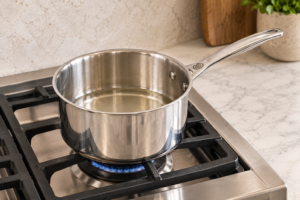
- Move the saucepan to a heat-safe support. Add the raw honey, cocoa, homemade vanilla, and mineral salt; whisk off heat until no dry cocoa, honey streak, or clear oil ring remains.
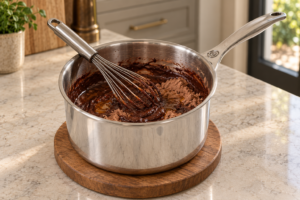
- Let the frosting stand off heat for a few minutes to thicken. Stir once, then spread over a completely cooled dessert when a broad rounded trail remains visible.
Notes
- The source supplies no portion yield or timing. The 1-batch card base exists only so every measured ingredient scales together at 2x.
- Keep the exact equal-parts oil, honey, and cocoa ratio plus the measured vanilla and salt.
- Pure organic cocoa is occasional on later Full GAPS after digestive symptoms are gone.
- Do not add coconut milk, cream, commercial chocolate, or another sweetener.
Tried this recipe?
Let us know how it was!Keep More Full GAPS Sweets Ready
A measured frosting works best when the dessert and its GAPS stage are planned together. The upcoming Sweet Snack Recipe Card Deck will collect stage-tagged sweet snack cards from The Big Book of GAPS Kids’ Snacks. Find current guides and catalog updates in the WFLI shop.

Leave a comment