

This three-ingredient cocoa drizzle keeps the simplest equal-parts formula: one-quarter cup coconut oil, one-quarter cup raw honey, and one-quarter cup pure organic cocoa. There is no vanilla and no salt. Whisk it smooth and use it while it is glossy and softly pourable.
The drizzle is looser than either frosting in this cocoa series. A spoon trail should nearly settle flat, and the mixture should move easily without looking watery or separated. That clear endpoint makes it useful when a dessert needs a thin cocoa finish rather than a thick topping.
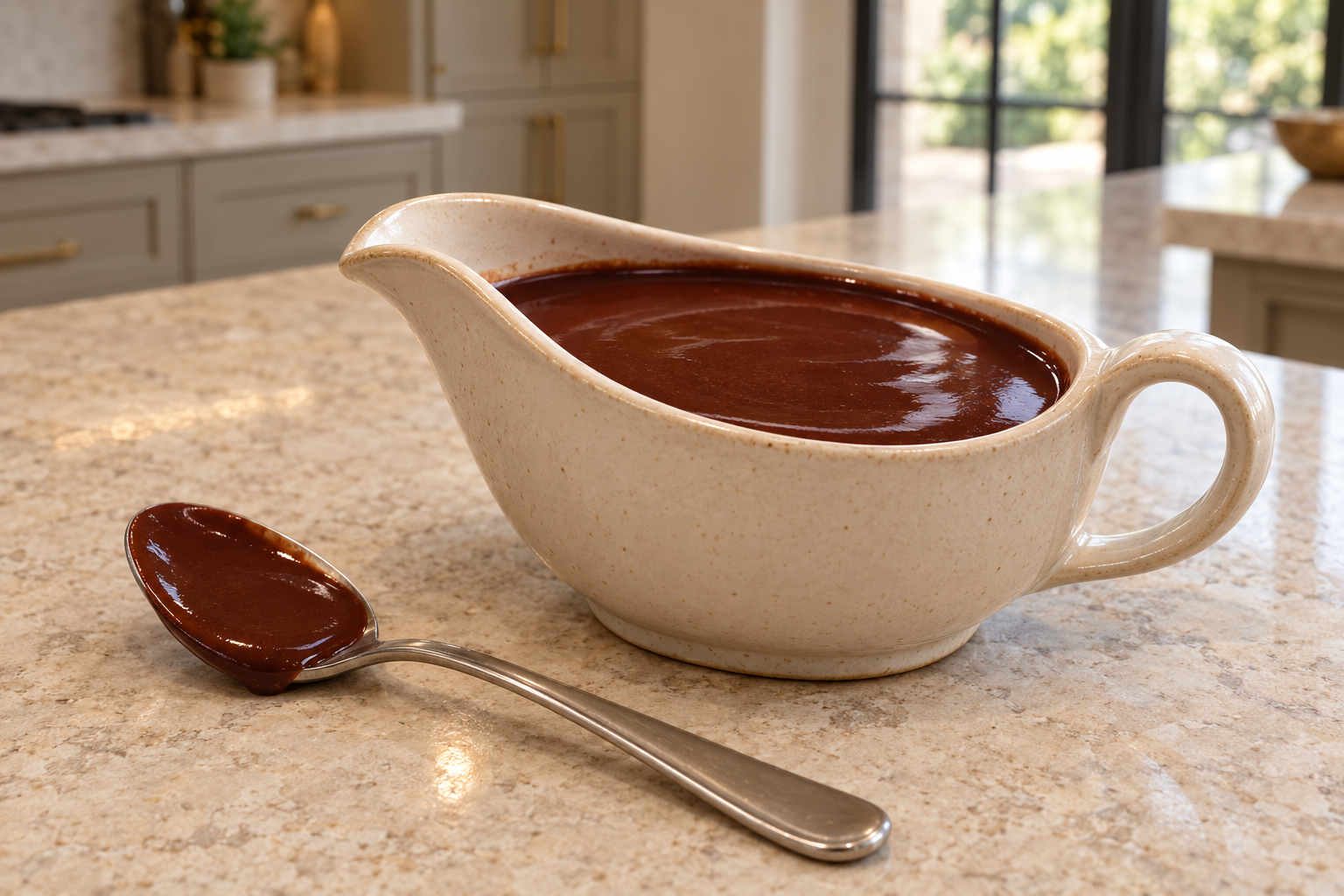
Why Keep This Drizzle Plain
This formula is intentionally only coconut oil, raw honey, and cocoa. Coconut oil gives it movement, honey sweetens and adds body, and cocoa turns the two liquids into a smooth chocolate drizzle. Leaving out vanilla and salt is part of the formula rather than an unfinished ingredient list.
The salted equal-parts frosting is a separate source recipe with a measured half-teaspoon vanilla and a pinch of salt. The firm frosting uses twice as much cocoa as oil or honey. Keeping each card intact protects the texture and flavor the source actually measured.
For our family, that separation is practical. Cocoa is an occasional later-Full-GAPS food, and several dark mixtures can look alike after refrigeration. A clear name and exact card tell me whether the container holds drizzle, soft frosting, firm frosting, or ganache.
The drizzle gives a dessert a thinner finish without diluting frosting by guess. If a topping needs to hold a ridge, choose a frosting. If it needs to move in a narrow ribbon and spread into a thin layer, use this formula as written.
Measure the Equal-Parts Formula
Measure one-quarter cup natural non-hydrogenated coconut oil, one-quarter cup raw honey, and one-quarter cup pure organic cocoa powder. Level the cocoa rather than packing it into the cup, and measure the honey once instead of replacing what clings with an extra pour.
Keep the bowl, whisk, and measuring tools dry. A small accidental splash can tighten a cocoa-fat mixture unevenly. Wipe the outside of the honey cup rather than letting an unmeasured drip fall into the bowl.
The WPRM card uses one batch as a truthful scaling base because the source supplies no portion yield. At 2x, every ingredient becomes one-half cup. That control keeps the formula together without pretending it serves a fixed number of people.
Do not add a fourth ingredient. More cocoa makes the drizzle thicker, more oil makes it greasy, and more honey makes it sticky and sweeter. Vanilla, salt, coconut milk, cream, and gelatin all belong to other measured formulas.
Liquefy the Coconut Oil Only If Needed
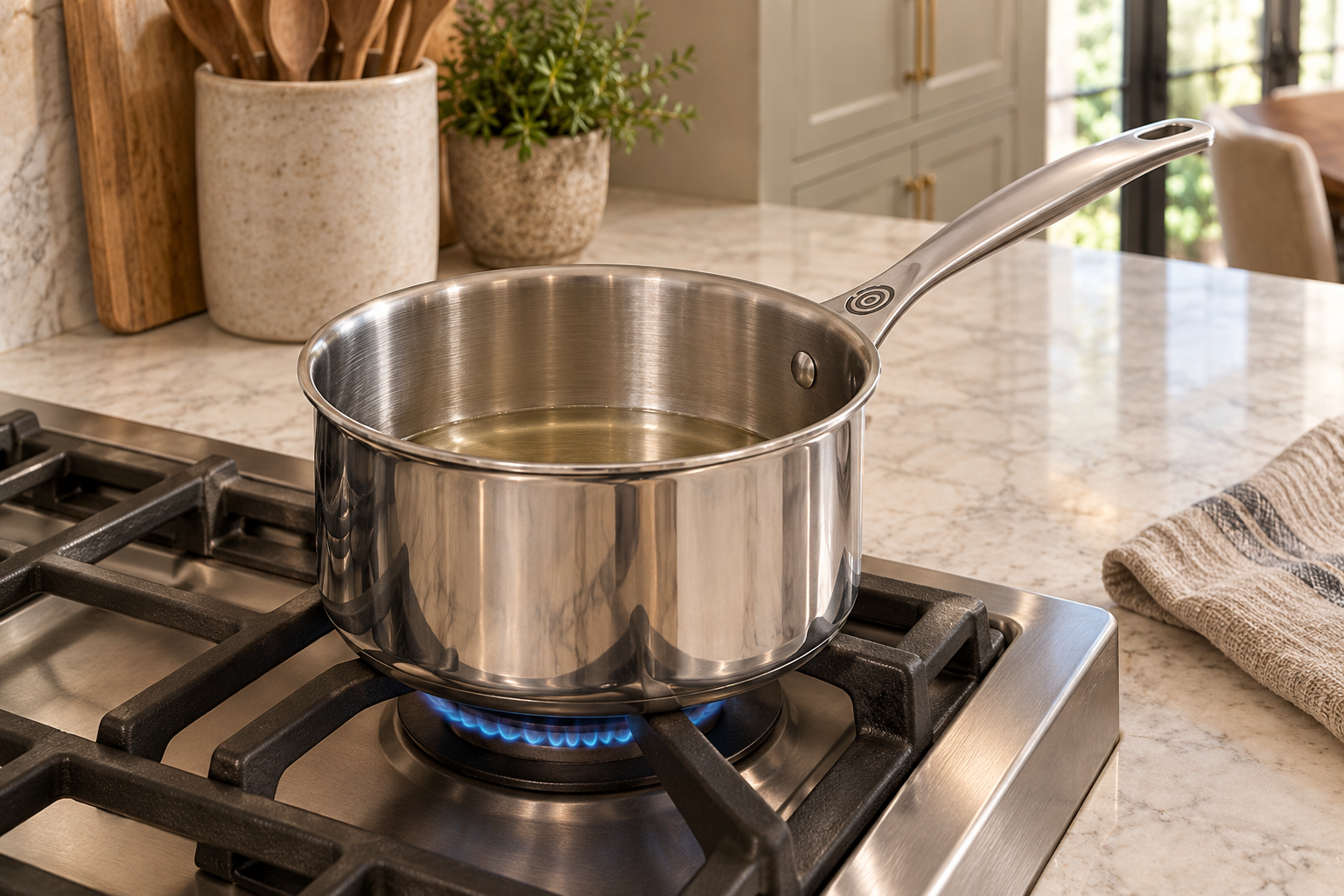
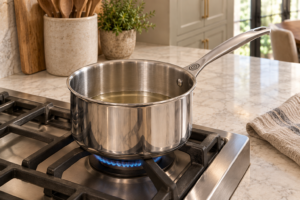
If the coconut oil is already clear and liquid, it can go directly into a dry glass or ceramic bowl. If it is firm, warm it gently in the registered stainless-steel saucepan only until the last opaque piece disappears.
Use low heat. The oil should look clear and calm, with no bubbles, smoke, browned residue, or hot shimmer. Turn off the burner as soon as it becomes uniformly liquid.
Let warmed oil cool until it no longer heats the mixing bowl. Hot oil temporarily makes the drizzle look thinner than it will be at serving temperature and can encourage an unnecessary extra spoonful of cocoa.
Whisk Until the Drizzle Is Uniform
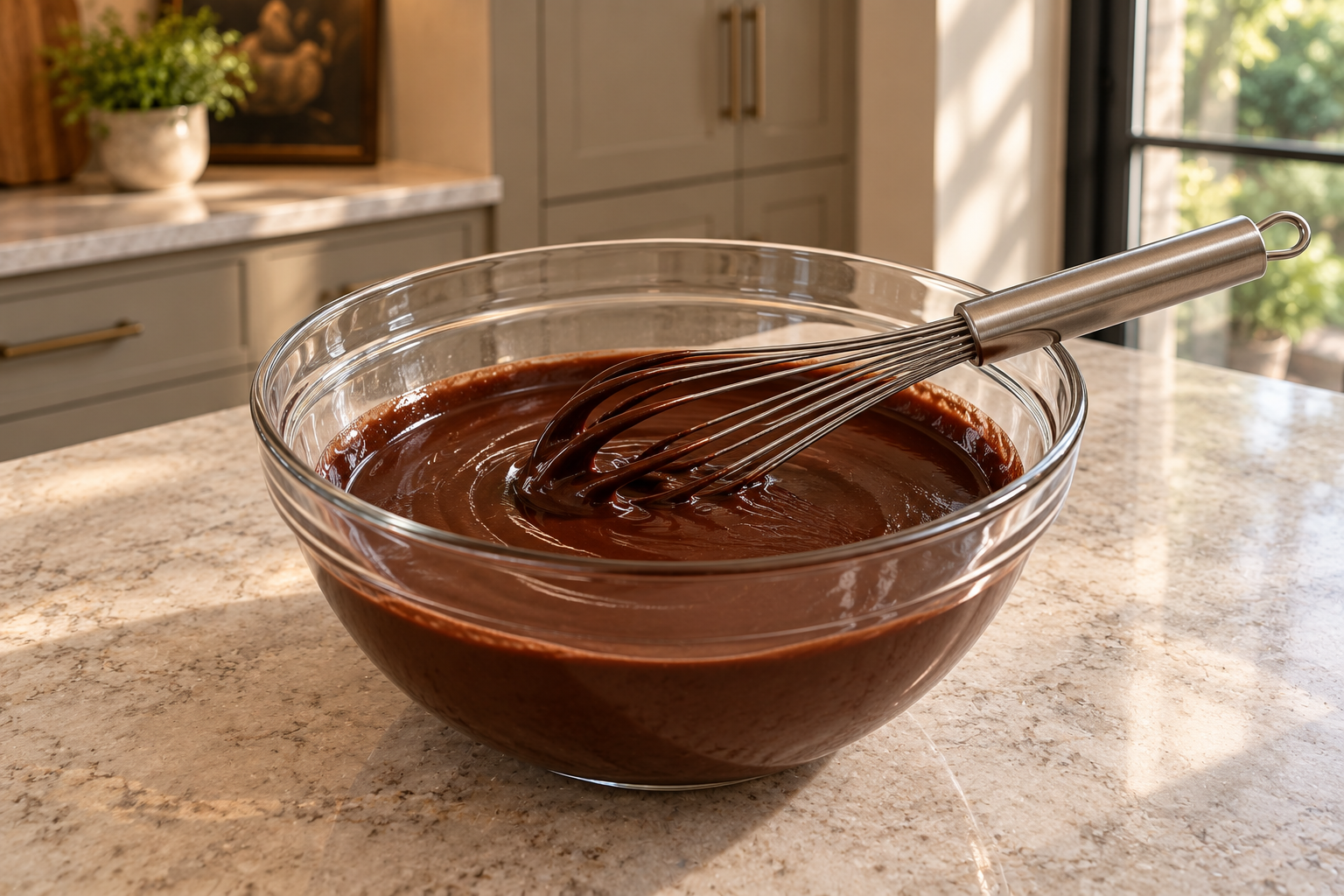
Combine the liquid coconut oil, raw honey, and cocoa in a dry glass or ceramic bowl. Begin whisking slowly so the cocoa stays in the bowl rather than lifting into the air.
The first strokes may show dry cocoa patches, amber honey streaks, and a clear oil edge. Keep scraping the bottom and the curve of the bowl. Bring the loose edges through the darker center instead of adding liquid.
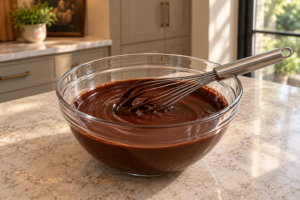
Stop when the color is even and no separate ingredient remains. The whisk should carry a thin cocoa coating, and a broad trail in the bowl should slowly relax until it is almost level.
Read the Texture Before Serving
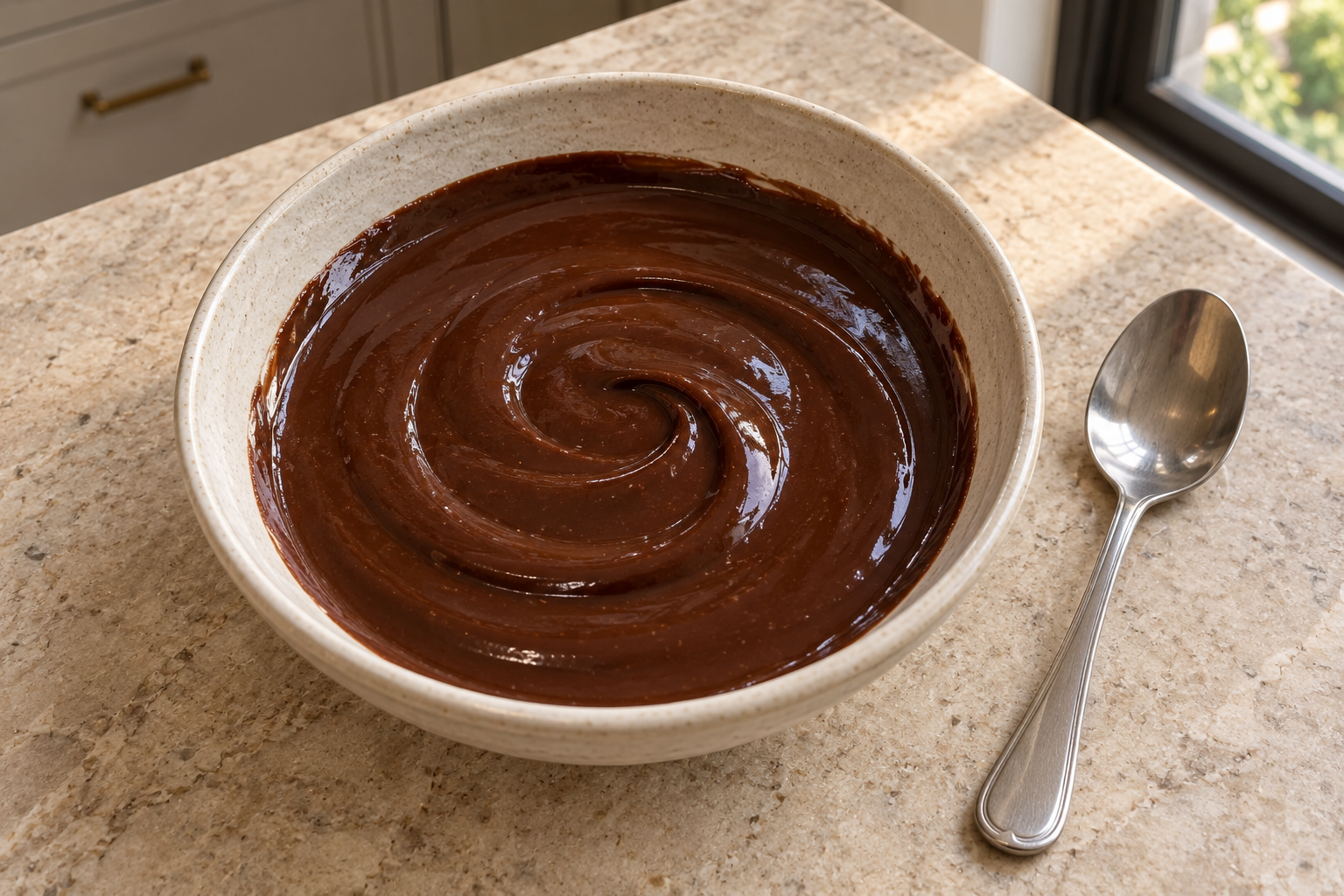
The finished drizzle should be deep cocoa brown, smooth, and glossy. It should not contain powdery specks or show a clear ring of coconut oil around the edge. Scrape the bowl completely before deciding the mixture is finished.
Draw a spoon through the surface. The trail remains visible for a moment and then nearly settles flat. A trail that stands in a firm ridge means the mixture has cooled into a frosting-like texture; let it warm slightly and stir again.
A trail that disappears instantly can mean the oil is still too warm. Let the exact batch cool briefly before judging it. Do not thicken it with an extra spoonful of cocoa or loosen it with more oil.
Drizzle Without an Active Pour
Transfer the mixture to a supported ceramic sauce boat or keep it in the bowl and use a spoon. Both methods let you control a narrow line without lifting an unsupported vessel over the dessert.
Start with a small amount. The drizzle spreads as it sits, especially over a room-temperature dessert. Add a second spoonful only after you see how far the first one travels.
On a cold dessert, coconut oil may set quickly and produce a thin shell-like finish. On a warmer dessert, the drizzle stays softer and moves farther. Use the same measured mixture and let temperature control the endpoint.
What the Finished Cocoa Drizzle Should Look Like
The surface should have a soft shine and a low spiral or spoon trail. It is visibly looser than the salted equal-parts cocoa frosting and the firm cocoa frosting.
It is also simpler than the coconut-milk cocoa ganache. There is no milk, vanilla, salt, gelatin, or commercial chocolate in this card.
The aroma is plain cocoa and honey. The coconut oil should not smell scorched. If another flavor dominates, an ingredient outside the three-part formula has been introduced.
Where Cocoa Drizzle Fits on GAPS
This is an occasional later Full GAPS recipe for after digestive symptoms are gone and pure organic cocoa is already appropriate. It is not an Introduction Diet recipe and does not have an earlier-stage cocoa adaptation.
Raw honey is the measured sweetener, and natural non-hydrogenated coconut oil is the measured fat. The formula uses no commercial chocolate or packaged sauce.
Do not substitute maple syrup, coconut sugar, allulose, monk fruit, stevia, avocado oil, MCT oil, cream, canned coconut milk, vanilla, or salt. Those changes belong to different formulas.
Serving Ideas
Spoon the drizzle over a completely cooled Full GAPS cake, bar, cookie, pancake, or other dessert whose own ingredients are already appropriate. Use a thin line when the dessert is already sweet.
For a soft glossy finish, serve soon after whisking. For a firmer finish, place the dressed dessert in the refrigerator briefly and let the coconut oil set.
If the dessert needs a thick layer that stays where it is spread, use a frosting card rather than cooling this drizzle until it behaves like another recipe.
Storage and Texture Recovery
Cover leftover drizzle and refrigerate it. Coconut oil will turn the chilled mixture firm. Let the covered container stand at room temperature before stirring.
The outside softens first, so scrape it through the cooler center until the texture is even. Warm only very gently if room temperature is not enough, stopping as soon as the mixture moves easily.
If an oily sheen appears, the drizzle is too warm. Let it cool and whisk again. Do not add unmeasured cocoa to absorb the oil.
Label the container as plain cocoa drizzle. Its lack of vanilla, salt, milk, and gelatin distinguishes it from the other dark cocoa recipes.
When returning a chilled batch to serving texture, stir before deciding it needs heat. A soft outer edge and firm center can look separated until they are folded together. A brief room-temperature rest followed by steady whisking often restores the glossy drizzle without putting the bowl or saucepan back over heat. Judge the combined texture, not the first softened edge.
Recommended Equipment
Use a dry glass or ceramic mixing bowl, a stainless-steel whisk, dry measuring cups, a flexible scraper, and a supported ceramic sauce boat or spoon. Use the registered Le Creuset stainless saucepan only when the coconut oil needs gentle warming.
The method photographs show the saucepan fully supported on the burner and the whisk resting across the bowl rim. No hot vessel, pouring vessel, or utensil is unsupported.
Frequently Asked Questions
Why Are There Only Three Ingredients?
This exact source variation measures only equal parts coconut oil, raw honey, and cocoa. Vanilla and salt belong to another card.
Can I Add Vanilla?
No. Use the salted equal-parts frosting when you want the separately measured homemade vanilla and salt formula.
Why Did the Drizzle Become Firm?
Coconut oil firms as it cools. Let the covered mixture warm slightly and stir rather than changing the ratio.
Can I Add Coconut Milk?
No. Coconut milk belongs to the separate coconut-milk ganache and changes the formula.
Can I Use It as a Shell?
It may firm on a cold dessert, but the two dedicated shell formulas have their own cocoa, oil, honey, vanilla, and method measurements. Keep those uses separate.
Can I Use It During the Introduction Diet?
No. Pure organic cocoa is an occasional later-Full-GAPS ingredient after digestive symptoms are gone.
Three-Ingredient Cocoa Drizzle Recipe
Three-Ingredient Cocoa Drizzle for Full GAPS
Ingredients
Equipment
Method
- If the coconut oil is firm, warm it over low heat only until liquid, then let it cool until it no longer feels warm. If it is already liquid, skip the heat.
- Whisk the coconut oil, raw honey, and cocoa in a dry glass or ceramic bowl until the color is even and no dry cocoa, amber honey streak, or clear oil ring remains.
- Use while smooth and softly pourable, when a broad spoon trail nearly settles flat. Let it cool slightly if too loose or warm gently if it has firmed; do not change the ratio.
Notes
- The source supplies no portion yield or timing. One batch is a scaling base only.
- Keep the exact equal-parts oil, honey, and cocoa formula with no vanilla or salt.
- Pure organic cocoa is occasional on later Full GAPS after digestive symptoms are gone.
- Do not add coconut milk, cream, gelatin, commercial chocolate, or another sweetener.
Tried this recipe?
Let us know how it was!Keep More Full GAPS Sweets Ready
A simple drizzle is easier to use when the dessert and its GAPS stage are planned together. The upcoming Sweet Snack Recipe Card Deck will collect stage-tagged sweet snack cards from The Big Book of GAPS Kids’ Snacks. Find current guides and catalog updates in the WFLI shop.

Leave a comment