

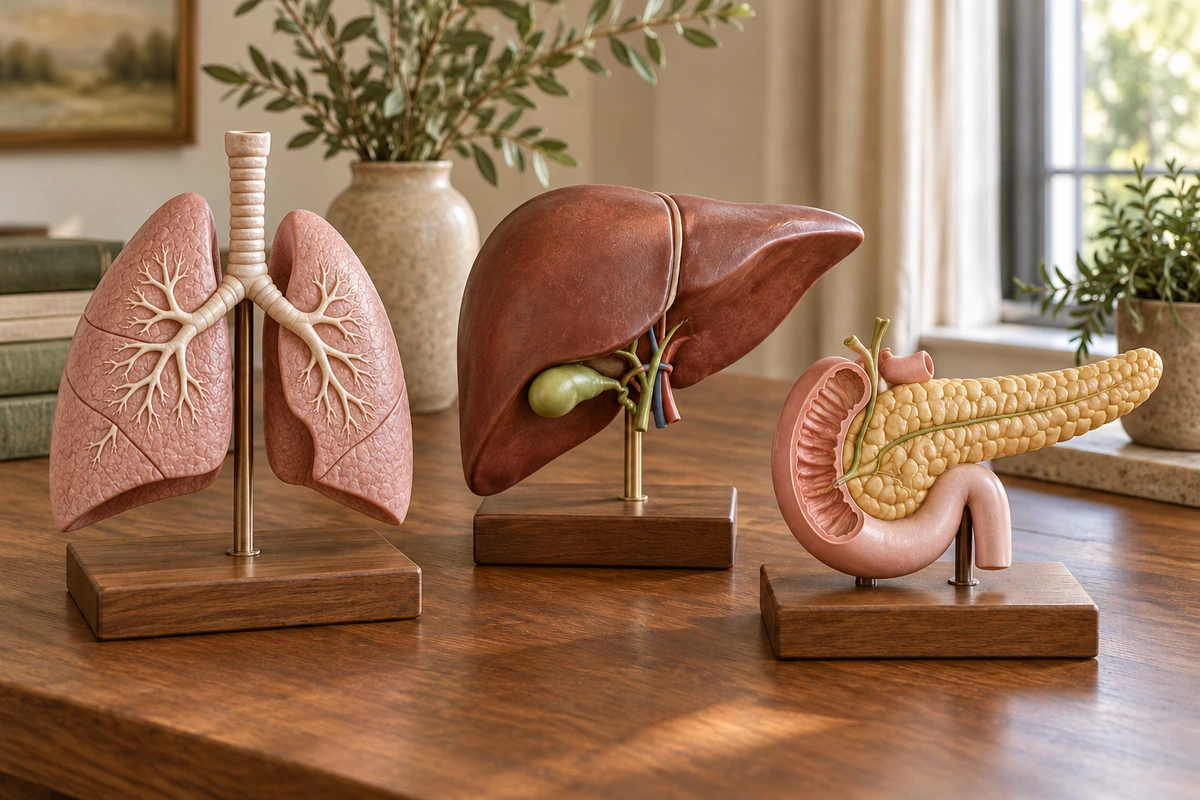
The liver, bile, and lungs appear together in the GAPS books because Dr. Natasha Campbell-McBride connects digestion with the work these organs do. The liver processes substances arriving from the gut and produces bile. Bile helps with fat digestion, while the lungs handle breathing and clear material from the airways. Her chapter brings those functions into a wider gut-health explanation.[1]
You can read that chapter without turning every digestive symptom into a liver problem or every breathing symptom into a gut diagnosis. This guide gives you the connections first, then helps you find the detailed article for the question you are trying to answer.
How the Gut Connects With the Liver and Lungs
Campbell-McBride describes material leaving the gut through two broad routes: blood and lymph. Portal blood carries many absorbed substances to the liver. Dietary fats also travel through the lymph before entering the bloodstream. The book uses those routes to explain why the liver and lungs matter in its account of gut health.[1]
Her wider explanation concerns abnormal gut flora, the gut lining, nutritional deficiencies, and substances reaching other organs. That is the GAPS framework described in the chapter. It does not establish the cause of a particular person’s liver disease, gallstones, or breathing difficulty.
Three Roles to Keep Separate
| Part of the System | Its Role | Why the Distinction Helps |
|---|---|---|
| Liver | Processes nutrients and other substances and produces bile. | Bile production and gallbladder storage are different jobs. |
| Bile and gallbladder | Bile helps digest fat. The gallbladder stores bile and releases it into the small intestine. | After gallbladder removal, the liver still produces bile; it flows through the ducts into the intestine. |
| Lungs and airways | Exchange gases and help clear inhaled material through mucus, cilia, and immune defenses. | Breathing symptoms need their own assessment rather than being explained by digestion alone. |
Bile and pancreatic enzymes work together in digestion. Meal fat can stimulate the gallbladder to contract and empty. That does not make a fatty meal a home test for a blocked duct, or prove that increasing fat will clear a stone.[2][3]
Choose the Guide That Fits Your Question
These guides keep the detailed explanations in one place. You do not need to read them all in order.
- Liver function and gut dysbiosis: how the GAPS books connect the liver and gut, including the source’s liver-test discussion.
- Difficulty digesting fat: bile, fat digestion, and life without a gallbladder.
- How stones form: the book’s gallstone explanation and the distinctions that matter when reading it.
- Pancreatic drainage: how a gallstone can affect the pancreas.
- A stone-passing episode: what the book describes about passage and recovery.
- Pain or possible complications now: gallstone symptoms and urgent assessment.
- The lung connection: the GAPS gut-lung explanation. The separate asthma guide keeps the asthma discussion together.
- Digestive signals: secretin and cholecystokinin, with their different triggers and roles.
- Anemia and food support: the GAPS nutrient and gut-flora account, alongside the distinction between food support and treating a diagnosed deficiency.
Keep Food Planning and Symptom Assessment Together
The GAPS approach to fat is gradual introduction according to tolerance, within the person’s dietary route. A measured recipe, a juice, and a GAPS shake are different preparations. Their ingredients must fit the stage and foods already introduced; a few weeks on the diet does not automatically make every preparation suitable.[1]
For an ongoing digestive question, useful notes include the food and amount eaten, what happened afterward, and whether there were changes in stool, pain, or nausea. Those notes describe the pattern. They do not diagnose a blocked duct or show that a liver test is rising for a beneficial reason.
A suspected gallstone attack needs prompt medical assessment, especially with persistent pain, vomiting, fever or chills, jaundice, dark urine, or pale stools. Severe breathing difficulty needs emergency help. Follow an existing asthma action plan rather than using this organ overview as an attack-treatment schedule.[4][5]
Your Next Step
Choose the focused guide that matches your question. If you are still getting the overall GAPS plan clear, Understanding & Preparing for the GAPS Diet is part of the WFLI shop catalog. You can see the course there while you work through the foundations.
References
- Campbell-McBride, Natasha. Gut and Physiology Syndrome (2020), “The Liver and the Lungs” and “The GAPS Introduction Diet.”
- NIDDK. Definition & Facts for Gallstones and Treatment for Gallstones.
- NIDDK. Eating, Diet, & Nutrition for Gallstones, dietary fats and gallbladder emptying.
- NIDDK. Symptoms & Causes of Gallstones.
- NHLBI. Asthma Attacks.

Leave a comment