

A gallstone can affect the pancreas when it blocks near the place where the bile and pancreatic ducts empty into the small intestine. The location matters. A stone sitting quietly in the gallbladder is not the same situation as a stone obstructing that outlet.[1][2]
The GAPS book discusses this connection alongside fat digestion, pancreatic enzymes, and constipation. Here is how to keep the anatomy, the book’s interpretation, and the questions you need answered separate.
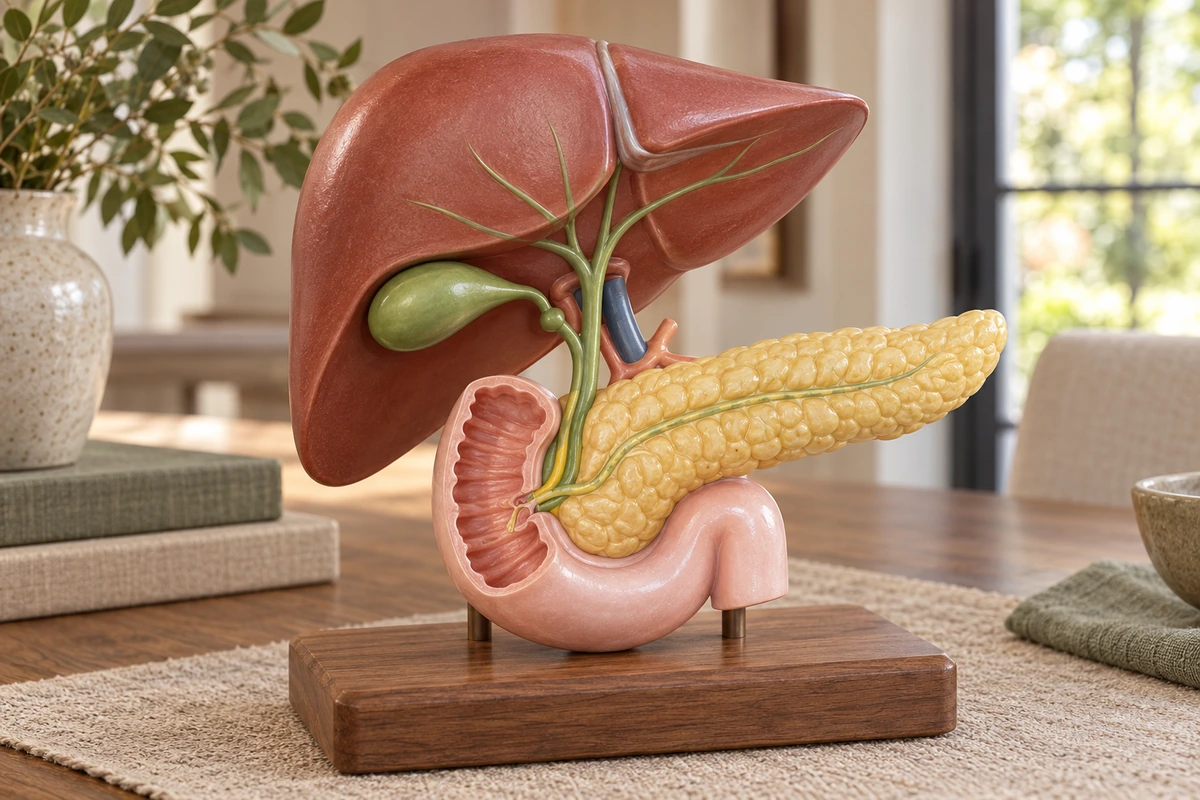
The Shared Outlet
Bile reaches the duodenum through the bile ducts. Pancreatic juices reach it through pancreatic ducts. Near their outlets, the two systems are closely connected. A lodged gallstone can interfere with drainage and cause acute pancreatitis.[1][2]
Campbell-McBride also describes the accessory pancreatic duct, called the duct of Santorini. Its presence and drainage cannot be treated as guaranteed protection from obstruction. The practical point is that a bile-duct problem can have consequences for the pancreas.[1]
| Term | What It Describes |
|---|---|
| Bile-duct obstruction | A blockage affecting the flow of bile. |
| Pancreatitis | Inflammation of the pancreas; gallstones are one cause. |
| Pancreatic insufficiency | Too little effective digestive-enzyme activity for normal digestion. This needs its own assessment. |
These terms are not interchangeable. Nausea after fat does not establish pancreatic insufficiency, and a gallstone does not mean pancreatitis is inevitable. The bile and fat-digestion guide explains the food-tolerance question in more detail.[2][3]
The Constipation Explanation in the Book
The book proposes that, when fat is not adequately handled, it combines with alkaline material in the gut to form a soap-like substance. Campbell-McBride connects that account with impaired transit and chronic constipation.[1]
This is her proposed mechanism. Constipation has several possible causes, so the description should not become a diagnosis of a particular reader or a conclusion that fiber cannot help. Record the stool pattern and other symptoms rather than treating constipation as proof of stones.[4]
Gallbladder Removal and Bile Flow
Campbell-McBride argues for preserving the gallbladder where possible and reports improved fat tolerance in people following GAPS after removal. Her preference is part of the chapter. It cannot establish that a painful attack means a stone has already left, that a removed gallbladder will contain only sludge, or that an indicated operation is unnecessary.[1]
After removal, the liver still makes bile, which flows through the ducts into the intestine. Treatment decisions depend on the actual symptoms, findings, and complications. Silent stones and symptomatic disease are different situations.[5]
What the Biliary Dyskinesia FAQ Actually Contains
Gallbladder Question 5 begins with a reader describing poor gallbladder emptying and their own experience with coffee enemas. Campbell-McBride’s answer refers to other FAQs and recommends the GAPS milkshake. It does not explain that biliary dyskinesia automatically obstructs pancreatic drainage.[6]
A questioner’s reported experience is not a mechanism established by the author’s answer. Keep an emptying-study result, a duct blockage, and a pancreatic diagnosis distinct when discussing your own results.
Questions That Make an Assessment Clearer
- Where is the suspected stone or blockage?
- Which finding suggests a problem with the pancreas?
- Is the concern inflammation, enzyme insufficiency, or both?
- What does the proposed treatment address?
- What follow-up is needed if the pain settles?
Severe or persistent upper-abdominal pain, vomiting, fever, or jaundice needs prompt assessment. Gallstones can cause pancreatitis without a preceding procedure or home flush. Use the urgent-care guide if this is a current symptom question.[2][7]
Your Next Step
Use the terms from your actual assessment when reading the chapter. For the formation model, continue with how gallstones form. For the experience the book describes, read passing a gallstone.
If you are putting the wider GAPS plan together, Understanding & Preparing for the GAPS Diet is listed in the WFLI shop.
For the wider organ map and the other guides in this series, return to Liver, Bile, and Lungs.
References
- Campbell-McBride, Natasha. Gut and Physiology Syndrome (2020), “The Liver and the Lungs.”
- NIDDK. Symptoms & Causes of Pancreatitis.
- NIDDK. Symptoms & Causes of Exocrine Pancreatic Insufficiency.
- NIDDK. Symptoms & Causes of Constipation.
- NIDDK. Treatment for Gallstones.
- Campbell-McBride, Natasha. Official GAPS FAQs, “Gallbladder,” Question 5.
- NIDDK. Symptoms & Causes of Gallstones.

Leave a comment