

The GAPS books connect the gut and lungs through circulation, nutrition, and microbial activity. Dr. Natasha Campbell-McBride describes how problems in the digestive system can affect the work of the lungs. That is the broader explanation behind her recommendation to consider digestion when reading about chronic lung conditions.[1]
The connection is worth understanding without losing sight of what the lungs do themselves. Breathing, airway clearance, and the author’s gut-lung model are related topics, but they answer different questions.
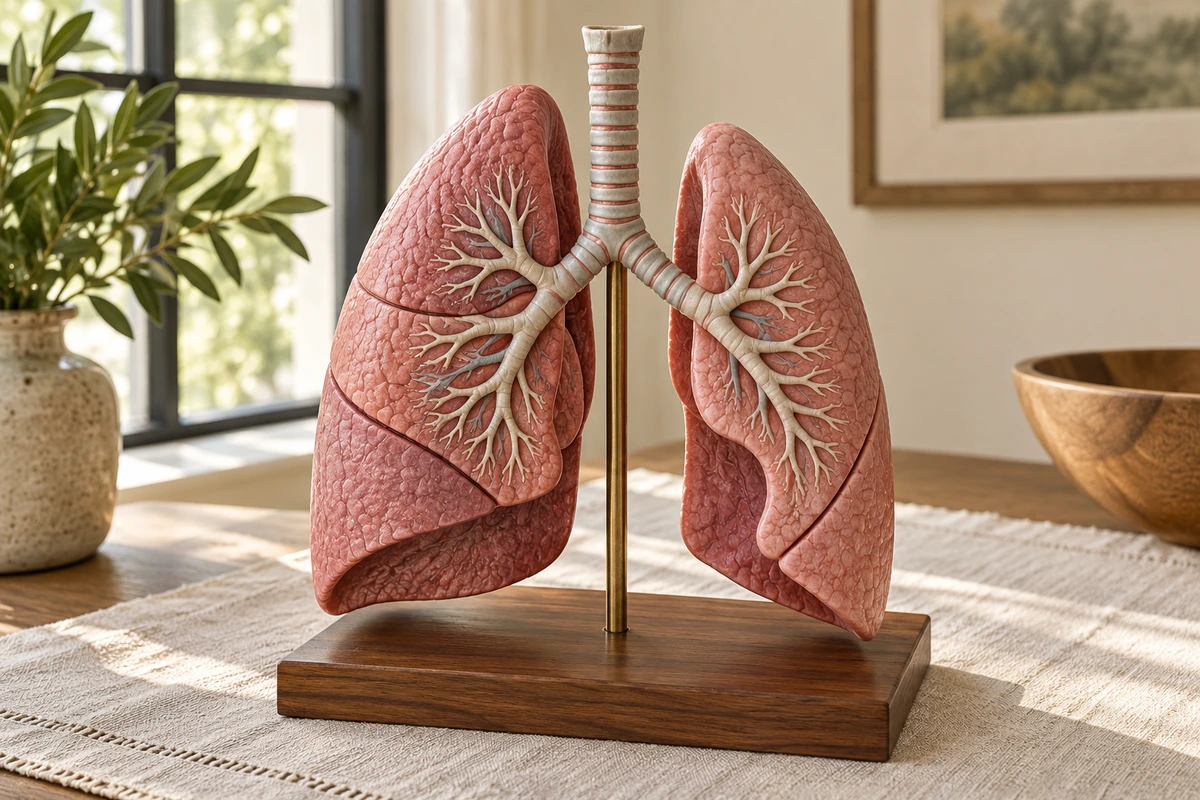
What the Lungs Do Every Day
The lungs bring oxygen into the blood and remove carbon dioxide. The conducting airways also have a clearing system: mucus traps material, and cilia help move it toward the throat, where it can be swallowed or expelled. Immune cells provide other defenses, including within the deeper lung.[2][3]
The ciliated airway lining and the air sacs are not the same structure. It is more accurate to describe movement toward the throat than to picture every tiny hair in the lung pointing upward or every particle being coughed out.
The Two Routes in the GAPS Account
Campbell-McBride describes blood and lymph as two broad routes from the digestive system. Her chapter links portal blood with the liver and lymph entering the bloodstream with the heart and lungs. She then describes the lungs receiving substances from both routes.[1]
The chapter’s description of fat-soluble substances generally travelling through lymph should not become a rule that all such substances bypass the liver forever. Likewise, its “second detox organ” framing is the author’s description, rather than a measurement of an individual lung’s workload.
How the Book Connects Gut Flora With Lung Health
The author proposes that abnormal gut flora and an impaired gut lining increase the material reaching other organs. In her account, nutritional deficiencies also make those organs less able to do their work. She applies that framework broadly to lung conditions.[1]
This is the GAPS interpretation of the connection. A breathing symptom does not identify gut toxins as its cause. Keep a respiratory assessment and an existing treatment plan alongside any nutritional work.
Supporting Research on Gut Microbes and Asthma Risk
In the CHILD study, researchers compared gut microbes from 319 children. Early microbial differences were associated with markers of asthma risk. The researchers also tested selected bacteria in mice and found an effect on airway inflammation in the offspring. The human observations and the mouse experiment were different parts of the study.[4]
This is a useful example of research examining the gut-lung relationship. It connects microbial patterns with respiratory outcomes in a defined setting, rather than treating the two systems as unrelated.
The Lung Microbiome
The GAPS chapter also discusses microbes within the lungs. Its list includes bacterial groups and Pneumocystis. This is the list Campbell-McBride gives. It is not a universal inventory that can be applied to every healthy lung or used to identify the cause of a particular illness.[1]
A change in microbial composition and a proven cause of symptoms are different findings. For the asthma-specific discussion, use the GAPS asthma guide rather than adding an attack or medication schedule to this overview.
Why This Matters in My Own Story
My asthma felt like breathing through a straw, with multiple attacks a day. When the emergency inhaler was not working, I went on steroids. I stopped them when I started GAPS and have had no issues since.[5]
That is my experience, and it is part of why I want these connections explained clearly. It is not an instruction to copy a medication change. The separate medication guide keeps that discussion and its exact sequence together.
Keep Useful Notes Together
- Record breathing symptoms and the circumstances in which they occur.
- Keep your inhaler and other medicine names with the record.
- Note digestive changes separately instead of assuming one explains the other.
- Follow your asthma action plan if you have one, and arrange assessment for new or worsening symptoms.
Severe breathing difficulty needs emergency help. Food planning or a gut explanation should not delay that response.[6]
Your Next Step
For a broader reading map, return to Liver, Bile, and Lungs. If your question is about asthma, continue with the focused asthma article.
If you are putting the wider GAPS plan together, Understanding & Preparing for the GAPS Diet is listed in the WFLI shop.
References
- Campbell-McBride, Natasha. Gut and Physiology Syndrome (2020), “The Liver and the Lungs.”
- NHLBI. How the Lungs Work.
- Alberts, B., et al. The Airways and the Gut. Molecular Biology of the Cell, fourth edition (2002).
- Arrieta, M.-C., et al. Early infancy microbial and metabolic alterations affect risk of childhood asthma. Science Translational Medicine (2015), 7:307ra152.
- Garnica, E. Personal account of maternal asthma, supplied September 2026. Additional family chronology: Our GAPS Journey.
- NHLBI. Asthma Attacks.

Leave a comment