

Fermented Cashew Faux Sour Cream is a thick dairy-free cultured condiment made from soaked raw cashews, dates, gelatin, filtered water, and live starter. It takes seven hours to soak and eighteen hours to culture, then firms further after chilling.
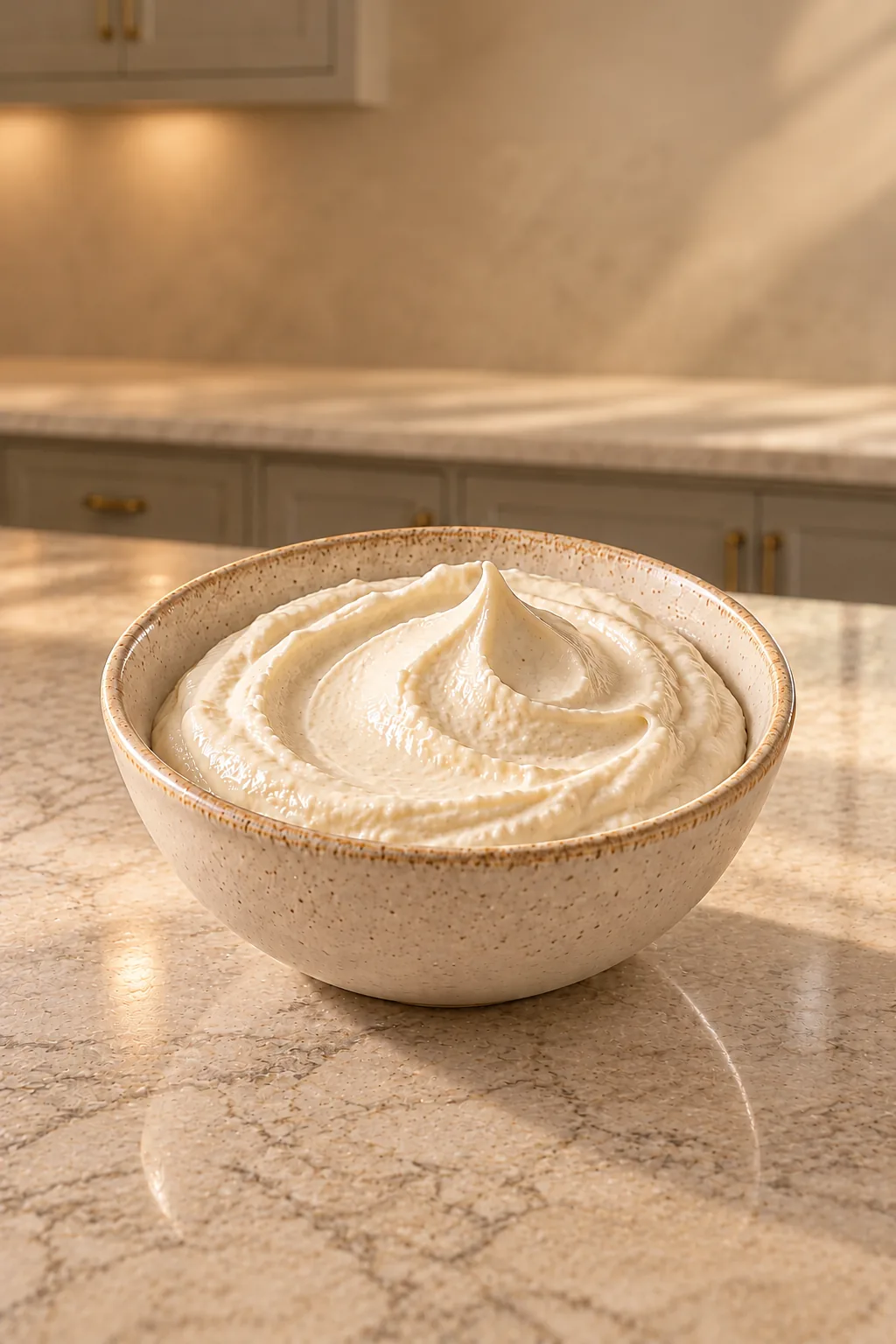
The finished cream should be pale ivory, completely smooth, clean-smelling, and distinctly tangy. It holds a soft peak on a spoon instead of running like nut milk. That texture lets it work as the sour-cream component in the linked Dairy-Free Beef Stroganoff With Cabbage Noodles without thinning the sauce.
In a busy family kitchen, this is the kind of component that needs its own place on the prep calendar. Start the cashew soak in the morning, blend and start the Luvele culture later the same day, then chill the finished batch before the meal that needs it.
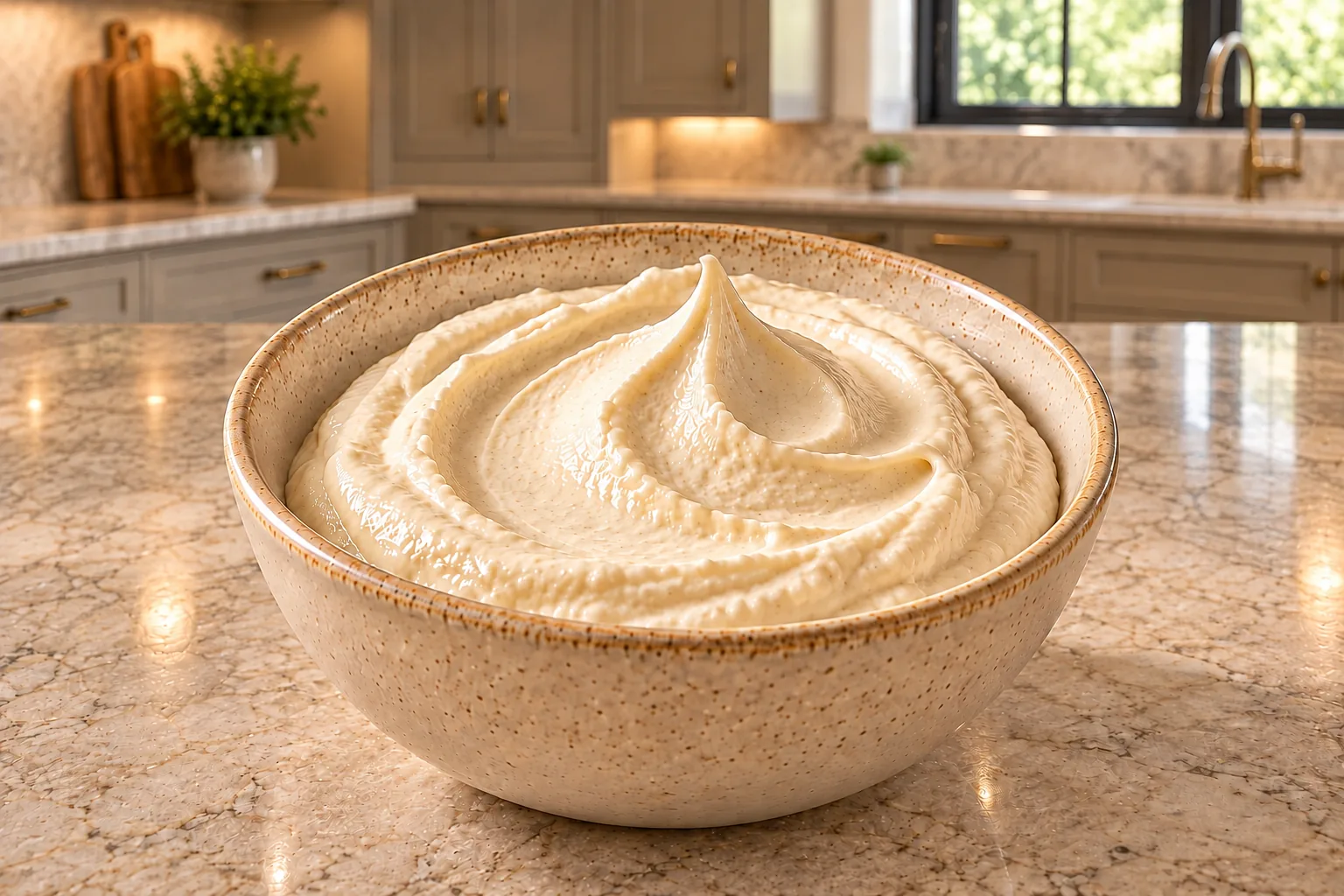
Where This Faux Sour Cream Fits On GAPS
This formula fits Full GAPS after cashews, dates, plain gelatin, and the chosen live dairy-free starter are individually introduced and tolerated. It is not an Introduction Diet recipe. Nuts and dried fruit have their own timing, and the cultured finished condiment belongs after those ingredients are established.
Use raw, whole, unroasted cashews. The source specifically distinguishes fresh, high-quality whole cashews from lower-quality pieces that can taste stale or off. The three dates stay part of the measured formula; do not replace them with sugar, syrup, or an unmeasured sweetener.
The starter also needs a complete ingredient check. Use a live dairy-free yogurt starter without starch, sugar, milk powder, or another non-GAPS filler. Keep the source amount at one-eighth teaspoon and follow that starter’s required culturing temperature in the Luvele.
Each measured ingredient has a separate job. Cashews provide the body, the dates soften the sharp edge without turning the cream into a dessert, gelatin supports the chilled texture, and the live starter develops the sour flavor. Keeping all four roles intact matters more than trying to make the ingredient list shorter.
Plan the batch backward from the meal that needs it. The seven-hour soak and eighteen-hour culture already require twenty-five hours before chilling. Starting at breakfast one day usually means the cream finishes culturing the following morning, with time left for the refrigerator to set the texture before dinner.
Soak The Cashews For Seven Hours
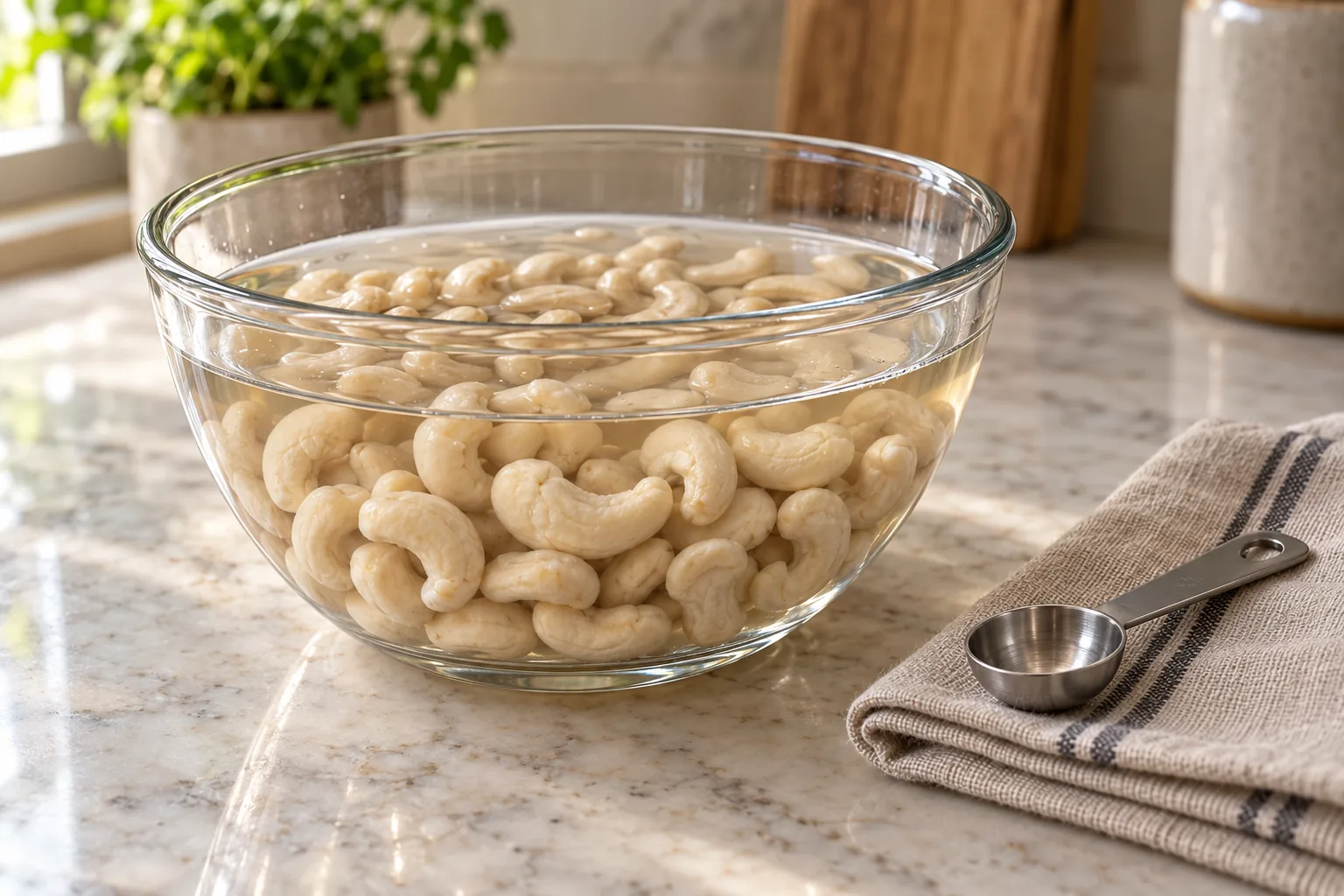
Put two cups raw cashews in a large glass bowl. Cover them generously with filtered water and stir in one teaspoon mineral salt. The cashews need room to expand while soaking, so the water line should sit well above the nuts.
Soak for the full seven hours. The cashews will look plumper and feel softer between your fingers, but the water should still smell clean. This is a measured preparation step, not the eighteen-hour culture; do not combine the two clocks.
Drain And Rinse Thoroughly
Pour the soaked cashews into a fine stainless-steel strainer and discard the soaking water. Rinse with fresh filtered water until the runoff is clear. Shake the strainer well so excess rinse water does not dilute the measured blending liquid.
The recipe uses exactly one and one-half cups fresh filtered water after soaking. Water clinging to the cashews is unavoidable, but carrying a bowlful of soak water into the blender changes the thickness and weakens the sour-cream texture.
Look over the rinsed cashews before blending. They should be pale, swollen, and clean-smelling. Discard the batch if the soak developed an unpleasant odor or visible spoilage. The later culture is intentional fermentation with a measured live starter; it does not correct a poor soaking batch.
Dissolve The Gelatin Separately
Measure one-quarter cup from the total one and one-half cups filtered water. Bring that quarter cup just to a boil in the Le Creuset stainless-steel saucepan, then remove it from the heat. Stir in one tablespoon plain unflavored bovine gelatin until no dry granules remain.
The dissolved mixture should look uniform rather than clumpy or stringy. Gelatin supports the chilled body of the finished faux sour cream. Doubling it would move the result toward the source’s firmer cream-cheese variation, so keep this sour-cream batch at one tablespoon.
Blend In The Exact Ninja BN801
Add the rinsed cashews, three pitted small dates, dissolved gelatin mixture, and the remaining one and one-quarter cups filtered water to the Ninja BN801 72-ounce pitcher. This batch is too large for the single-serve cup once the cashews and full water measure are combined.
Start low, then increase speed after the contents begin moving. Stop the motor completely before opening the lid or scraping the sides. Continue until no nut grains, date pieces, or gelatin streaks remain.
Rub a small amount between two clean fingers. The cream should feel silky, not sandy. It should pour in a thick ribbon and settle slowly. Keep blending rather than adding extra water when the texture is still grainy.
Scrape down the pitcher only with the motor stopped and the blades still. Dense cashew cream can cling above the moving portion, so one careful scrape may be needed before the final blend. When the entire batch moves as one smooth pale wave, check the rubbed texture again before transferring it.
Distribute The Starter Evenly
Spoon one tablespoon of the blended cashew cream into a small glass bowl. Mix the one-eighth teaspoon live starter into that small portion until there are no concentrated specks, then stir the inoculated portion back into the full batch.
This small-bowl step makes it easier to disperse a tiny measured amount through three cups of thick cream. Stir gently but thoroughly. The culture should be mixed throughout before the cream goes into the yogurt maker.
Use a clean dry bowl, spoon, Luvele container, lid, and spatula for this stage. The live starter should be the only culture intentionally added. Wash away detergent residue and avoid tasting with a utensil that will go back into the batch.
Culture In The Luvele For Eighteen Hours
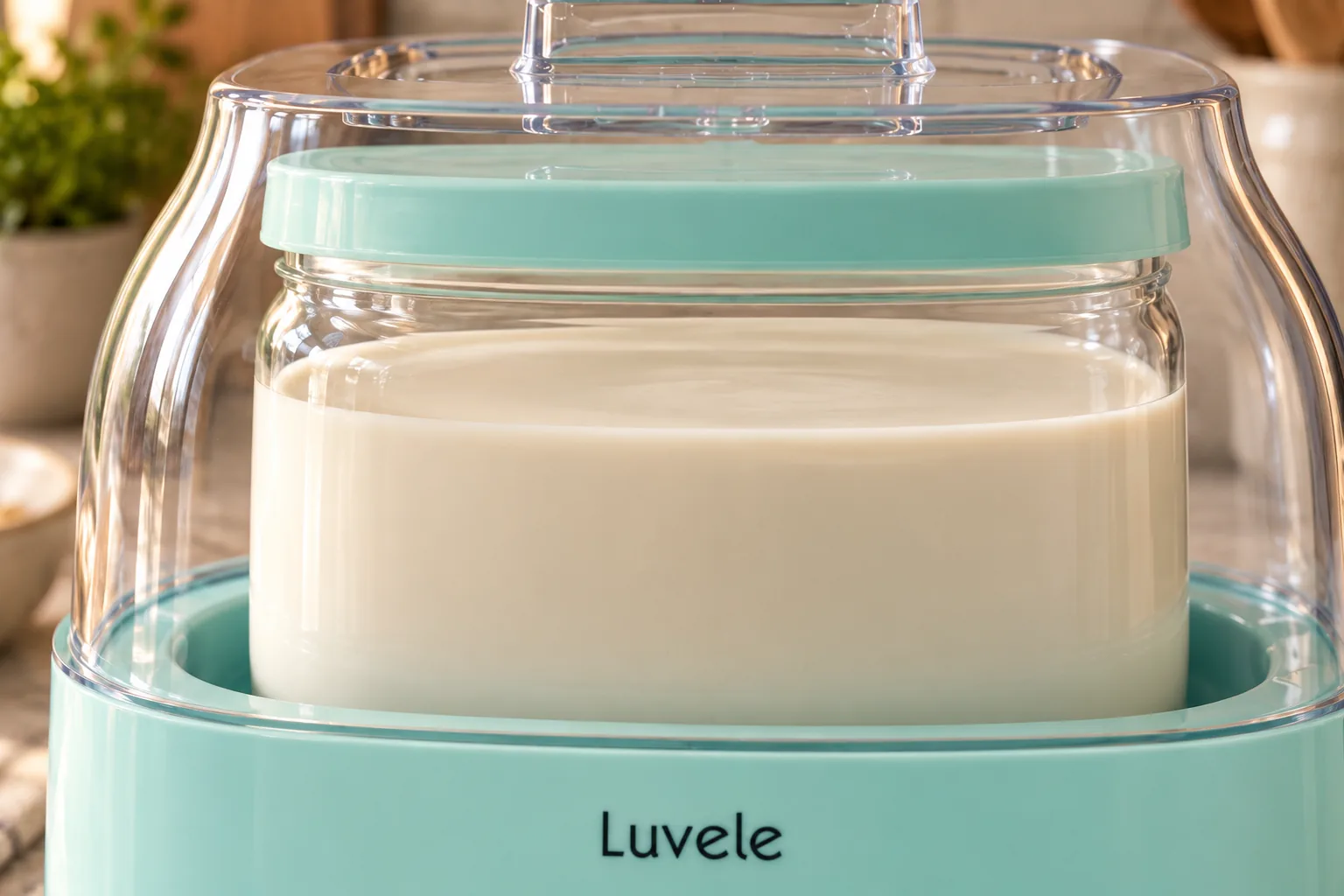
Transfer the cream to the exact Luvele Pure Plus LPPYM300WUSA two-liter glass container. Fit the container and cover correctly. Set the Luvele to the temperature required by the chosen live starter and culture for eighteen hours.
The source notes that twelve hours produced only a mild result, while eighteen hours made the tart cultured flavor needed for recipes. Keep the container closed and undisturbed. A stable warm environment supports the live culture; repeated opening interrupts it.
Check The Finished Physical Cues
At eighteen hours, the cream should smell clean and tangy. Its surface should remain pale and uniform, without colored growth, fuzzy patches, or an unpleasant odor. A slight increase in tang is expected; obvious spoilage is not.
The warm cultured cream may be softer than it will be after chilling. Stir gently, cover, and refrigerate promptly. The gelatin sets more firmly in the refrigerator, turning the smooth cultured base into a spoonable sour-cream texture.
Judge the final thickness only after the cream is cold. A spoon drawn through the chilled batch should leave a visible path, and a lifted spoonful should mound before slowly settling. Do not add more gelatin after culturing; that would not disperse evenly and would change the accepted formula.
Use And Store The Batch
The recipe makes about three cups. Use one-quarter cup in Dairy-Free Beef Stroganoff With Cabbage Noodles. For another cultured cashew preparation, use GAPS Cashew Yogurt. It also works as a cool topping, dip base, or cultured substitute in a recipe that specifically calls for this formula.
Keep the finished cream covered in the refrigerator and use clean utensils each time. Do not return a spoon that has touched other food to the storage jar. Label the container with the culture date so the batch does not become anonymous at the back of the refrigerator.
When using it in a warm recipe, stir it in at the finishing stage rather than boiling it hard. For the linked dairy-free beef stroganoff, the measured quarter cup meets the cooked beef and cabbage after the sauce has reduced. That keeps the cultured cream part of the finished sauce instead of cooking it for the full skillet time.
Recommended Equipment
- Large glass soaking bowl
- Fine stainless-steel strainer
- Le Creuset stainless-steel saucepan
- Ninja Professional Plus Kitchen System BN801 with 72-ounce pitcher
- Luvele Pure Plus LPPYM300WUSA with two-liter glass container
- Small glass bowl and silicone spatula
- Tablespoon and teaspoon measures
Frequently Asked Questions
Can I Skip The Seven-Hour Soak?
No. The soak, drain, and rinse are part of the measured source method and the GAPS nut-preparation route. Do not count culturing time as a substitute for soaking.
Why Is My Cream Grainy?
The cashews may need more blending, or they may not have soaked fully. Keep the measured liquid unchanged and blend until a rubbed sample feels smooth.
Can I Make The Cream-Cheese Version?
The source makes a firmer variation by doubling the gelatin. This card is the one-tablespoon sour-cream formula needed for the stroganoff, so the firmer variation stays outside this measured card.
Can I Use The BN801 Single-Serve Cup?
Use the 72-ounce pitcher for this full three-cup batch. The soaked cashews and one and one-half cups water exceed a comfortable small-cup working volume.
Why Is The Chilled Cream Too Soft?
Confirm that the full tablespoon of gelatin dissolved without granules, the post-soak water stayed at one and one-half cups, and the batch chilled completely. Extra soak water or an incomplete chill can leave the cream looser than intended.
What If It Is Not Tangy At Eighteen Hours?
Check that the starter was live, stored correctly, and cultured at its required temperature. Do not extend a questionable batch indefinitely. A clean but mild batch and a batch with an unpleasant odor are different situations; discard anything that shows spoilage.
Can I Double The Recipe?
Yes. The WPRM 2× control doubles every measured ingredient, but six cups of finished cream may exceed one Luvele container. Culture in two complete containers or separate batches without crowding.
Fermented Cashew Faux Sour Cream Recipe
Fermented Cashew Faux Sour Cream for Full GAPS
Ingredients
Equipment
Method
- Cover the raw cashews with filtered water, stir in 1 teaspoon mineral salt, and soak for 7 hours.
- Drain and rinse the cashews thoroughly until the runoff is clear.
- Bring 1/4 cup of the measured water just to a boil in the Le Creuset stainless saucepan. Remove from the heat and stir in 1 tablespoon gelatin until no granules remain.
- Put the rinsed cashews, 3 pitted dates, dissolved gelatin mixture, and remaining 1 1/4 cups filtered water into the Ninja BN801 72-ounce pitcher. Blend until completely smooth, stopping the motor before scraping.
- Remove 1 tablespoon of the smooth cashew cream to a small glass bowl. Mix the 1/8 teaspoon live dairy-free starter into that portion thoroughly, then stir it evenly back into the full batch.
- Transfer the cream to the Luvele Pure Plus 2-liter glass container. Set the machine to the temperature required by the chosen live starter and culture for 18 hours.
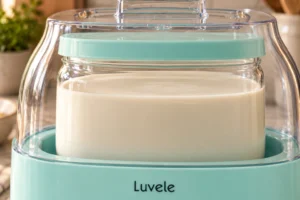
- When the cream smells clean and tangy and remains thick and uniform, cover and refrigerate promptly. Chill before serving; the texture firms further as it cools.
Notes
Starter: Use a live dairy-free yogurt starter with a complete GAPS-compatible ingredient list; follow its required culture temperature.
Timing: Preserve the source 7-hour soak and 18-hour culture.
Yield: About 3 cups.
Tried this recipe?
Let us know how it was!Build A Reliable Cultured-Dairy-Free Kitchen
The upcoming Dairy-Free GAPS Cookbook organizes cultured substitutes, sauces, soups, breakfasts, and family meals around the same ingredient and equipment rules. Find current releases and upcoming additions in the WFLI shop.

Leave a comment