

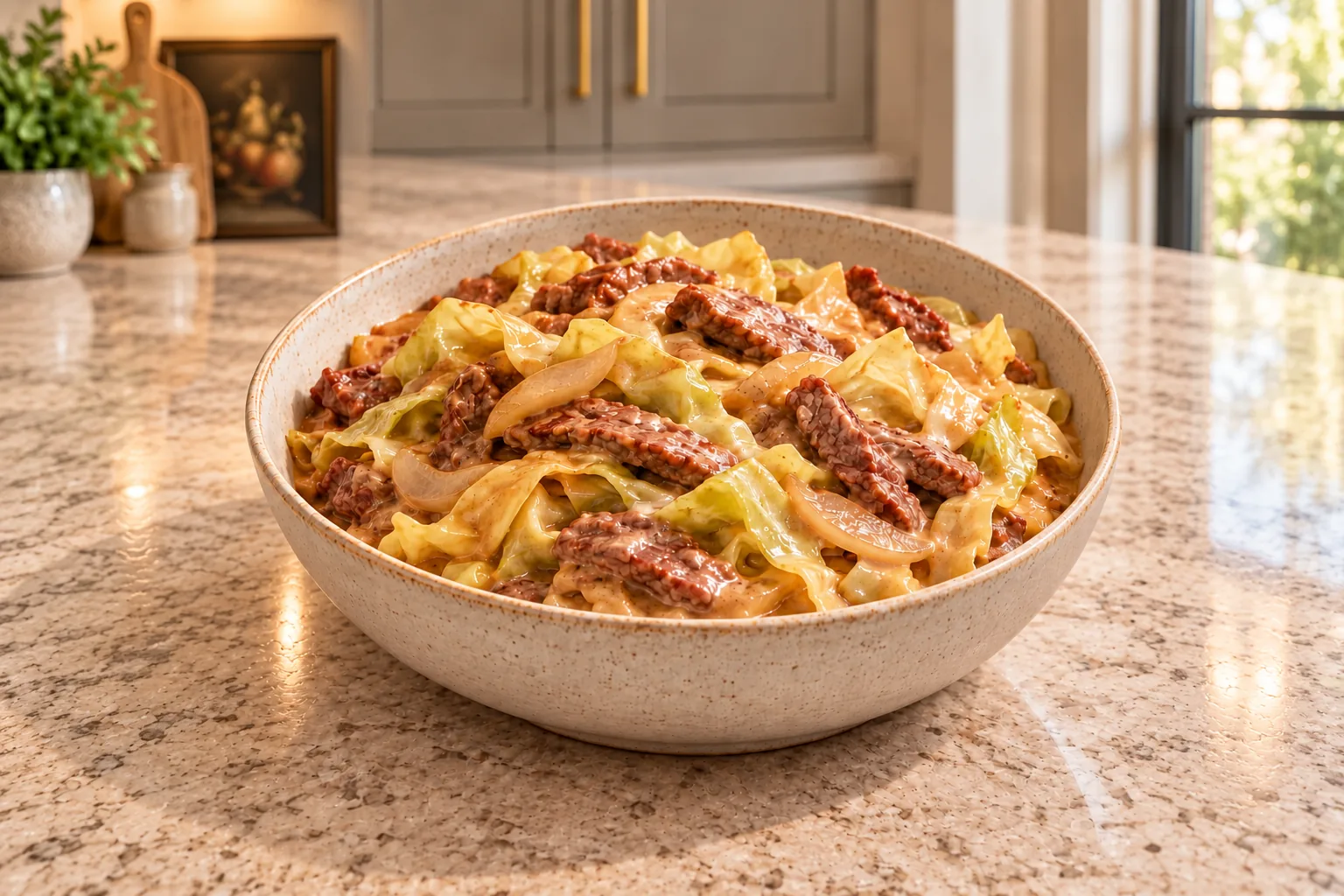
Dairy-Free Beef Stroganoff With Cabbage Noodles keeps the comfort of a creamy beef skillet while replacing egg noodles with wide cabbage ribbons and dairy sour cream with linked fermented cashew faux sour cream.
Thin London broil cooks in bacon grease with garlic, ginger, and coconut aminos until the liquid reduces into a glossy coating. In a second skillet, onion and cabbage soften for twenty minutes. The two pans come together with mineral salt and one-quarter cup cultured cashew cream.
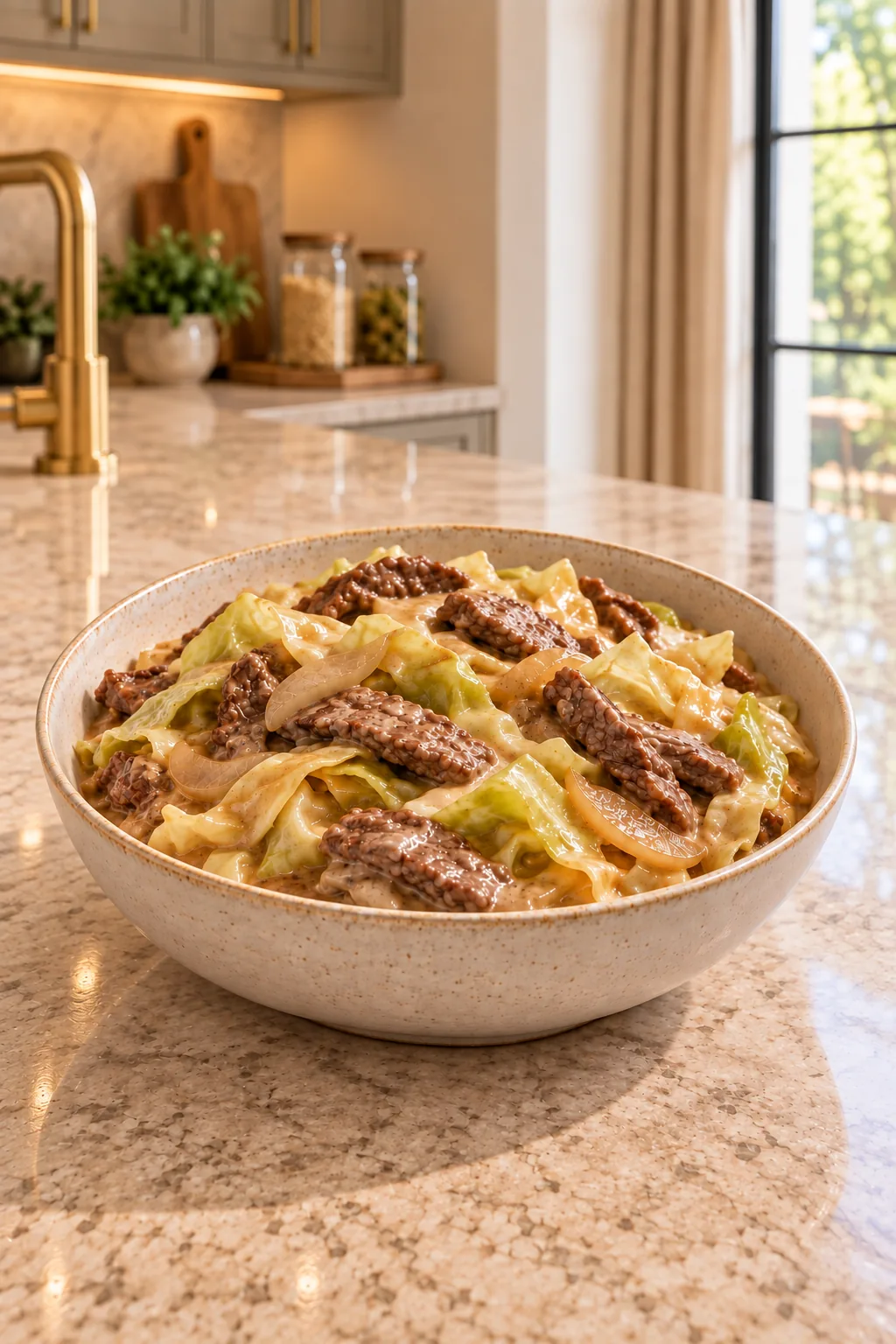
The finished sauce should cling to the beef and cabbage rather than pool underneath them. The cabbage stays recognizable as broad soft ribbons, the onion turns translucent, and the thin beef strips remain easy to bite. It is stroganoff in flavor and function without pretending cabbage tastes exactly like pasta.
For a busy family dinner, the useful part is that both skillets work at the same time. Start the cabbage first, begin the beef while it softens, then reduce the meat liquid before combining the full meal.
In our house, a two-skillet dinner works best when the second pan has a clear job instead of creating one more thing to manage. Here, the first skillet holds the slow-softening cabbage while the second gives the beef room to brown and the coconut aminos room to reduce. By the time both are ready, the only finishing work is folding them together with the cultured cashew cream.
Where This Stroganoff Fits On GAPS
This complete formula fits Full GAPS after cabbage, onion, beef, garlic, ginger, coconut aminos, bacon grease, mineral salt, and the linked fermented cashew sour cream are introduced and tolerated. It is not an Introduction Diet preparation.
The cabbage replaces grain noodles, and the cultured cashew component replaces dairy sour cream. Use Fermented Cashew Faux Sour Cream for the measured quarter cup. Standard cultured dairy sour cream belongs to a different variation and is not mixed into this dairy-free card.
Make the fermented cashew cream before dinner day so it has time to culture and chill. Measure the finished cream only after it reaches that recipe’s thick, tangy endpoint. A thin unfermented cashew blend will loosen this sauce and will not give the stroganoff the same cultured finish.
Use pure coconut aminos only after reading the complete current label. The product should not contain soy, wheat, refined sugar, starch, preservatives, or a flavored sauce blend. The measured quarter cup provides both liquid and savory depth during the beef reduction.
Slice The Cabbage Into Wide Noodles
The source uses one head of cabbage weighing about one pound ten ounces. Remove the core and cut the leaves into wide strips. Keep the ribbons broad enough to remain visible after twenty minutes in the skillet.
Thin shreds collapse into a soft mound and lose the noodle-like shape. Very thick wedges stay firm in the middle. Aim for long irregular ribbons of similar width, accepting the natural shorter pieces from the curved inner leaves.
Start The Cabbage And Onion First
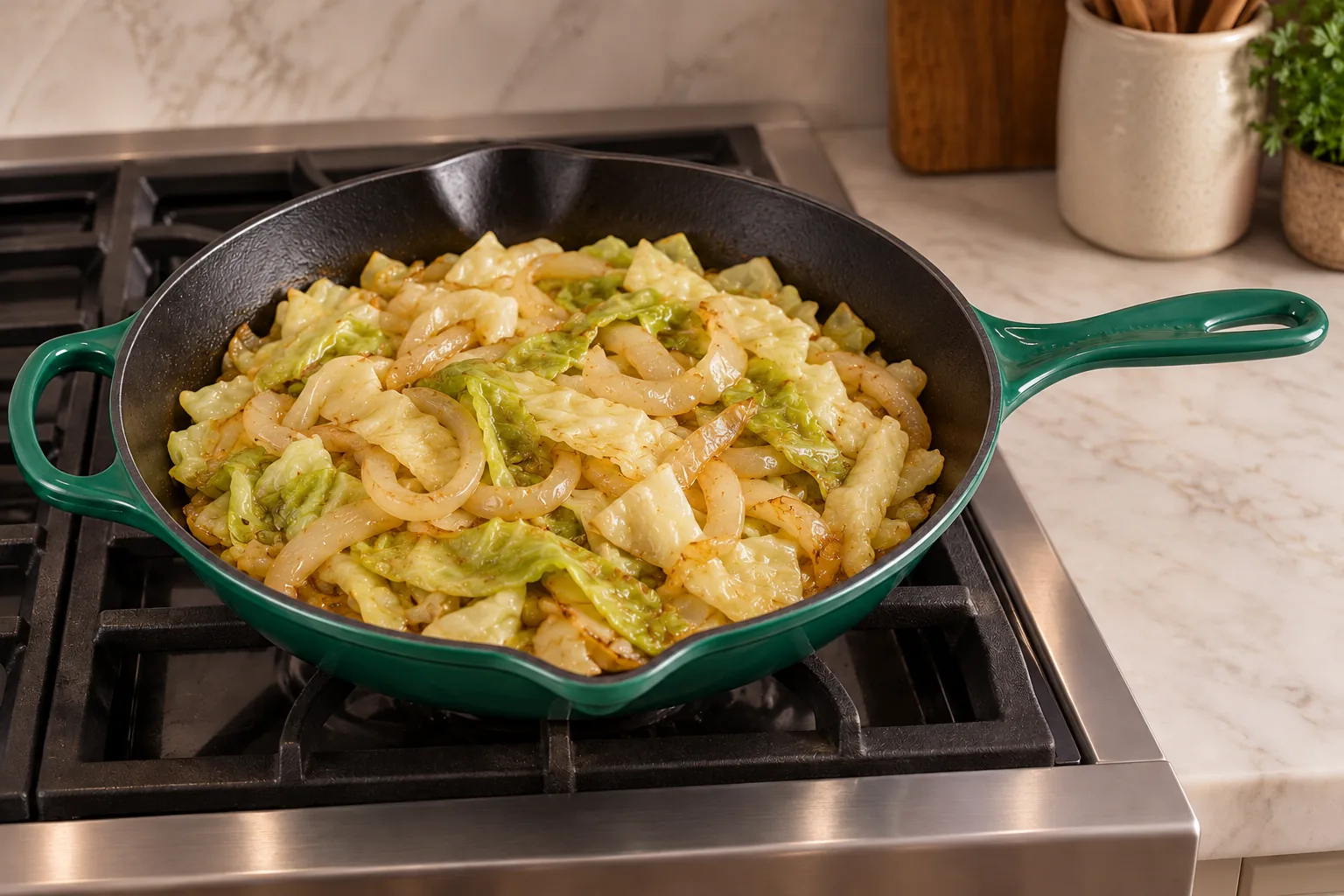
Melt four tablespoons homemade bacon grease saved from properly prepared additive-free uncured bacon in the first Le Creuset Signature 10.25-inch Artichaut skillet over medium heat. Add the wide cabbage ribbons and one small sliced onion, about six ounces.
Sauté for twenty minutes, stirring often so the lower leaves do not scorch. The onion should become translucent and the cabbage should turn glossy, soft, and limp while retaining broad folds. Lower the heat when that stage is reached.
Slice The London Broil Thinly
Cut one and one-half pounds London broil into thin strips. Slice across the visible grain whenever possible. Thick chunks need different timing and do not distribute through the cabbage the way narrow strips do.
Pat the strips dry before they reach the second skillet. Excess surface water turns the first ten minutes into steaming and delays browning. Keep the garlic, grated ginger, and coconut aminos ready because they enter after the initial beef cook.
Cook The Beef In A Separate Skillet
Melt the remaining two tablespoons bacon grease in the second Artichaut skillet over medium heat. Add the thin beef strips and cook for ten minutes, turning and separating them as needed.
The meat should lose its raw red surfaces and begin browning at the edges. Keep the heat steady rather than crowding both the beef and cabbage into one pan. The separate skillet gives the beef room to cook before the liquid ingredients arrive.
Add Garlic Ginger And Coconut Aminos
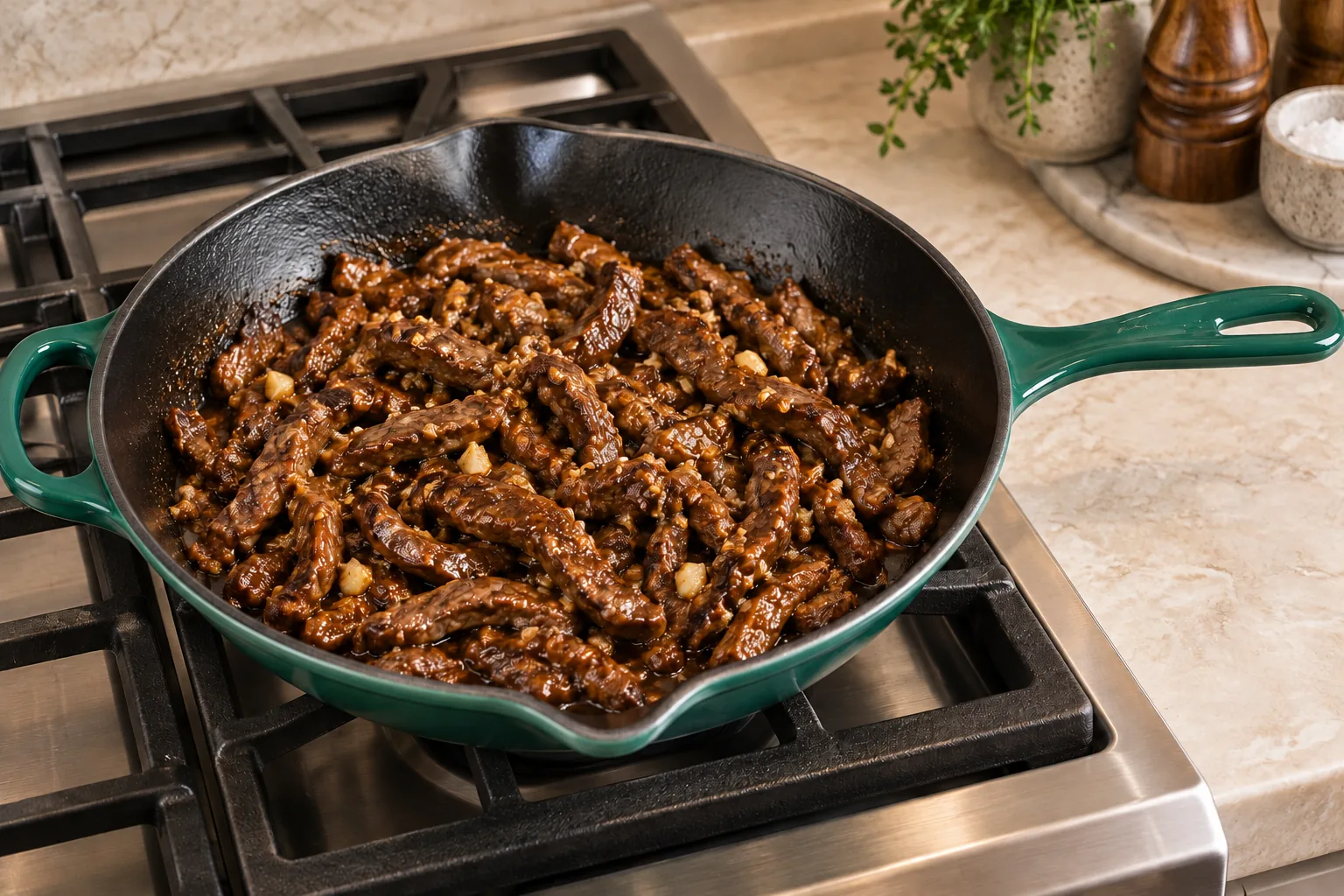
Add four coarsely chopped garlic cloves, one-quarter teaspoon grated ginger, and one-quarter cup pure coconut aminos to the beef. Continue cooking for ten more minutes.
At first, the coconut aminos will run freely between the strips. The garlic pieces stay visible while the ginger disappears into the liquid. Turn the beef so every strip meets the seasoned sauce.
Reduce Until The Liquid Clings
Turn up the heat only enough to reduce the remaining liquid. Watch the bottom of the skillet. The sauce is ready when it looks glossy and thick, coats the meat, and leaves only a thin film when a strip is moved.
Do not reduce until the garlic burns or the coating turns black and sticky. The sauce still needs enough moisture to spread through the cabbage and cultured cream during the final combination.
Combine The Two Skillets
Add the beef and its reduced coating to the softened cabbage and onion. Sprinkle in one teaspoon mineral salt. Fold carefully from the bottom so the beef distributes without shredding the cabbage into smaller pieces.
Add one-quarter cup fermented cashew faux sour cream at the finishing stage. Stir until no white streaks remain and a light-brown creamy sauce coats both meat and cabbage. Keep the heat low; the cultured cream does not need a hard boil.
The source also allows plating the cabbage first, spooning the beef over it, and adding the sour cream as a dollop. This card keeps the printed combined method, while the article preserves the separate-plating option for families who prefer distinct textures.
If you choose the separate-plating finish, keep the same measured quantities: divide the softened cabbage among the plates, spoon the reduced beef over it, and add the measured cultured cream across the servings. This changes the presentation, not the formula.
Use The Final Texture Cues
Lift a cabbage ribbon with a fork. It should bend easily without dissolving. A beef strip should be tender enough to bite through, and the sauce should remain on both ingredients instead of draining back into the skillet.
If the sauce looks loose, keep the skillet over low heat briefly while folding. If it looks dry, first confirm that all reduced beef coating and the full quarter cup sour cream reached the cabbage before changing the measured formula.
Serve The Stroganoff Hot
Serve the stroganoff as soon as the sauce is evenly creamy and hot. The formula yields three generous servings or more modest portions when another vegetable side is included.
For a plain cabbage preparation with its own measured method, use Braised Cabbage Noodles for Full GAPS. Keep that component distinct from this bacon-grease, beef, coconut-aminos, and cashew-cream skillet.
Store And Reheat Leftovers
Cool leftovers promptly and refrigerate them in a covered glass container for up to three days. Keep the sauce with the beef and cabbage so the meat does not dry around the edges.
Reheat gently in a covered skillet over low heat, stirring occasionally. Uncover near the end if extra moisture has collected. High heat can tighten the beef and make the cultured sauce separate.
Recommended Equipment
- Two Le Creuset Signature 10.25-inch Artichaut skillets
- Stable wooden cutting board
- Sharp chef’s knife
- Fine grater for the ginger
- Stainless-steel tongs or wide spatula
- Tablespoon, teaspoon, and quarter-cup measures
- Covered glass storage container
Frequently Asked Questions
Can I Use Dairy Sour Cream?
This card is the dairy-free source branch and uses the linked fermented cashew sour cream. A cultured-dairy variation should remain separately labeled rather than silently changing this formula.
Can I Replace The Bacon Grease?
Other homemade GAPS cooking fats may be permitted, but the source measures six tablespoons bacon grease and divides it between the cabbage and beef. This card preserves that measured fat.
Why Is My Cabbage Watery?
The pan may be crowded or the cabbage may need more time before the heat is lowered. Stir often and let released moisture cook away while the onion becomes translucent.
Why Is My Beef Sauce Thin?
Finish the source’s reduction step before combining the skillets. The coconut-aminos liquid should visibly coat the beef rather than run freely around the pan.
Can I Use Ground Beef?
No. This formula uses one and one-half pounds thinly sliced London broil. Ground beef changes the texture, fat release, and sauce contact and belongs in a separate recipe.
Can I Double The Recipe?
Yes. Use the WPRM 2× control, then cook the cabbage and beef in roomy batches if your two skillets cannot hold the doubled amounts without crowding. Give each batch the same visual endpoints before combining everything in a larger GAPS-compatible vessel.
Dairy-Free Beef Stroganoff Recipe
Dairy-Free Beef Stroganoff With Cabbage Noodles
Ingredients
Equipment
Method
- Melt 4 tablespoons bacon grease in the first Artichaut skillet over medium heat.
- Add the sliced onion and wide cabbage ribbons. Saute for 20 minutes, stirring often, until the onion is translucent and the cabbage is glossy, soft, and limp but still visibly broad. Lower the heat.

- Melt the remaining 2 tablespoons bacon grease in the second Artichaut skillet over medium heat. Add the thin London broil strips and cook for 10 minutes, turning and separating them until no raw red surface remains.
- Add the grated ginger, coconut aminos, and coarsely chopped garlic to the beef. Cook for 10 more minutes, turning the strips through the liquid.
- Increase the heat only enough to reduce the liquid until it is thick, glossy, and clings to the beef without burning the garlic.
- Add the beef and its coating to the cabbage. Add the mineral salt and 1/4 cup fermented cashew faux sour cream. Fold over low heat until the sauce is evenly creamy and coats the beef and cabbage. Serve hot.
Notes
Dairy-free component: Use the linked Fermented Cashew Faux Sour Cream for the measured quarter cup.
Timing: The source gives parallel 20-minute cabbage and 20-minute beef sequences followed by an unmeasured reduction; no unsupported total time is added.
Yield: The source yields 3 or more servings.
Tried this recipe?
Let us know how it was!Keep Comforting Full GAPS Dinners Organized
The upcoming Dinner Cookbook organizes skillet meals, soups, roasts, casseroles, and family-size GAPS dinners by method and prep needs. Find current releases and upcoming additions in the WFLI shop.

Leave a comment