

Braised cabbage noodles are what I make when dinner needs a warm vegetable base with more flavor than plain boiled cabbage. One green cabbage is cut into wide ribbons, browned in an Artichaut skillet, and finished with a small amount of homemade meat stock. The strips soften without disappearing, and the stock loosens every browned bit from the pan so the cabbage tastes savory from edge to edge.
This is a useful Full GAPS side because it works with food that is already familiar. There is no specialty noodle product to buy and no fragile dough to manage. On a busy school day, I can cut the cabbage earlier, keep the ribbons covered in the refrigerator, and cook them while the rest of dinner rests. The pan needs attention for only a few short stages, and the physical cues are easy to see.
This post contains one complete formula for braised cabbage noodles. The faster water-cooked version belongs in the separate boiled-cabbage-noodle recipe, and the herb meatballs each have their own recipe and cooking method. Keeping the formulas separate makes the ingredient quantities, times, photographs, and WP Recipe Maker card unambiguous.
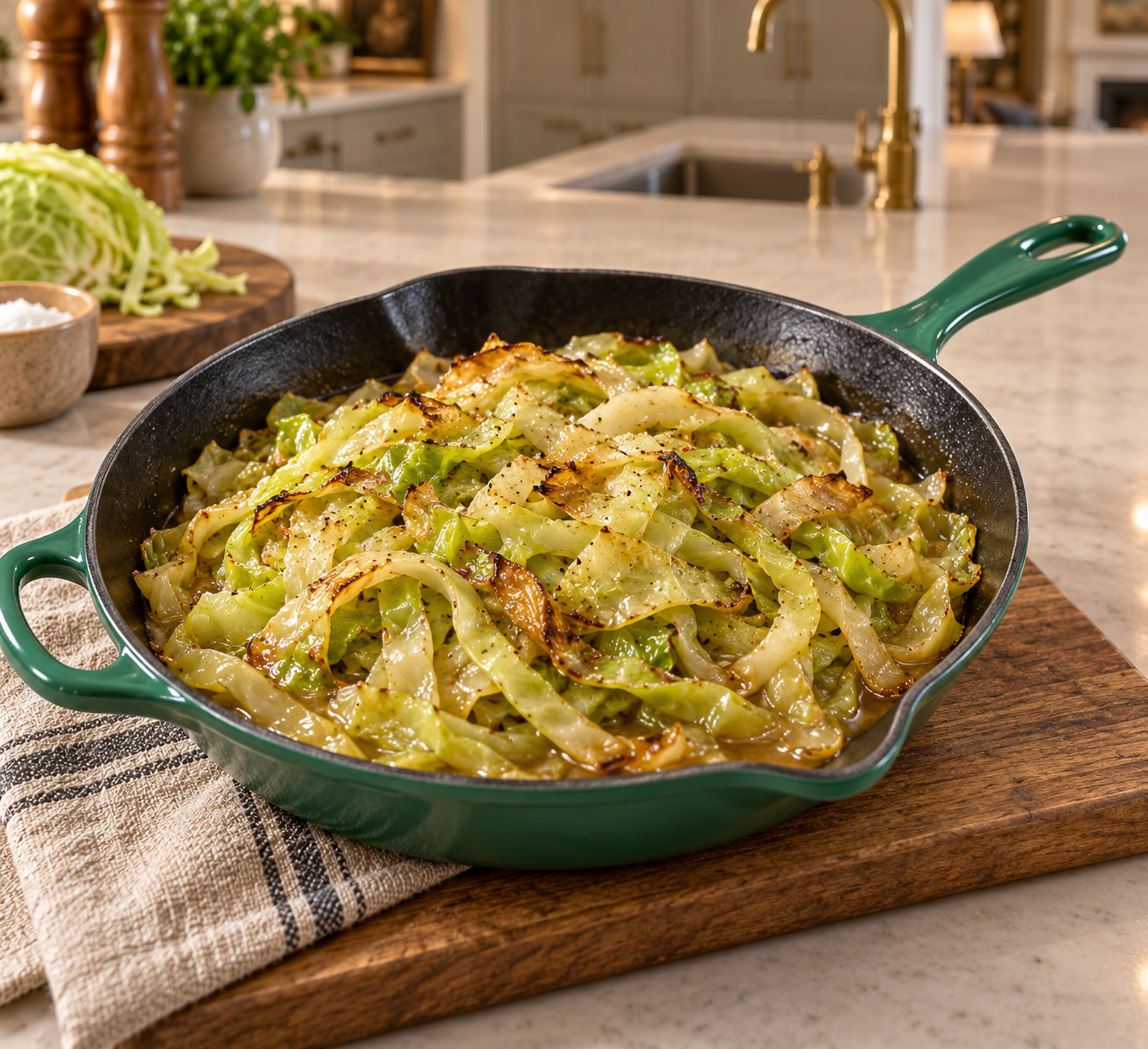
Why Braising Makes Better Cabbage Noodles
Cabbage contains plenty of its own moisture. If a crowded skillet is covered too early, the strips steam before they have a chance to brown. The result can be soft and wet, with very little flavor from the pan. This method starts over medium-high heat in the largest suitable skillet, giving the cabbage room to wilt and pick up browned edges before the lid goes on.
The covered stage finishes tenderizing the thicker pieces. A measured quarter cup of homemade meat stock then deglazes the pan. You are not trying to make soup. The stock should bubble quickly, dissolve the browned fond, and leave just enough glossy liquid to coat the ribbons. Optional apple cider vinegar adds a gentle tang, while ginger or black pepper can supply a warm finish.
Choose the Cabbage and Cooking Fat
Use one firm head of green cabbage. The outside leaves should look crisp and tightly attached, without wet dark patches. A medium-to-large head that fits your skillet after slicing is easier to cook evenly than an oversized cabbage packed into a small pan.
The source formula uses two tablespoons of cooking fat. Bacon fat works only when it was rendered from GAPS-compatible salt-only, traditionally aged, unsmoked bacon without sugar, starch, smoke flavor, preservatives, curing salts, or other additives. An ordinary “uncured” label does not answer those ingredient questions. If that bacon is not available, use another accepted animal fat such as lard, beef tallow, chicken fat, or duck fat.
The fat should be clean and fresh-smelling. Warm it only until it flows easily and coats the skillet. If it begins smoking, the pan is too hot; lower the heat briefly before adding the cabbage.
Use Finished Homemade Meat Stock
Measure one quarter cup of complete, strained homemade raw-meaty meat stock. A mild chicken meat stock keeps the cabbage light, while beef meat stock gives the pan juices a deeper flavor. Either one works; choose the stock that fits the main dish you are serving.
This small amount is a finishing liquid, so do not replace it with water and expect the same result. The stock carries the flavor from the raw meaty parts used to make it and binds with the rendered fat and browned fond in the skillet. Measure after the stock is finished and strained.
How to Cut Cabbage Into Noodles
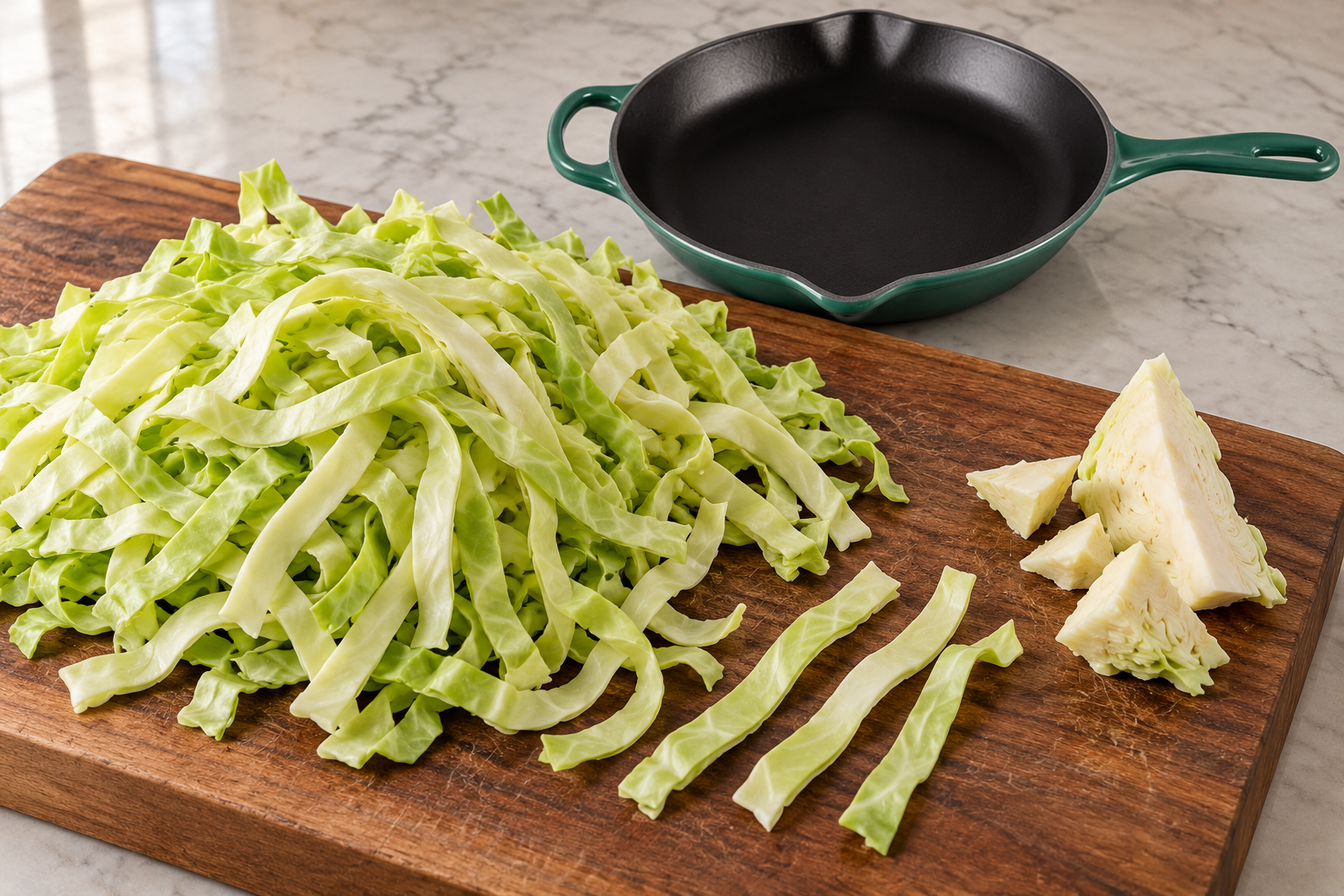
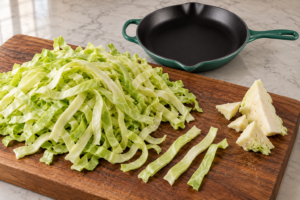
Cut the cabbage in half through the stem, then cut each half in half again to make four quarters. Set one quarter on a flat cut side and slice downward at an angle to remove the hard core. Repeat with the other quarters.
Slice across each quarter into strips about one-third inch wide, similar to fettuccine. The ribbons do not need to be perfectly identical, but avoid mixing paper-thin shreds with very thick pieces. Thin shreds will disappear before the wider strips become tender. Pull apart any sections that remain stuck together before they go into the skillet.
A whole head makes a large pile when raw. That is normal. Use the largest skillet you have, and add the strips in two quick additions if needed. The first handful will begin to wilt and make room for the rest within a minute or two.
How to Make Braised Cabbage Noodles
Heat the Skillet
Set a large cast-iron or uncoated stainless-steel skillet over medium-high heat. Let it heat before adding the fat. The fat should spread in a thin, shimmering film when you swirl the pan, but it should not smoke.
Sauté Until the Edges Begin to Brown
Add the sliced cabbage and one teaspoon mineral salt. Toss to coat the ribbons in the fat. Cook for about 5 minutes, stirring and turning the cabbage so fresh surfaces touch the hot skillet. The mound should shrink, the pale centers should begin turning translucent, and scattered edges should take on light golden-brown spots.
If liquid collects immediately, the pan is overcrowded or the heat is too low. Spread the cabbage out, raise the heat slightly, and let the moisture cook away before covering. Browning happens only after the surface moisture stops pooling.
Cover and Tenderize
Turn the heat to low, cover the skillet, and cook for 5 minutes. The trapped steam softens the thicker ribbons. When you lift the lid, the cabbage should smell sweet and savory rather than raw and sulfurous. A ribbon should bend easily but still hold its shape.
Deglaze With Meat Stock
Pour in the quarter cup of meat stock and the optional apple cider vinegar. The liquid should bubble as soon as it reaches the hot pan. Scrape the bottom with a wooden or silicone spatula and fold the cabbage through the loosening browned bits. Keep turning until the ribbons look glossy and the liquid is reduced to a shallow coating rather than a puddle.
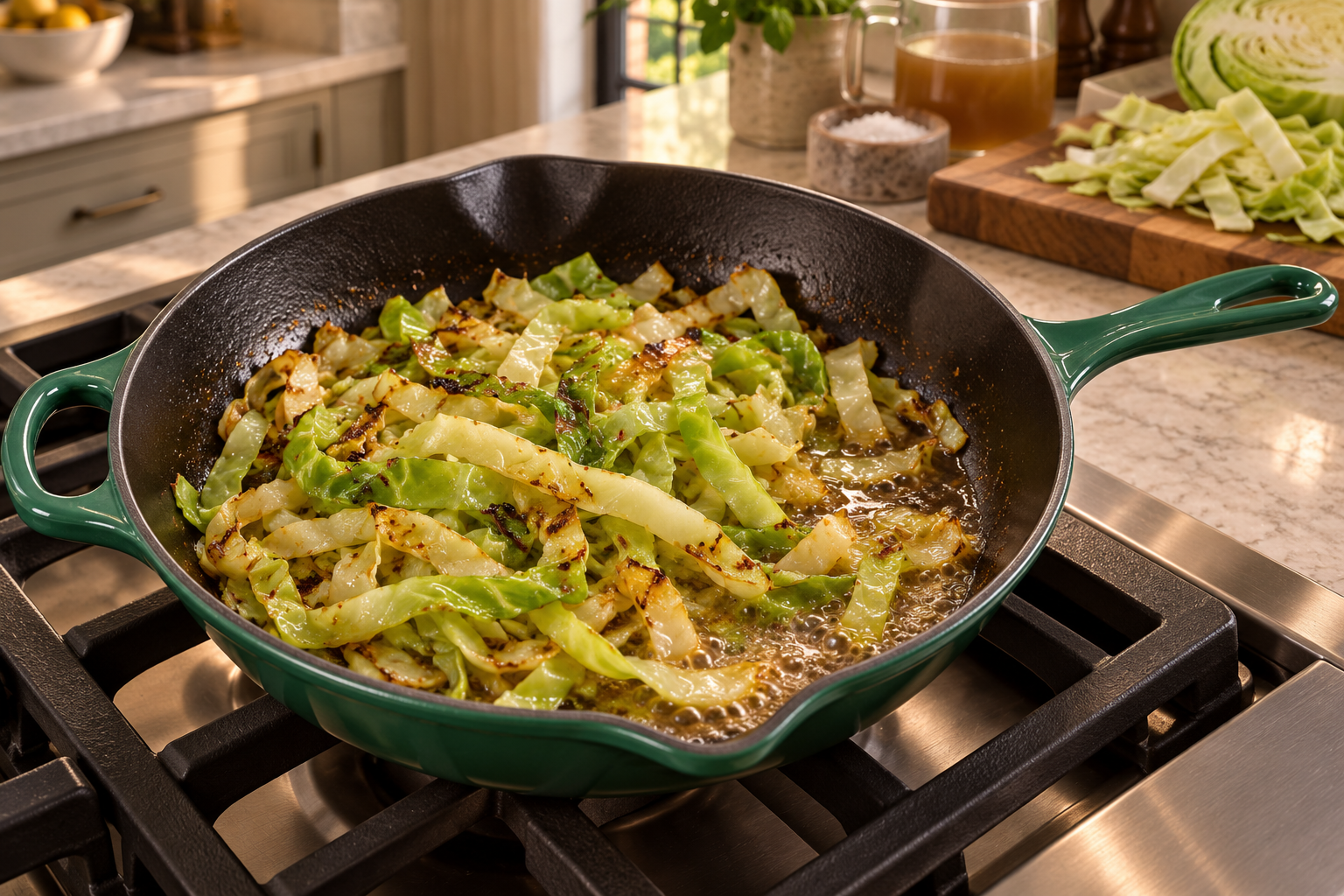
Taste one of the thicker strips. If it is tender enough for your meal, remove the skillet from the heat. If you want softer noodles, cover and cook on low for up to 5 minutes more. Stir in the optional ginger or freshly ground black pepper, then taste before adding more salt.
What the Finished Noodles Should Look and Taste Like
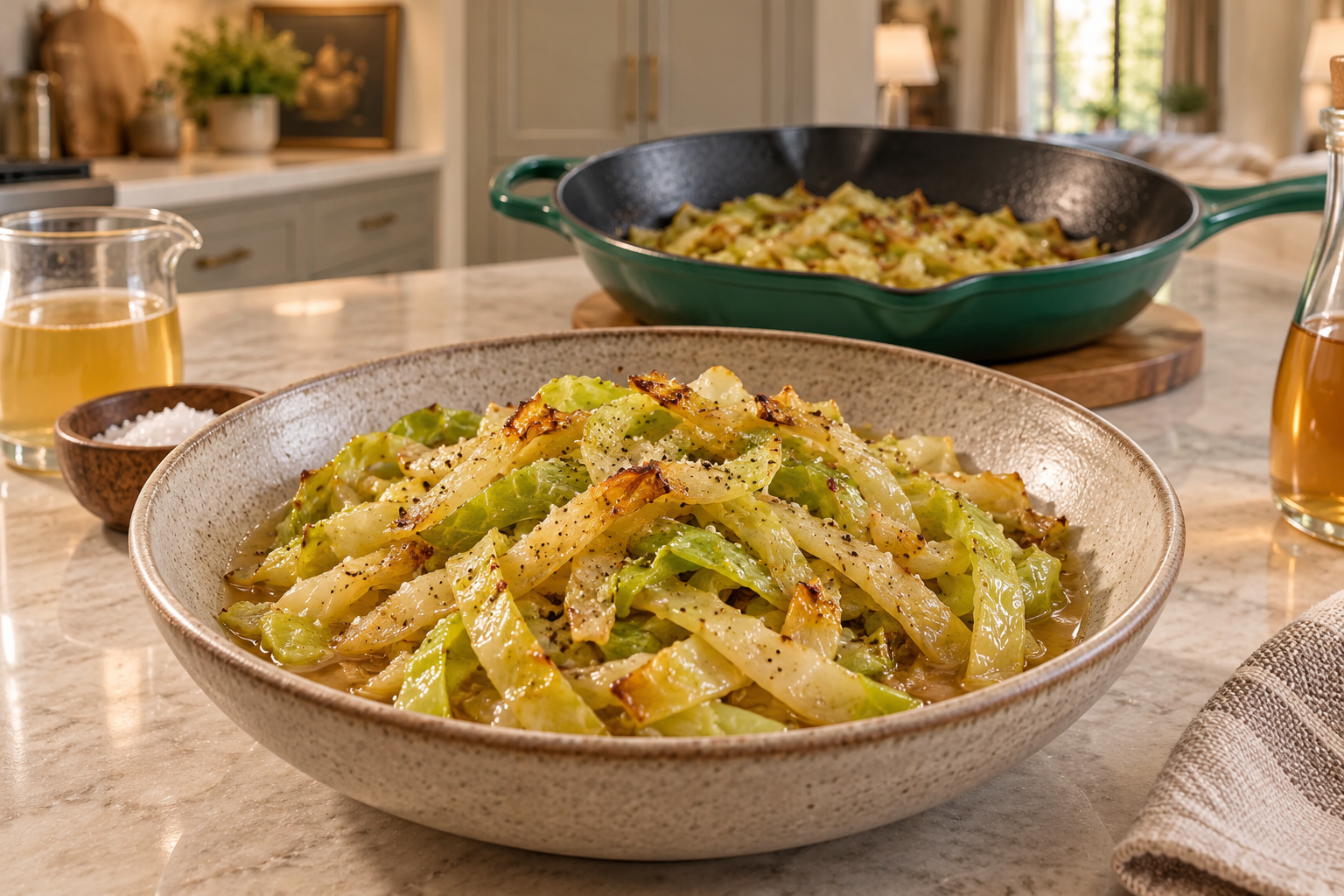
The finished strips should be soft enough to coil on a fork but distinct enough to see as ribbons. Look for translucent pale centers, brighter green leaf edges, and scattered caramel-brown marks. The pan juices should cling to the cabbage and collect only lightly at the bottom of a serving bowl.
The flavor is savory and gently sweet from the browned cabbage. Chicken stock keeps it mild; beef stock makes it richer. Apple cider vinegar gives the finish a small bright edge without making the noodles taste pickled. Ginger is warmer and softer, while black pepper is sharper. Choose one optional finish rather than adding every variation at once.
Braised Cabbage Noodles for Full GAPS
Ingredients
Equipment
Method
- Quarter the cabbage through the stem, cut the hard core from each quarter, and slice into ribbons about 1/3 inch wide. Separate any strips that remain stuck together.
- Heat the largest suitable skillet over medium-high heat. Add the animal fat and swirl until it forms a thin shimmering film without smoking.
- Add the cabbage and mineral salt. Sauté for about 5 minutes, stirring and turning, until the mound shrinks, pale centers begin turning translucent, and scattered edges show light golden-brown spots.
- Turn the heat to low, cover, and cook for 5 minutes. The thicker ribbons should bend easily but still hold their shape.
- Add the meat stock and optional apple cider vinegar. Scrape up the browned fond and fold the cabbage through the bubbling liquid until the ribbons look glossy and only a shallow coating remains.
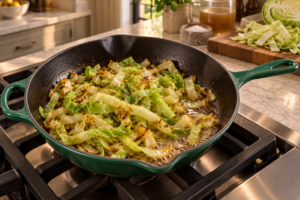
- Taste a thick ribbon. For softer noodles, cover and cook on low for up to 5 minutes more. Stir in the optional ginger or pepper, taste, and add salt only if needed.
Notes
Tried this recipe?
Let us know how it was!What to Serve With Braised Cabbage Noodles
Use these noodles anywhere a tender, savory vegetable base makes sense. They work under a spoonful of Stovetop Nomato Sauce, beside roasted chicken, or under meatballs after those foods have been introduced and tolerated. A little of the meat’s pan juice can be spooned over the cabbage at serving time.
For a simple supper, pair them with fresh meat patties or an additive-free sausage that meets the same ingredient standards used throughout Full GAPS. The cabbage is already seasoned and glossy, so the main dish does not need a heavy sauce.
Storage, Make-Ahead, and Reheating
Cool leftovers promptly and refrigerate them in a covered container. Reheat in a skillet over low heat with one or two tablespoons of meat stock, stirring gently until steamy. The small splash restores moisture without turning the noodles into soup.
For make-ahead preparation, quarter, core, and slice the cabbage earlier in the day. Keep the ribbons covered and chilled, then cook them shortly before the meal. Fully cooked cabbage can also be reheated, but the browned edges are best on the day it is made.
Freezing changes the texture because the cabbage releases more water after thawing. If you freeze leftovers, thaw them in the refrigerator and reheat uncovered until the extra moisture evaporates.
Recommended Equipment
- A large Le Creuset Signature skillet in Artichaut or a large uncoated stainless-steel skillet
- A stable cutting board
- A large sharp chef’s knife
- A wooden or silicone spatula that will not damage the cooking surface
- A fitted lid for the covered tenderizing stage
- Measuring cups and spoons
Frequently Asked Questions
Is This Recipe for Intro GAPS?
This is a Full GAPS recipe. Use it after cabbage, the chosen animal fat, the selected finished meat stock, and any optional vinegar or seasoning have been introduced and tolerated.
How Wide Should I Slice the Cabbage?
Aim for strips about one-third inch wide, similar to fettuccine. Consistent width helps the ribbons become tender at the same time.
Why Did My Cabbage Steam Instead of Brown?
The skillet may have been too small, too cool, or covered before surface moisture cooked away. Use the largest pan available, begin over medium-high heat, and wait for scattered browned edges before the covered stage.
Can I Use Bone Broth?
Use finished homemade raw-meaty meat stock for this formula. Meat stock and bone broth have different preparation and timing roles in GAPS; the first year uses meat stock rather than bone broth, and some people remain with meat stock longer.
Do I Have to Add Apple Cider Vinegar?
No. It is optional. Use stock alone for a neutral savory noodle, or add the measured cider vinegar for a slightly brighter finish. Do not substitute balsamic vinegar.
Can I Double the Recipe?
Yes, but use two large skillets or cook in two batches. Packing two heads into one pan prevents browning. Double every measured ingredient and keep the same physical cues and stage times for each pan.
More Help for Everyday Full GAPS Meals
If planning the vegetable, stock, fat, and main dish at the same time is the part that makes dinner difficult, browse the Well Fed & Lived In shop for the upcoming Dinner Cookbook and practical kitchen-planning resources. The goal is a repeatable meal rhythm with enough clear cues that you can cook without second-guessing every pan.

Leave a comment