

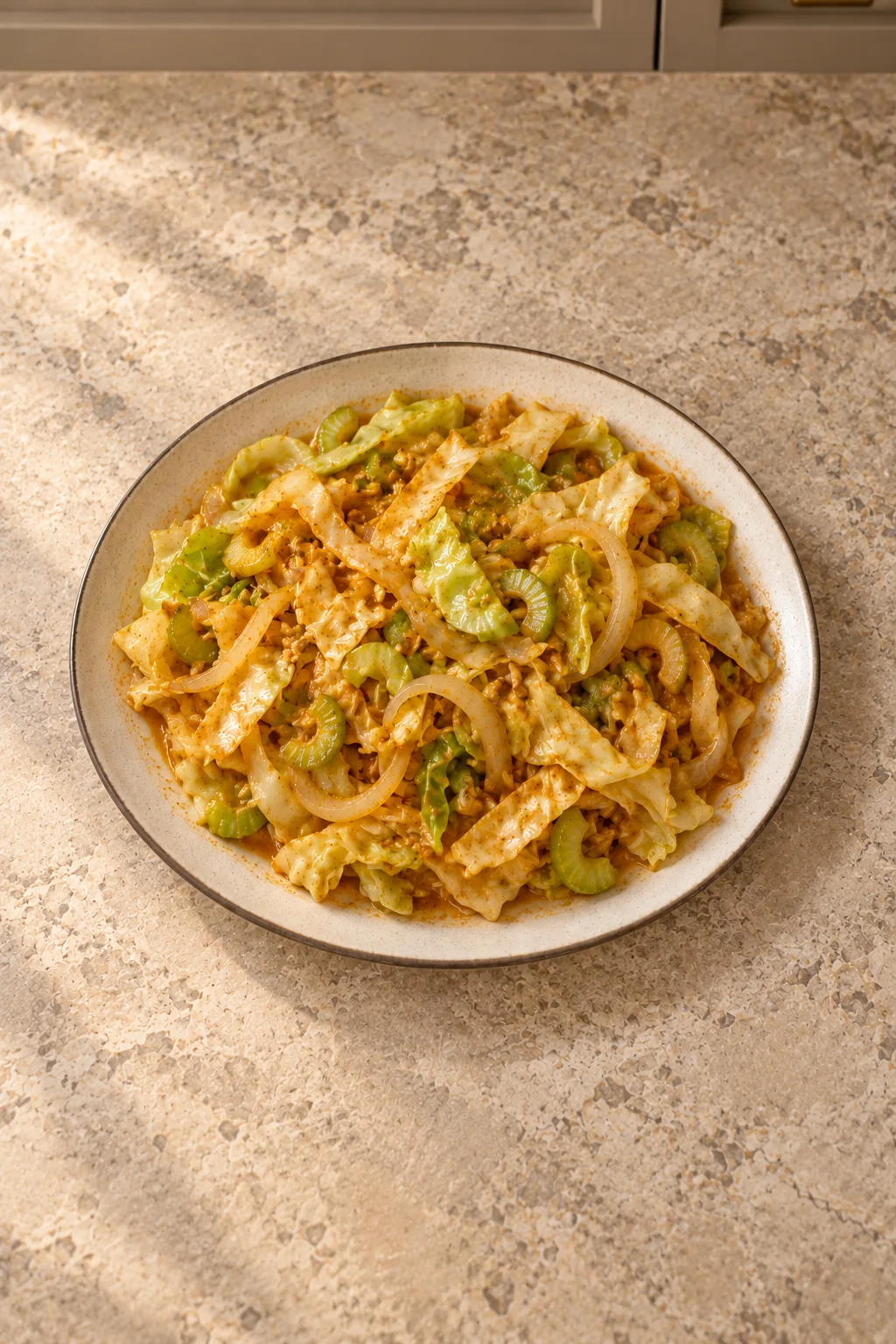
These spicy cabbage noodles are soft cabbage ribbons with onion, celery, garlic, and a light coating of coconut cream and tikka masala spices. They cook in a skillet until the cabbage bends easily and the onion turns translucent. The celery keeps a little crunch, so the finished dish has more texture than a plate of completely soft vegetables.
Homeschooling and second-shift work mean I often need lunch and dinner planned before I leave the house. A vegetable side like this gives me something specific to put beside the main dish. It is already seasoned, so there is no separate sauce to make when everything else is ready.
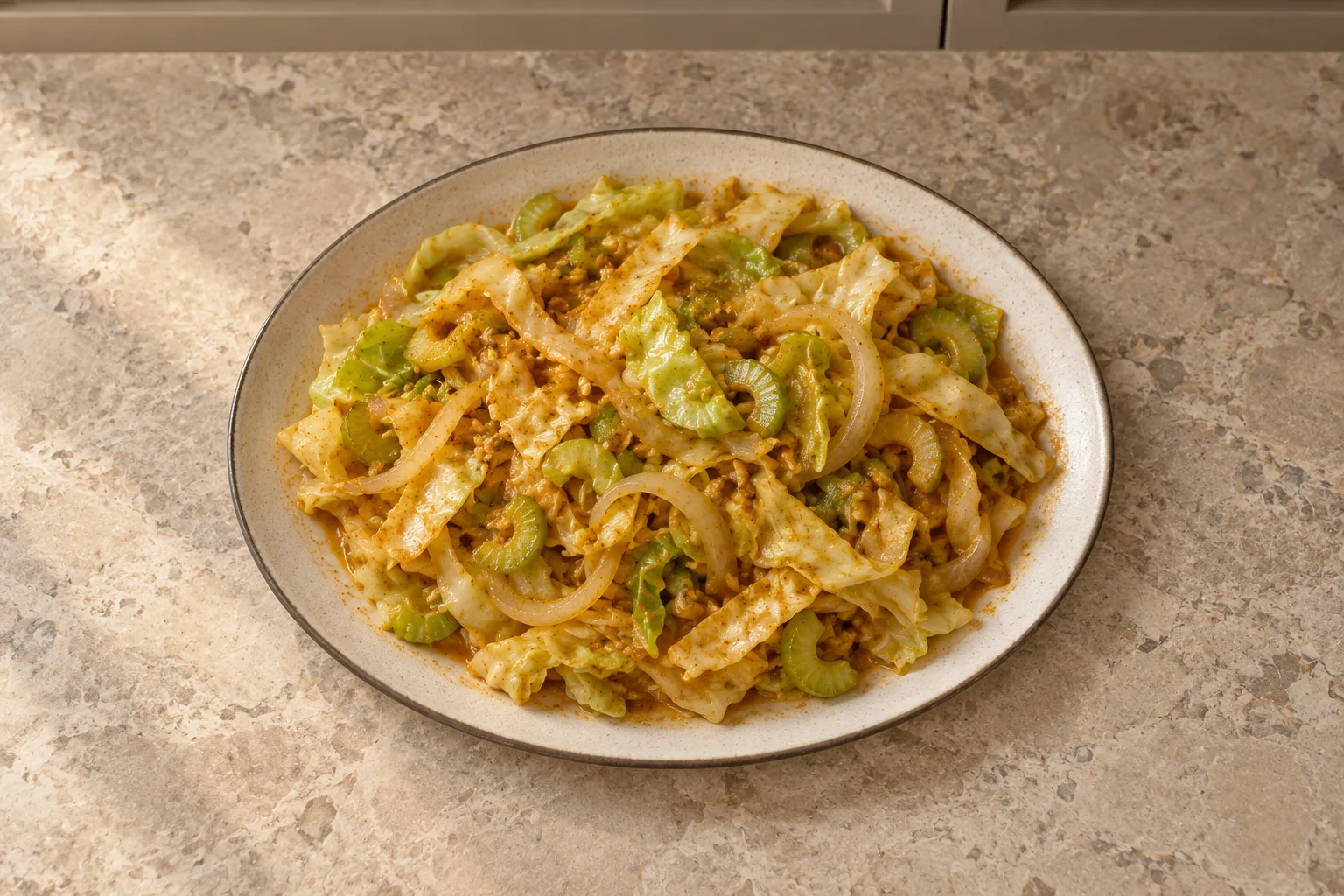
Cut the Cabbage Into Quarter-Inch Ribbons
The cut matters here. Slice the cabbage about one-quarter inch wide so the cooked strips stay recognizable as ribbons. Paper-thin shreds soften much faster and give you more of a cooked slaw. Large chunks will not have the same loose, noodle-like shape.
Quarter the cabbage through its stem and cut away the hard core. Set each quarter on a flat cut side before slicing. A sharp knife and a stable cutting board are enough; you do not need a spiralizer. Separate the packed layers with your fingers before cooking so the skillet does not have to break apart a solid wedge.
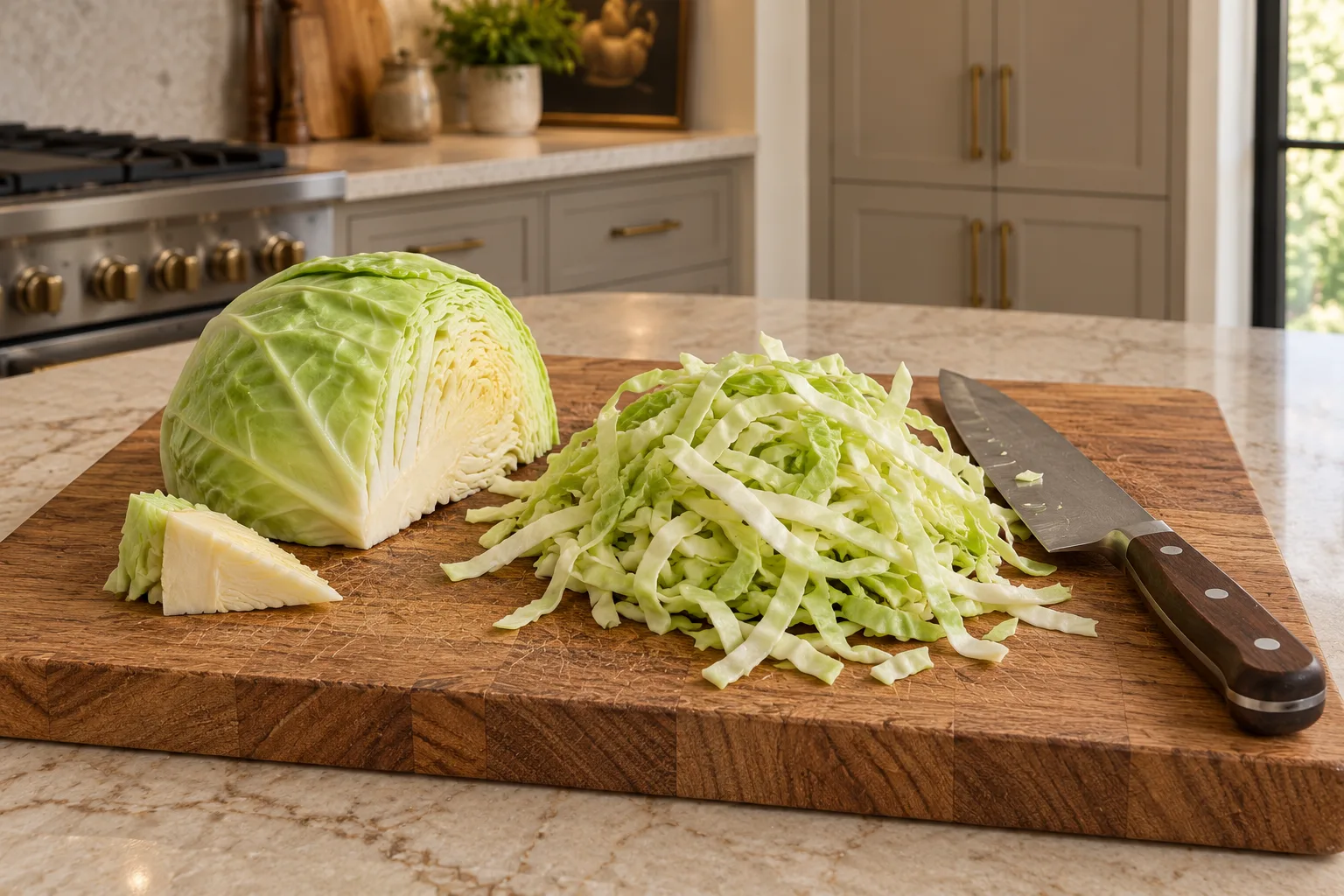
Use one large green cabbage for the three-serving batch. Slice the onion and celery before turning on the heat, then crush and chop the garlic. The cabbage makes a generous raw pile. Having everything cut keeps you from leaving the garlic in hot oil while you finish working through the head.
What Goes Into the Seasoning
Four tablespoons of coconut oil coat the vegetables as they cook. The two tablespoons of coconut aminos go in after the first ten minutes. They bring their own saltiness, which is why the extra sea salt comes at the end, after you have tasted the finished dish.
Use coconut aminos with a simple ingredient list, without added sugar or flavoring. The GAPS FAQ specifically discusses coconut aminos. It is a different ingredient from ordinary soy sauce, so keep the coconut aminos named in the recipe.
The two teaspoons of tikka masala spices are a dry spice blend, not a jar of prepared curry sauce. Look for a blend of plain spices without starch, sugar, flavor enhancers, or other additives. One tikka masala blend with its ingredients listed combines paprika, coriander, garlic, turmeric, ginger, onion, salt, chili powder, black pepper, clove, cinnamon, and cardamom. Check the current label when buying, since blends differ.
That mix gives the cabbage warm spice and some pepper heat. Two teaspoons season the whole pan rather than making a thick curry sauce. The heat will depend on the blend, so a mild blend and a hot blend will not taste identical even at the same measure.
Add Coconut Cream at the End
There are only two tablespoons of coconut cream in this recipe. Stirred through the hot vegetables, it leaves a thin creamy coating. The cabbage should still be easy to distinguish from the onion and celery; it should not be submerged in sauce.
Choose unsweetened coconut cream without gums, starches, or other additives. Do not use sweetened cream of coconut, which is a different product. Dr. Natasha includes pure coconut cream in her discussion of coconut foods, and the GAPS cooking guide specifically calls out guar gum and locust bean gum as ingredients to avoid.
Coconut cream is richer than the thinner milk. Keep the measured cream here rather than replacing it with a large splash of milk. The recipe does not need extra liquid added at the finish.
Cook the Vegetables Until They Bend Easily
Warm the coconut oil in a large skillet over medium heat. Add the sliced onion, followed by the celery, garlic, and cabbage. Turn and stir the vegetables frequently so the pieces against the bottom do not stay there long enough to stick.
Add the cabbage in handfuls if it does not all fit immediately. The first leaves begin shrinking as they warm, making room for the rest. Keep enough room to turn the ribbons without spilling them over the rim. For a doubled batch, divide the cooking between pans or cook in batches.
After about ten minutes, stir in the coconut aminos. Continue cooking until the cabbage is limp and the onion is translucent. A cabbage ribbon should fold rather than snap when you lift it with the spatula. The celery can still have a slight bite.
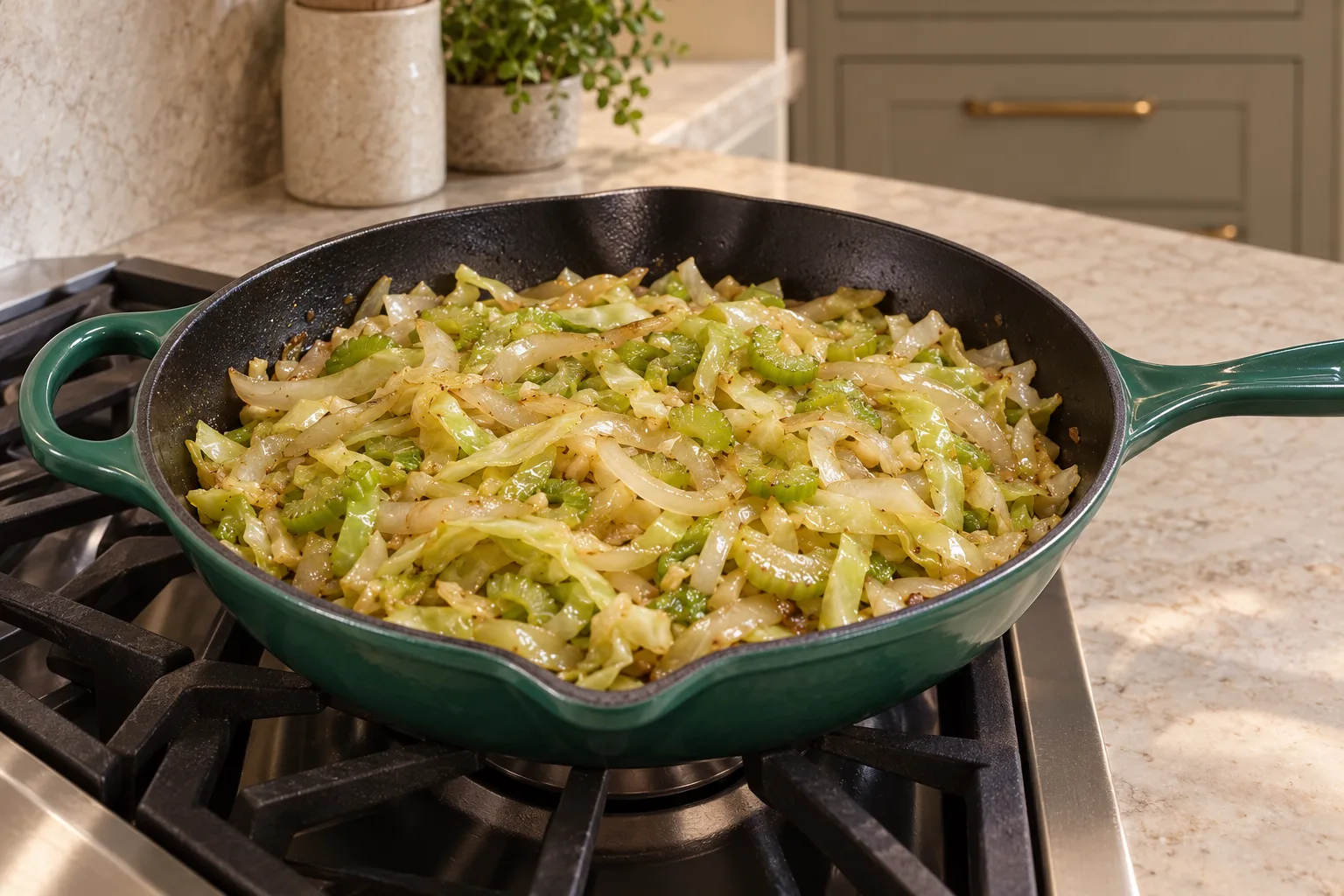
Watch the bottom of the skillet as the vegetables soften. Keep stirring and lower the heat if they begin catching. This is not a high-heat sear; the goal is tender ribbons with a little gloss from the oil and pan juices.
Stir in the tikka masala spices and coconut cream once the vegetables have reached that texture. Cook for another five minutes, turning the cabbage so the cream and spices reach the whole pan. Remove from the heat, taste, and add sea salt only as needed.
Full GAPS and the Milder Alternative
This skillet preparation belongs on Full GAPS after the ingredients are introduced and tolerated. It is dairy-free and egg-free, but the spicy blend can contain nightshades such as paprika and chili. It is not an early Introduction Diet recipe.
If you need cabbage without those spices, the separate braised cabbage noodles use a small amount of homemade meat stock instead of coconut cream and tikka masala. They are a different preparation, with their own quantities and method, and make a useful savory base when a spicy side is not what you want.
For this recipe, choosing a milder tikka blend keeps the same measured formula while changing the heat. A mild blend may still contain nightshades, so mild and nightshade-free are not the same thing.
Serving and Reheating
Serve the cabbage hot as a side dish. It works beside plain cooked meat or fish because the vegetables already carry garlic, warm spices, and coconut cream. You can also put the ribbons underneath your main dish so a little of its juices reaches the cabbage.
If you want meat to serve alongside, homemade sausage links are one option. Choose the mild version of the sausage mixture when you want the cabbage to supply the heat.
Refrigerate leftovers promptly in a covered container. Reheat the portion you need in a skillet over gentle heat, stirring until hot throughout. If it starts to stick, add a small splash of water and continue turning the ribbons. The cabbage will soften further when reheated, so avoid cooking it longer than it needs.
You can slice the vegetables earlier and keep them covered in the refrigerator until you are ready to cook. Keep the garlic covered separately so it is easy to add at the right point. Measure the coconut aminos, spices, and cream before starting the skillet.
Frequently Asked Questions
Do These Taste Like Pasta?
They taste like seasoned cabbage. The ribbon cut gives you a loose shape that works where you want a vegetable base, but it does not turn cabbage into wheat noodles. The onion and coconut cream soften the flavor of the spices.
Should the Celery Be Completely Soft?
A little crunch is part of this version. Look for limp cabbage and translucent onion while the celery still has some texture.
Does Tikka Masala Mean There Is Chicken in It?
No. This recipe uses the dry seasoning blend only. There is no chicken in the ingredient list.
Can I Use Curry Sauce Instead of the Spices?
No. A prepared sauce adds liquid and other ingredients. Use the measured dry spice blend and the separate two tablespoons of coconut cream.
Recommended Equipment
- A large Le Creuset Artichaut skillet
- A sharp knife and stable cutting board
- A spatula for turning the cabbage ribbons
- Measuring spoons and a covered container for leftovers
Spicy Cabbage Noodles Recipe
Spicy Cabbage Noodles With Coconut Cream for Full GAPS
Ingredients
Equipment
Method
- Quarter and core the cabbage, then slice into ribbons about 1/4 inch wide. Slice the onion and celery. Crush and chop the garlic.
- Heat the coconut oil in a large skillet over medium heat. Add the sliced onion, then the celery, garlic and cabbage. Add cabbage in handfuls as it begins to wilt if necessary.
- Cook over medium heat, stirring frequently to prevent sticking. After about 10 minutes, add the coconut aminos.
- Continue cooking and stirring until the cabbage is limp and the onion is translucent. The celery should still have a slight crunch. Lower the heat if the vegetables begin catching.
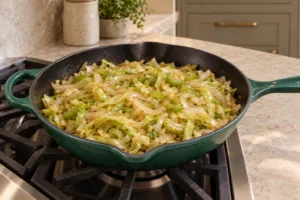
- Stir in the tikka masala spices and coconut cream. Cook for 5 more minutes, turning the vegetables so the seasoning coats the ribbons.
- Remove from the heat. Taste and add sea salt as needed, then serve hot.
Notes
Tried this recipe?
Let us know how it was!Plan a Vegetable Side for Dinner
The upcoming Weekly Kitchen Rhythm Planner gives you a place to plan the main dish and its sides before the week gets busy. This cabbage is useful when the rest of dinner needs only simple seasoning. Find current releases in the WFLI shop, and put the cabbage prep alongside the meal you want to serve it with.

Leave a comment