

If you think you are having a gallstone attack, seek medical care promptly. Pain cannot show whether a stone is passing, obstructing a duct, or causing inflammation. Persistent upper-abdominal pain, vomiting, fever or chills, jaundice, dark urine, or pale stools are reasons for urgent assessment.[2]
The GAPS book contains a very different account of managing passage at home. This guide explains what that passage says and the specific distinction that matters: a description of spontaneous passage cannot identify a safe episode in someone with undiagnosed pain.
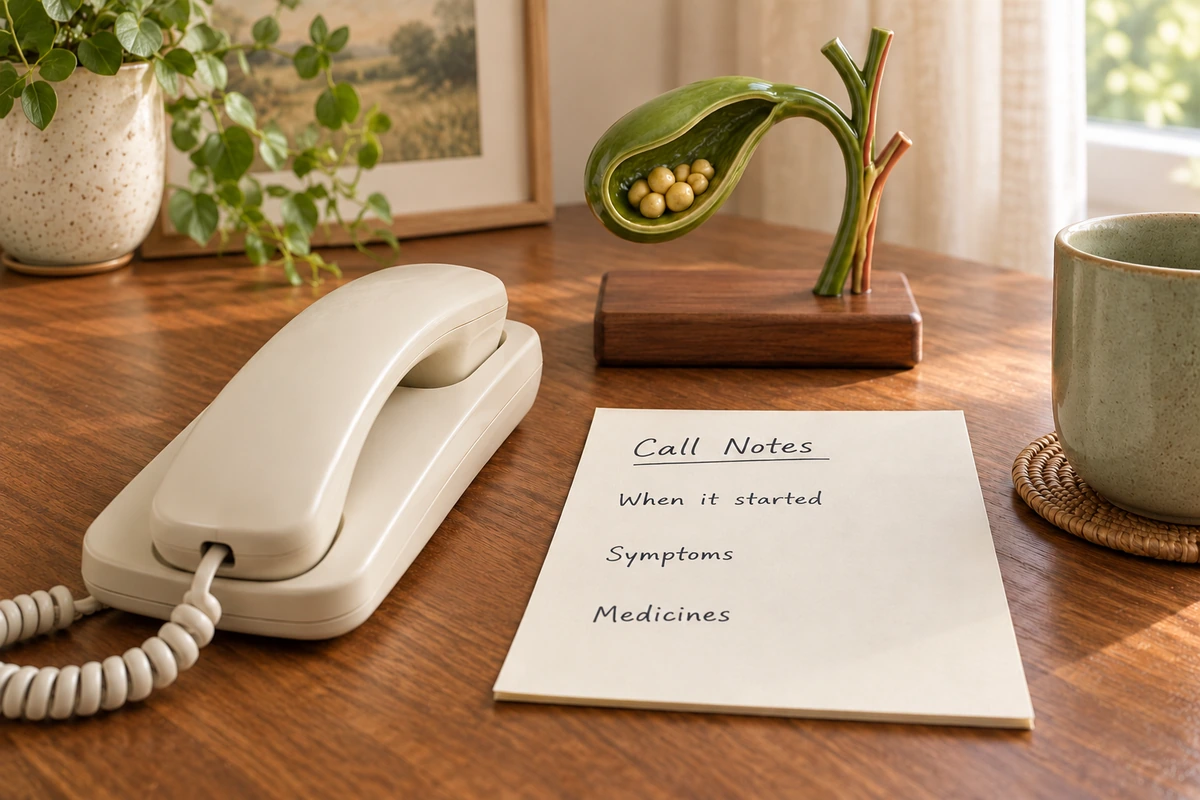
What the GAPS Passage Says
Campbell-McBride advises calm and warmth and argues against rushing to hospital. She describes the body coordinating passage and names magnesium, peppermint, and coffee enemas among her proposed measures. She also discusses rest and simpler Intro foods afterward.[1]
Those are the author’s recommendations in the chapter. They do not provide a reliable way to exclude a blocked duct, infection, inflammation, or pancreatitis. Natural passage itself can cause an obstruction; this risk is not confined to a procedure or home flush.[2][3]
Symptoms That Need Prompt Assessment
| Sign | Why It Matters |
|---|---|
| Pain that continues or is severe | A blockage or another acute abdominal problem may be involved. |
| Vomiting or fever and chills | The episode needs assessment, including possible inflammation or infection. |
| Yellow eyes or skin | Jaundice can accompany a bile-flow problem. |
| Dark urine or pale stools | These changes can be relevant to obstruction. |
NIDDK advises seeking care for a gallbladder attack and for these accompanying symptoms. Do not wait for every sign to appear. Tell the care service what is happening now and when it began.[2]
The Three-Hour Description Is Not a Waiting Rule
The book describes episodes resolving in fifteen to thirty minutes, sometimes up to three hours. That duration does not identify which episode is safe to watch at home. It also does not mean that relief proves a duct has cleared or that another episode cannot occur.[1][2]
A previous diagnosis can help the clinician interpret your history, but it does not establish that every later pain episode has the same cause. Keep the findings from earlier imaging or procedures available if you have them.
Why the Home Remedies Are Not an Attack Plan
The book’s magnesium and enema discussion is presented as helping passage. Oral magnesium sulfate is labeled as a saline laxative for occasional constipation, not a treatment for gallstone obstruction. Its label specifically flags abdominal pain, nausea, vomiting, kidney disease, medicines, and pregnancy for medical consultation.[4]
The coffee-enema pilot study cited in the chapter studied preparation for capsule endoscopy. It did not test whether an enema safely expels a stone during biliary pain. Neither that study nor the timing passage supplies a home treatment ladder for an attack.[5]
Do not use ingested Epsom salt, essential oils, an enema, or an oil-and-citrus flush to try to force a stone through while delaying assessment. While arranging care, follow the instructions you are given about food, drink, and medicines. A hot bath is not a way to determine that the episode is safe.
What an Assessment May Clarify
The assessment can establish whether stones, obstruction, infection, or pancreatitis are involved and what treatment is appropriate. ERCP can be used for duct problems and has its own procedure risks. It is not equivalent to an unvalidated home flush, and evaluation does not mean that surgery is automatic.[3][6][7]
- Describe where the pain is and when it began.
- Report vomiting, fever, jaundice, and urine or stool changes.
- Give the names of medicines and supplements you take.
- Mention known stones, prior gallbladder removal, and earlier procedures.
Food and Rest After the Problem Is Assessed
The book describes warm meat stock and Intro Stage 1 or Stage 2 foods after an episode. If you are following GAPS, ask how that food context fits the recovery instructions given for your actual findings. Do not treat pain relief or a bowl of stock as confirmation that a stone has cleared.[1]
For the explanation rather than immediate action, continue with the book’s stone-passage account. The pancreatic-duct guide explains why the location of an obstruction matters.
Your Next Step
For symptoms happening now, arrange prompt assessment and take your symptom notes and medication list with you. For later reading, return to the liver, bile, and lung overview.
If you are putting the wider GAPS plan together, Understanding & Preparing for the GAPS Diet is listed in the WFLI shop.
References
- Campbell-McBride, Natasha. Gut and Physiology Syndrome (2020), “The Liver and the Lungs.”
- NIDDK. Symptoms & Causes of Gallstones.
- NIDDK. Symptoms & Causes of Pancreatitis.
- DailyMed. Magnesium Sulfate (Epsom Salt) labeling.
- Kim, E. S., et al. Coffee enema for preparation for small bowel video capsule endoscopy: a pilot study. Clinical Nutrition Research (2014).
- NIDDK. Endoscopic Retrograde Cholangiopancreatography (ERCP).
- NIDDK. Treatment for Gallstones.

Leave a comment