

This two-carcass chicken bone broth begins with exactly two cooked chicken carcasses, three to four litres of filtered water, and two tablespoons of raw apple cider vinegar. Chicken feet can join the pot when you have them. Onion, carrots, and garlic are optional, so you can keep the broth plain or build in a little more flavor without changing the core formula.
This is a later Full GAPS broth made from bones that have already been cooked. It is separate from the raw-meaty chicken meat stock used earlier in GAPS. Keep those containers clearly labeled, especially when both live in the same refrigerator or freezer.
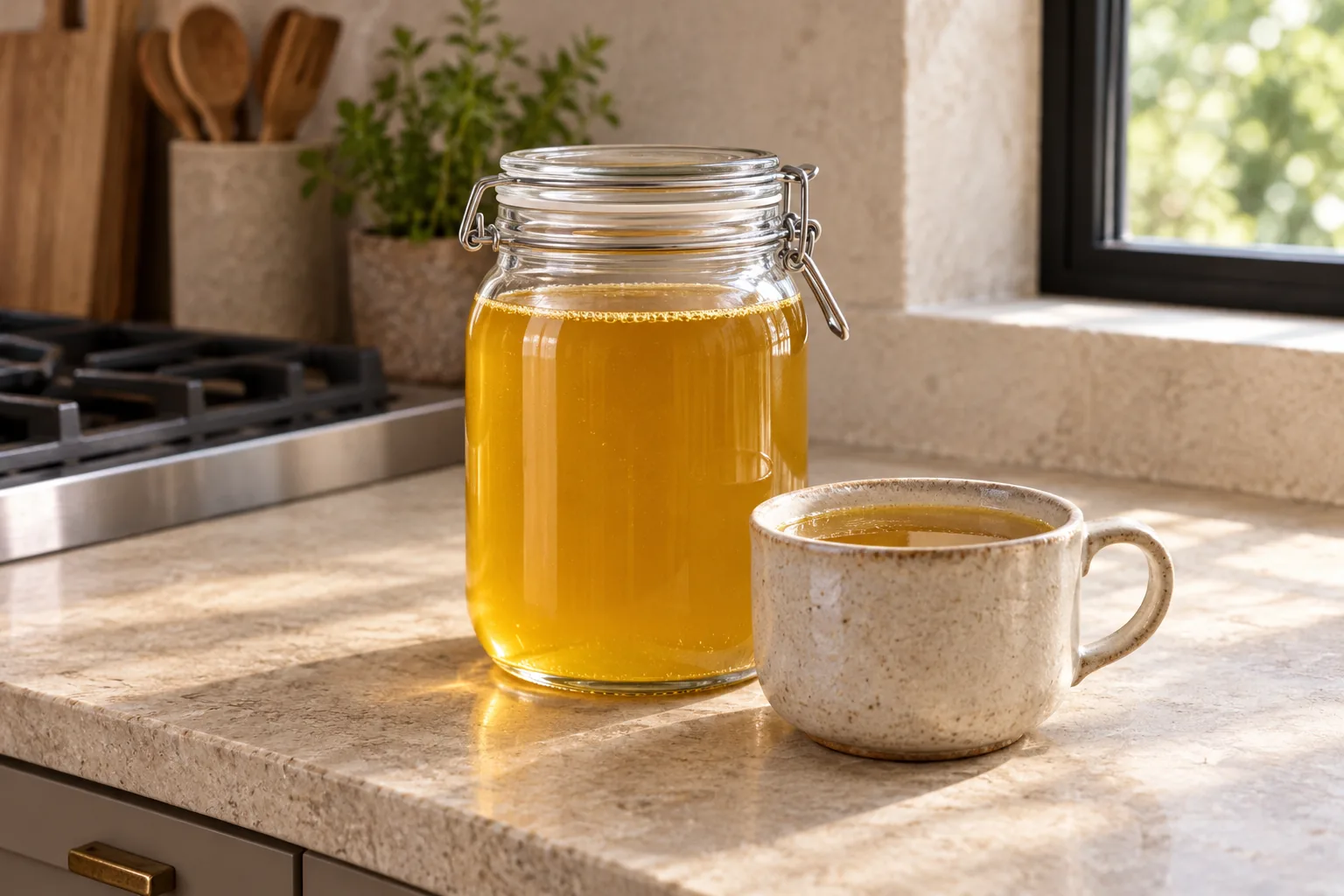
Save Two Cooked Chicken Carcasses
Use the frames and bones from two cooked chickens after you have removed the meat you plan to eat. The carcasses can come from two separate meals. Chill or freeze each one promptly, label it as a cooked carcass for later bone broth, and combine the pair when you are ready to cook.
The word cooked matters here. Raw chicken pieces with meat, skin, joints, and connective tissue belong to meat stock. This recipe starts after the chickens have already been roasted, simmered, or otherwise cooked and served. A few small scraps of cooked meat may remain attached, but the pot is built around the two carcasses.
Chicken feet are optional and can be added if they are available. They do not replace either carcass. Add them alongside the two frames rather than treating a handful of feet as an equivalent amount of bones.
In our six-person-plus kitchen, freezer labels prevent a bag of bones from becoming a mystery. I write “cooked chicken carcass,” the number of frames, and the date before the bag goes into the freezer. When the second carcass is ready, I can see whether the pair is complete without opening and thawing every package.
Choose the Plain or Aromatic Version
The core ingredients are two cooked carcasses, three to four litres of filtered water, and two tablespoons of raw apple cider vinegar. One large roughly chopped onion, two roughly chopped carrots, and two roughly chopped garlic cloves are optional. Salt and pepper are added to taste after straining.
Use all three optional aromatics for a broth with a rounder vegetable flavor, or leave them all out for a more neutral cooking broth. You may also use only the optional vegetables you want. Their amounts remain fixed: no more than one onion, two carrots, and two garlic cloves.
Rough chopping is enough. The long cook softens the vegetables completely, and small dice would only create more particles for the strainer to catch. Cut the onion into several large pieces, the carrots into thick chunks, and each garlic clove into two or three pieces.
Do not import bay leaves, parsley, celery, wine, oil, or extra herbs from the other chicken-broth formulas. This version already has its own measured choices. Keeping the optional branch narrow makes the result repeatable.
Measure the Water and Vinegar Once
Place the two cooked carcasses, optional chicken feet, and any optional aromatics in the unheated vessel. Use the registered ten-quart Le Creuset Classic stainless-steel stockpot for the stovetop method, or a slow cooker large enough to hold the same formula with safe headroom.
Add three to four litres of filtered water. Start with three litres and use the fourth only when needed to settle around the carcasses while leaving safe space at the top. Do not exceed four litres. Add two tablespoons of raw apple cider vinegar and stir once to distribute it through the cool water.
The surface may sit below the highest bones at first. The pieces settle as they heat. Do not keep pouring until every curve disappears under water, because that can push the recipe beyond its measured range.
This is the only water added to the batch. The formula specifically does not top up the pot partway through cooking. Choose a vessel and heat level that can hold the long cook without a hard boil or excessive evaporation.
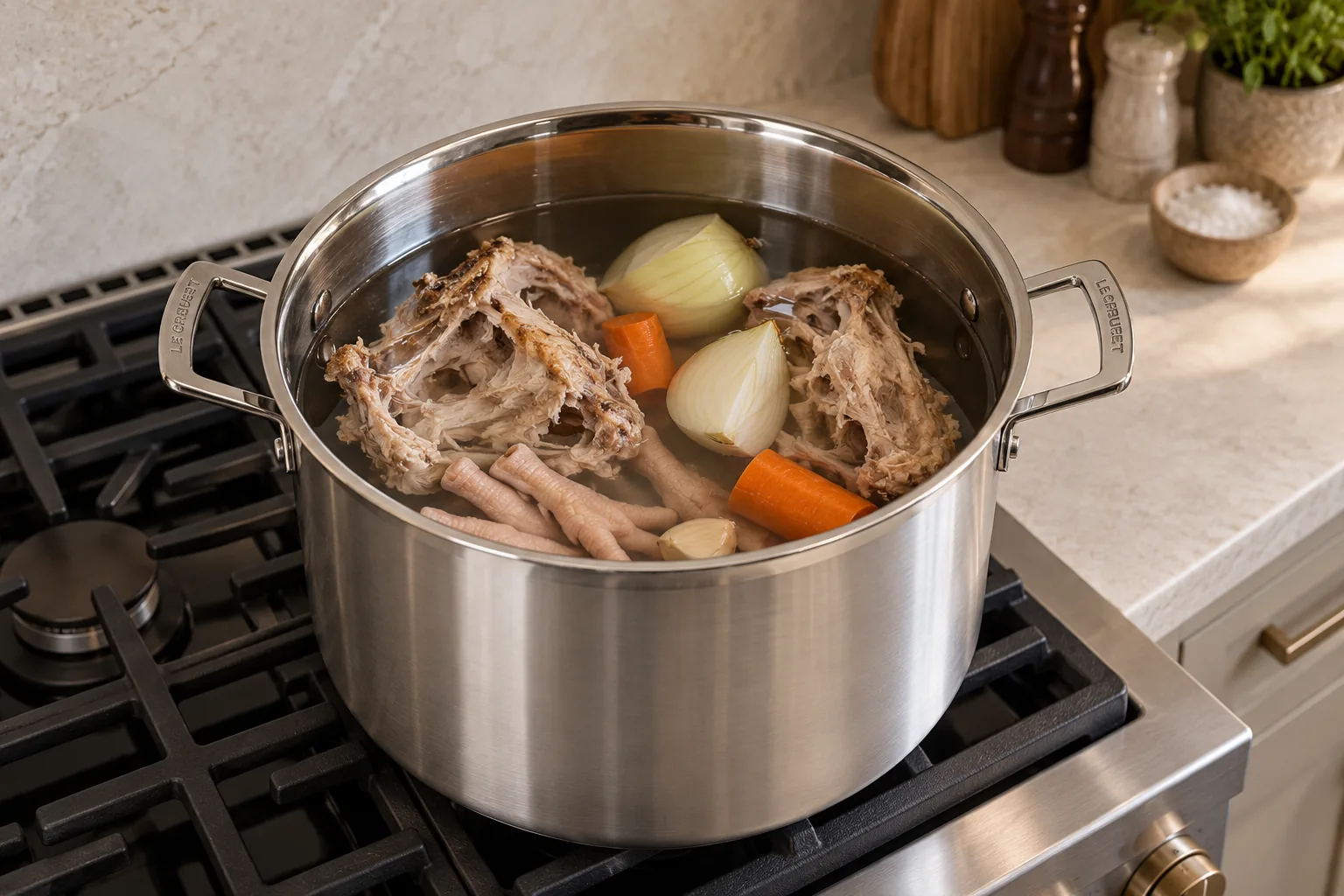
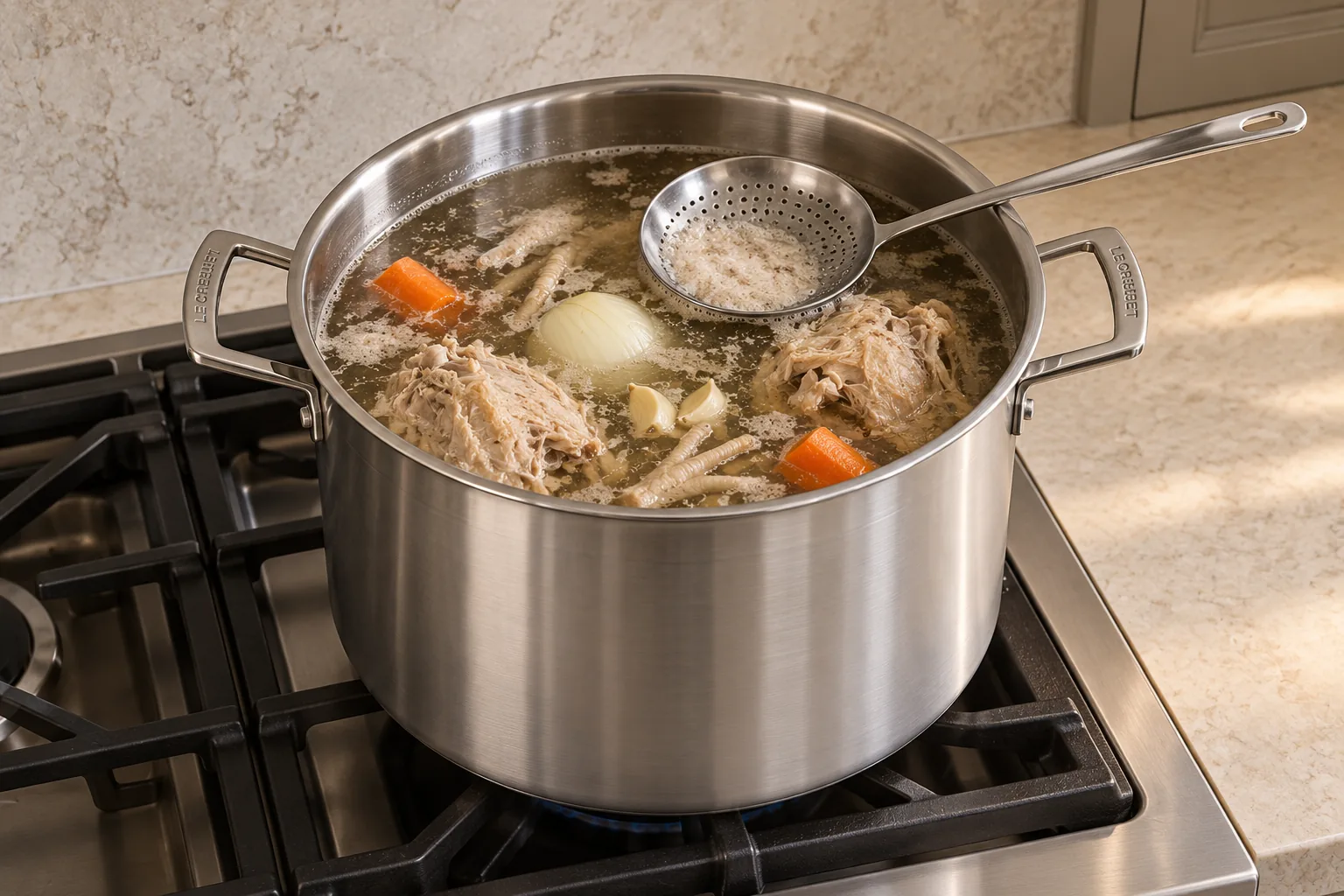
Skim Before the Long Cook
For the stovetop branch, bring the pot to a boil. Pale gray or tan foam may collect in patches as it heats. Remove that foam with a shallow stainless skimmer, keeping the tool supported by the pot rim or a nearby heat-safe dish whenever you pause.
After skimming, reduce the heat to low cooking and cover the pot. The liquid should move gently, with occasional bubbles rather than a hard rolling boil. Cook for six to twelve hours. Pick the endpoint before you begin so the broth can still be strained and cooled when the timer ends.
For the slow-cooker branch, cook the same measured formula for exactly twenty-four hours on low. This recipe does not provide a high-setting conversion and does not include a pressure-cooker method. Keep the branch you choose intact rather than estimating between appliances.
Whichever method you use, do not add more water during cooking. A steady low stovetop setting and a properly sized covered vessel help protect the measured liquid. If the pot is boiling hard enough to demand repeated top-ups, the heat is too high for this method.
Look for a Deep Chicken Broth
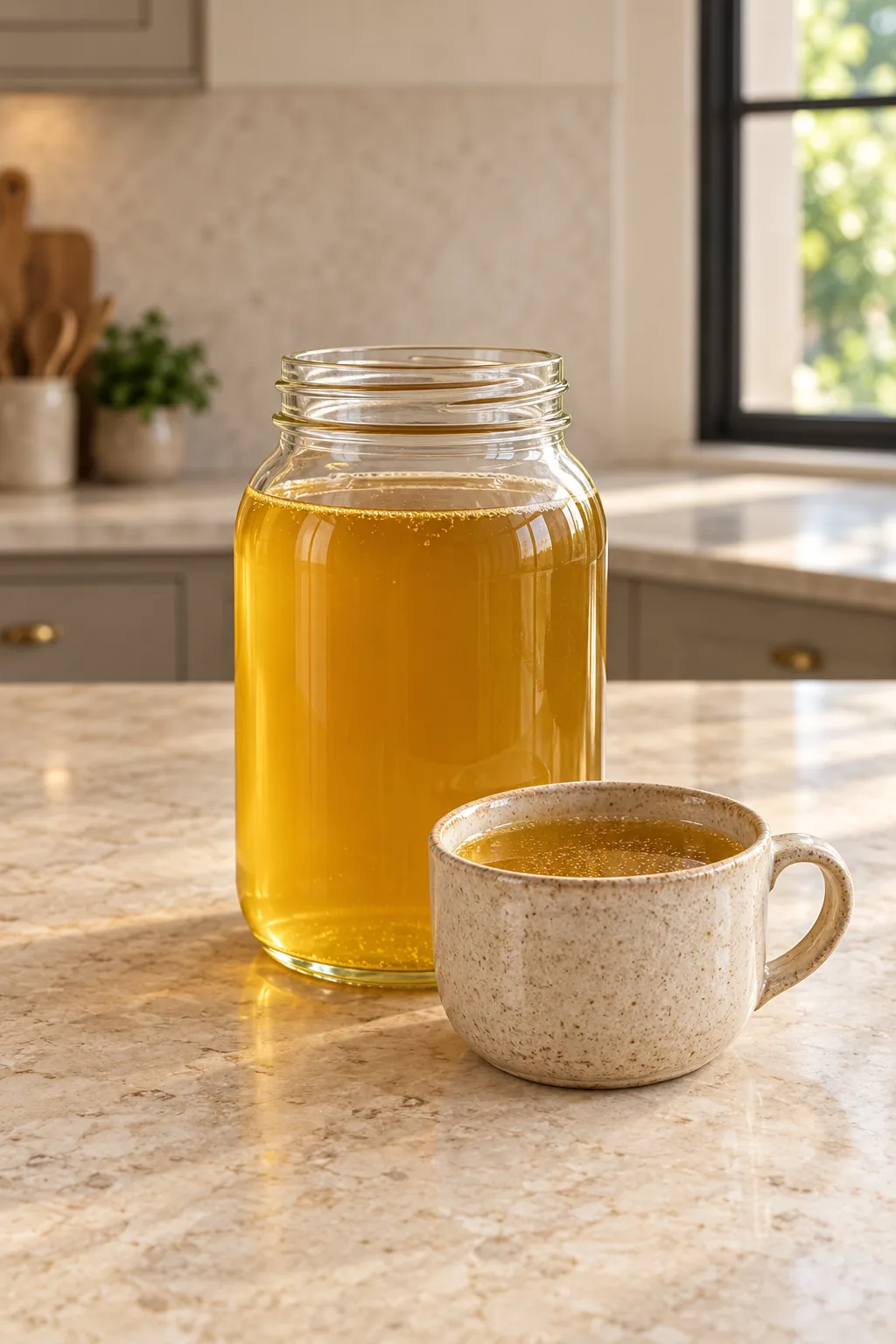
By the end of the cook, the liquid should look deeper gold or light brown, depending on how the carcasses were originally cooked. The aroma should be plainly chicken-forward. When the optional vegetables are present, onion, carrot, and garlic should support the broth without smelling like a separate vegetable soup.
The carcass pieces will look spent and softened. Optional carrots lose their firm edges, onion layers collapse, and garlic becomes very soft. Those cues show what the long cook has done, but the chosen time still controls the endpoint.
A chilled batch may gel firmly, softly, or not at all. Chicken feet often support a stronger gel, but carcasses differ. Gel strength is not permission to alter the measured water after cooking or to add powdered gelatin to the stockpot.
Strain, Season, and Cool Promptly
Set a stainless fine-mesh strainer securely over a heat-safe bowl or second pot large enough to hold the broth. Keep the hot vessel on the stove or a heat-safe trivet. Ladle the broth through the strainer in manageable amounts, then discard the bones, feet, and vegetable solids.
Strain a second time through a clean finer mesh if small particles remain. Add mineral salt and pepper to taste only after the solids are removed. This keeps the seasoning from concentrating unpredictably during the long cook.
Divide the broth among clean glass containers so it cools promptly. Leave expansion room in any jar intended for freezing. Refrigerate once the containers no longer steam. Use refrigerated broth within two days or freeze smaller portions for longer storage.
Label every container “Two-Carcass Chicken Bone Broth, Later Full GAPS,” with the date and amount. That label separates it from early meat stock and from the three other distinct chicken-broth formulas on this site.
Use It for Later Full GAPS Cooking
This broth belongs to later Full GAPS, after at least one year of raw-meaty meat stock and longer when needed. It can be used for soups, stews, sauces, reductions, or a warm cup once bone broth fits the person’s current GAPS progression.
The plain version is useful when another recipe already has a strong seasoning plan. The aromatic version works well when the broth itself needs more flavor. Taste before adding more salt, onion, carrot, or garlic to the finished dish.
For a measured second-batch broth built around three pounds of cooked bones, use the three-pound chicken bone broth. For a stovetop version with bay, peppercorns, and parsley, use the leftover carcass chicken bone broth. Each remains a separate post because the quantities and methods differ.
Frequently Asked Questions
Can I Use One Large Carcass Instead?
No. This formula is measured for two cooked chicken carcasses. Use both rather than guessing that one larger frame is equivalent.
Are Chicken Feet Required?
No. Add them when available, but keep the two cooked carcasses as the base.
Do I Have to Add the Onion, Carrots, and Garlic?
No. All three are optional. Leave them out for a plainer broth or use them in their measured amounts.
Can I Skip the Apple Cider Vinegar?
No. This formula includes two tablespoons of raw apple cider vinegar. The sibling stovetop formula without measured acid is a separate recipe.
Can I Top Up the Water?
No. Add three to four litres at the beginning and do not add more during cooking.
How Long Does It Cook?
Cook it for six to twelve hours on the stovetop, or exactly twenty-four hours on low in a compatible slow cooker.
Two-Carcass Chicken Bone Broth Recipe
Two-Carcass Chicken Bone Broth for Later Full GAPS
Ingredients
Equipment
Method
- Place the two cooked chicken carcasses, optional chicken feet, and any optional onion, carrots, and garlic in the unheated stainless stockpot or compatible slow cooker.
- Add 3 to 4 litres filtered water and 2 tablespoons raw apple cider vinegar. Stir once and confirm safe headroom.
- For the stovetop branch, bring to a boil. Skim and discard the scum, reduce to low cooking, and cover.
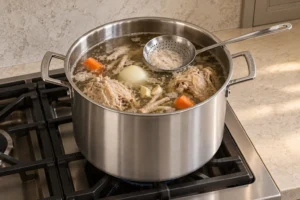
- Cook 6 to 12 hours on the stovetop, or cook exactly 24 hours on low in the slow cooker.
- Do not top up the water during cooking.
- Turn off the heat. Ladle through a securely supported stainless fine-mesh strainer. Discard the solids and season the strained broth with fine mineral salt and black pepper to taste.
- Divide into clean glass containers and cool promptly. Refrigerate for up to 2 days or freeze smaller portions for longer storage.
Notes
Tried this recipe?
Let us know how it was!Keep Your Broth Routine Organized
The planned Meat Stock vs. Bone Broth Chart keeps early raw-meaty stock and later cooked-bone broth easy to distinguish. The planned Stock Pot Course adds a save, label, cook, cool, and freeze rhythm for a busy family kitchen. Watch the WFLI shop as they are released.

Leave a comment