

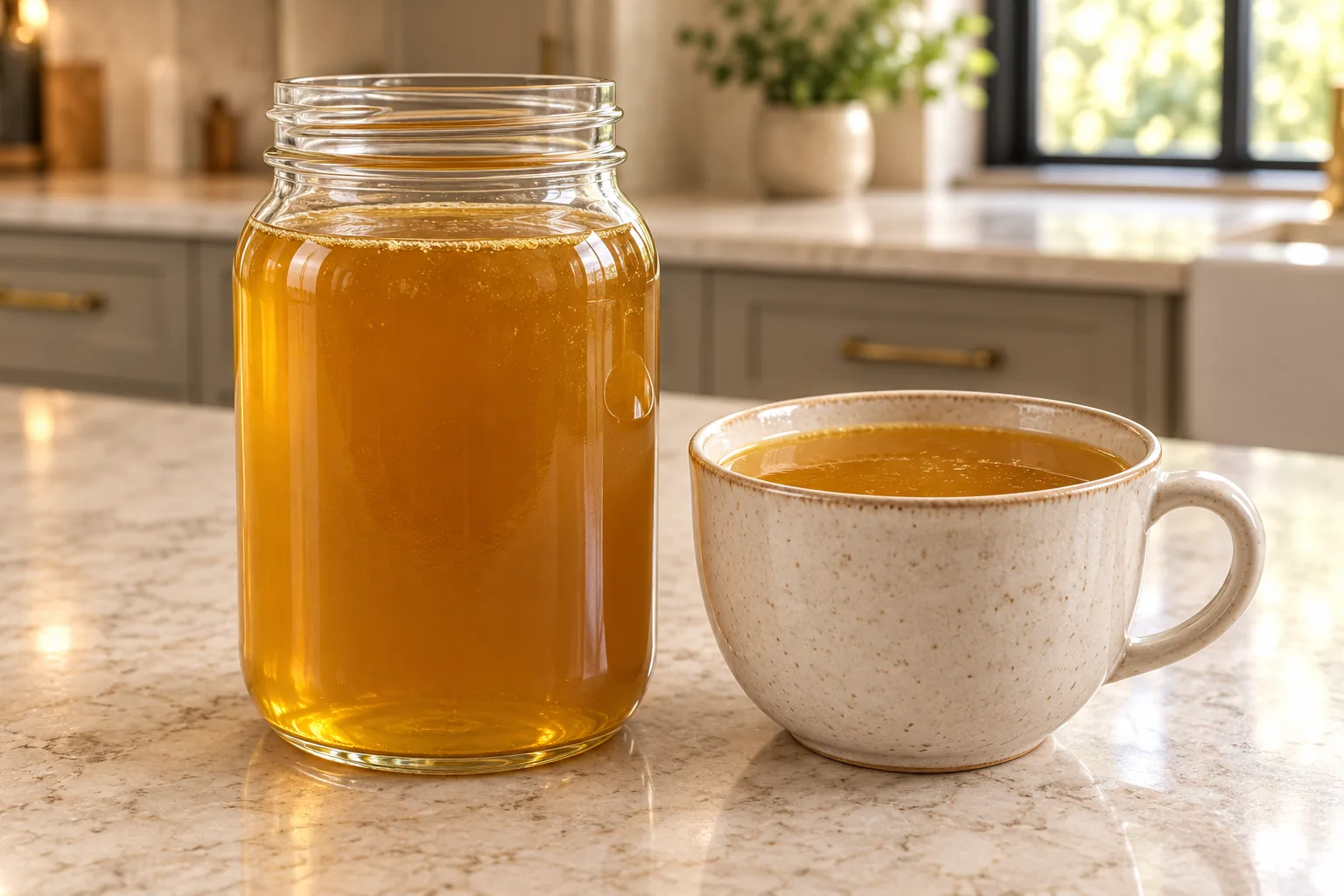
This leftover chicken carcass bone broth turns up to three pounds of saved cooked bones into a separate stovetop batch with twelve cups of filtered water, onion, garlic, bay leaves, peppercorns, and parsley. The broth cooks for eight to twelve hours, with the parsley held back until the final thirty minutes.
The words leftover carcass are doing real work here. This is a cooked-bone broth for later Full GAPS, not the raw-meaty chicken meat stock used earlier. The carcass has already been roasted or cooked, the meat has already been served, and the remaining bones begin a new long-cooked formula.
Start With Saved Cooked Carcass Bones
Use up to three pounds of cooked chicken bones or scraps. Backs, necks, wing tips, and the frame of a roasted chicken all fit the measured starting point when they are already cooked. Remove the meat you plan to eat before weighing the bones. A few tiny cooked scraps may remain attached, but this is not a pot of raw chicken pieces.
If one meal does not give you enough bones, chill or freeze the cooked carcasses promptly until you have the amount you need. Stop at three pounds. A container of unmeasured bones may look convenient, but it changes the relationship between the twelve cups of water and the solids in the pot.
Break a large frame into only as many pieces as the stockpot needs. The pieces should settle below the safe fill line without being crushed into fragments. Small splinters are harder to strain cleanly and add no advantage to the method. Keep the saved neck, back, and wing-tip pieces recognizable so you can see what is entering the pot.
In our six-person-plus kitchen, labels keep saved bones from becoming anonymous freezer bags. I write “cooked chicken bones for later broth” with the weight and date. That label separates them from raw pieces reserved for chicken meat stock and saves a round of guessing when the stockpot comes out.
Keep This Ingredient List Exact
Along with the cooked bones, this formula uses twelve cups of filtered water, one quartered yellow onion, one smashed bulb of garlic, two bay leaves, one tablespoon whole black peppercorns, one bunch of fresh parsley, and fine mineral salt to taste.
There is no measured vinegar, wine, oil, carrot, celery, or additional herb in this version. Those ingredients belong to other chicken-broth formulas. Do not borrow them simply because they often appear in a stockpot. Keeping each version separate is what makes the finished recipe repeatable.
Quarter the onion into four large pieces. Separate the garlic bulb into sections only as needed to smash the cloves; do not mince them into a paste. Leave the peppercorns whole so the finished broth can be strained cleanly. Rinse the parsley and keep the bunch separate until the long cook is almost done.
Load the Stockpot Before Heating
Use the registered ten-quart Le Creuset Classic stainless steel stockpot so the bones and all twelve cups of water fit with safe headroom. Set the pot on a burner that supports its full base. Place the cooked bones in the cool pot, then add the quartered onion, smashed garlic, bay leaves, and whole peppercorns.
Measure in twelve cups of filtered water. The liquid should settle around the carcass pieces without reaching the rim. Stir once to release trapped air pockets, then check that the pot still has room for the surface to rise as it comes to a boil.
Twelve cups is the measured amount for this formula, even when the bones do not all disappear beneath the surface at once. As the pot heats and the pieces shift, they settle into the liquid. Do not keep adding water until the stockpot looks full; extra water weakens the formula and changes the final yield.
Keep the parsley and final salt adjustment out of the pot for now. You will add the parsley near the end and season the strained broth after cooking. This order protects the measured method and keeps the salt from concentrating unpredictably as water evaporates.

Bring It to a Boil and Skim the Surface
Bring the stockpot to a boil over the stovetop. As the water heats, pale gray or tan foam may collect in small patches. Lift those patches away with a shallow stainless skimmer. Rest the skimmer securely across the rim or on a nearby heat-safe dish between passes so it never floats above the pot.
Once the surface is skimmed, reduce the heat to low cooking and cover the pot. The broth should move gently under the lid, with an occasional bubble rather than a hard rolling boil. A hard boil loses water quickly, clouds the liquid, and makes the long cook harder to control.
Cook for eight to twelve hours on the stovetop. Choose the endpoint before you begin and set a timer. This formula does not include a slow-cooker or pressure-cooker translation. Keep the vessel, heat source, water amount, and accepted stovetop range together.
Plan the ending time as carefully as the start. An eight-hour batch that begins in the morning can be strained before dinner, while a twelve-hour batch needs a schedule that still leaves time for safe straining and cooling. The recipe is not finished when the burner turns off; the hot liquid still needs your attention before it can go into the refrigerator.

Add Parsley for the Final Thirty Minutes
When thirty minutes remain in the chosen cook, add the rinsed bunch of parsley. Push it just below the surface with the stainless spoon, replace the lid, and set a separate thirty-minute timer. The parsley should look fresh and green when it enters the pot rather than gray from hours of cooking.
Do not use the parsley timer as the main cook time. It begins only after the broth has already completed all but the final thirty minutes of its eight-to-twelve-hour stovetop window. When the timer ends, turn off the heat.
The finished liquid will usually look deeper gold or light brown than it did at the beginning. The aroma should be plainly chicken-forward, with onion, garlic, bay, pepper, and parsley supporting rather than burying it. Color varies with the roasted bones, so use the formula and completed time instead of demanding one exact shade.
The onion quarters and garlic soften until they no longer hold their raw firmness. The parsley wilts through the broth but should not become the dull, indistinguishable mass it would be after a full day in the pot. Whole peppercorns and bay leaves remain visible solids for the strainer to catch.
Strain, Season, and Cool the Broth
Set a stainless fine-mesh strainer securely over a heat-safe bowl or second pot large enough to receive the broth. Make sure the rim or support arms are fully seated before lifting hot liquid. Keep the stockpot on the stove or a heat-safe trivet and ladle the broth through the strainer in manageable amounts.
Discard the cooked bones, onion, garlic, bay leaves, peppercorns, and parsley after the liquid is separated. If fine particles pass through, strain the broth once more through a clean finer mesh. Season the strained broth with fine mineral salt to taste.
Divide the broth among clean glass containers so it can cool promptly. Leave expansion room in jars intended for freezing. Refrigerate once the broth no longer steams. Use refrigerated broth within two days or freeze smaller portions for longer storage.
Let the jars cool with their identities intact. If you make meat stock and this bone broth on the same day, place the labels on the containers before filling them. Once both liquids are cold and opaque, color alone is a poor way to tell them apart. A clear label prevents a later broth from slipping into an earlier-stage meal.
Use It Only Where Later Bone Broth Fits
This is a later Full GAPS cooking broth for soups, stews, pan sauces, reductions, or a warm cup. The onion, garlic, bay, peppercorns, and parsley give it more built-in flavor than the plain three-pound second-batch formula, so taste a dish before adding more aromatics or salt.
Do not replace early meat stock with this broth simply because both are made from chicken. The cooked carcass and eight-to-twelve-hour cook place it in the later bone-broth category. Keep the separate chicken-meat-stock recipe in any Intro or early Full GAPS dish that calls for it.
Freeze practical portions based on how you cook. One-cup containers work for sauces; two- or four-cup containers are useful for soups. Write “Leftover Carcass Chicken Bone Broth, Later Full GAPS,” the amount, and the date on each container before freezing.
Frequently Asked Questions
Can I Use a Fresh Raw Chicken?
No. This formula starts with up to three pounds of cooked chicken bones or scraps. A fresh raw chicken belongs to the separate meat-stock method.
Do I Need to Roast the Bones Again?
No. The bones are already cooked or roasted. Put them directly into the cool stockpot with the measured aromatics and water.
Why Is There No Vinegar?
This measured formula does not include an acid. Do not import vinegar or wine from another bone-broth version.
Can I Use a Slow Cooker or Pressure Cooker?
Not for this routed version. Preserve the eight-to-twelve-hour stovetop method on this page.
When Does the Parsley Go In?
Add the bunch of fresh parsley for the final thirty minutes only, after the broth has completed the rest of its chosen cook time.
What If the Chilled Broth Does Not Gel?
Gel strength varies with the bones and connective tissue in the measured carcass scraps. Keep the recipe unchanged and use the finished liquid as broth.
Leftover Chicken Carcass Bone Broth Recipe
Leftover Chicken Carcass Bone Broth for Later Full GAPS
Ingredients
Equipment
Method
- Place the cooked chicken carcass bones or scraps in the unheated stainless stockpot. Add the quartered onion, smashed garlic, bay leaves, and whole peppercorns. Hold back the parsley and salt.
- Measure in 12 cups filtered water and stir once. Confirm safe headroom above the liquid.
- Bring to a boil. Skim and discard the scum, reduce to low cooking, and cover.
- Cook for 8 to 12 hours on the stovetop.
- Add the bunch of fresh parsley for the final 30 minutes only.
- Turn off the heat. Ladle through a securely supported stainless fine-mesh strainer. Discard the solids and season the strained broth with fine mineral salt to taste.
- Divide into clean glass containers and cool promptly. Refrigerate for up to 2 days or freeze smaller portions for longer storage.
Notes
Tried this recipe?
Let us know how it was!Keep Your Stock Routine Clear
The planned Meat Stock vs. Bone Broth Chart keeps raw-meaty stock and cooked-carcass broth easy to distinguish. The planned Stock Pot Course adds a practical save, label, cook, and freeze rhythm for a busy family kitchen. Watch the WFLI shop as they are released.


Leave a comment