

Preparing a nursery can mean choosing furniture, cleaning out a room, and deciding whether to paint. GAPS gives specific advice about when to leave those bigger changes for later. During pregnancy, Dr. Natasha Campbell-McBride recommends avoiding artificial chemicals wherever possible and postponing renovation and new furniture. Her baby-care guidance repeats the renovation and furniture advice for the first year and adds a new kitchen to the list.[1][2]
Start with the room and furniture you already have. Separate any major projects from the cleaning you do every day, then look at the pregnancy, first-year, and general GAPS recovery guidance below. That gives you a practical way to plan the work without treating a nursery as a new shopping list.
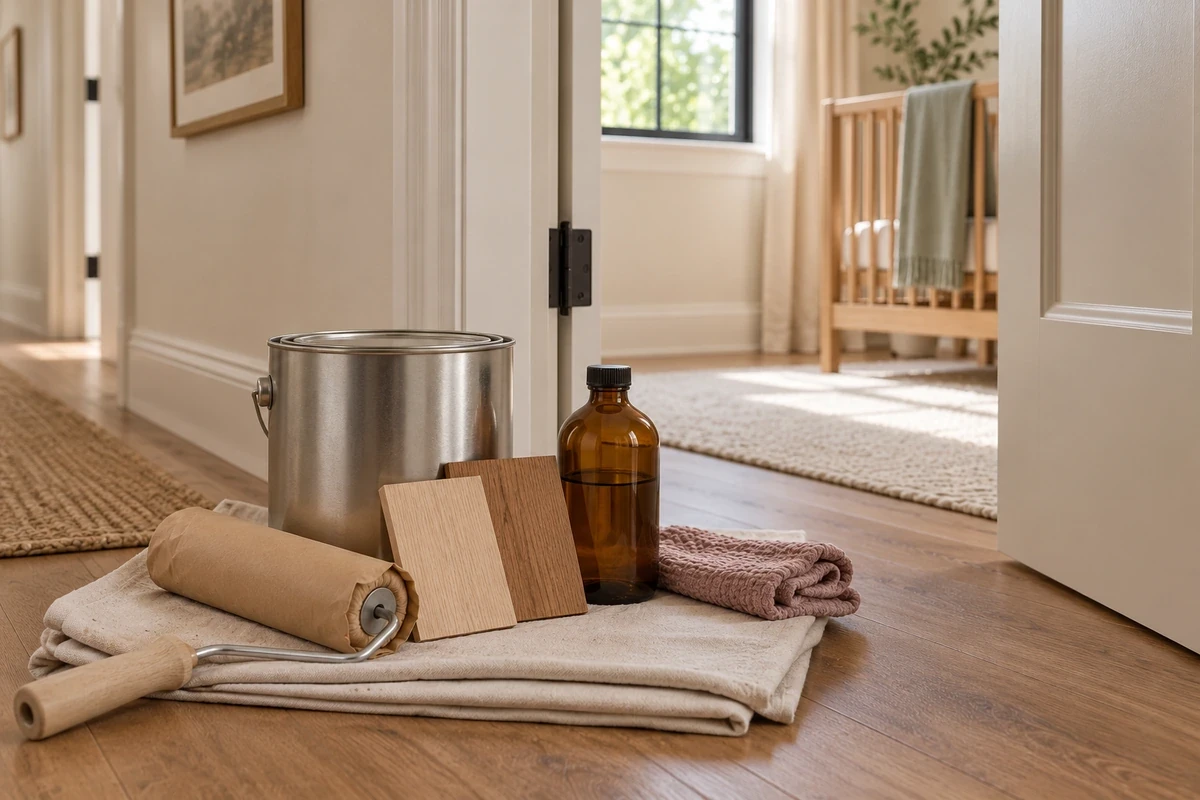
The Pregnancy Window
The pregnancy section says to avoid artificial chemicals wherever possible, including personal-care products, perfume, hair dye, household cleaners, carpet pesticides, dry cleaning, industrial chemicals, paint, and varnish. It then says pregnancy is not a good time to renovate the home or buy new furniture because those changes bring many chemicals into the home.[1]
The same passage tells the pregnant mother to avoid places that smell of chemicals and names the hairdresser, public swimming pools, shopping malls, and hospitals as examples.[1]
The Baby’s First Year
For the baby’s first year, Dr. Natasha advises against renovating the home, buying new furniture, or installing a new kitchen. She explains that these changes bring chemicals into the home that may affect the baby’s development.[2]
Her 2020 book adds a separate recommendation for GAPS recovery: avoid redecorating or refurnishing for at least a year while the body’s detoxification system, which processes and removes toxins, recovers. She also describes fresh household paint releasing chemicals for at least six months. Keep this general GAPS guidance alongside the pregnancy and first-year advice above; it does not establish that a particular room, paint, or piece of furniture becomes safe on a set date.[6]
Cleaning the Home
For everyday cleaning, the baby-care passage names water and vinegar and natural, biodegradable detergents.[2] The 2020 book gives more examples for particular jobs, including vinegar for glass and strong tea for wood floors. It also discusses lemon juice, baking soda, and olive oil among its cleaning options, while recommending that cleaning products be kept to a minimum.[6] These are examples for different tasks, rather than ingredients for one all-purpose mixture.
Gather the products you use for floors, counters, laundry, and dishes. Choose one cleaning job to work through first, then match the method to that surface and its care instructions. Keep a short note of what you use so the routine is easy to repeat.
Washing Baby Dishes
Dr. Natasha’s baby-care guidance says to wash the baby’s dishes by hand and carefully rinse away any dish soap.[2] In her 2020 book, she likewise recommends handwashing, especially at the beginning of the GAPS program, and names hot water with mustard powder, vinegar, or baking soda as options.[6] Keep the washing and thorough rinsing together when following that guidance.
Think through the dishes your baby actually uses and where you will wash them. Keep the items you need within reach, so handwashing fits into the kitchen routine.
Exposures Beyond the Nursery
In the baby-care passage, Dr. Natasha names chlorinated pools, shopping malls, and hospitals among the places to avoid. It also says not to allow smoking near the baby or a heavy amount of perfume around the baby.[2]
Avoiding unnecessary exposure does not mean avoiding prenatal appointments, newborn checkups, or urgent medical care. The point is wider than one room. A nursery can be simple and freshly cleaned while the baby’s regular air, laundry, dishes, visitors, and outings still determine much of the day-to-day exposure.
What Renovation Research Can Show
One study looked back at parents’ questionnaire responses for 39,782 children ages three to six in seven Chinese cities. The researchers asked about new furniture and redecoration during pregnancy, the first year, and later childhood. Those exposures were associated with more frequent common colds, with the strongest association during pregnancy.[3]
The LINA birth-cohort study included 465 mother-child pairs. Researchers asked about renovation during pregnancy and the first year and measured indoor volatile organic compounds, or VOCs, which are chemicals released into the air. New flooring during pregnancy was associated with physician-treated wheeze in the baby’s first year, especially in children with a tendency toward allergic conditions. The associations were generally weaker for exposure after birth.[4]
These findings support taking renovation timing and early indoor exposures seriously. Both studies examined associations; they do not prove that a particular renovation caused an illness or establish one waiting period for every home.[3][4] The GAPS books’ pregnancy, first-year, and general recovery recommendations still need to be read in their own contexts.
A Timeline You Can Use
| When | What Dr. Natasha Recommends | What to Record |
|---|---|---|
| Before pregnancy | The pregnancy and baby-care passages do not give a fixed pre-pregnancy deadline.[1][2] | Major work you want completed before the pregnancy window |
| Pregnancy | Avoid renovation, new furniture, and artificial chemical exposure where possible.[1] | Any unavoidable work, products, dates, and where the mother spends time |
| Baby’s first year | Avoid renovation, new furniture, and a new kitchen.[2] | Furniture, cleaning, dishes, visitors, smoke, perfume, and regular outings |
| General GAPS recovery | No redecorating or refurnishing for at least a year while the detoxification system recovers.[6] | Major projects to postpone; this is separate from the pregnancy and baby’s first-year windows |
| Cleaning routine | Water and vinegar; minimal natural, biodegradable detergents; handwashing and careful rinsing of baby dishes. The 2020 book gives further task-specific cleaning options.[2][6] | The products and methods used for each task |
The broader Baby GAPS newborn-care and home guide connects this planning with fresh air, sleep, and the rest of the home. Use the baby skin-care guide for the book’s washing and skin-care advice, and the baby bedding guide for its natural-material and mattress-cover guidance.
What This Looked Like in Our Home
In our home, we changed the laundry detergent, stopped using fabric softener, and rewashed clothes and sheets. We also made laundry and dishwasher detergents, made lotions and balms, and used a Berkey water filter.[5]
Our kitchen swaps came later, as money allowed. Food changes came first, and we replaced the kitchen items over time. I keep that in mind when I write about home changes: start where you are and work within your budget.[5]
Build the Home Plan Room by Room
You’ll find The Low-Tox GAPS Home in the course catalog in my shop. For the nursery, start with the timeline above and the home changes you are considering.
Frequently Asked Questions
When Should You Plan Nursery Renovation?
The pregnancy and baby-care passages advise avoiding renovation during pregnancy and the baby’s first year.[1][2] The 2020 book separately recommends no redecorating or refurnishing for at least a year during GAPS recovery. The six-month paint statement describes her concern about emissions, rather than a ready-to-use date for one room or product.[6]
What Does the First-Year Rule Cover?
For the baby’s first year, Dr. Natasha advises against renovating the home, buying new furniture, or installing a new kitchen.[2]
How Should You Use Vinegar for Cleaning?
The baby-care passage names water and vinegar without giving one dilution for every surface.[2] The 2020 book describes different methods for different jobs, including vinegar for glass and a separate furniture-polish mixture.[6] Choose the cleaning task first rather than assuming one mixture fits every job.
How Does GAPS Say to Wash Baby Dishes?
The baby-care guidance says to wash them by hand and carefully rinse away any dish soap.[2] The 2020 book also favors handwashing, especially at the beginning of GAPS, and gives hot-water cleaning options.[6]
What Does Low-Tox Mean Here?
Here, it means following the books’ specific advice about avoidable exposures: renovation, furnishings, cleaning products, smoke, perfume, and regular outings.[1][2] Start with the room and routines you have, then work through the changes that apply. The books do not give a zero-exposure test or guarantee.
References
- Campbell-McBride, Natasha. Gut and Psychology Syndrome, second German edition (2015), pregnancy chemical-exposure, renovation, furniture, and place-avoidance passage. English wording here is translated from that supplied edition, based on the expanded English edition (2013).
- Campbell-McBride, Natasha. Gut and Psychology Syndrome, second German edition (2015), household cleaning, baby dishes, first-year renovation and furniture, outside-place, smoke, and perfume passage. English wording here is translated from that supplied edition, based on the expanded English edition (2013).
- Fu, X., et al. “Effect of Prenatal and Postnatal Exposure to Home Renovation on the Risk of Common Cold in Preschool Children.” Indoor Air (2022). PubMed 35762240.
- Franck, U., et al. “Prenatal VOC Exposure and Redecoration Are Related to Wheezing in Early Infancy.” Environment International (2014). Study abstract and the study team’s report. DOI: 10.1016/j.envint.2014.08.013.
- Garnica, E. WFLI Family Story Source, low-tox home and budgeted-swap sections, current through October 2026.
- Campbell-McBride, Natasha. Gut and Physiology Syndrome (2020), “Reduce your general toxic load,” household cleaning, dishwashing, renovation, and refurnishing discussion.
The personal beliefs, opinions, philosophies, and/or views shared in this article are solely based upon my own GAPS experience and may not align with nor reflect the views of GAPS or Dr. Natasha Campbell-McBride, or the content in Dr. Natasha’s GAPS books, podcasts, blog posts, social media posts, or training courses.

Leave a comment