

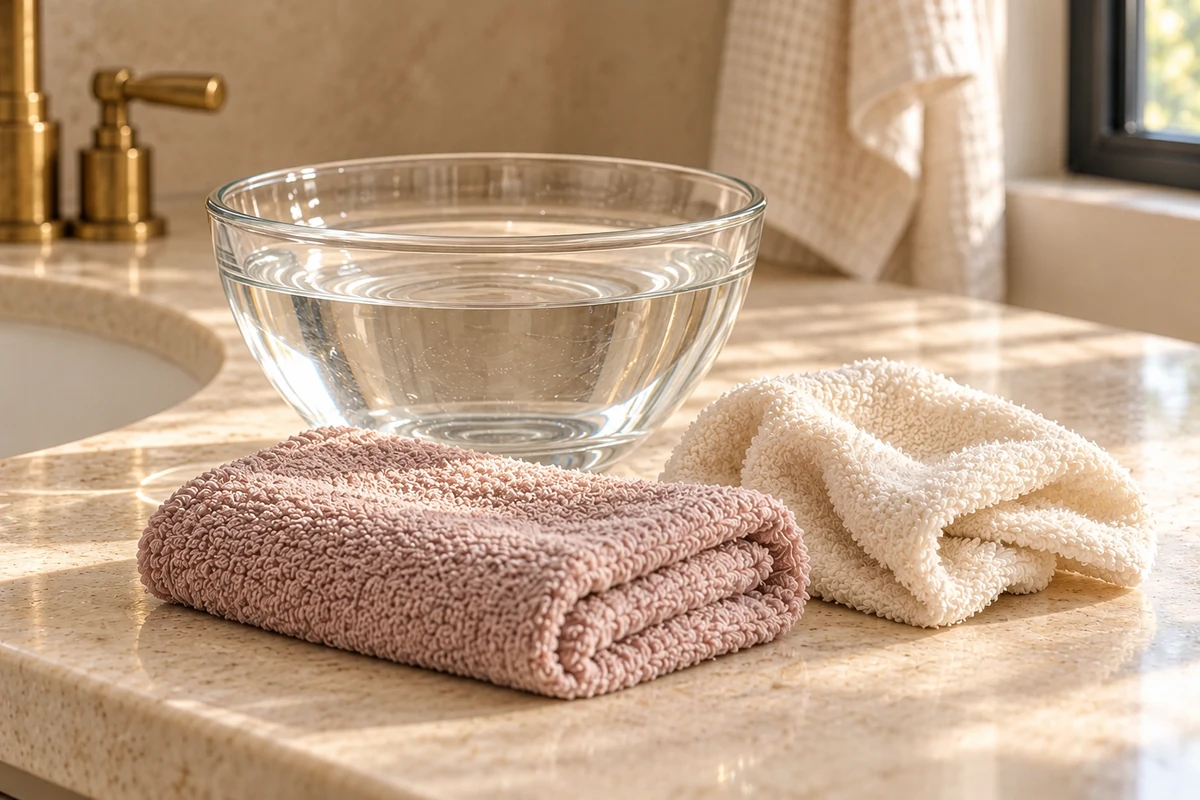
Baby GAPS begins with a simple approach to skin care: clean warm water for routine washing, without soap or shampoo. Dr. Natasha Campbell-McBride recommends avoiding artificial chemicals in baby personal care. For the diaper area or dry skin, the book names coconut oil, olive oil, homemade yogurt, and homemade kefir.[1]
If you are looking at a shelf full of baby-care products and wondering where to begin, this short list gives you a starting point. Below, I walk through the book’s approach and share how bathing changed in our own family.
Why the Book Skips Soap and Shampoo
Gut and Psychology Syndrome says baby-care products are unnecessary, including products marketed as natural. It says soap removes protective oils from a baby’s skin and leaves the skin more open to dryness and colonization by pathogens.[1]
For routine washing, the book’s answer is clean warm water.[1]
What Clean Warm Water Covers
For everyday washing, clean warm water is the starting point in the Baby GAPS guidance.[1] In Gut and Physiology Syndrome, Dr. Natasha describes washing with water and a sponge as sufficient, especially for babies and children. She explains that the skin’s natural oils help protect it from drying out and provide a home for its microbial flora, the microorganisms that live on the skin.[5]
Options for the Diaper Area and Dry Skin
| Purpose | What the Book Names |
|---|---|
| Routine washing | Clean warm water[1] |
| Diaper area | Coconut oil, olive oil, homemade yogurt, or homemade kefir[1] |
| Dry skin | The same oils and homemade ferments[1] |
The book specifically names homemade yogurt and kefir, alongside coconut oil and olive oil, for the diaper area or dry skin. Keep those distinctions in mind when choosing from its list.[1]
The book’s list is not evidence that oils or homemade ferments treat an infection. If a rash develops blisters, pus, fever, or worsening pain, or does not improve, contact your baby’s clinician instead of continuing home treatment.[4]
What Infant Skin Research Can Support
A randomized study examined tap water, two pH 5.5 cleansing products, and alkaline soap on the skin of 40 infants without skin disease between two weeks and 16 months old. Alkaline soap caused the largest rise in skin pH and the greatest reduction in measured skin-surface fat; tap water produced the smallest fat reduction.[2]
That study supports the narrow physical point behind the book’s explanation: cleansing agents can change infant skin pH and surface fat. It did not test coconut oil, olive oil, yogurt, kefir, eczema treatment, or the complete Baby GAPS skin-care passage.[2]
Baby Skin Care Within the Wider Home Plan
The baby-care passage here concerns what touches the skin. Household detergents, renovation timing, bedding, mattresses, and outside exposures are covered in the Baby GAPS newborn-care and home guide.
Keeping the tasks separate makes the plan usable: decide what touches the baby’s skin, then work through the products and materials used around the room and home.
What This Looked Like in Our Family
When we started GAPS in July 2024, my fourth child was almost two and had eczema. During those difficult first six weeks of Intro, we stopped bathing the children. Their skin did better without baths during that period, even though the GAPS books include several bath options. Baths came back after week six.[3]
After that, we used Aalgo seaweed baths and alternated them with baths described in the GAPS books. The kids liked the seaweed baths because they smelled like the ocean. We also made our own lotions and balms as part of our broader home changes.[3]
That experience concerned our family’s eczema and baths during Intro. I am not describing a newborn skin-care result. For a baby’s routine care, the guidance above gives you the book’s specific warm-water, oil, and homemade-ferment options.
Build a Skin Plan You Can Actually Follow
Skin-Soothing GAPS brings the food, home, and personal-care pieces together for eczema-prone skin and includes the eczema and bath changes we actually made at home.
Frequently Asked Questions
Does the No-Soap Instruction Include Shampoo?
Yes. The passage says babies do not need soap or shampoo and that clean warm water is enough.[1]
What Does the Book Name for the Diaper Area?
Coconut oil, olive oil, homemade yogurt, and homemade kefir. The same list is given for dry skin.[1]
Can Store-Bought Yogurt Replace Homemade Yogurt?
The passage specifically says homemade yogurt and homemade kefir. It does not provide a commercial-product substitution.[1]
References
- Campbell-McBride, Natasha. Gut and Psychology Syndrome, second German edition (2015), “Nahrung ist nicht alles,” baby personal-care passage. English wording here is translated from that supplied edition, based on the expanded English edition (2013).
- Gfatter, R., Hackl, P., and Braun, F. “Effects of Soap and Detergents on Skin Surface pH, Stratum Corneum Hydration and Fat Content in Infants.” Dermatology (1997). PubMed 9407174.
- Garnica, E. WFLI Family Story Source, Intro bath, eczema, and low-tox home sections, current through October 2026.
- American Academy of Dermatology. How to Treat Diaper Rash.
- Campbell-McBride, Natasha. Gut and Physiology Syndrome (2020), “Detoxification,” personal-care discussion.
The personal beliefs, opinions, philosophies, and/or views shared in this article are solely based upon my own GAPS experience and may not align with nor reflect the views of GAPS or Dr. Natasha Campbell-McBride, or the content in Dr. Natasha’s GAPS books, podcasts, blog posts, social media posts, or training courses.

Leave a comment