

Gut and Physiology Syndrome is the GAPS book I recommend starting with when you want to understand the whole program. Dr. Natasha Campbell-McBride connects gut health with physical health, then explains the food, supplements, and home changes that make up her nutritional protocol. Its strongest contribution is helping those parts make sense together.[1]
I have read and studied this book, along with Gut and Psychology Syndrome, while running GAPS with my family. We began GAPS in July 2024. Speech concerns first led me to gut-health research, and eczema brought me back to it later. Having a book that looks beyond one symptom or one body system matters to me because that is how the questions unfolded in our own household. You can read our full GAPS story here.
This review looks at what the 2020 book teaches, how its explanation connects with its practical guidance, and what makes it useful beside the earlier GAPS book. If you have seen the two similar titles and wondered which one you need, they are separate companion volumes with different emphases.
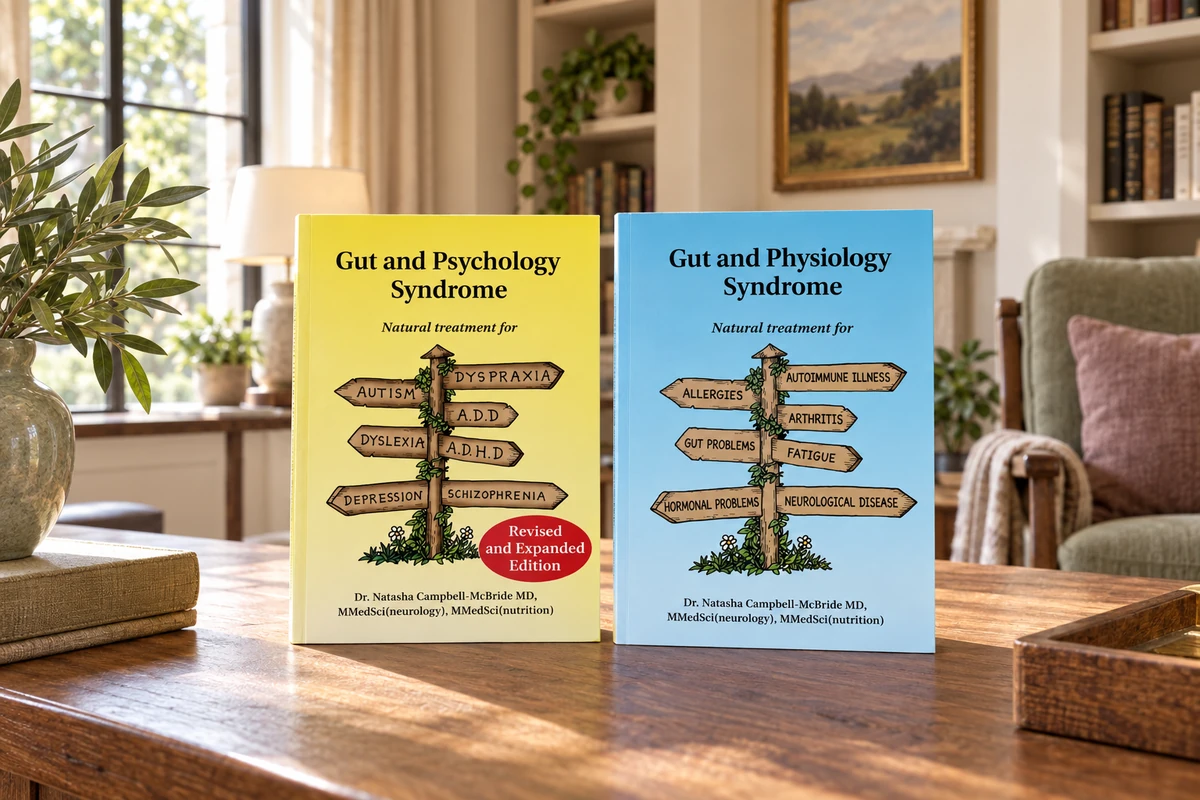
What the Book Sets Out to Explain
GAPS stands for Gut and Psychology Syndrome and Gut and Physiology Syndrome. In this volume, Dr. Natasha develops the physical-health side of the concept: the connection she describes between the digestive system, its microbial community, and the rest of the body. She explains that her work with learning disabilities and mental illness repeatedly brought her face to face with physical symptoms as well.[1]
That opening is important to the book’s purpose. The discussion is not limited to obvious digestive concerns. Her subjects include the immune system, hormones, liver and lungs, bones and teeth, allergies, skin problems, and fatigue. She considers them through a shared gut-health framework rather than treating each chapter as a completely separate dietary program.
For a reader, the benefit is a more connected explanation. You can follow why the same author discusses a stock-based meal, fermented food, and changes in the home within one program. The book supplies her reasoning before it asks you to apply the practical parts.
How Dr. Natasha Teaches the Gut Connection
The opening chapter compares the gut’s microbial community with living soil. A plant depends on the environment around its roots; she uses that familiar picture to introduce the environment surrounding the gut’s absorptive surface. She then develops the comparison into a discussion of different microbes, their relationships, and the conditions in which they live.[1]
I think this is one of the book’s useful teaching choices. A beginner does not have to arrive knowing the vocabulary. There is an image to hold onto while the explanation becomes more detailed. You can understand the author’s emphasis on a community and its surroundings before trying to remember the names of individual organisms.
The broader chapters then carry that framework into the body. This gives the practical guidance continuity: food is discussed as part of nourishment and digestion, while the wider program also considers microbial balance and environmental exposure. Reading the early explanation helps the later instructions feel less like unrelated tasks.
There is a lot to absorb. I would not try to turn every new term into a research project on the first read. Start by understanding the main connection each chapter is making, then return to the details that relate to the question you are working through.
What You Learn About the GAPS Program
The practical program has three connected elements: diet, supplementation, and detoxification and lifestyle changes. Dr. Natasha places diet first. That organization is useful because a reader can see the larger program without mistaking the supplement discussion for the starting point of every decision.[1]
The dietary discussion also has more range than a short online food list can show. The book explains Intro and Full GAPS, then discusses No-Plant GAPS, Ketogenic GAPS, More-Plant GAPS, and liquid fasting. Coming off GAPS has its own section. These have distinct purposes within her explanation; they are not simply different names for the same menu.[1]
That is a substantial reason to read the book. If your understanding of GAPS has come from individual posts or recipes, you may know several rules without knowing how they fit together. Here you can see the program’s structure and the distinctions behind the dietary approaches.
For the practical choice between Intro and Full GAPS, I have a comparison of what changes on the plate. Use that alongside the book when you are trying to picture the cooking involved. The book provides the fuller explanation; the comparison helps make that particular decision easier to see.
Why the Food Explanation Is Useful
A food list answers whether something is included. A program book can explain why an ingredient, its preparation, and the timing of its introduction matter. That difference is central to the value of Gut and Physiology Syndrome.
The book moves from its discussion of food into the nutritional protocol, the dietary approaches, and preparations with recipes. You can therefore read a practical instruction in the context of the author’s larger explanation rather than treating one recipe as the whole diet.[1]
The meat-stock chapter gives a concrete example. It distinguishes stock made with raw, meaty animal parts from long-cooked bone broth, then connects the stock with the cooked meat and soup that become a meal. That is more useful than being told to drink a cup of an unnamed broth. You can see what preparation the author means and how it belongs in the food you are making.[1]
For example, the dietary spectrum is presented before the detailed Intro discussion. That makes it easier to understand that the word “Introduction” does not, on its own, answer every question about where someone begins. The book considers different circumstances as part of the implementation discussion. Reading that explanation is more useful than assuming that every reader must follow an identical starting plan.
My recommendation is to read for those connections. When you reach an unfamiliar preparation, ask what job it is doing in the program and where it belongs. Then use a detailed method or recipe to help with the actual kitchen work. My GAPS food-list guide is a useful companion for checking the foods while you learn the larger framework.
How I Would Read and Use It
I would begin with the introduction and the early gut-flora explanation, then read the treatment and diet sections before building a plan from individual condition entries. The alphabetical section is helpful for finding a topic, but an isolated entry cannot carry all the explanation supplied by the rest of the book.
Keep your notes simple. Write down the question you started with, the chapter that answers it, and anything you need to return to. If the question is about starting GAPS, read the starting guidance before gathering a long list of new recipes. If it is about a kitchen preparation, connect the program’s explanation with a clear method before expanding your menu.
This is my suggested way of organizing the reading. It gives you a manageable first task without turning the book into a stack of instructions to attempt all at once. The goal is to understand what you are doing well enough to make the next practical decision.
How It Compares With Gut and Psychology Syndrome
The original Gut and Psychology Syndrome develops the gut-brain explanation through learning, behavioral, and mental-health topics. It also contains practical dietary guidance and recipes. Gut and Physiology Syndrome widens that discussion to physical health and gives the updated program described in the 2020 volume. Dr. Natasha’s own resource guide presents them as complementary books.[2]
I use the newer book when their GAPS instructions differ, while keeping compatible explanations and additional subjects from the earlier book. That does not make the original volume unnecessary. It means I read them together with an understanding of what each contributes.
If you want a closer look at the whole shelf, my GAPS books and coaching-kit guide explains the roles of the other titles. A technique book, a personal account, and a journal each support a different part of the work.
My review of Gut and Psychology Syndrome takes a closer look at the original book’s gut-brain explanation and practical material.
Who Will Get the Most From This Book?
I recommend it to the reader who wants to understand GAPS beyond a list of allowed foods, especially someone whose questions involve physical health as well as digestion. It is also a useful choice when you have gathered disconnected advice and want to see how the author explains the whole program.
Its breadth asks more of you than a short starting checklist. You will be reading explanations as well as instructions, and you may need to return to a section more than once. That effort is worthwhile if understanding the reasoning will help you carry the program into ordinary life. If your immediate need is one new dinner idea, you will still want a recipe collection alongside it.
I would choose this book for the foundation it gives those later decisions. You can add recipes, kitchen references, and a way to keep notes as you discover what help you actually need.
Find Gut and Physiology Syndrome in my Amazon book collection. Then begin with the introduction and connect it with the question that brought you to GAPS.
References
- Campbell-McBride, N. Gut and Physiology Syndrome. Medinform Publishing, 2020. Introduction; “Good Health Begins in the Soil Inside Us!”; “Treatment”; “GAPS Nutritional Protocol”; “GAPS Diet”; “GAPS Introduction Diet”; “Meat Stock and Soups”; contents and alphabetical condition section. Official book page.
- Campbell-McBride, N. “Resources for the GAPS Diet and Nutritional Protocol.” Descriptions of the two core GAPS books and their complementary purposes.

Leave a comment