

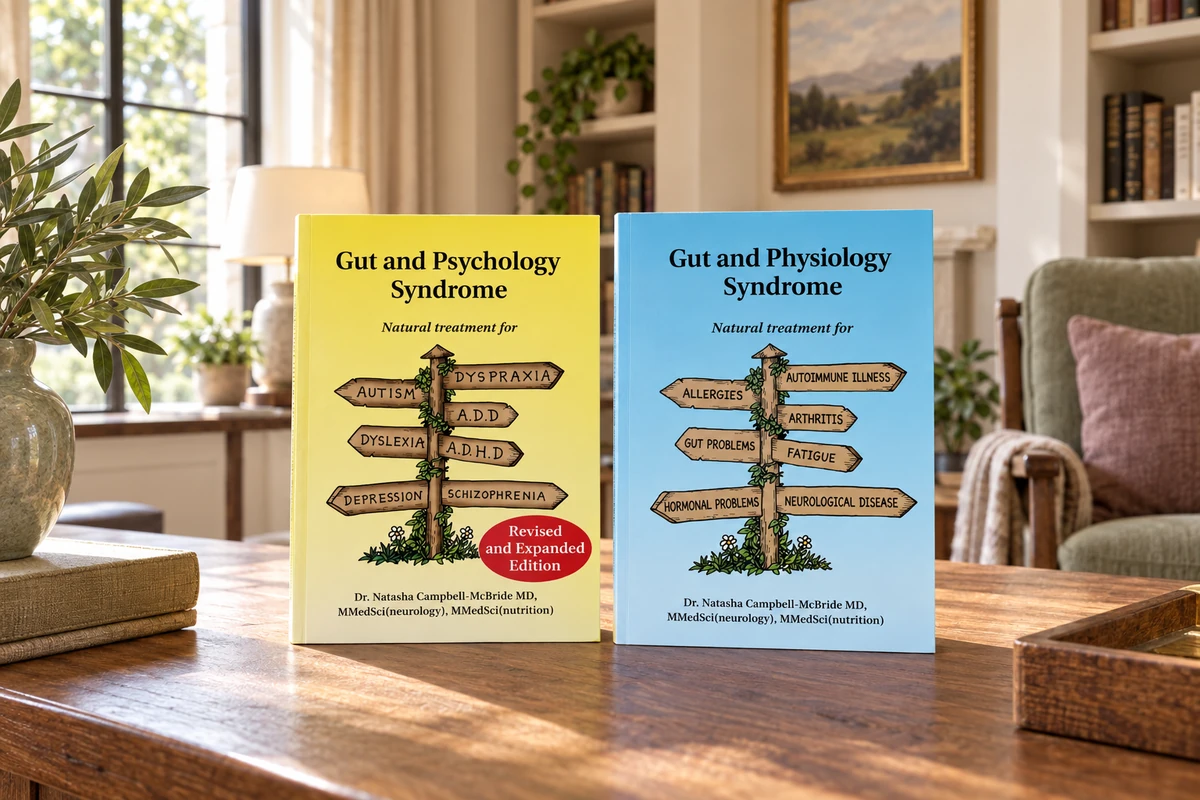
Gut and Psychology Syndrome is worth reading for the explanation that began GAPS: Dr. Natasha Campbell-McBride’s account of the connection between digestion and the brain. Its value goes beyond identifying foods to remove. The book explains why she developed the program and connects that reasoning with practical food guidance, feeding difficulties, and family topics.[1]
I have read and studied this book alongside Gut and Physiology Syndrome while running GAPS with my family. We began in July 2024, after speech concerns first led me to gut-health research and eczema brought me back to it later. The questions were personal and practical: I wanted to understand what I was reading well enough to make changes in our own home. You can read our full family account here.
My recommendation is to keep this book beside the newer physical-health companion. The original gives the gut-brain explanation room to develop. The 2020 book broadens the picture and supplies updated GAPS instructions. They are separate works, and understanding their different purposes makes both more useful.
The Question Behind the Book
Dr. Natasha describes beginning with the intention of writing about autism, then finding that the children she saw often had overlapping learning, behavioral, digestive, allergic, and other physical concerns. The introduction asks why those problems appeared together and what role digestion might have in the pattern.[1]
That is the foundation of Gut and Psychology Syndrome, abbreviated to GAPS. The book develops her explanation of the relationship between gut health and brain function, then sets out the nutritional approach she developed in response. The subjects on the cover are part of that discussion, but they are not the full extent of the book’s contents.
For a reader, this gives the program an understandable starting question. The food guidance does not arrive as an unexplained collection of restrictions. It follows the author’s account of what she believes is happening in digestion and how that connects with the other difficulties she describes.
What the Expanded Book Covers
The early part explains the gut, gut flora, immunity, influences on the microbial community, and the gut-brain connection. The practical part then turns to nutrition, the GAPS dietary approach, recipes, feeding difficulties, failure to thrive, and eating disorders. Supplements and detoxification are also covered. Later material includes other recurring questions and a section about a new baby in a GAPS family.[1]
The useful feature of that arrangement is the connection between understanding and implementation. You can read the explanation first, then return to the practical subject that is relevant to your situation. Someone interested in the gut-brain framework and someone working through the food changes may be using the same book in different ways.
It also explains why I would not dismiss it as a book only about autism or only about psychology. Food and digestion are central throughout. The practical sections are a substantial part of the work, rather than a few recipes added after the main argument.
The Nutrition Discussion Is a Real Strength
One of the most useful parts examines why different dietary approaches may not accomplish the same thing. In the discussion of gluten- and casein-free eating, Dr. Natasha considers what happens when processed foods are replaced with other processed foods that meet those exclusions. Her GAPS argument asks the reader to look beyond the label and consider the food’s place in digestion and the wider program.[1]
That is concrete teaching a food chart cannot supply on its own. A reader may know that a product is gluten-free and still not know whether it belongs in a GAPS kitchen. The book spends time on the reasoning behind the distinction.
The same chapter explains the author’s account of carbohydrates, proteins, and fats, including the work involved in digesting and absorbing food. It connects the later dietary guidance with that explanation. You do not have to memorize the technical vocabulary to see the practical question it is building toward: what food will you prepare, and why?
I value that kind of explanation because following GAPS involves ordinary decisions, not just reading a list once. Ingredients change, meals need planning, and an unfamiliar preparation can raise several new questions. Understanding the program’s reasoning gives you something more useful to return to than an isolated rule.
Why the Feeding Material Matters
The book also recognizes a difficulty that can disappear from a simple diet description: knowing what you want to prepare is not the same as being able to introduce it. Its feeding chapter discusses limited accepted foods, sensory experience, chewing and swallowing difficulties, and the mouth itself as parts of the picture.[1]
That makes the scope more practical than a recipe collection alone. A recipe can show what to cook. A discussion of feeding can help you understand why the change may involve more than putting a different meal on the table.
I read the earlier book alongside the newer companion when using these subjects. My GAPS books guide explains how I use them together and where the cooking-technique books and journal fit. Each has a different job, and a helpful shelf gives you more than one kind of support.
How It Compares With Gut and Physiology Syndrome
Gut and Physiology Syndrome takes the discussion into the rest of the body. Its subjects include immunity, hormones, the liver and lungs, bones and teeth, and a wider physical-health picture. It also sets out the updated GAPS program and its dietary spectrum. Dr. Natasha presents it as the companion that completes the broader GAPS concept.[2]
The important difference is purpose, not just the similar words in the titles. Gut and Psychology Syndrome gives the original gut-brain framework and its related practical material. The newer book broadens the physical discussion and updates program guidance. I follow the 2020 book where their GAPS instructions differ and keep the original book’s compatible detail.
If you are beginning with one volume to understand the current program as a whole, I recommend Gut and Physiology Syndrome first. I would add Gut and Psychology Syndrome for the fuller original explanation, especially when learning, behavior, or feeding are part of what brought you to GAPS.
For the companion’s broader physical-health explanation and program coverage, read my review of Gut and Physiology Syndrome.
What the Book Asks of the Reader
This is a book to read for an explanation as well as a set of practical instructions. There are unfamiliar terms, discussions of research, clinical observations, and dietary material. You may want to return to a chapter once the main ideas are more familiar.
The range is a strength when you want depth. It can also make the first read feel like a lot if you only arrived looking for a starting menu. I would begin by identifying the question you want answered, reading the introduction and early explanation, and then moving into the relevant nutrition material. Keep a short note of the points you want to revisit rather than trying to act on everything at once.
For an immediate practical choice, use my Intro versus Full GAPS comparison with the books. For checking foods, keep the GAPS food-list guide nearby. Those shorter guides make particular questions easier to work through while you read the fuller explanation.
Why I Recommend Reading It
I recommend Gut and Psychology Syndrome because understanding why the program exists adds something a meal plan cannot. The gut-brain explanation, the examination of dietary approaches, and the practical family subjects make it a worthwhile companion to the newer book.
It is the better choice when you want to explore the original GAPS reasoning in more detail. A cookbook will help with dinner variety; this book helps you understand the framework behind the food. I would keep both kinds of help available rather than expecting either one to do every job.
Find Gut and Psychology Syndrome in my Amazon book collection. Begin with the question that brought you to the book, and give yourself room to understand the explanation before turning it into a long list of changes.
References
- Campbell-McBride, N. Gut and Psychology Syndrome, expanded edition. Introduction; Part 1; Part 2, nutrition, dietary, and feeding chapters; Part 4. Official book page.
- Campbell-McBride, N. Gut and Physiology Syndrome. Medinform Publishing, 2020. Introduction; “GAPS Nutritional Protocol”; “GAPS Diet.” See also the author’s description of the two core books.

Leave a comment