

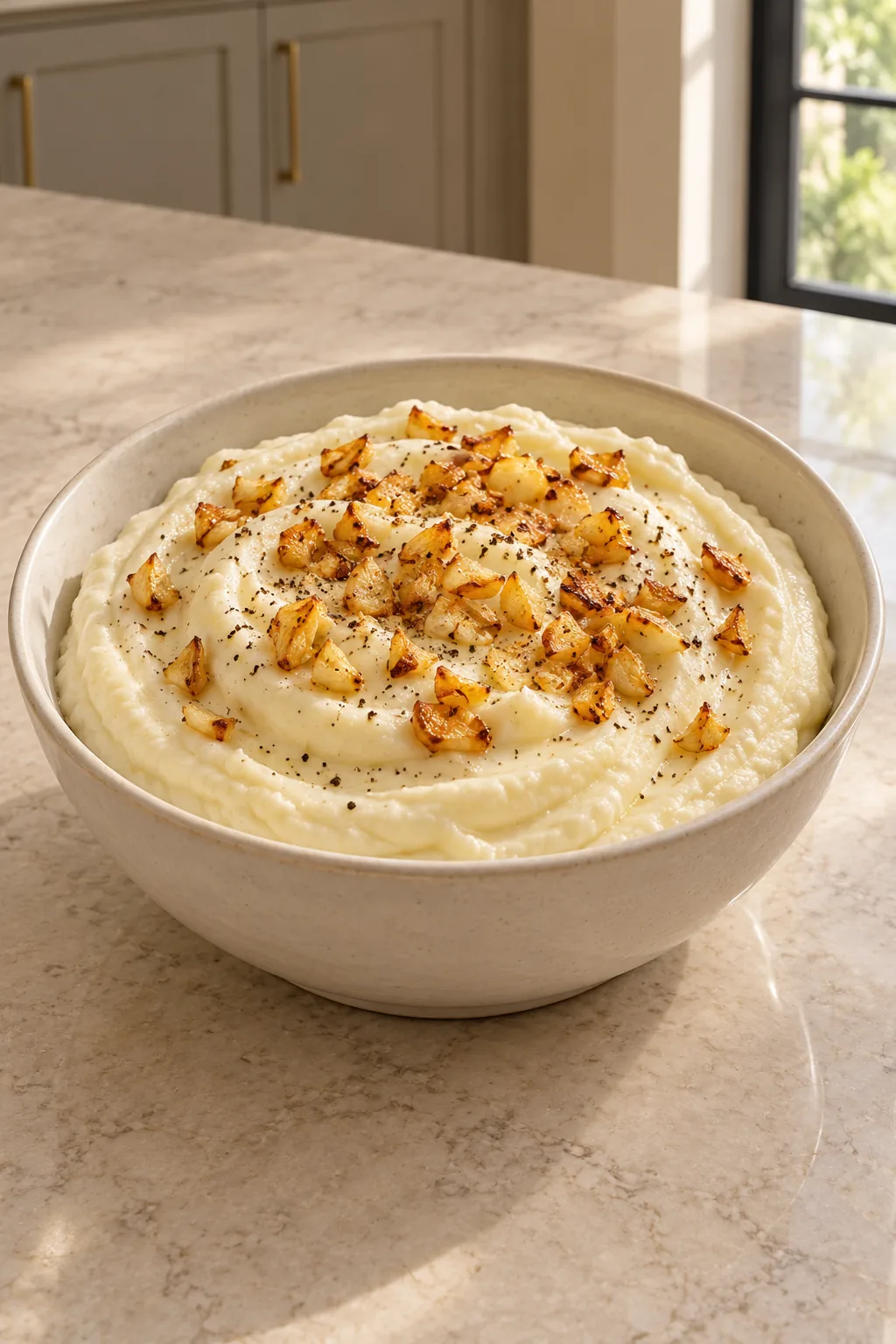
Toasted Garlic Cauliflower Whip turns one steamed cauliflower into a smooth, buttery Full GAPS side dish, then finishes it with eight cloves of garlic cooked slowly until golden. The garlic stays crisp on top instead of disappearing into the purée.
The cauliflower should be completely smooth, creamy, and softly glossy when warm, with enough butter or ghee to carry the toasted-garlic flavor. The topping smells nutty and savory, never sharp, raw, or burned.
For a family meal, I like sides that can be prepared in parts. The cauliflower can be steamed and blended first, while the garlic is toasted separately and kept crisp until the plates are ready.
The final reheating happens in the garlic pan. That picks up the thin butter film and golden coating left behind without mixing the crisp garlic into the moist cauliflower too early.
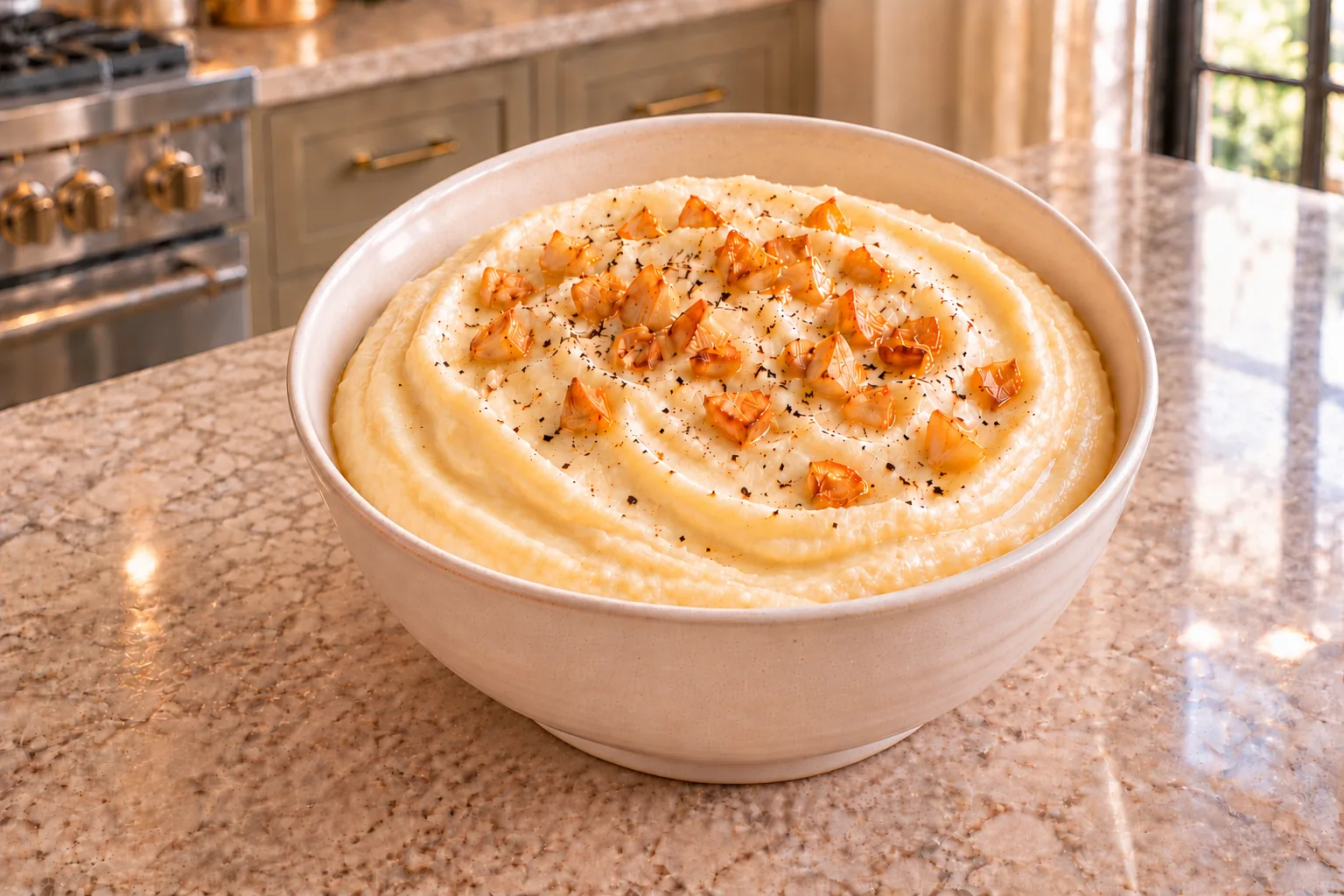
Where This Cauliflower Whip Fits On GAPS
This seasoned formula fits Full GAPS after cauliflower, garlic, black pepper, and the chosen dairy fat are introduced and tolerated. Use raw butter only after it fits the eater’s dairy introduction, or use homemade ghee.
The complete recipe is kept on Full GAPS even though very soft cauliflower and garlic appear in earlier GAPS contexts. Toasted garlic, black pepper, the generous fat, and the finished side-dish format belong together here.
This recipe is naturally grain-free, gluten-free, egg-free, and nut-free. The ghee route removes the milk solids but should still follow the eater’s dairy-introduction plan.
Trim The Cauliflower Before Steaming
Cut one medium cauliflower into evenly sized florets. Remove the thick central stalk and any woody or fibrous stem sections.
Similar-size florets soften at the same pace. Tiny pieces become waterlogged while large pieces can stay firm in the center, leaving grainy flecks in the purée.
Rinse the florets and shake off excess water before placing them in an uncoated stainless-steel steamer. Do not pack them so tightly that steam cannot move between the pieces.
Steam Until A Fork Meets No Resistance
Steam the cauliflower until it is much softer than tender-crisp. A fork should pass through the thickest floret without pressure, and the piece should crush easily against the side of the steamer.
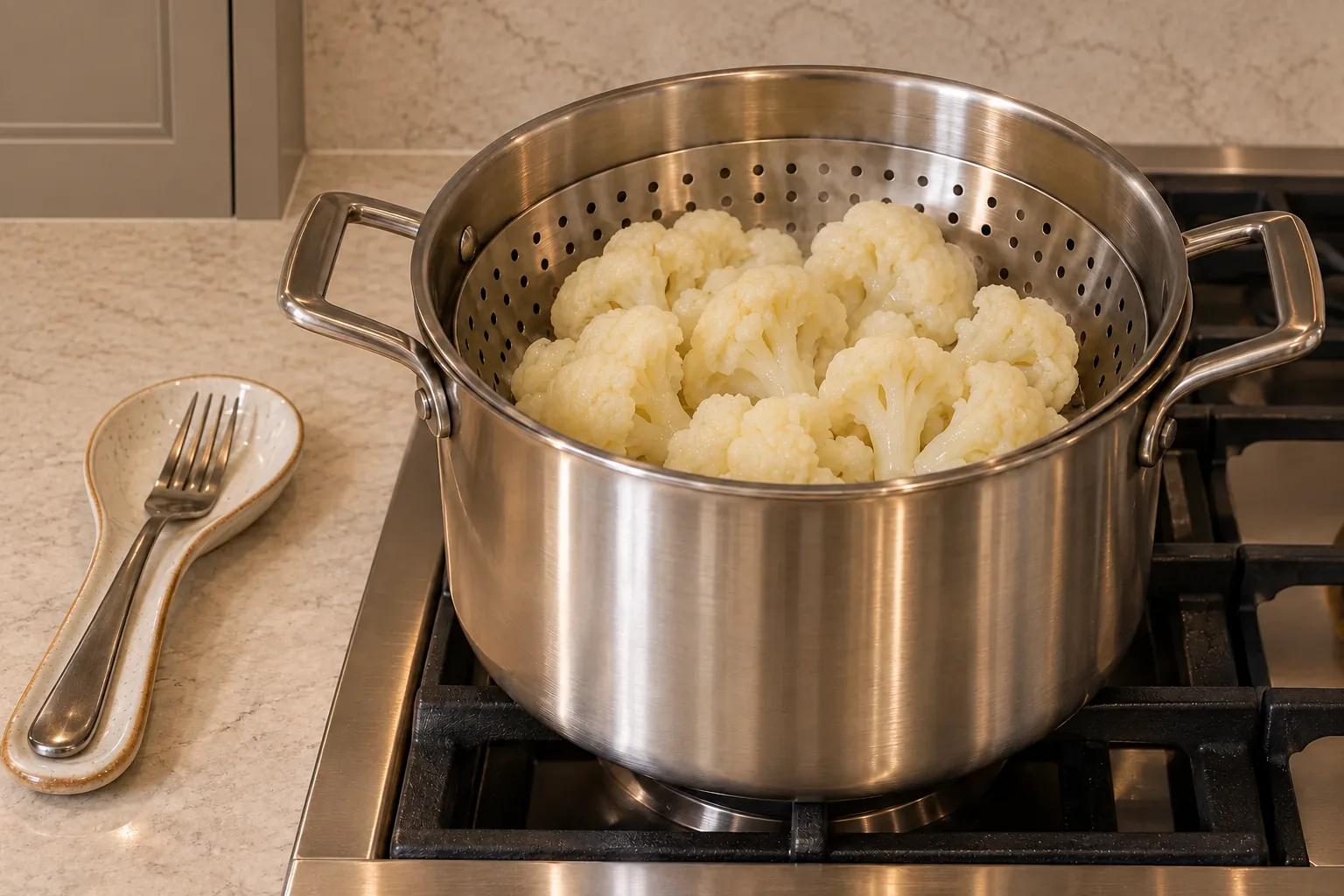
Firm cauliflower never becomes a silky whip. If the stem resists the fork or snaps instead of mashing, continue steaming.
Drain thoroughly and let the steam escape for a minute or two. Water trapped between the florets thins the purée and dulls the butter flavor.
Divide The Butter Or Ghee
The source uses about four tablespoons butter total. Reserve two tablespoons for toasting the garlic. Use the remaining amount in the cauliflower purée and for its final texture adjustment.
If using ghee, keep the same total amount and division. Do not add four tablespoons to the purée and then another two to the garlic pan; that would exceed the source formula.
Have the fat soft or melted but not scorching. Warm fat blends more evenly into hot cauliflower than a refrigerator-cold lump.
Blend In The Exact Ninja BN801
Transfer the drained hot cauliflower to the exact Ninja Professional Plus Kitchen System BN801 pitcher. Add the purée portion of butter or ghee and mineral salt.
Begin on low or pulse, then increase only after the cauliflower starts moving. Stop the motor completely before removing the lid and scraping the sides.
Continue until no cauliflower grains or white stem pieces remain. The purée should fold over itself in smooth thick waves rather than tumble as dry crumbs or slosh like soup.
Taste the base before adding more fat or salt. Keep enough of the measured total fat reserved for the garlic pan and final reheating.
Keep The Purée Thick Without Adding Liquid
Freshly steamed cauliflower carries its own moisture. Once it is very tender and properly drained, it should blend with the measured fat without milk, cream, stock, or water.
If the blades spin above the cauliflower, stop the machine and push the florets down with a spatula only after the motor and blades are still. Restart on low before increasing speed.
Adding liquid may make the mixture move faster, but it also turns a spoonable side dish into cauliflower soup. Give the hot florets time to break down and scrape the pitcher as needed before changing the measured formula.
Chop Eight Garlic Cloves Evenly
Peel and chop eight large garlic cloves into small, similar pieces. Uneven garlic gives you burned crumbs beside pale raw chunks.
Keep the pieces chopped rather than crushed to a paste. Distinct pieces are easier to toast evenly and stay crisp enough to sprinkle over the finished cauliflower.
Why The Garlic Stays Separate
The garlic has a different job from the garlic in a blended soup or sauce. Here it supplies a crisp, toasted contrast to the smooth cauliflower.
Removing the golden pieces before the purée enters the saucepan keeps them from absorbing steam. The fat and browned coating remain behind, so the cauliflower still picks up the flavor.
This separation also makes the leftovers easier to manage. The purée can be reheated slowly while the garlic stays dry until the last moment.
Toast The Garlic Over Very Low Heat
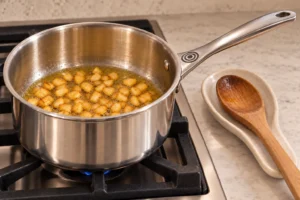
Melt the reserved two tablespoons butter or ghee in the registered Le Creuset Signature stainless-steel saucepan over very low heat. Add the chopped garlic in an even layer.
Cook for about five to seven minutes, stirring often. Do not turn up the burner to shorten the process.
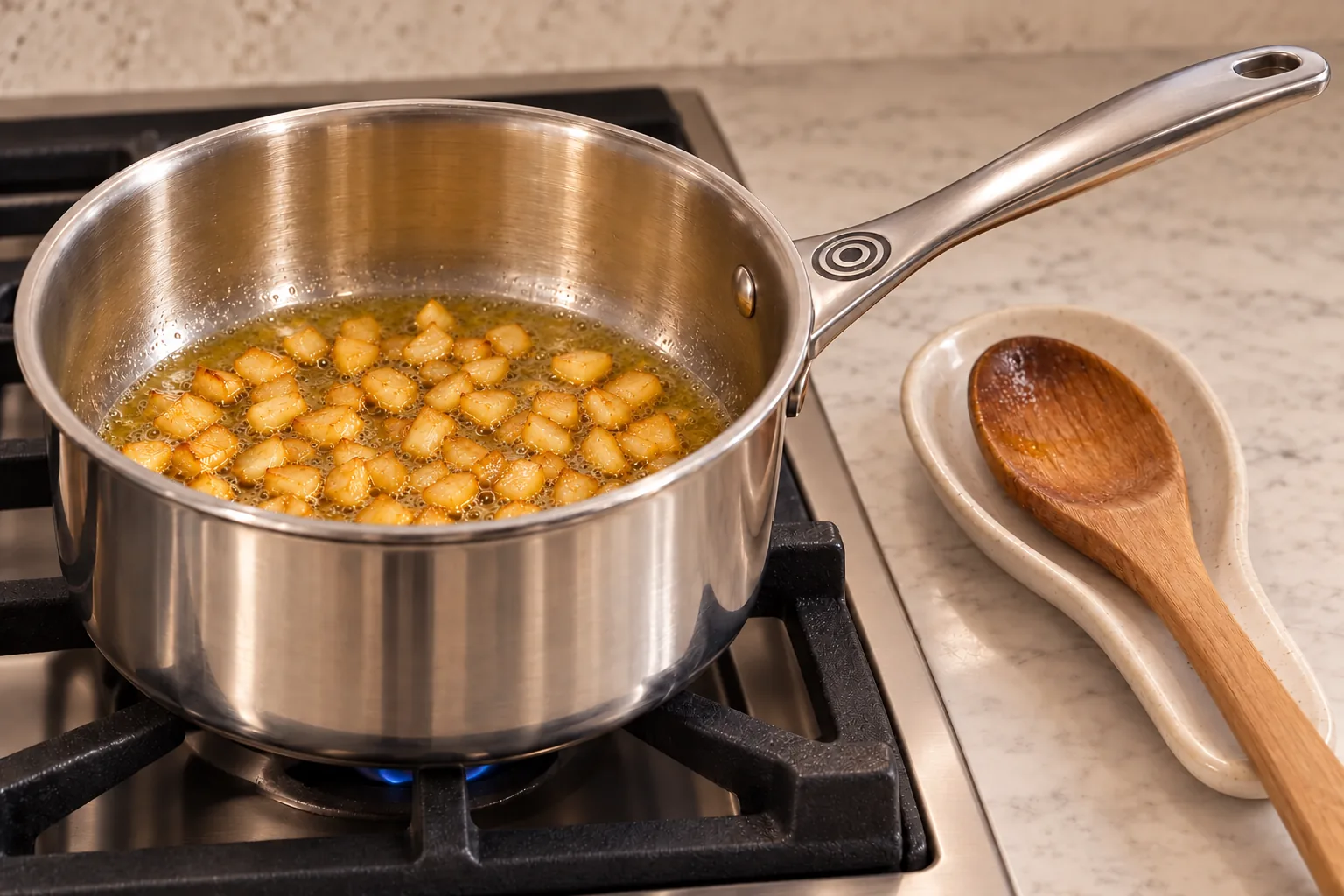
The garlic is ready when the pieces are evenly golden and smell mellow and toasted. Dark brown or black edges taste bitter and will overpower the whole dish.
Season the garlic lightly with mineral salt, then lift it from the pan with a slotted spoon. Leave the butter film and golden coating in the saucepan.
Reheat The Whip In The Garlic Pan
Spoon the cauliflower purée into the empty garlic saucepan. Warm it gently while scraping the bottom and sides so the purée collects the browned garlic flavor and remaining fat.
Keep the heat low and stir often. The goal is to warm and season the purée, not fry it or form a browned crust.
Taste and add only enough of the remaining measured butter or ghee and mineral salt to make the purée smooth and well seasoned.
Use The Spoon Test For The Final Texture
Drag a wooden spoon through the warmed purée. The pan bottom should remain visible briefly before the cauliflower settles back into place.
A spoonful should hold a soft mound without releasing water around its edges. If liquid appears, continue warming gently and stirring so excess moisture can evaporate.
If the purée looks dry or cracks as it moves, use only the remaining portion of the source’s measured butter or ghee. Do not add an unmeasured splash that changes the batch.
Top Each Portion At The Table
Divide the hot cauliflower whip among bowls or plates. Sprinkle the toasted garlic on top and finish with pure black pepper to taste.
Keep the topping visible and crisp. Stirring all the garlic into the pan makes the pieces soften before the dish reaches the table.
Serve beside roast chicken, beef, fish, meatballs, or another Full GAPS entrée. For a different smooth vegetable side, try Roasted Carrot Purée for Full GAPS. The Creamy Cauliflower-Onion Gravy uses cauliflower in a separate sauce formula.
Store The Garlic Separately
Cool leftovers promptly. Refrigerate the cauliflower whip in one covered glass container and the toasted garlic in another for up to three days.
Separating them keeps moisture from the cauliflower from turning the garlic soft. Reheat the purée gently on the stove, then add the garlic after the purée is hot. Keep the cauliflower container covered so refrigerator odors do not flatten its mild flavor.
Freeze only the cauliflower base if needed. Thaw it in the refrigerator and reheat slowly, stirring in a small amount of the recipe’s measured fat if separation appears. Make fresh toasted garlic for the best texture.
Recommended Equipment
- Uncoated stainless-steel steamer basket and pot
- Ninja Professional Plus Kitchen System BN801 with 72-ounce pitcher
- Le Creuset Signature stainless-steel saucepan
- Chef’s knife and cutting board
- Wooden spoon
- Stainless-steel slotted spoon
- Flexible spatula and measuring spoons
Frequently Asked Questions
Can I Use Coconut Oil Instead Of Butter Or Ghee?
This card preserves the source’s butter route with homemade ghee as the supported GAPS alternative. Coconut oil would change the flavor and is not added as an untested variation.
Why Is My Cauliflower Whip Grainy?
The cauliflower may not be soft enough, or the florets may not have blended long enough. Steam until a fork meets no resistance, drain, and blend again after scraping the pitcher.
Why Did My Garlic Burn?
The heat was too high or the pieces were uneven. Use very low heat, stir often, and remove the garlic when it is golden rather than waiting for dark brown edges.
Can I Stir The Garlic Into The Whole Batch?
You can, but the source keeps it as a topping. Adding it at the table preserves the crisp texture and makes leftover storage easier.
Can I Double The Recipe?
Yes. Use the WPRM 2× control, steam in batches if the steamer is crowded, and keep half of the scaled fat reserved for toasting the doubled garlic.
Can I Make It Ahead?
Prepare and refrigerate the cauliflower base and toasted garlic separately. Reheat the base gently, then add the garlic only when serving.
Toasted Garlic Cauliflower Whip Recipe
Toasted Garlic Cauliflower Whip for Full GAPS
Ingredients
Equipment
Method
- Steam the cauliflower until a fork passes through the thickest floret without resistance and the piece crushes easily. Drain thoroughly and let excess steam escape for 1 to 2 minutes.
- Blend the hot drained cauliflower in the Ninja BN801 with about 2 tablespoons butter or ghee and mineral salt. Pulse first, stop before scraping, and continue until completely smooth with no grains or stem pieces.
- Melt the reserved 2 tablespoons butter or ghee in the Le Creuset stainless saucepan over very low heat. Add the chopped garlic and cook about 5 to 7 minutes, stirring often, until evenly golden and mellow-smelling without dark edges. Salt lightly and remove with a slotted spoon.
- Add the cauliflower puree to the empty garlic pan. Warm gently while scraping up the butter film and golden coating. Taste and add only enough remaining measured fat and salt to reach a smooth, well-seasoned texture.
- Portion the hot cauliflower whip, top with the toasted garlic, and add black pepper to taste. Store leftover puree and garlic separately so the topping stays crisp.
Notes
Fat: Use about 4 tablespoons total; do not add 4 tablespoons to the puree plus 2 more for the garlic.
Garlic: Keep the heat very low and remove the pieces when golden, not dark brown.
Storage: Refrigerate puree and toasted garlic separately for up to 3 days.
Tried this recipe?
Let us know how it was!Make The Side Dishes Land With The Main Meal
The upcoming Holiday Menu & Prep Timeline works backward from serving time so vegetable purées, roasts, gravy, reheating, and crisp toppings arrive in the right order. Find current releases and upcoming additions in the WFLI shop.

Leave a comment