

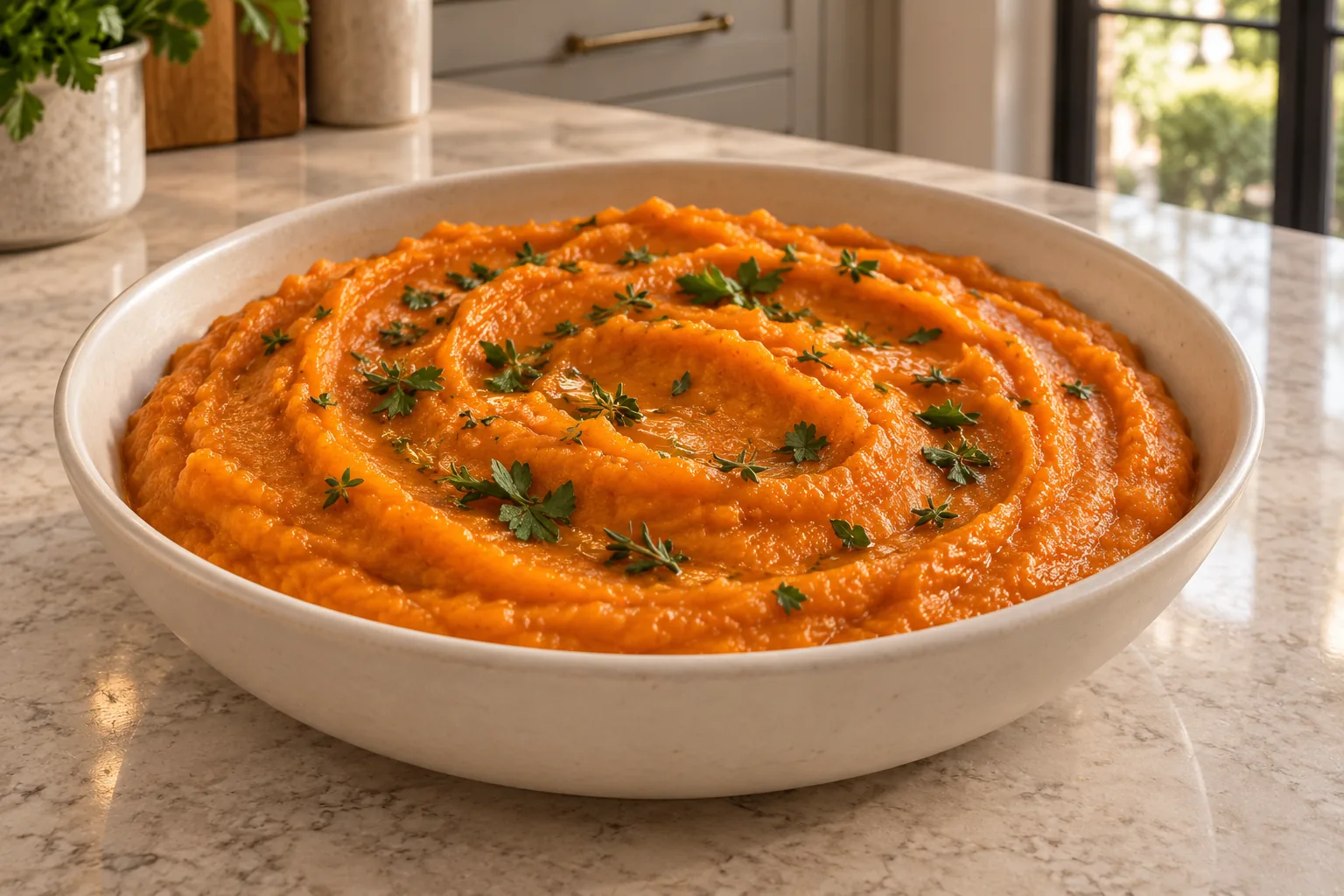
Roasted carrot purée gives you the soft, buttery place on the plate that mashed potatoes usually fill, using a Full GAPS vegetable. The carrots roast until their edges turn deep golden, then blend with meat stock and ghee into a thick orange purée that holds a spooned swirl.
The flavor is savory first, with the carrots’ natural sweetness rounded by browned edges, butter or ghee, and pepper. The finished purée should smell roasted and warm, not raw or sugary. It is smooth enough to spoon but firm enough to stay beside roast chicken, beef, lamb, or pork.
For our family, holiday meals on GAPS work best when the familiar jobs on the plate are still covered. This is the side I use where a potato dish would normally go. It can be made ahead, reheated on the stove, and loosened with a little stock without turning dinner into another last-minute project.
Why This Is Carrot Purée Instead Of Parsnip Purée
The source recipe is roasted parsnip purée, and it specifically names carrots as a direct substitute. Tier 0 excludes parsnips from GAPS because they are a starchy root vegetable. This recipe keeps the source’s one-pound vegetable measure, roasting method, blended texture, and six-serving yield while using carrots.
This is one complete carrot-purée formula. It is not a parsnip recipe with a small variation tucked inside. The title, card, images, and GAPS placement all match the carrot route.
Where Roasted Carrot Purée Fits On GAPS
This recipe fits Full GAPS after carrots, meat stock, and the chosen fat are introduced and tolerated. Use homemade ghee or coconut oil for roasting.
Blend with homemade chicken meat stock or homemade beef meat stock. Butter can replace the finishing ghee once butter is part of your diet.
The source’s cream, milk, seed oils, plant-based butter, and parsnips are left out. The dairy-free source route supplies the one-cup liquid starting point, and the source also names chicken stock as a thinning liquid.
Chicken and beef meat stock both bring gelatin and savory flavor that plain water cannot. Use chicken stock when you want the carrots to remain the clearest flavor on the plate. Use beef stock beside roast beef or lamb, where a darker, meatier purée fits the meal. Whichever stock you choose, warm it before blending so it does not cool and stiffen the roasted carrots.
Choose And Prepare The Carrots
Use one pound carrots after trimming. Choose firm carrots without soft spots or a rubbery bend. Peel them, then cut off the stem ends and thin root tips.
Very large carrots can develop a tougher center. Halve a large carrot lengthwise, set the flat side on the board, and cut away a woody core at an angle if needed. Most medium carrots will not need this step.
Cut the carrots into pieces close to one inch long. The exact shape matters less than consistency. Similar pieces brown at the same pace and become fork-tender together.
Weigh the carrots after trimming if you want the card to scale cleanly. Six medium carrots is only an estimate; carrot sizes vary widely. A full pound gives the fat, salt, pepper, and one-cup stock allowance the proportions used in this recipe.
Season The Carrots For Roasting
Melt three tablespoons ghee or coconut oil. Toss it with the carrots and one-half teaspoon of the sea salt. Every surface should look lightly glossy without a pool of fat collecting on the pan.
Spread the pieces in one layer on an uncoated stainless-steel rimmed sheet pan. Leave a little room between pieces so oven heat can reach their sides. Crowded carrots steam and stay pale.
Add two peeled whole garlic cloves if you want the optional roasted-garlic finish. Keep them whole so they soften without burning before the carrots are done.
Roast To Deep Golden And Fork-Tender
Heat the oven to 400°F. Roast the carrots for twenty-five to thirty minutes. Shake the pan or turn the pieces after the first fifteen minutes.
The carrots are ready when several flat edges are deep golden brown and a fork slides through the thickest piece without resistance. They should not be black or dried into hard shells. The center stays soft and moist enough to blend.
Look underneath pieces near the hottest edge of the pan. If their bottoms are darkening faster than their centers soften, turn them and lower the oven rack one position. You want caramelized edges, not a bitter crust that follows every spoonful into the purée.
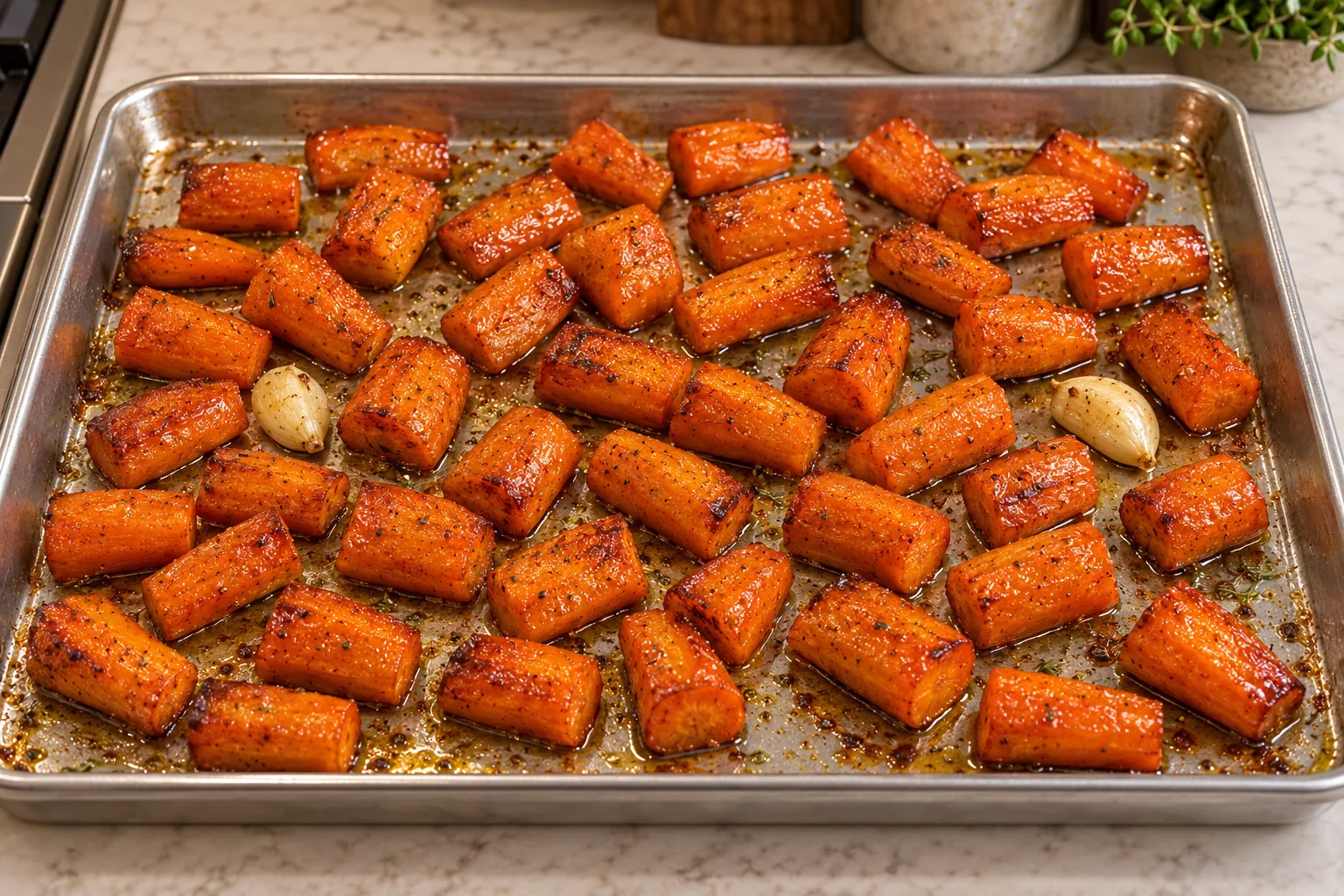
Let the roasted carrots cool on the pan for about five minutes. They should remain warm, but the trapped steam should settle before the blender lid closes.
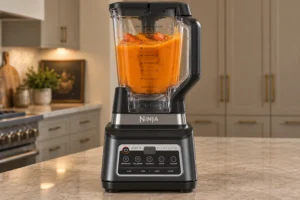
Blend In The Exact Ninja BN801
Transfer the roasted carrots and optional garlic to the exact Ninja Professional Plus Kitchen System BN801 pitcher. Add three tablespoons butter or ghee, the remaining one-half teaspoon salt, and one-eighth teaspoon ground black or white pepper.
Begin with one-half cup homemade meat stock. Blend until the lower portion becomes smooth, then stop and scrape the sides if needed. Add more stock a few tablespoons at a time.
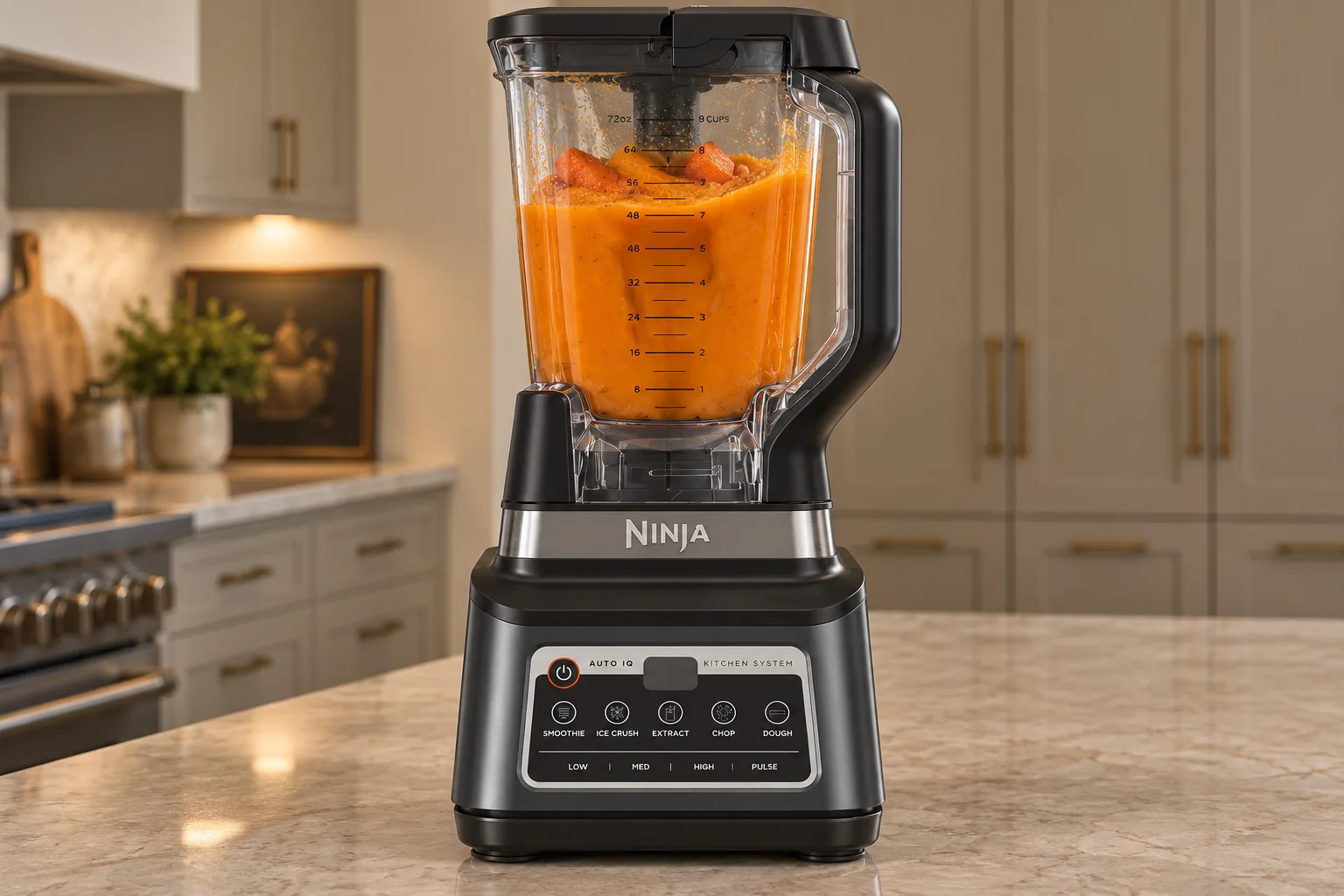
Use only as much of the measured one cup stock as the carrots need. Moist carrots may not need all of it. Drier roasted pieces may need the full cup plus a small extra splash. Adding it slowly keeps the purée from becoming carrot soup.
Pause between additions and let the Ninja BN801 pull the purée through the blades. A thick vegetable purée can form an air pocket above the blade. Stop the motor, remove the lid, scrape down the sides with a flexible spatula, replace the lid, and blend again. Never push a utensil into the pitcher while the motor is running.
Read The Texture Before Adding More Liquid
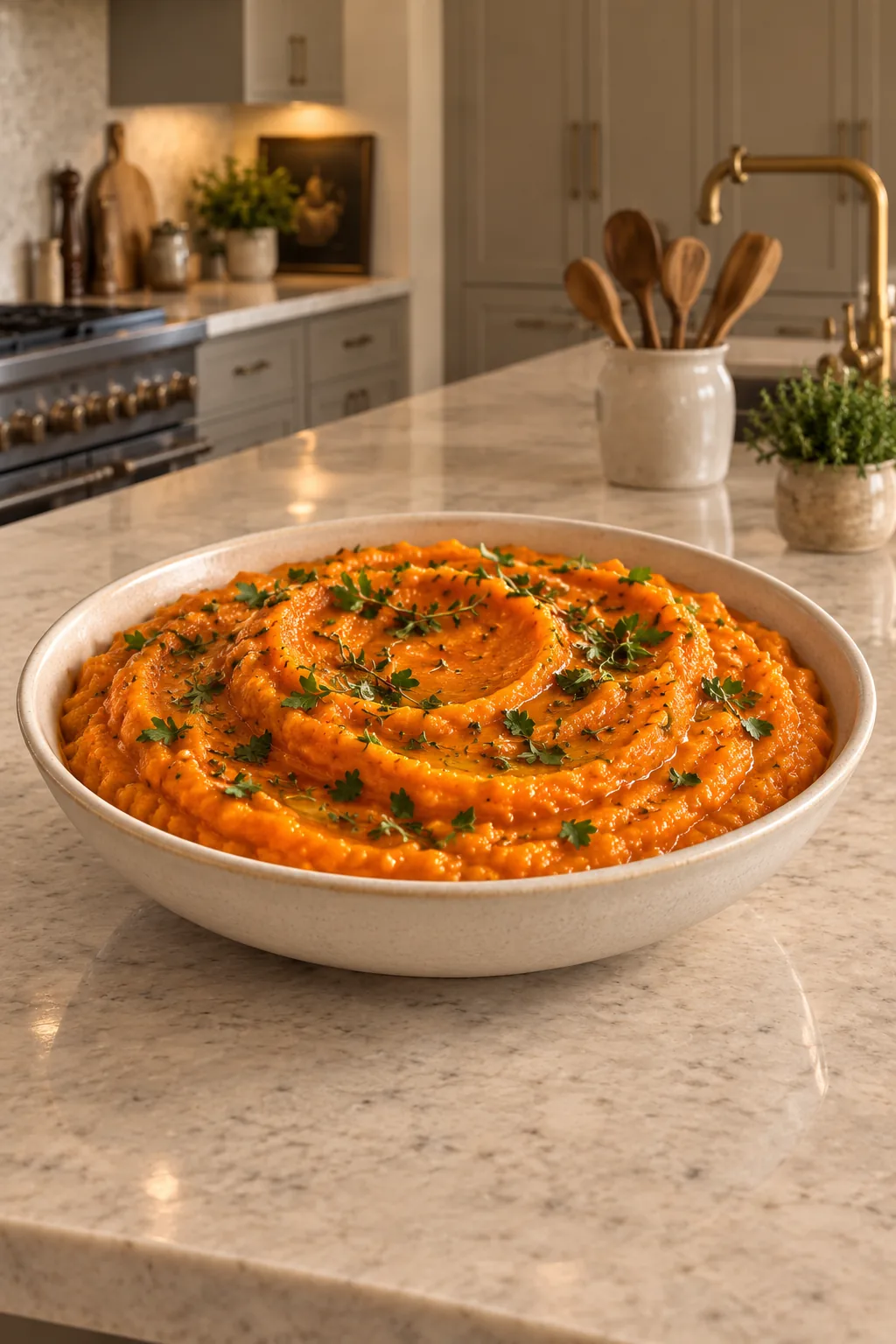
The purée is ready when no carrot pieces remain and the blade leaves a smooth, thick orange mixture. A spoon dragged through it should leave a clean path for a moment before the sides slowly relax.
If the purée stands in stiff chunks, add warm meat stock one tablespoon at a time. If it is too loose, return it to a saucepan over low heat and stir until excess moisture evaporates.
Taste after the texture is right. Add pepper or a few grains of sea salt as needed. Carrots and stock both vary in sweetness and seasoning, so the final taste matters more than adding extra salt automatically.
Finish And Serve The Purée
Spoon the purée into a warm serving bowl and make broad swirls across the surface. Finish with chopped flat-leaf parsley, thyme, or rosemary. Freshly grated nutmeg can be added lightly for a holiday meal.
Serve it with roast chicken, beef, lamb, pork, meatballs, or sautéed mushrooms. The thick purée catches pan juices and sauces without spreading across the whole plate.
For six servings, plan on about one-half cup per person. The WPRM 2× control scales the one-pound batch to two pounds carrots and keeps the salt, fat, pepper, and stock proportions visible.
For a doubled batch, roast on two sheet pans rather than crowding two pounds of carrots onto one pan. Rotate the pans halfway through cooking. Blend in batches if the roasted carrots sit above the BN801 pitcher’s comfortable working level, then stir the finished batches together before seasoning.
Make It Ahead For A Busy Meal
Prepare the purée up to four days ahead and refrigerate it in a shallow covered container. It will firm as it chills. Keep any garnish separate so the herbs stay fresh.
Reheat in a saucepan over low to medium-low heat. Stir often and add water or meat stock one tablespoon at a time until the purée returns to its mashed-potato texture. Add a little butter or ghee at the end if you want more shine.
Freeze in meal-size portions for longer storage. Thaw in the refrigerator, then reheat on the stove. A quick final whisk smooths the texture after freezing.
Recommended Equipment
- Uncoated stainless-steel rimmed sheet pan
- Ninja Professional Plus Kitchen System BN801 with 72-ounce pitcher
- Vegetable peeler
- Chef’s knife and cutting board
- Kitchen scale, measuring spoons, and liquid measuring cup
- Flexible spatula
- Medium saucepan for reheating
Frequently Asked Questions
Are Parsnips Allowed On Full GAPS?
No. Tier 0 lists parsnips among the starchy vegetables excluded from GAPS. The source supports carrots as the direct substitute, so this post uses carrots throughout.
Should I Boil The Carrots Before Roasting?
No. Extra water prevents the surfaces from browning well. Roast the raw carrot pieces after coating them with ghee or coconut oil.
Can I Use Chicken Or Beef Meat Stock?
Either works. Chicken meat stock keeps the flavor lighter. Beef meat stock gives the purée a deeper savory edge. Add either one gradually.
Can I Make It Without Butter?
Yes. Use ghee for both roasting and blending. Coconut oil works for roasting, though ghee gives the finished purée a more buttery flavor.
What If I Do Not Have A Blender?
Push the roasted carrots through a potato ricer or fine sieve, then whisk in the warm meat stock, butter or ghee, salt, and pepper.
Why Is My Purée Watery?
The liquid went in faster than the carrots could absorb it. Warm the purée in a saucepan and stir over low heat until it thickens, then add finishing fat if needed.
Roasted Carrot Purée Recipe
Roasted Carrot Purée for Full GAPS
Ingredients
Equipment
Method
- Preheat the oven to 400°F. Peel and trim the carrots. Remove any woody core from very large carrots, then cut all carrots into uniform 1-inch pieces.
- Toss the carrots with the melted ghee or coconut oil and half of the measured sea salt. Spread them in one layer on an uncoated stainless-steel rimmed sheet pan. Add the optional whole garlic cloves.
- Roast for 25 to 30 minutes, shaking or turning the pieces after 15 minutes, until several edges are deep golden and a fork slides through the thickest piece easily.
- Cool on the pan for 5 minutes. Transfer the carrots and optional garlic to the exact Ninja BN801 pitcher with the butter or ghee, the remaining sea salt, and the pepper.
- Add half of the measured meat stock and blend. Add more of the measured stock a few tablespoons at a time until the purée is completely smooth and thick like mashed potatoes.
- Taste and adjust salt or pepper. Spoon into a warm bowl and garnish with chopped herbs or a little grated nutmeg, if using.
Notes
Parsnip boundary: Parsnips are excluded from GAPS; the source specifically supports carrots as the substitute.
Texture: Use only as much of the measured stock as needed for a mashed-potato texture.
Storage: Refrigerate for up to 4 days or freeze in meal-size portions; reheat on the stove with a little stock or water.
Tried this recipe?
Let us know how it was!Plan The Rest Of The Holiday Plate
The upcoming Holiday Menu & Prep Timeline works backward from serving time so the main dish, sides, stock, reheating, and table all land in the right order. Find current releases and upcoming additions in the WFLI shop.

Leave a comment