

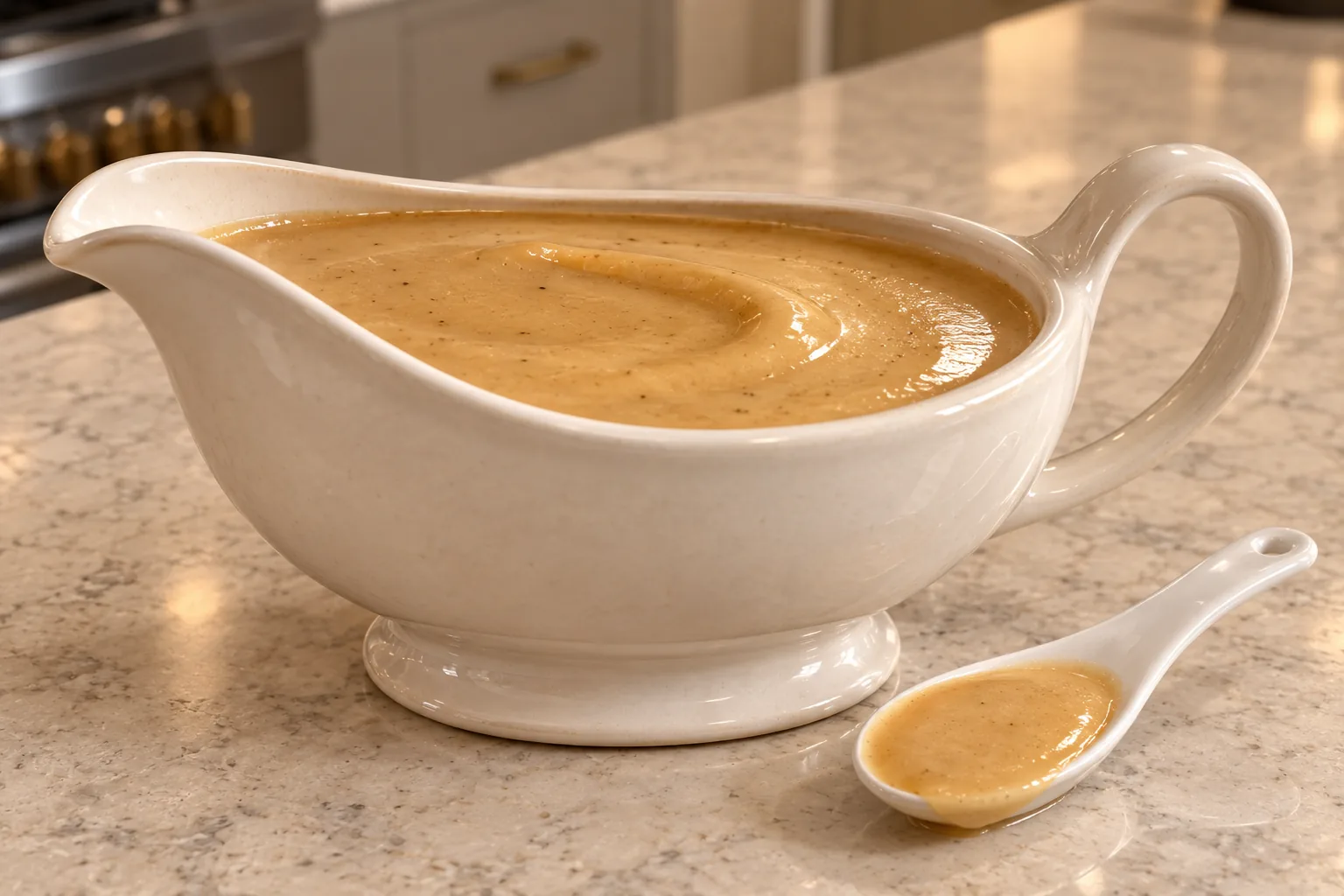
This creamy cauliflower-onion gravy gets its body from vegetables instead of flour or starch. Deep caramelized onion gives the sauce its warm color and savory sweetness. Very tender cauliflower blends with meat stock and pan drippings until the gravy is silky enough to pour and thick enough to coat a spoon.
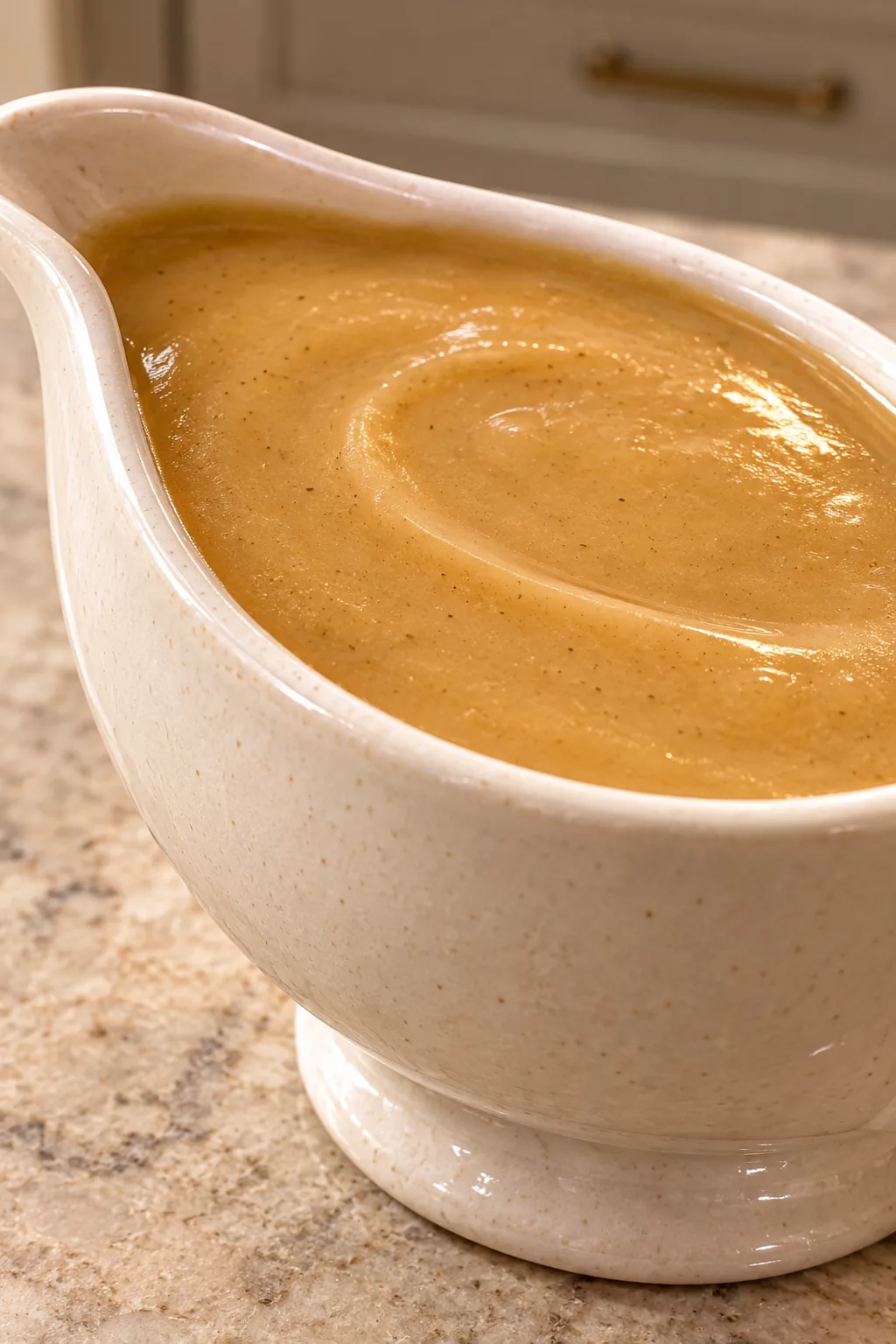
The finished gravy should smell like browned onion and the roast whose drippings you used. It is smooth, pale golden-tan, and glossy. You should not see cauliflower grains or onion pieces in the sauce.
When hot, it should settle slowly after stirring and leave a clean, even coating on the spoon rather than running off like plain stock.
I like keeping sauces like this in the freezer because they turn plain leftovers into a real meal. A small container can cover roast chicken, beef, salmon, zucchini noodles, spaghetti squash, or a holiday plate without starting another pan of flour-thickened gravy.
Where This Gravy Fits On GAPS
This recipe fits Full GAPS after cauliflower, onion, pepper, and the chosen stock or roast drippings are introduced and tolerated. Use homemade ghee and either homemade chicken meat stock or homemade beef meat stock.
If you use juice and fat from a roast, verify that the roast contained no sugar, starch, flour, opaque seasoning, non-GAPS additive, or heated plant oil. The drippings carry every ingredient that went into the roasting pan.
The source collagen peptides are omitted. Your standing WFLI ruling allows plain unflavored bovine gelatin as an optional measured Full GAPS finish where it adds useful body to gravy.
Measure The Cauliflower And Onion
Use one-quarter pound cauliflower florets, about one-quarter of a typical head, and one-half diced onion. Weighing the cauliflower keeps this a small gravy batch rather than a blender full of vegetable purée.
Cut the cauliflower florets into similar sizes so they steam at the same pace. Dice the onion small. Smaller onion pieces expose more surface to the pan and caramelize evenly.
Keep the one-quarter-pound measure even if the cauliflower head is unusually large or small. A quarter of a head is only a shopping estimate. Too much cauliflower turns the gravy into a thick vegetable mash and dulls the caramelized-onion flavor.
Caramelize The Onion Deep Brown
Melt two tablespoons ghee in the exact Le Creuset stainless-steel saucepan over medium to medium-low heat. Add the diced onion and stir to coat every piece.
Cook for about fifteen minutes, stirring often. The onion is ready when it is very soft, jammy, and deep golden-brown to brown. No pale raw centers should remain.
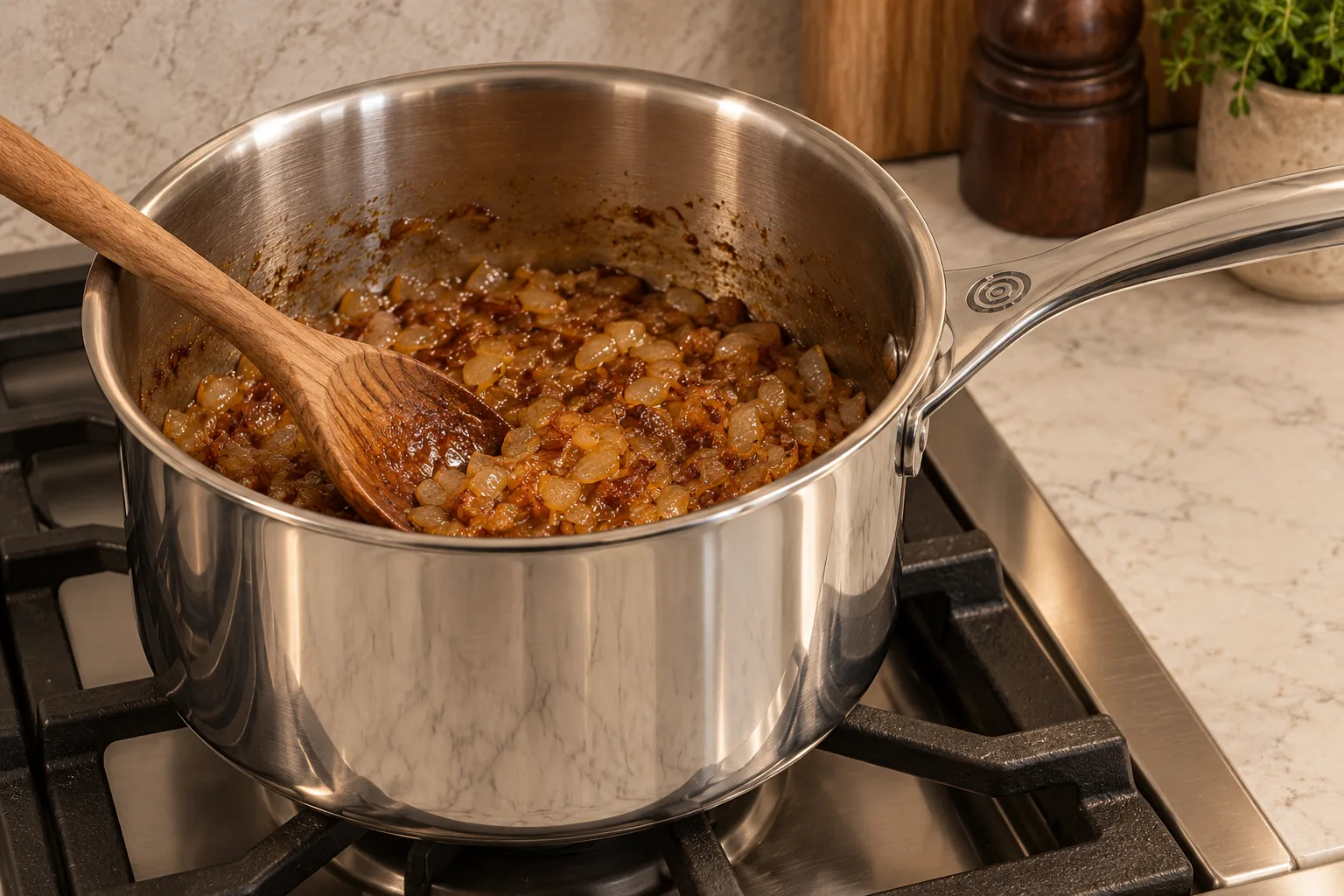
If the onion catches before it softens, lower the heat. Black burned flecks make the entire gravy bitter. Deep caramelization gives color and flavor without scorching.
Do not rush the onion with high heat. The pieces need time to soften before their sugars brown. Add a teaspoon of water only if the pan is dry and the onion threatens to burn; let that water evaporate before blending so it does not change the measured gravy liquid.
Steam The Cauliflower Until Very Tender
While the onion cooks, steam the cauliflower florets in an uncoated stainless-steel steamer until a fork passes through without resistance. This is softer than tender-crisp cauliflower.
Drain the florets thoroughly. Water trapped between pieces thins the gravy before the measured stock or pan juice is added. Let the steam escape for a minute before transferring the cauliflower.
Choose Meat Stock Or Compliant Pan Juice
The source uses one-half to three-quarters cup broth or juice from a roast. This card preserves that range with homemade meat stock or verified compliant roast pan juice.
Begin with one-half cup. The extra one-quarter cup is for adjusting the final texture. Cauliflower moisture and the amount of fat in the drippings both change how much liquid the gravy needs.
Chicken stock makes a lighter gravy for poultry or salmon. Beef stock gives a deeper sauce for roast beef and meatballs. Pan juice carries the most direct connection to the roast, but it must be checked ingredient by ingredient before it goes into a GAPS gravy.
Add one to two tablespoons compliant pan drippings for flavor and richness. If you do not have drippings, use one additional tablespoon homemade ghee as the source directs.
Add Optional Bovine Gelatin Correctly
Plain unflavored bovine gelatin is optional. The controlled ratio is one tablespoon gelatin powder per cup of liquid. With this recipe’s one-half to three-quarters cup liquid, use one-half to three-quarters tablespoon gelatin.
Sprinkle the measured gelatin over half of the cold stock or pan juice. Let it rest for one minute to hydrate. Warm the other half of the measured liquid, then stir the bloomed gelatin into it until dissolved.
Use the recombined liquid in the blender. The gelatin adds body as the finished gravy cools, but it does not create the same hot texture as a flour roux. Keep it optional and keep the vegetable-thickened base intact.
The ratio follows the liquid you actually measure. One-half cup liquid takes one-half tablespoon gelatin; three-quarters cup takes three-quarters tablespoon. On a doubled batch, one to one-and-one-half cups liquid takes one to one-and-one-half tablespoons gelatin.
Blend In The Exact Ninja BN801
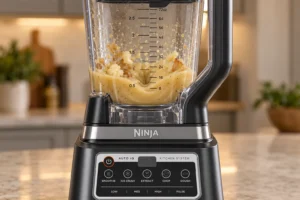
Add the steamed cauliflower, caramelized onion, the initial one-half cup stock or pan juice, and the pan drippings or extra ghee to the exact Ninja Professional Plus Kitchen System BN801 pitcher.
If using gelatin, add the prepared liquid instead of plain liquid. Add mineral salt and black pepper lightly; roast juice and stock may already be seasoned.
Blend until the lower pitcher is completely smooth. Stop, scrape the sides, and blend again if small cauliflower or onion pieces remain.
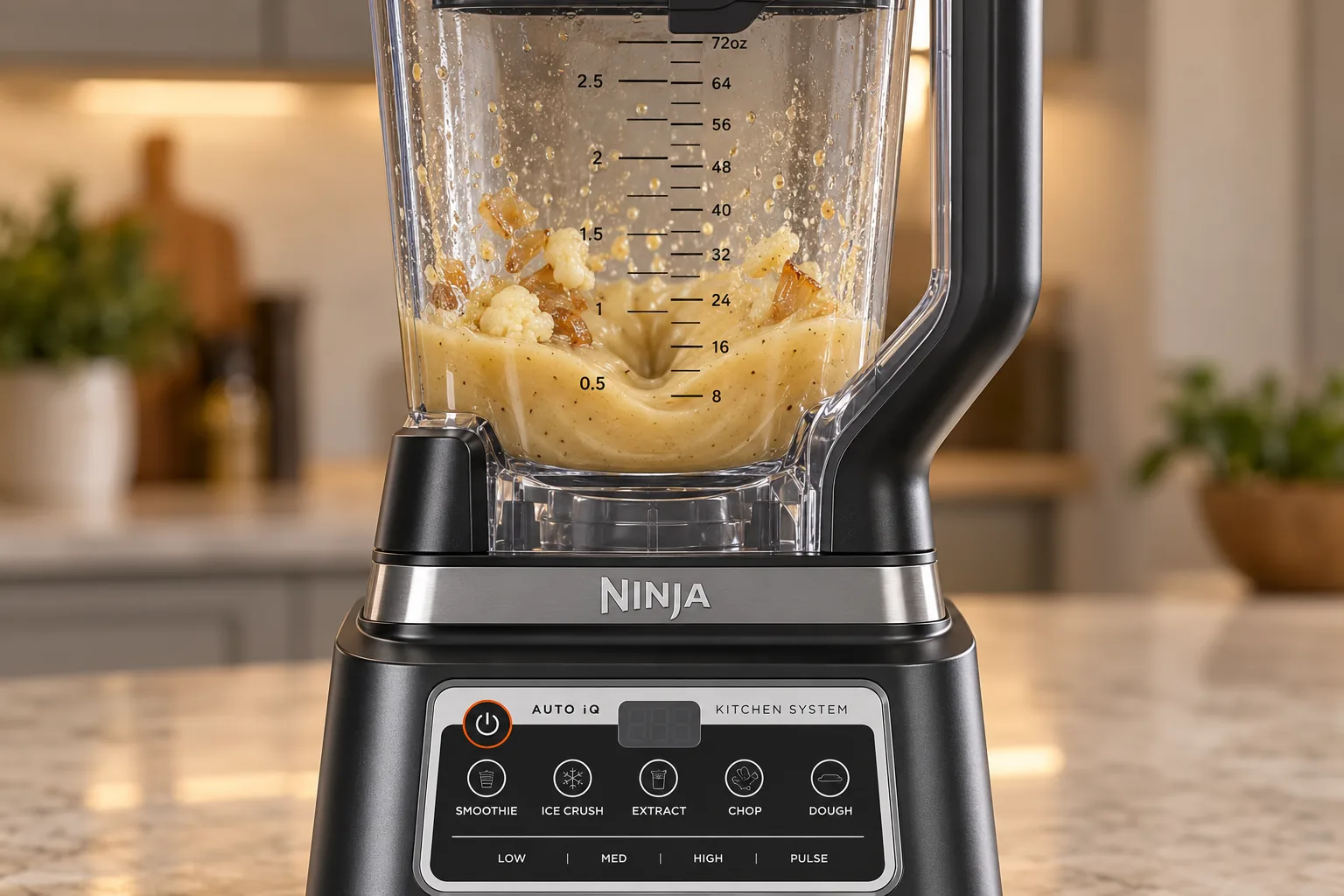
The batch should occupy only the lower portion of the full-size pitcher. A large volume in the pitcher means the cauliflower or liquid was overmeasured.
Because the batch is small, begin on low or pulse before increasing speed. Stop the motor before scraping. Keep the lid secured and never push a utensil into the pitcher while the blades are moving.
Adjust The Gravy Texture
Pour the blended gravy into a saucepan. If it is too thick, add more of the reserved stock or pan juice one tablespoon at a time, up to the source’s three-quarter-cup total.
If it is too thin, simmer gently while stirring until some moisture evaporates. The gravy is ready when it pours in a steady ribbon and leaves a clear coating on the back of a spoon.
Taste after the texture is correct. Add mineral salt and pepper in small amounts. Seasoning becomes more noticeable if the sauce reduces.
Serve The Gravy While Warm
Pour the gravy over roast chicken, beef, pork, salmon, meatballs, roasted vegetables, or a measured GAPS purée. It also works as a creamy sauce for zucchini noodles or spaghetti squash.
For other distinct gravy formulas, try Bacon Onion Gravy With Coconut Milk or Sage and Thyme Coconut Onion Gravy. Those recipes remain separate because their measured bases and flavors are different.
For a holiday meal, make the gravy after the roast comes out and rests. The onion and cauliflower can be prepared earlier, leaving only the compliant drippings, final blend, texture adjustment, and seasoning for the last part of dinner.
Store And Reheat The Gravy
Cool the gravy promptly and refrigerate it in a shallow covered container for up to four days. Gelatin-finished gravy may become firmer when chilled.
Reheat gently in a saucepan, whisking in a spoonful of stock or water if needed. Do not boil aggressively; steady low heat restores the smooth pour.
Freeze in small meal-size containers. Thaw in the refrigerator, then warm and whisk on the stove. A small batch thaws quickly enough for a weeknight meal.
Recommended Equipment
- Le Creuset Signature Stainless Steel Saucepan
- Uncoated stainless-steel steamer basket and pot
- Ninja Professional Plus Kitchen System BN801 with 72-ounce pitcher
- Wooden spoon
- Chef’s knife and cutting board
- Kitchen scale, measuring cups, and measuring spoons
- Flexible spatula and whisk
Frequently Asked Questions
Does This Gravy Contain Flour?
No. Cauliflower and caramelized onion supply the creamy body. There is no grain flour, starch, or roux.
Can I Use Roast Pan Drippings?
Yes, when every ingredient in the roast and pan is GAPS-compatible. Avoid drippings containing sugar, starch, additives, opaque seasoning, or heated plant oil.
Is Bovine Gelatin Required?
No. The base gravy works without it. Plain gelatin is an optional Full GAPS finish at the measured one-tablespoon-per-cup ratio.
Why Did My Gelatin Form Lumps?
Gelatin was probably added directly to warm liquid. Sprinkle it over the cold half first, wait one minute, then dissolve that bloom into the remaining warm half before blending.
Why Is My Gravy White?
The onion may not have caramelized deeply enough, or the cauliflower may dominate because the pan drippings were omitted. Cook the onion to deep brown without burning.
Why Is My Gravy Grainy?
The cauliflower needs to be very soft and well drained. Blend longer, scrape the pitcher, and blend again until no visible pieces remain.
Can I Double The Recipe?
Yes. Use the WPRM 2× control. Keep the gelatin-to-liquid ratio matched and blend in batches if the doubled ingredients crowd the pitcher.
A doubled batch still begins with the lower end of the scaled liquid range. Add the rest gradually so the gravy stays spoon-coating instead of becoming a thin cauliflower soup.
Creamy Cauliflower-Onion Gravy Recipe
Creamy Cauliflower-Onion Gravy for Full GAPS
Ingredients
Equipment
Method
- Melt the measured ghee in the saucepan over medium to medium-low heat. Add the diced onion and cook about 15 minutes, stirring often, until very soft, jammy, and deep brown without burned black pieces.
- While the onion cooks, steam the cauliflower until a fork passes through without resistance. Drain thoroughly and let excess steam escape for 1 minute.
- For the optional gelatin finish, sprinkle the measured gelatin over half of the cold measured liquid and rest 1 minute. Warm the remaining half, stir in the bloomed gelatin until dissolved, and recombine.
- Blend the cauliflower, caramelized onion, the lower end of the measured liquid range, pan drippings or extra ghee, salt, and pepper in the exact Ninja BN801 until completely smooth. Use the prepared gelatin liquid here if using.
- Return the gravy to a saucepan. Add reserved liquid 1 tablespoon at a time if too thick, or simmer gently if too thin, until it pours in a ribbon and coats the back of a spoon. Taste and adjust seasoning.
Notes
Drippings: Pan juice and drippings must contain no sugar, starch, additives, opaque seasoning, or heated plant oil.
Gelatin: Plain bovine gelatin is optional at the measured 1 tablespoon per cup liquid ratio.
Storage: Refrigerate for up to 4 days or freeze in meal-size portions; reheat gently on the stove.
Tried this recipe?
Let us know how it was!Plan The Sauce With The Rest Of The Meal
The upcoming Holiday Menu & Prep Timeline works backward from serving time so roast drippings, stock, sides, gravy, reheating, and the table land in the right order. Find current releases and upcoming additions in the WFLI shop.

Leave a comment