

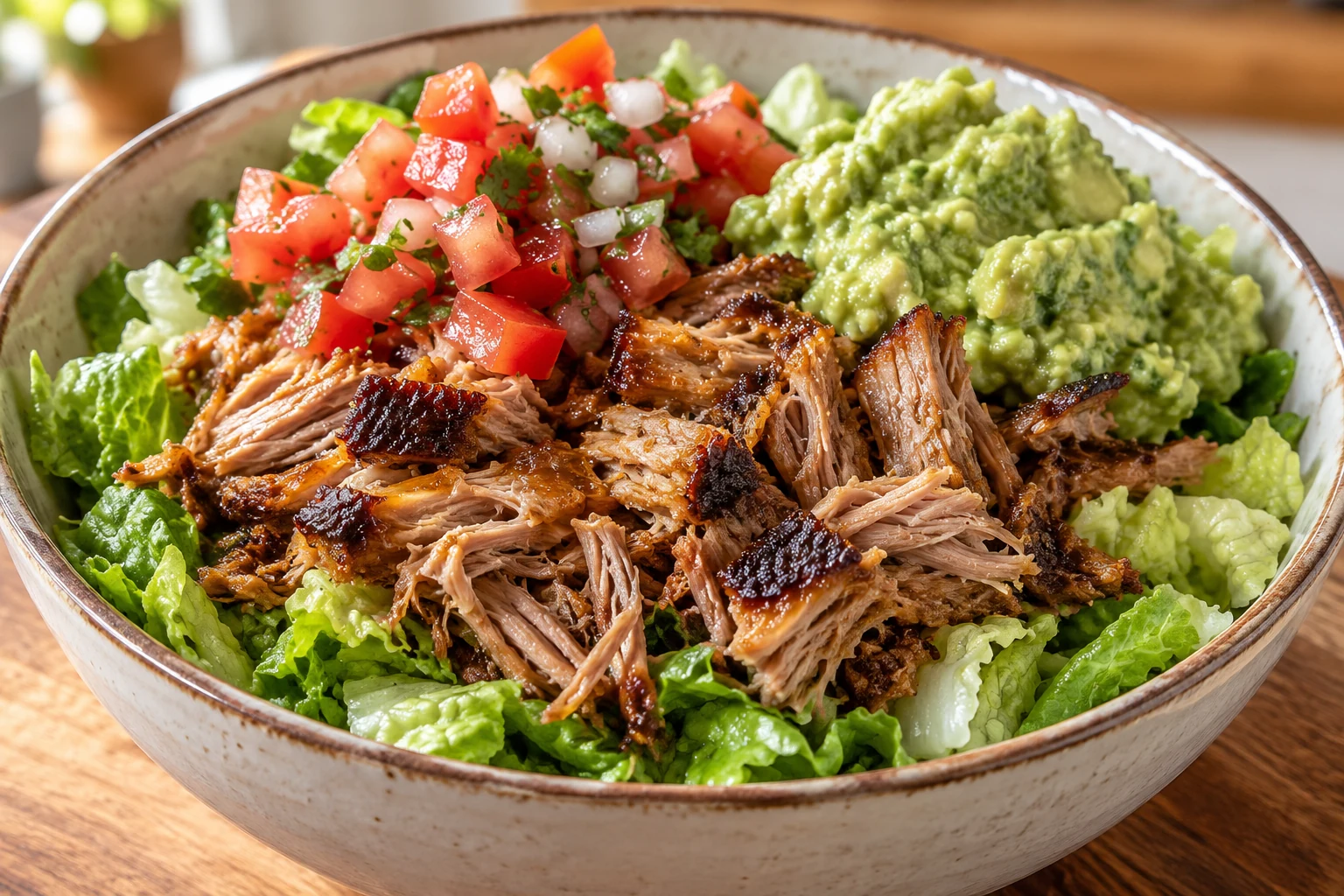
A slow cooker carnitas salad bowl gives you the crisp-edged pork and fresh toppings that make a restaurant-style bowl satisfying, while keeping every component inside Full GAPS. Four pounds of pork shoulder are browned in batches, seasoned with garlic and pure spices, and cooked slowly in homemade chicken meat stock until the meat separates with almost no pressure from two forks.
In a household feeding eight people, I appreciate a dinner that can sit in the middle of the table and let everyone build a bowl from the same food. The pork is rich enough to carry the meal, while lettuce, homemade salsa, and guacamole keep the finished bowl fresh. The useful part is that none of those toppings has to be hidden inside the main recipe. Each component stays recognizable and can be made ahead when that fits the week.
Where This Carnitas Salad Bowl Fits on GAPS
This recipe is for Full GAPS. It uses unprocessed pork shoulder, homemade chicken meat stock, natural cooking fat, garlic, sea salt, black pepper, garlic powder, oregano, and optional pure smoked paprika. The serving bowl uses lettuce, homemade salsa or pico de gallo, and homemade guacamole.
Use single-ingredient spices without starch, sugar, anti-caking agents, flavoring, or commercial seasoning blends. Use homemade meat stock rather than boxed broth, bouillon, concentrate, or bone broth. The recipe is not an Introduction Diet meal because its browned preparation, spice profile, and raw salad toppings belong later.
Why This Version Uses the Slow Cooker
The source recipe uses an electric pressure cooker. Current GAPS authority favors slow cooking on lower heat, so this version keeps the source’s measured pork, fat, garlic, seasonings, and stock while moving the covered cooking stage to a slow cooker.
The six-hour mark is the first doneness check, not a promise that every four-pound shoulder finishes at the same minute. Pork shoulders vary in shape, connective tissue, starting temperature, and how tightly the slow cooker is packed. The controlling cue is simple: two forks should pull the meat apart without a struggle. If the fibers resist, cover the cooker and continue.
Choose Pork Shoulder With Enough Fat
Pork shoulder is the right cut because it contains the fat and connective tissue needed for long cooking. A lean loin or tenderloin will not behave the same way. The source begins with about seven pounds bone-in and removes the bone, rind, and some excess fat to obtain four pounds boneless shoulder meat.
Trim only what is necessary. Leave visible seams of fat through the chunks. During the slow cook, that fat softens the meat and enriches the stock. The raw chunks should be large enough to brown without drying at the edges before the center cooks.
Build Flavor in the Skillet First
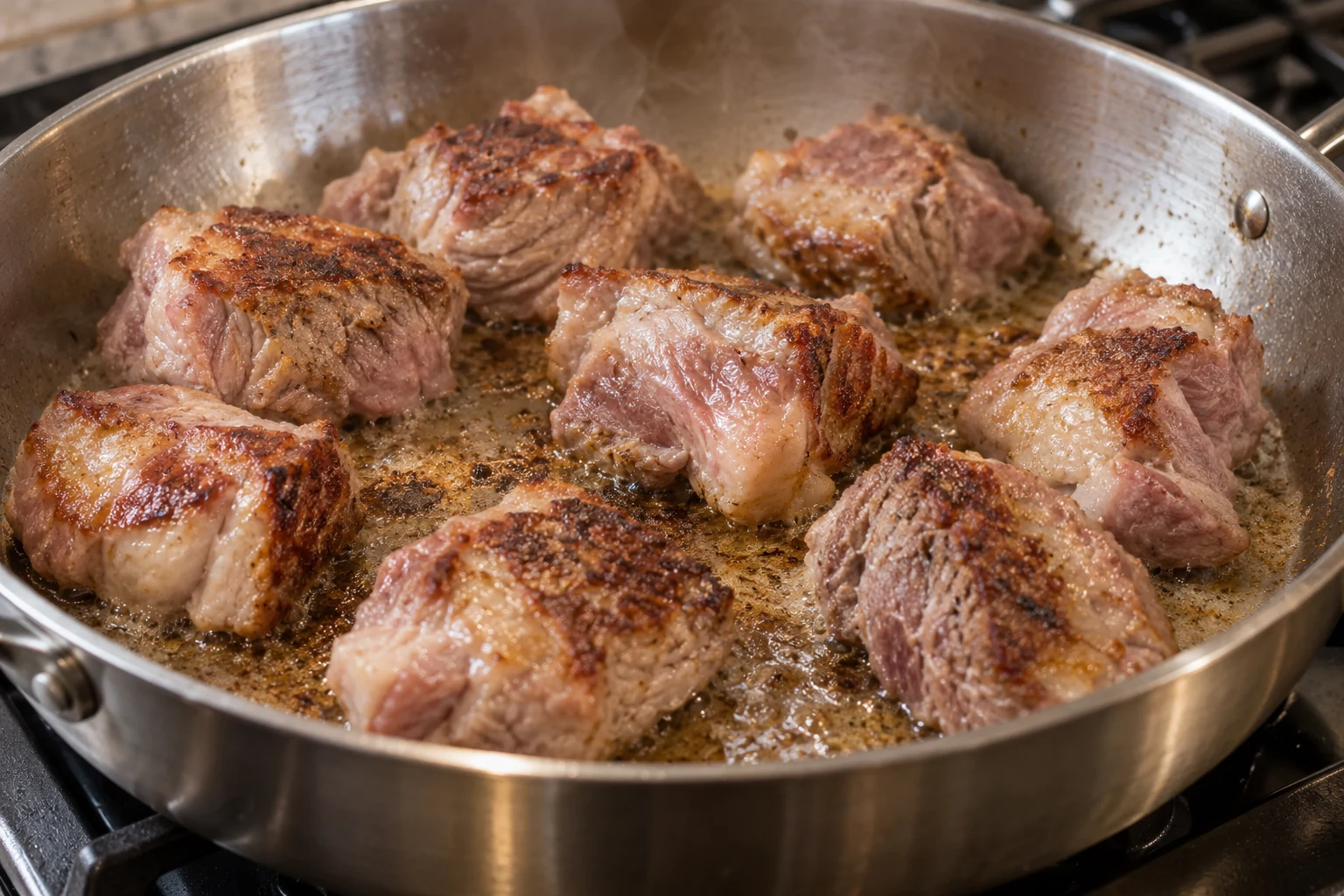
Browning is what separates this carnitas-style pork from plain slow-cooked shoulder. Heat four tablespoons coconut oil or another GAPS animal fat in a roomy cast-iron or stainless-steel skillet. The fat should shimmer and move freely, but it should not smoke.
Add only enough pork to make one uncrowded layer. Once the meat touches the pan, leave it alone for several minutes. A properly browned piece releases more easily and shows dark golden-brown patches. Pale gray meat needs more contact time. Crowded meat releases water and steams instead of browning.
Use the Browned Bits Without Burning Them
After each batch, the skillet will hold a dark film of browned pork juices. Pour in a couple tablespoons from the measured two cups chicken meat stock and scrape with a straight-edged wooden or stainless-steel spatula. The liquid should hiss, turn brown, and lift the flavorful bits from the pan.
Do this before the residue becomes black or smells burned. Transfer the loosened liquid to the bowl with the meat, or leave it in the skillet while the next batch browns. At the end, add the remaining stock, scrape the pan clean, and bring the liquid to a simmer before it goes into the slow cooker.
How to Make Slow Cooker Carnitas Salad Bowls
1. Cut and Dry the Pork
Remove the rind and bone, then cut the shoulder into large, similarly sized chunks. Pat the surfaces dry. Damp meat cools the skillet and delays browning.
Keep plenty of fat attached. The pieces should look marbled rather than uniformly lean. Set the prepared pork beside the stove while the skillet heats.
2. Heat the Cooking Fat
Put four tablespoons coconut oil, chicken fat, pork fat, or another GAPS cooking fat in a large skillet over medium-high heat. Heat until the fat shimmers and a pork edge sizzles immediately when it touches the pan.
If the fat smokes, lower the heat before adding the full batch. Smoking fat and scorched browned bits give the finished stock a bitter flavor.
3. Brown the Pork in Batches
Arrange one layer of pork with space between the chunks. Leave the first side undisturbed until brown patches form and the meat releases readily, then turn and brown another broad side.
Move each browned batch to a large glass or stainless-steel bowl. Continue until all four pounds have visible caramelized areas. The source allows about 30 minutes for the complete browning stage.
4. Deglaze Between Batches
When browned residue builds on the skillet, add a small splash from the measured stock and scrape the bottom clean. The stock will bubble rapidly and darken as it collects the fond.
Add that liquid to the browned pork. Do not replace the measured stock as you work; every splash comes from the same two-cup total.
5. Add the Garlic and Seasonings
Cut six garlic cloves into small pieces. Add them to the browned meat with two teaspoons sea salt, one teaspoon black pepper, one teaspoon pure garlic powder, a pinch dried oregano, and one teaspoon pure smoked paprika if using.
Toss until the garlic and spices are distributed across the warm meat. You should smell pork, garlic, oregano, and paprika without the dusty aroma of unmixed spice pockets.
6. Finish the Skillet Liquid
Pour the remaining chicken meat stock into the skillet. Scrape until no browned film remains, then bring the stock to a gentle simmer.
The liquid should be brown and fragrant, without black flecks or a burnt smell. Pour it over the seasoned meat in the slow cooker.
7. Slow Cook Until Fork-Shred Tender
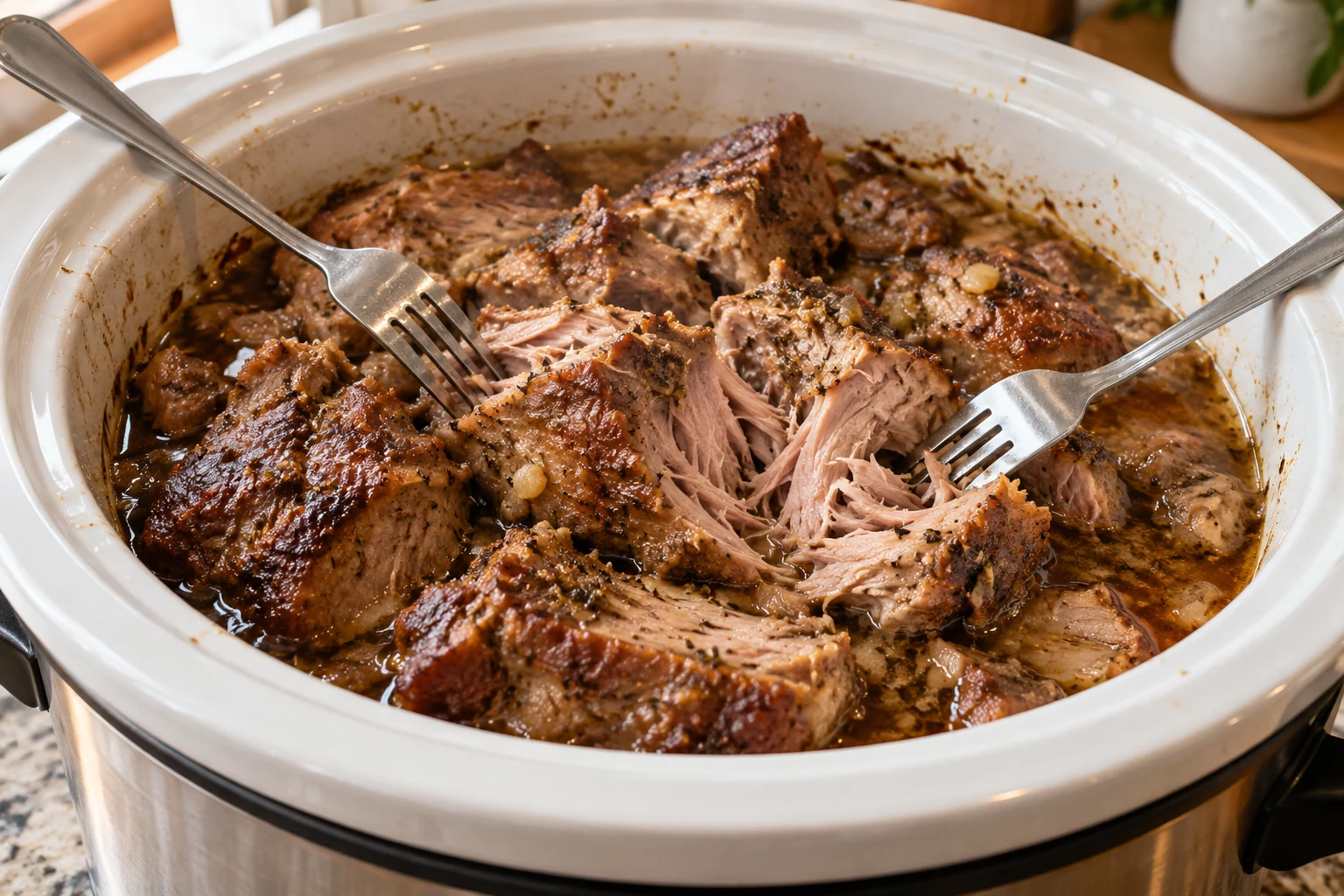
Press the pork into an even layer, cover, and cook on low. Begin checking at six hours. Insert two forks into a thick chunk and pull in opposite directions.
The pork is ready when the fibers separate immediately with almost no resistance. If the meat stretches, feels springy, or stays together, cover it and continue cooking before testing again.
8. Shred and Moisten the Pork
Lift the tender pork into a bowl and pull it into bite-size strands with two forks. The meat should look juicy and fibrous, with soft pieces of rendered fat distributed through it.
Spoon enough cooking liquid over the pork to keep it moist. Save the remaining liquid for reheating the meat or adding to a compatible soup or stew.
9. Build the Salad Bowls
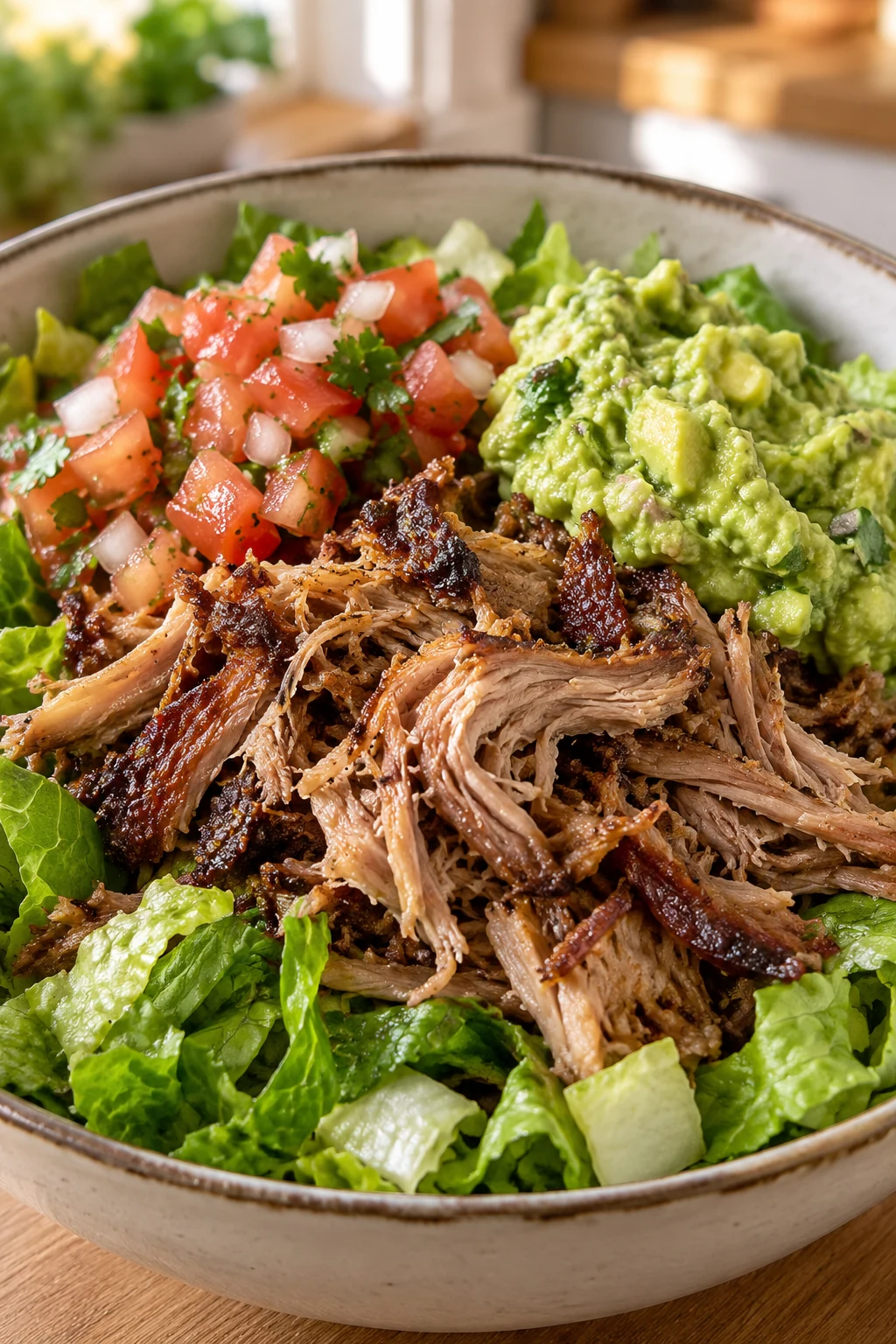
Put lettuce in each bowl and add warm carnitas. Finish with Classic Pico de Gallo or another homemade GAPS salsa and Three-Ingredient Avocado-Lime Guacamole.
Keep the hot pork and cold toppings in distinct layers. That contrast gives you crisp lettuce, juicy meat, bright salsa, and cool creamy guacamole in the same bite.
What the Finished Carnitas Should Look and Taste Like
The pork should be deeply savory, garlic-forward, and gently smoky when paprika is included. The outside of some strands will be darker from the sear, while the centers remain soft and moist from the stock.
The cooking liquid should taste concentrated and meaty rather than watery. The salad bowl should not be swimming in broth; use enough liquid to moisten the pork, then let the fresh toppings supply their own juices.
Storage and Reheating
Cool the pork and cooking liquid promptly in shallow containers. Store the meat and liquid together when possible so the strands remain moist. Keep lettuce, salsa, and guacamole separate from the warm component.
The captured source does not establish a tested refrigerator or freezer duration, so this post does not invent one. Reheat the portion needed gently on the stovetop with a spoonful of its cooking liquid. Do not microwave it.
Frequently Asked Questions
Can I Use the Instant Pot?
This Full GAPS version uses a slow cooker because current GAPS guidance favors lower, slower cooking. The source’s measured ingredients remain intact, but the covered cooking stage changes.
Why Is Six Hours Only a Starting Check?
The four-pound source formula is larger than the captured slow-cooker shoulder used to establish the six-hour checkpoint. Shape and connective tissue also vary. Fork-shred tenderness, rather than the clock alone, proves the pork is ready.
What Meat Stock Should I Use?
Use two cups homemade chicken meat stock. Do not replace it with boxed broth, bouillon, commercial stock concentrate, or bone broth.
Can I Skip Browning?
Skipping the skillet changes the formula’s carnitas-style flavor and removes the fond that enriches the cooking liquid. Keep the batch browning and deglazing steps for this version.
Which Salsa Works Best?
A fresh tomato salsa or pico de gallo keeps the bowl bright. Use the linked classic pico, or another homemade salsa whose ingredients fit your current Full GAPS approach.
Can I Serve the Pork Without Lettuce?
Yes. The measured carnitas remain the same. Serve them beside cooked Full GAPS vegetables, but keep that serving choice separate from the card’s salad-bowl assembly.
Recommended Equipment
- Large cast-iron or stainless-steel skillet
- Straight-edged wooden or stainless-steel spatula
- Large slow cooker with a ceramic insert
- Large glass or stainless-steel bowl
- Two forks
- Shallow glass storage containers
Slow Cooker Carnitas Salad Bowl for Full GAPS Recipe
Slow Cooker Carnitas Salad Bowl for Full GAPS
Ingredients
Equipment
Method
- Remove the rind and bone, cut the pork into large similar chunks, and pat every surface dry. Leave visible seams of fat through the meat.
- Heat the cooking fat in a large cast-iron or stainless-steel skillet over medium-high heat until it shimmers and a pork edge sizzles immediately.
- Brown the pork in uncrowded single-layer batches. Leave each first side undisturbed until dark golden-brown patches form and the meat releases readily. Transfer browned pieces to a large bowl.
- Between batches, pour a small splash from the measured meat stock into the skillet and scrape up the browned bits before they burn. Add the loosened liquid to the pork.
- Add the garlic, sea salt, black pepper, garlic powder, oregano, and optional smoked paprika to the browned pork. Toss until evenly distributed.
- Pour the remaining meat stock into the skillet, scrape the bottom clean, and bring the liquid to a gentle simmer. Pour it over the pork in the slow cooker.
- Press the pork into an even layer, cover, and cook on low. Begin checking at 6 hours. Continue until two forks pull a thick chunk apart with almost no resistance.
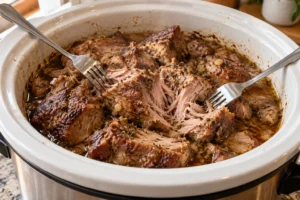
- Lift the pork into a bowl, shred into bite-size strands, and spoon enough cooking liquid over it to keep the meat moist.
- Serve warm pork over lettuce with homemade salsa or pico de gallo and homemade guacamole. Keep the cold toppings separate until serving.
Notes
Tried this recipe?
Let us know how it was!Make Full GAPS Dinners Easier to Repeat
The planned Dinner Cookbook will organize slow-cooker meals, skillet dinners, soups, casseroles, and family-size mains by method and preparation needs. Find current resources and upcoming releases in the WFLI shop.

Leave a comment