

Classic pico de gallo needs only ripe tomato, onion, lime, cilantro, and sea salt. A fine, even chop and a few hours of rest turn those simple ingredients into a bright Full GAPS condiment with distinct pieces and enough tomato-lime juice to season every spoonful.
This version deliberately stays classic. It does not add garlic, jalapeño, lemon, or avocado. Those ingredients belong to other measured salsa formulas, each with its own post and card.
In our working, homeschooling family of eight, salsa is one of the easiest ways to make a familiar plate feel finished. I can spoon it beside eggs, meat, fish, or cauliflower rice, and everyone can take the amount that works for them. Making it early also clears the chopping board before the rest of dinner starts.
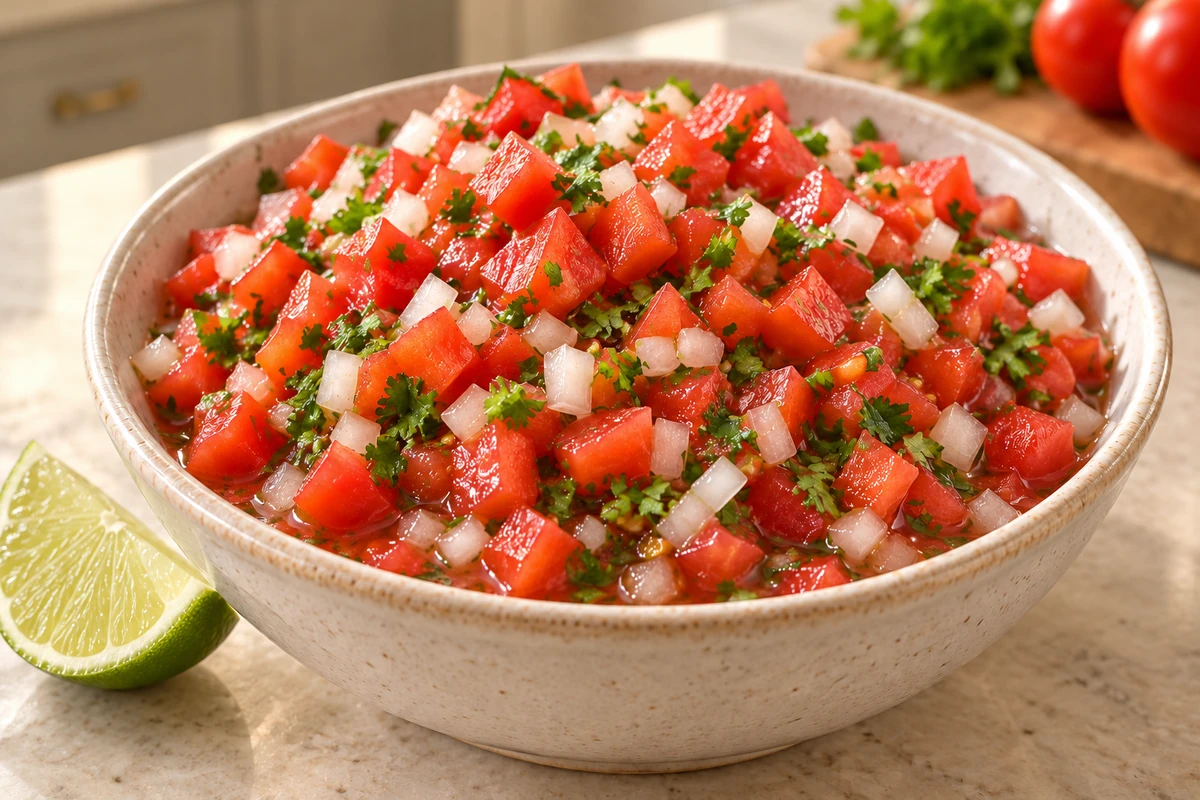
Where Classic Pico de Gallo Fits on GAPS
Use this raw salsa on Full GAPS after raw tomato, raw onion, lime, cilantro, and sea salt are introduced and tolerated. Tomatoes are nightshades, so this is not the route for someone who is still avoiding them. During the Introduction Diet, raw vegetables are introduced gradually and citrus is not part of this finished formula’s stage placement.
Lime is the controlling citrus in this source formula and is a recommended GAPS food. The older draft incorrectly replaced it with lemon and added garlic. Both changes are removed here. This card keeps three tomatoes, one-third of one white or yellow onion, one or two limes, two tablespoons cilantro, and sea salt.
Choose Ripe Tomatoes That Still Hold a Dice
Choose three tomatoes that smell ripe at the stem and give slightly when pressed, but are not collapsing or leaking. Very soft tomatoes release too much liquid and lose their shape; pale firm tomatoes make a dry salsa with little flavor.
Core the tomatoes and chop them into small pieces that sit easily on a spoon. Keep the pieces close in size. Large chunks shed their juice slowly, while tiny crushed pieces turn the bowl watery. A sharp stainless-steel knife makes a cleaner cut than a dull blade that presses the tomato flat.
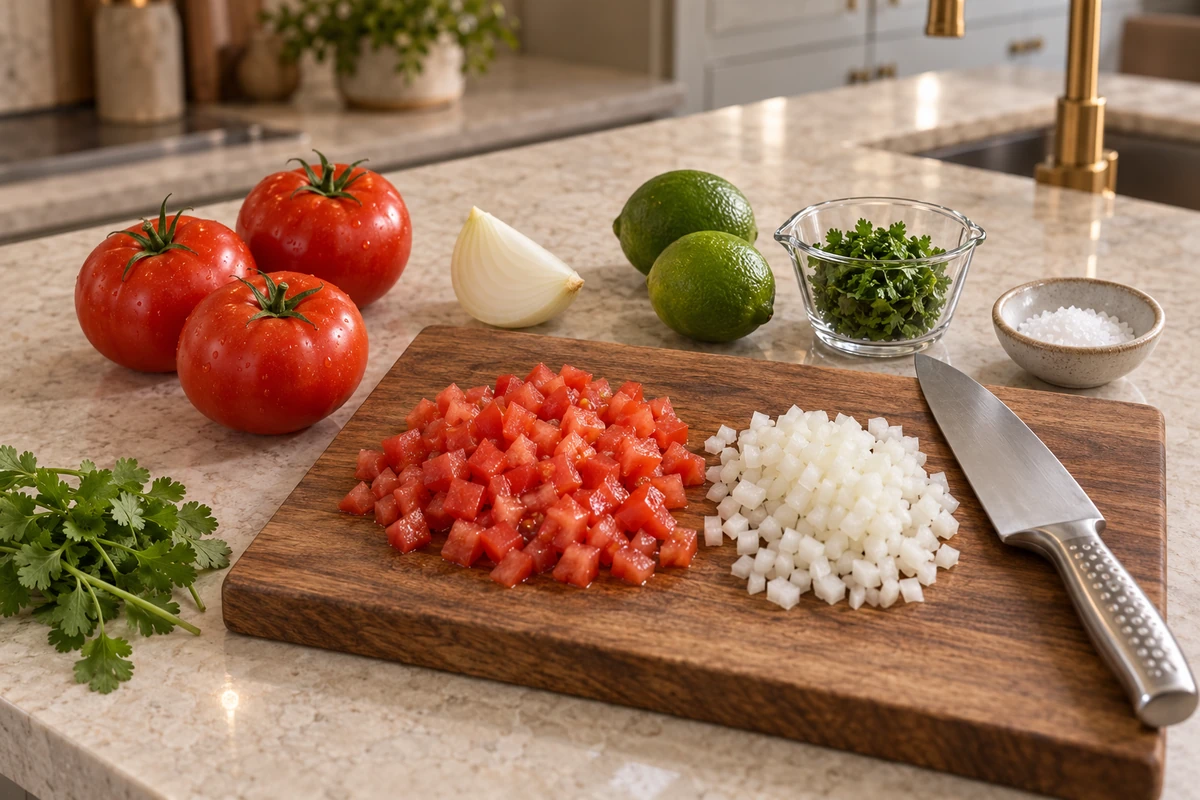
Measure One-Third of the Onion
The onion measure is one-third of one white or yellow onion, not one-third cup. Cut a third from the onion and dice it finer than the tomato. Raw onion should be distributed through the bowl rather than arriving in large sharp pieces.
If the onion tastes forceful when you first mix it, give the salsa its full resting time before changing the formula. Lime juice and salt soften the raw edge as the mixture sits.
Add Lime, Salt, and Cilantro in Order
Combine the chopped tomato and onion in a glass, ceramic, or stainless-steel bowl. Squeeze in one lime and stir. A juicy lime may be enough; if the bowl still tastes flat or dry, add the second lime.
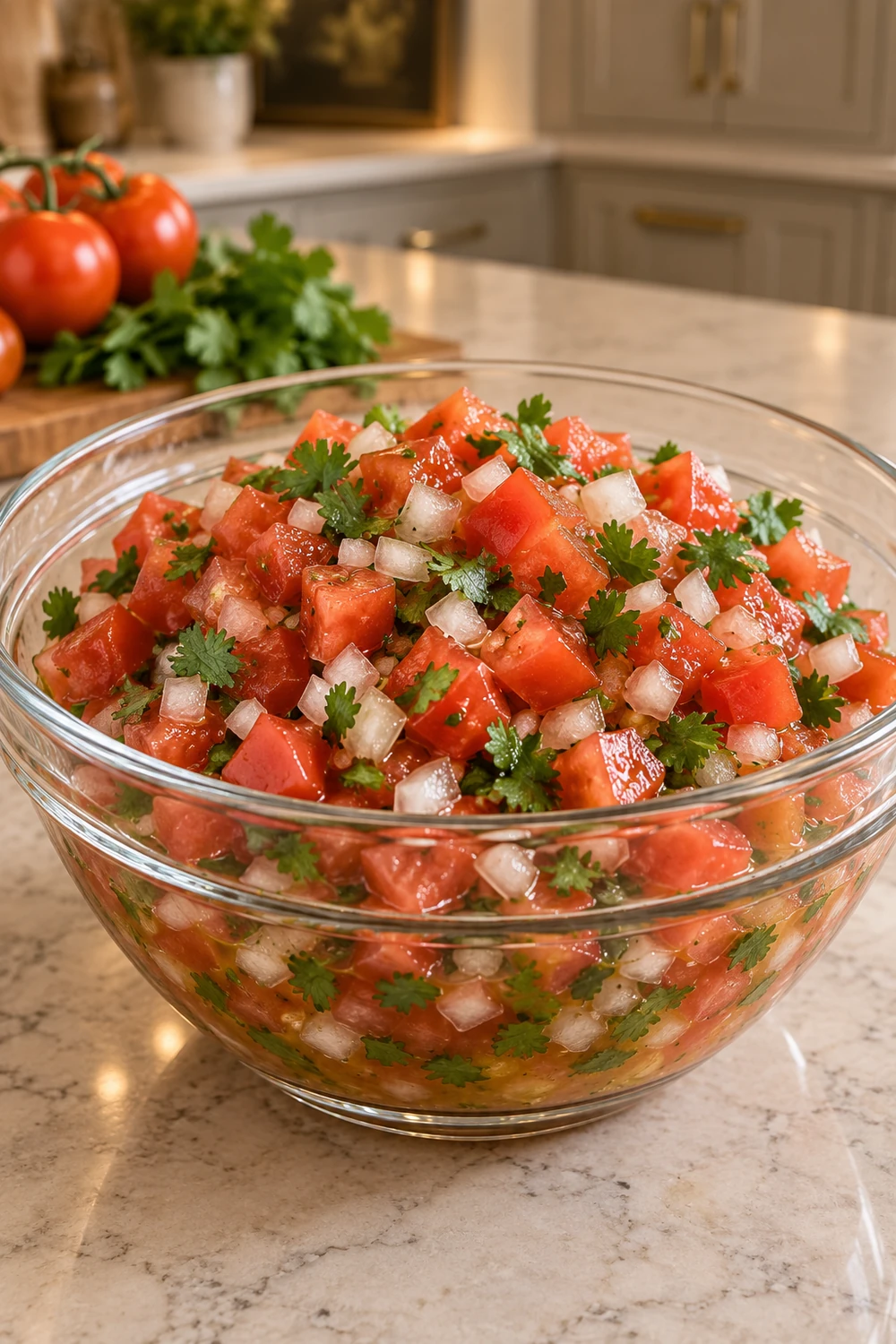
Add a few shakes of sea salt, stir, and taste again. Salt draws juice from the tomatoes, so wait a minute before deciding the bowl needs more liquid. Finely mince two tablespoons cilantro and fold it in last. The finished mixture should remain red and distinct, with green flecks spread evenly rather than large leaves sitting on top.
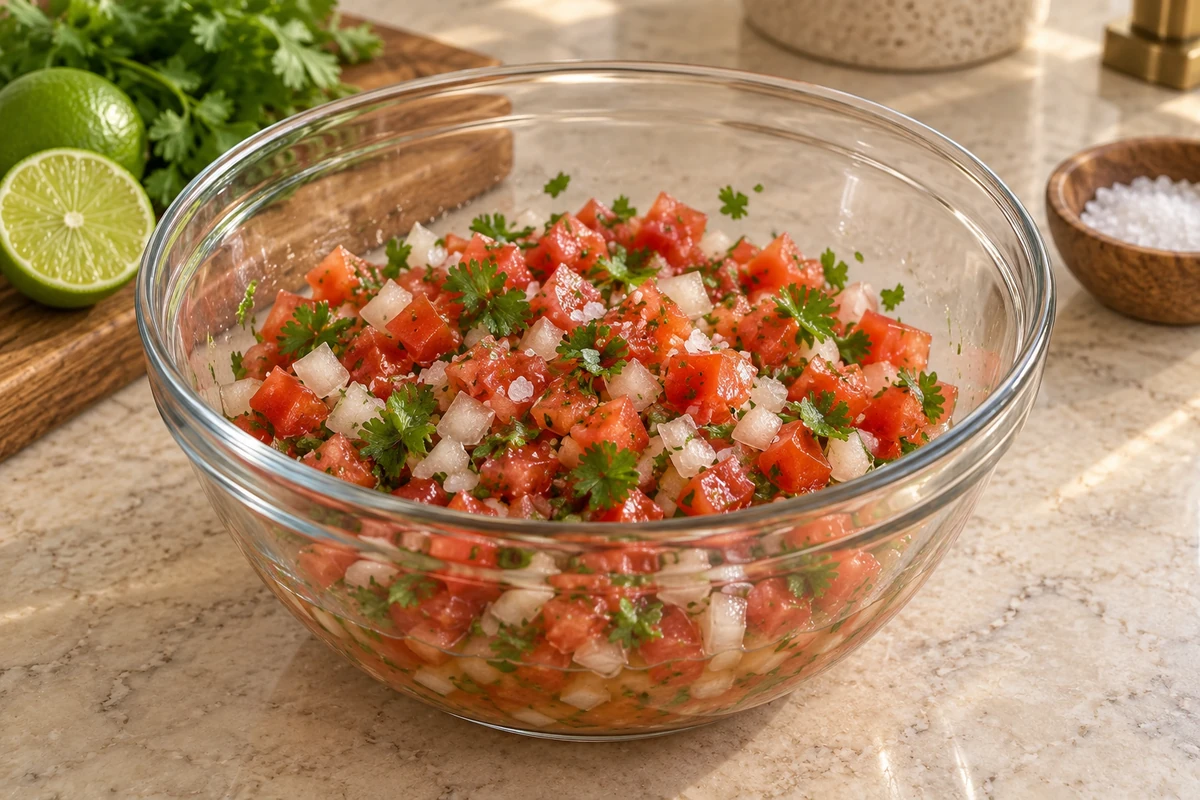
Let the Flavors Meld
Cover the bowl and refrigerate it for at least two hours. During that rest, the tomato releases juice, the onion softens, and the lime and salt move through the vegetables. Stir before serving. The salsa should smell clean and bright, and a spoonful should carry tomato, onion, cilantro, and lime together.
If liquid collects at the bottom, that is normal. Use a slotted spoon for a drier topping or include some juice when serving over meat or cauliflower rice.
Serving and Storage
Serve pico de gallo with eggs, grilled or slow-cooked meat, fish, salads, or Mexican Cauliflower Rice. Add Three-Ingredient Avocado-Lime Guacamole beside it when you want both components; keep them as separate recipes rather than folding avocado into this classic bowl.
Keep covered in glass in the refrigerator and use a clean utensil. It is best the day it is made, though leftovers can be used the next day if the tomatoes still smell fresh and the texture has not become unpleasantly soft.
Recommended Equipment
Use a sharp stainless-steel knife, cutting board with a juice groove, citrus reamer or handheld juicer, tablespoon measure, glass or stainless mixing bowl, silicone spoon, and covered glass storage container.
Frequently Asked Questions
Does Classic Pico de Gallo Need Garlic?
No. This classic formula is tomato, onion, lime, cilantro, and salt. Garlic belongs to other salsa formulas.
Can I Use Lemon Instead of Lime?
Keep lime in this recipe. Lemon would create a different flavor route and is not the source-measured formula.
Why Is My Pico Watery?
Ripe tomato releases juice after salting. Use a slotted spoon for serving, or drain only the excess after the flavors have rested.
Can I Double It?
Yes. Use the card’s 2× control so all measured ingredients double together, including the one-third-onion measure.
Classic Pico de Gallo Recipe
Classic Pico de Gallo for Full GAPS
Ingredients
Equipment
Method
- Core the tomatoes and finely chop them into small even pieces. Measure the onion amount shown in the card and chop it finer than the tomato.
- Combine the chopped tomatoes and onion in a glass, ceramic, or stainless-steel bowl.
- Squeeze in the juice of 1 lime and stir. Taste; add the second lime if the mixture still tastes flat or dry.
- Add a few shakes of natural sea salt. Stir and wait briefly for the salt to draw juice from the tomatoes before adjusting.
- Finely mince 2 tablespoons cilantro and fold it in until evenly distributed. Keep the tomato and onion pieces distinct rather than crushing them.
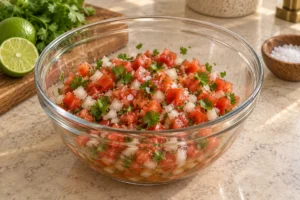
- Cover and refrigerate for at least 2 hours so the lime, salt, onion, cilantro, and tomato juices meld. Stir before serving.
Notes
- Full GAPS: Use after raw tomato, raw onion, lime, cilantro, and sea salt are introduced and tolerated.
- Classic formula: Do not add garlic, jalapeño, lemon, or avocado to this card.
- Onion measure: Use one-third of one onion, not one-third cup.
- Storage: Best the day it is made; keep covered in glass in the refrigerator.
Tried this recipe?
Let us know how it was!More Homemade Condiments
The planned Sauces, Dressings & Condiments Cookbook will keep measured salsa, sauce, and dressing formulas together without nesting separate recipes in one post. Find the current guides and recipe resources in the WFLI shop.

Leave a comment