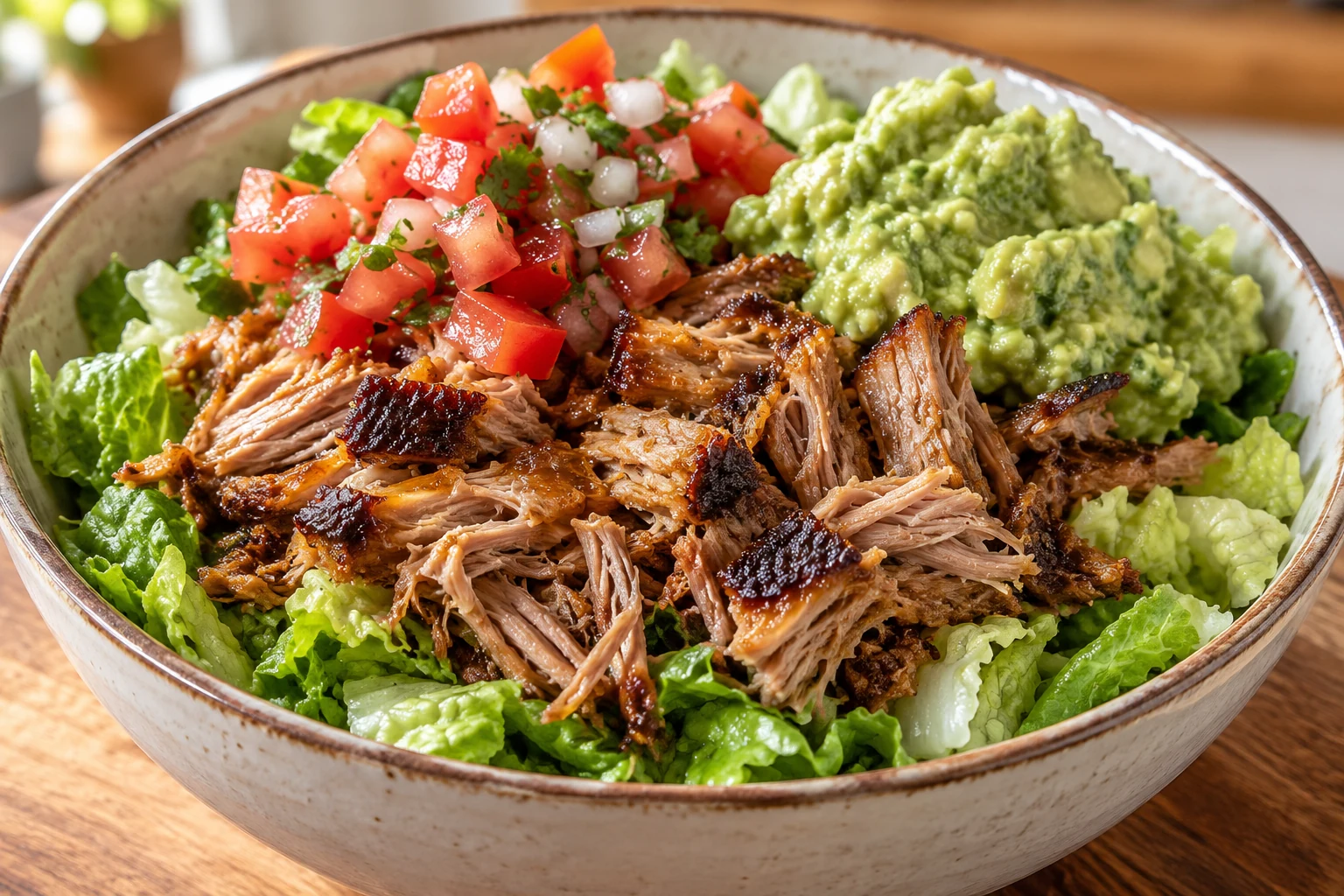
Ingredients
Equipment
Method
- Remove the rind and bone, cut the pork into large similar chunks, and pat every surface dry. Leave visible seams of fat through the meat.
- Heat the cooking fat in a large cast-iron or stainless-steel skillet over medium-high heat until it shimmers and a pork edge sizzles immediately.
- Brown the pork in uncrowded single-layer batches. Leave each first side undisturbed until dark golden-brown patches form and the meat releases readily. Transfer browned pieces to a large bowl.
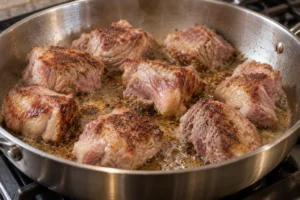
- Between batches, pour a small splash from the measured meat stock into the skillet and scrape up the browned bits before they burn. Add the loosened liquid to the pork.
- Add the garlic, sea salt, black pepper, garlic powder, oregano, and optional smoked paprika to the browned pork. Toss until evenly distributed.
- Pour the remaining meat stock into the skillet, scrape the bottom clean, and bring the liquid to a gentle simmer. Pour it over the pork in the slow cooker.
- Press the pork into an even layer, cover, and cook on low. Begin checking at 6 hours. Continue until two forks pull a thick chunk apart with almost no resistance.
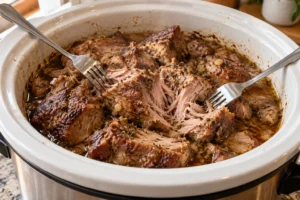
- Lift the pork into a bowl, shred into bite-size strands, and spoon enough cooking liquid over it to keep the meat moist.
- Serve warm pork over lettuce with homemade salsa or pico de gallo and homemade guacamole. Keep the cold toppings separate until serving.
Notes
Full GAPS: This recipe is not for the Introduction Diet.
Slow-cooker adaptation: The exact source ingredients are retained while the pressure-cooker stage is replaced with slow cooking under current GAPS guidance. Six hours is the first check; fork-shred tenderness controls completion.
Stock: Use homemade chicken meat stock, not boxed broth, bouillon, concentrate, or bone broth.
Storage: The captured source establishes no tested duration. Cool promptly, keep toppings separate, and reheat pork gently with its cooking liquid.
Scaling: The 2x card doubles every measured ingredient. Brown and slow-cook in batches or separate cookers when the doubled volume would crowd the equipment.