

This raw honey-Dijon vinaigrette is bright enough for a crisp composed salad and substantial enough to coat chicken, avocado, and chopped vegetables. Cold-pressed olive oil gives it body, fresh lemon keeps the flavor clean, Dijon adds savory depth, and raw honey rounds the sharp edges. Ground ginger and optional fresh garlic make it distinct from a standard five-ingredient honey mustard dressing.
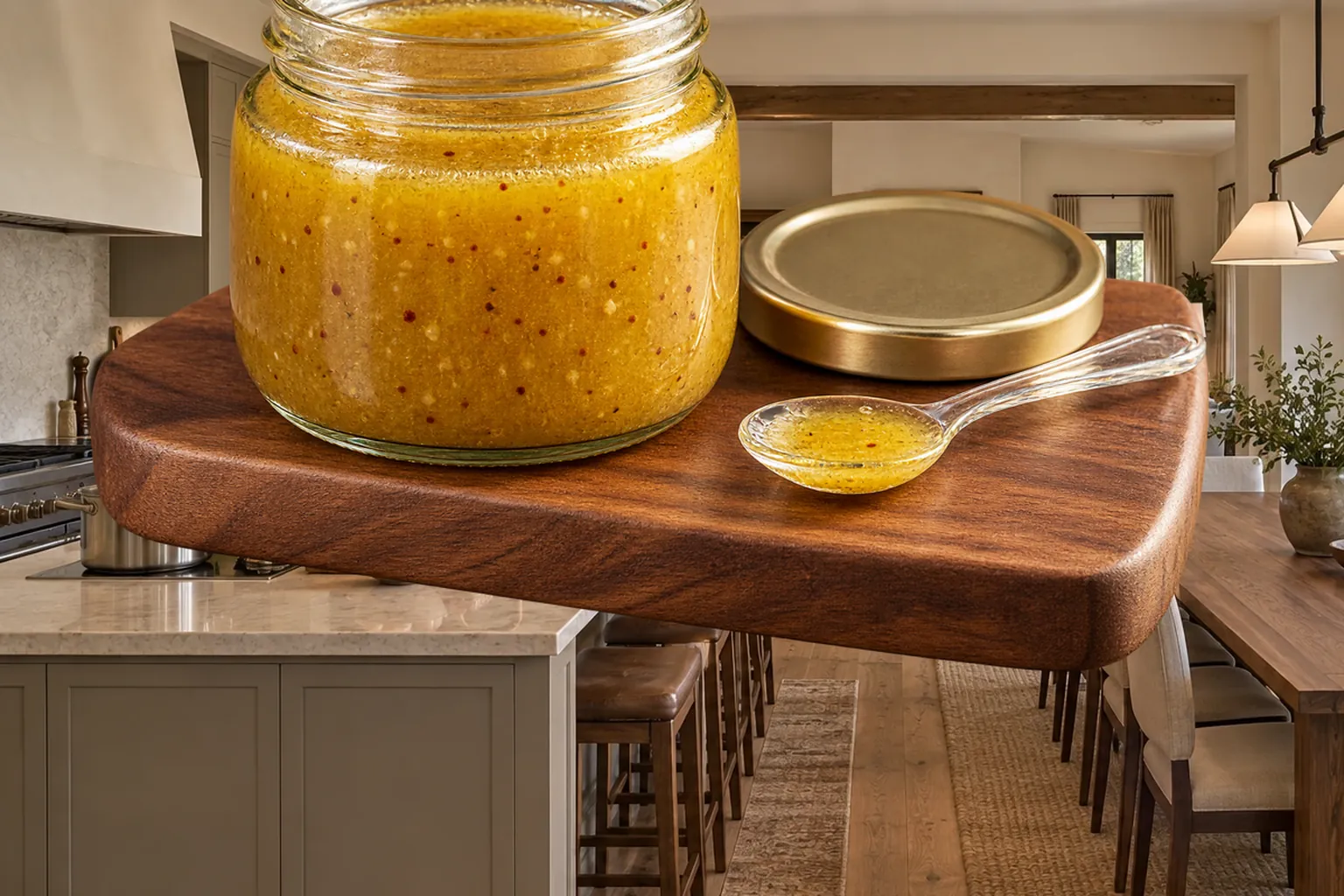
As a working, homeschooling mom of six, I like dressings that can be measured into one bowl and whisked in a few minutes. The ease still depends on knowing what “finished” looks like. At the beginning, oil floats above lemon and the honey sits in a dense ribbon. At the end, the mixture is evenly golden and falls from the whisk as one thin stream.
Why This Vinaigrette Has Its Own Recipe
The measured formula belongs with the Sour Apple Chicken Cobb Salad for Full GAPS, but it is a complete dressing with seven ingredients and its own technique. Keeping it in a separate post means its measurements can scale correctly and the salad card does not hide a second recipe inside the notes.
WFLI also has a five-ingredient Honey Mustard Vinaigrette. That version uses raw apple cider vinegar, one tablespoon Dijon, two teaspoons honey, and one teaspoon salt. This formula uses fresh lemon, twice as much Dijon and honey, optional garlic, less salt, and ground ginger. They are related, but they are not interchangeable measurements.
That distinction matters most when you scale a dressing. A small change in mustard or honey can disappear in a large salad, but doubling two different formulas as though they were the same produces a very different jar. Keeping the cards separate lets the 1× and 2× controls do real arithmetic while the cook still understands which flavor profile is being made.
Why It Fits Full GAPS
This is a Full GAPS dressing for someone who already tolerates raw cold-pressed olive oil, fresh lemon, mustard, raw honey, garlic, and ginger. Use an additive-free Dijon made only with permitted ingredients. The front label is not enough; check for sugar, starch, artificial flavor, preservatives, wine additives, or any ingredient you cannot verify.
The olive oil remains raw. Fresh lemon juice is the selected route from the source’s vinegar-or-lemon choice and combines well with meat. Raw honey is the measured sweetener. Maple syrup, refined sugar, commercial low-carb sweeteners, and bottled salad dressing do not belong in this Full GAPS version.
Measure the Seven Ingredients
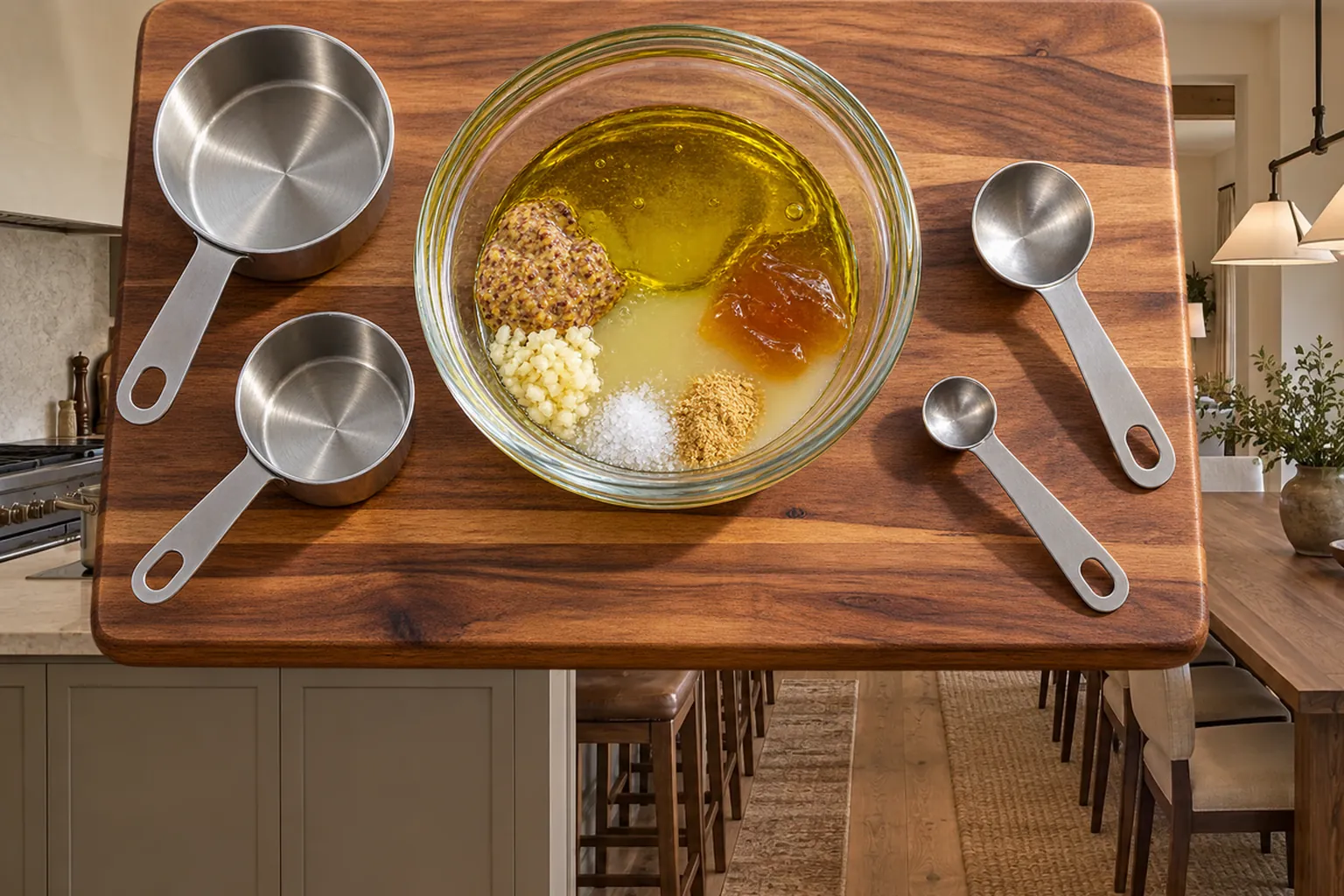
Use ½ cup raw cold-pressed extra-virgin olive oil. Smell it before measuring; it should smell clean and fresh, never waxy or stale. The oil carries the other flavors and determines most of the finished body.
Squeeze ¼ cup fresh lemon juice. Strain out seeds, but fine pulp is harmless. The juice should smell bright and sharp. Old bottled lemon juice can taste flat or bitter and does not give this no-cook dressing the same clean finish.
Add 2 tablespoons pure additive-free Dijon mustard and 2 tablespoons raw honey. The mustard may look grainy or smooth depending on the product, but the ingredient list must stay clean. The honey can be thick or partly crystallized; steady whisking will draw it into the liquid.
Finish the formula with 1 optional minced garlic clove, ½ teaspoon natural sea salt, and ½ teaspoon ground ginger. Mince the garlic finely so it disperses instead of creating one sharp bite. Ground ginger gives even warmth without adding wet fibers.
How to Make Raw Honey-Dijon Vinaigrette
1. Layer Everything in One Bowl
Put the olive oil, lemon juice, Dijon, raw honey, optional garlic, sea salt, and ground ginger into a small clear glass bowl or liquid measuring cup. Before whisking, expect visible separation: clear oil above cloudy lemon juice, mustard in a dense mound, and honey in a sticky amber ribbon.
Use a bowl with enough empty space for the whisk to move without throwing oil over the rim. A narrow vessel slows the first few strokes; an oversized bowl spreads the dressing too thin to whisk efficiently.
2. Whisk Through the Bottom
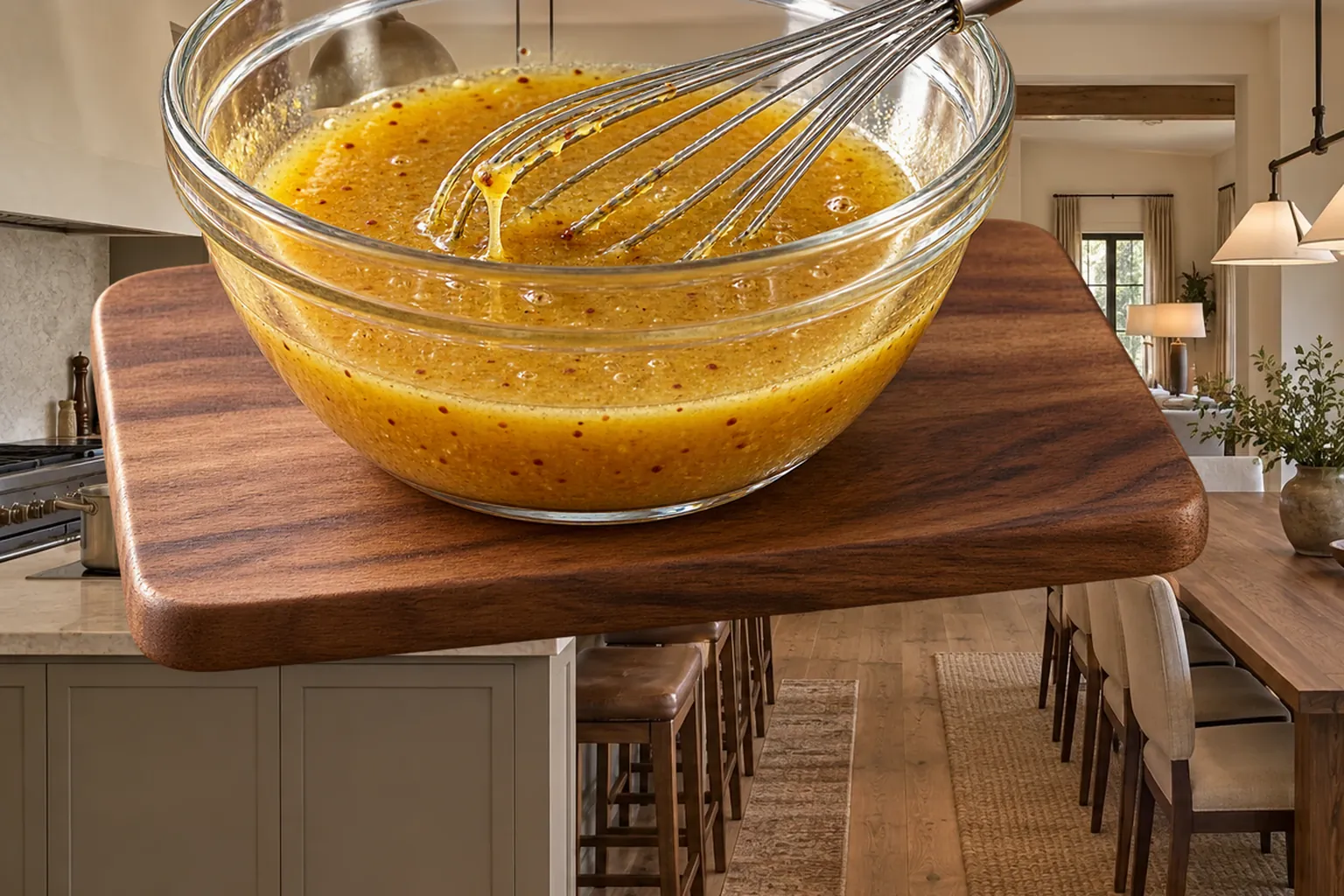
Start the whisk at the bottom where the honey and mustard collect. Use steady small circles until those thick ingredients loosen into the lemon juice. Then widen the motion to pull the olive oil down through the mixture.
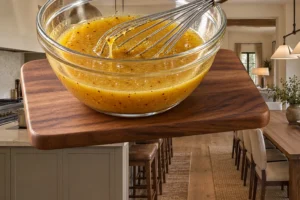
Scrape the whisk around the outer edge of the bowl where a clear ribbon of oil can hide. Keep whisking until the sharp boundary between oil and lemon disappears and the color becomes evenly golden. Tiny mustard and ginger specks are expected.
3. Check the Texture
Lift the whisk just above the bowl. Finished vinaigrette should fall in one thin, continuous stream. It remains pourable rather than becoming thick mayonnaise, but separate clear oil droplets should no longer dominate the surface. A few bubbles are normal.
Look through the bottom of the glass. If you still see a sticky honey streak or dense mustard patch, whisk directly through it. Taste only after the mixture is even; tasting a separated spoonful gives you oil or lemon instead of the actual balance.
4. Use or Store It
Use the vinaigrette immediately or transfer it to a clean covered glass jar. Natural separation is normal after it rests. Shake the covered jar or whisk again until the dressing returns to an even golden color before serving.
What It Should Taste Like
The first impression should be fresh lemon and Dijon, followed by light honey sweetness and a warm ginger finish. Garlic, when used, should support the dressing rather than dominate it. The oil softens the acidity without erasing it.
On lettuce, the vinaigrette should leave a thin glossy coating. It should not form an oily puddle under the greens. On chicken or avocado, a small drizzle should taste complete rather than needing a second sauce.
If the flavor tastes flat, first whisk again and taste a properly combined spoonful. Separation can make one taste seem dull and the next painfully sharp. If the dressing is fully mixed and still tastes muted on the salad, add a little more dressing to the food instead of changing the jar. The bacon, chicken, apple, and lettuce in the Cobb salad each affect how much seasoning a serving needs.
The aroma should be clean and savory: lemon first, then mustard, ginger, and optional garlic. A stale-oil smell or an artificially sweet mustard smell is a reason to stop and check the ingredients before serving.
Ways to Use It
Start with the linked sour apple chicken Cobb salad. The lemon and honey suit tart apple, while Dijon and ginger stand up to chicken and bacon. Drizzle a modest amount over the assembled rows or serve it beside the platter so each person can add their own.
The dressing also works on plain lettuce, cucumber, celery, cooled cooked vegetables, or cold leftover chicken. Add it only after hot vegetables have cooled enough that the raw olive oil is not being cooked.
For a creamy alternative, use Full GAPS Cilantro Lime Ranch Dressing. Follow that card intact rather than stirring ranch ingredients into this vinaigrette and guessing at a new formula.
Storage
Refrigerate the dressing in a clean covered glass jar. This source does not provide a tested long-storage window, so make it close to the meals you plan to serve. Use a clean spoon and keep salad crumbs or chicken out of the jar.
Olive oil can become cloudy or thicker when chilled. Let the covered jar stand briefly at room temperature, then shake until the dressing is fluid and evenly golden again. Do not microwave or heat it to clear the oil.
Frequently Asked Questions
Can I Use Apple Cider Vinegar?
The source allows a favorite vinegar or fresh lemon juice. This card locks the fresh-lemon route so the recipe has one exact formula and pairs cleanly with the meat-and-sour-apple salad. Use the separate five-ingredient Honey Mustard Vinaigrette when you want an apple-cider-vinegar formula.
Can I Use Maple Syrup?
No. Raw honey is the measured Full GAPS sweetener. Maple syrup and commercial low-carb substitutes change the formula and do not belong in this version.
Can I Leave Out the Garlic?
Yes. The garlic is optional in the source. The lemon, Dijon, honey, salt, and ginger still make a complete vinaigrette without it.
Why Did My Dressing Separate?
Olive oil and lemon naturally separate as the dressing rests. Shake the covered jar or whisk again before serving. If it separates immediately while you are making it, keep whisking through the bottom until the honey and mustard are fully incorporated.
How Much Does It Make?
The formula makes about 1 cup, enough to dress a large four-serving composed salad with extra available at the table. Use the card’s 2× control for a larger batch and choose a jar with enough empty space to shake it.
Is Dijon Mustard Automatically GAPS-Compatible?
No. Read the full ingredient list. Use a pure Dijon made only with GAPS-allowed ingredients and skip products containing sugar, starch, preservatives, artificial flavor, or unverified additions.
Recommended Equipment
- A small clear glass mixing bowl or liquid measuring cup
- A small stainless-steel whisk
- Measuring cups and spoons
- A citrus reamer and fine strainer for the fresh lemon
- A clean covered glass jar for storage
More Dressings for Full GAPS
Use the five-ingredient Honey Mustard Vinaigrette when you want apple cider vinegar and a simpler flavor profile. Try Fresh Herb Vinaigrette when herbs should lead, or choose Cilantro Lime Ranch for a creamy avocado-and-coconut-milk dressing.
Build a Better Condiment Shelf
This vinaigrette belongs in the planned Sauces, Dressings & Condiments Cookbook, where each formula keeps its own measurements, storage notes, and best uses. Visit the WFLI shop for current resources and upcoming releases.
Raw Honey-Dijon Vinaigrette for Full GAPS
Ingredients
Equipment
Method
- Place the olive oil, fresh lemon juice, Dijon mustard, raw honey, optional minced garlic, sea salt, and ground ginger in a small clear glass bowl or liquid measuring cup. Expect separate oil, lemon, mustard, and honey layers before whisking.
- Whisk steadily through the bottom until the honey and mustard loosen, the clear oil line disappears, and the vinaigrette looks evenly golden and pourable with tiny mustard and ginger specks. No sticky honey ribbon should remain.
- Use immediately or transfer to a clean covered glass jar. Refrigerate between uses; let chilled olive oil loosen briefly at room temperature, then shake or whisk until evenly golden again.
Nutrition
Notes
Tried this recipe?
Let us know how it was!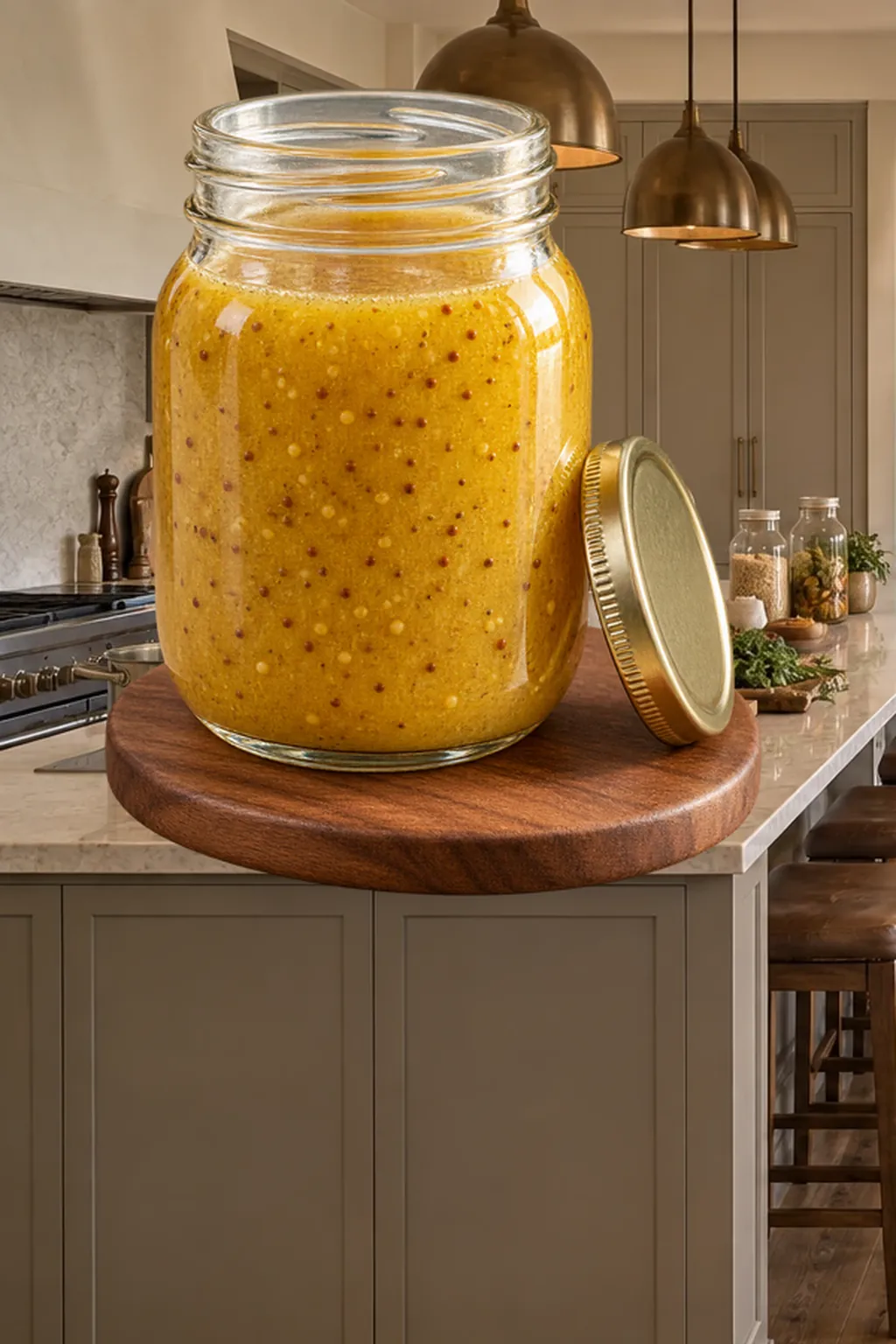

Leave a comment