

This honey mustard vinaigrette is a quick Full GAPS dressing made with extra-virgin olive oil, raw apple cider vinegar, pure Dijon mustard, raw honey, and sea salt. It tastes tangy first, then gently sweet, with enough mustard to pull the oil and vinegar together. Whisk one small batch for a chopped salad, cooked vegetables, or cold leftover chicken.
The finished dressing is golden and pourable. It should coat a lettuce leaf in a thin glossy layer instead of sliding to the bottom of the bowl as separate oil and vinegar. There is no maple syrup, commercial salad-dressing mix, starch, or heated olive oil in this version.
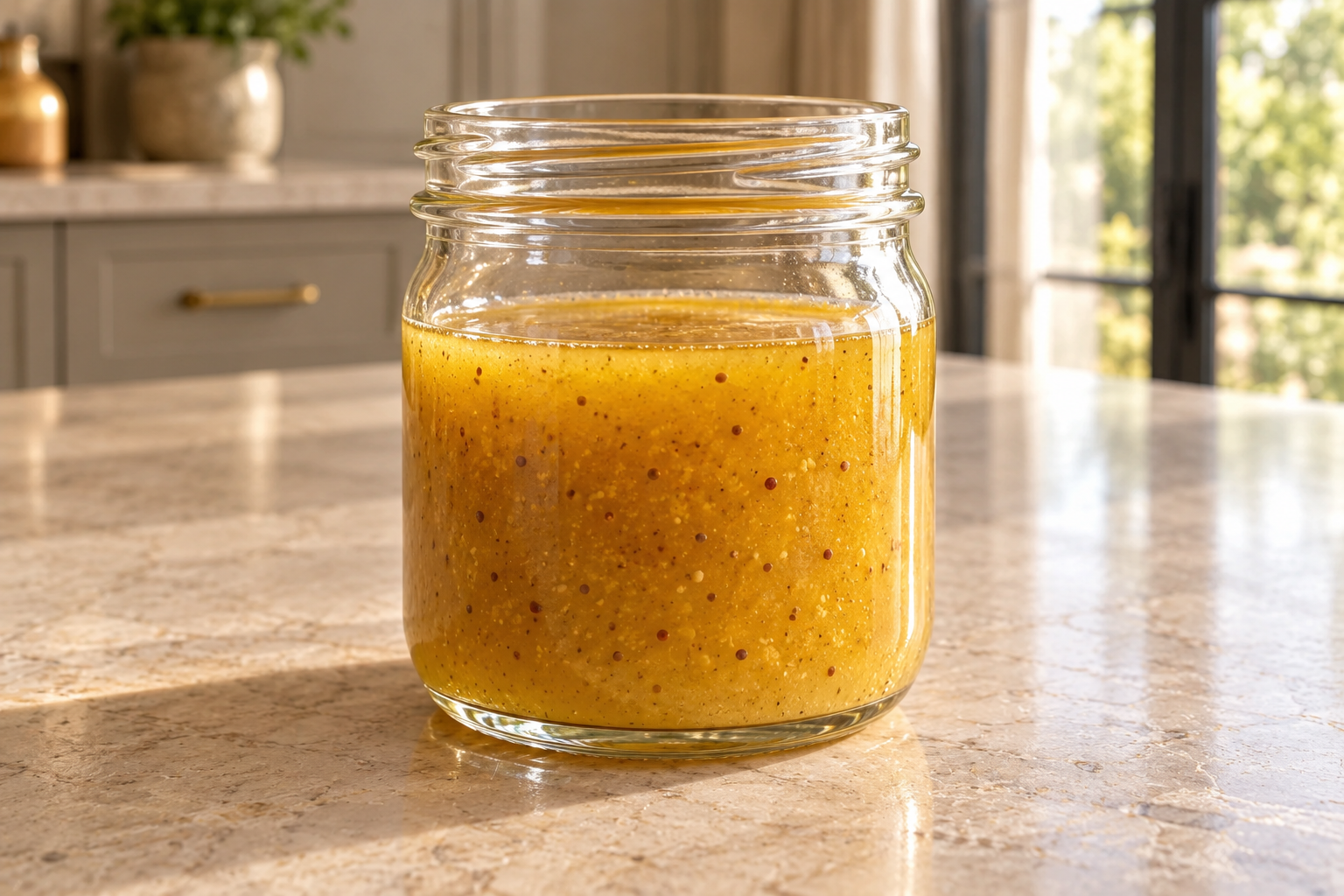
Why This Dressing Gets Its Own Jar
This vinaigrette is the measured dressing for the Blueberry Chicken Chopped Salad with Cranberries for Full GAPS, but it is useful far beyond one bowl. Keeping a small batch in its own jar makes the measurements easy to find and gives you a ready dressing for lettuce, cold chicken, cucumber, celery, or cooled cooked vegetables.
I homeschool before work and cook in the morning. We do not have a polished bulk-prep routine right now, which means a small missing ingredient can still turn into one more job at the worst time. A five-ingredient dressing is easier to fit into that kind of day when the formula is easy to find and the jar is clearly labeled.
Measure everything before you start whisking. The whole job takes only a few minutes, but stopping halfway through to search for the salt is how a simple dressing becomes more annoying than it needs to be.
Choose Each Ingredient Carefully
Use ½ cup cold-pressed extra-virgin olive oil. The oil stays raw in this recipe. It brings the body of the dressing and carries the mustard, vinegar, and honey across the salad.
Measure 2 tablespoons raw apple cider vinegar. Its acidity balances the oil and brightens the dressing. This Full GAPS formula uses apple cider vinegar rather than the rice, Champagne, or white balsamic choices that sometimes appear in general-purpose vinaigrettes.
Add 1 tablespoon pure Dijon mustard made only with GAPS-allowed ingredients. Read the complete ingredient list. Mustard seed or pure mustard belongs here; sugar, starch, artificial flavoring, and preservatives do not. The word “Dijon” on the front does not tell you everything that is in the jar.
Two teaspoons raw honey soften the vinegar without making the dressing taste like dessert. Measure the honey instead of pouring by eye. A little extra changes the balance quickly in such a small batch.
Finish with 1 teaspoon sea salt. The salt dissolves into the liquid as you whisk. If you plan to dress an already salty dish, start with the measured formula and use a modest amount of dressing on the food rather than changing the vinaigrette before you know how the whole plate tastes.
Check the ingredients with your eyes and nose before they go into the bowl. The olive oil should smell clean rather than stale. The vinegar should smell sharply of apple cider, and the mustard should smell tangy and savory without an artificial sweetness. Raw honey may be thick or partly crystallized; measured honey will still blend in as you whisk through the bottom of the bowl.
Whisk The Vinaigrette Until Even
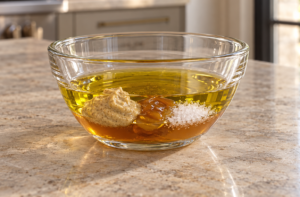
Place the olive oil, apple cider vinegar, mustard, honey, and salt in a liquid measuring cup or small bowl. Before whisking, the oil will sit above the vinegar. The mustard and honey may rest in thicker ribbons near the bottom. That separation is exactly what you should expect at the start.
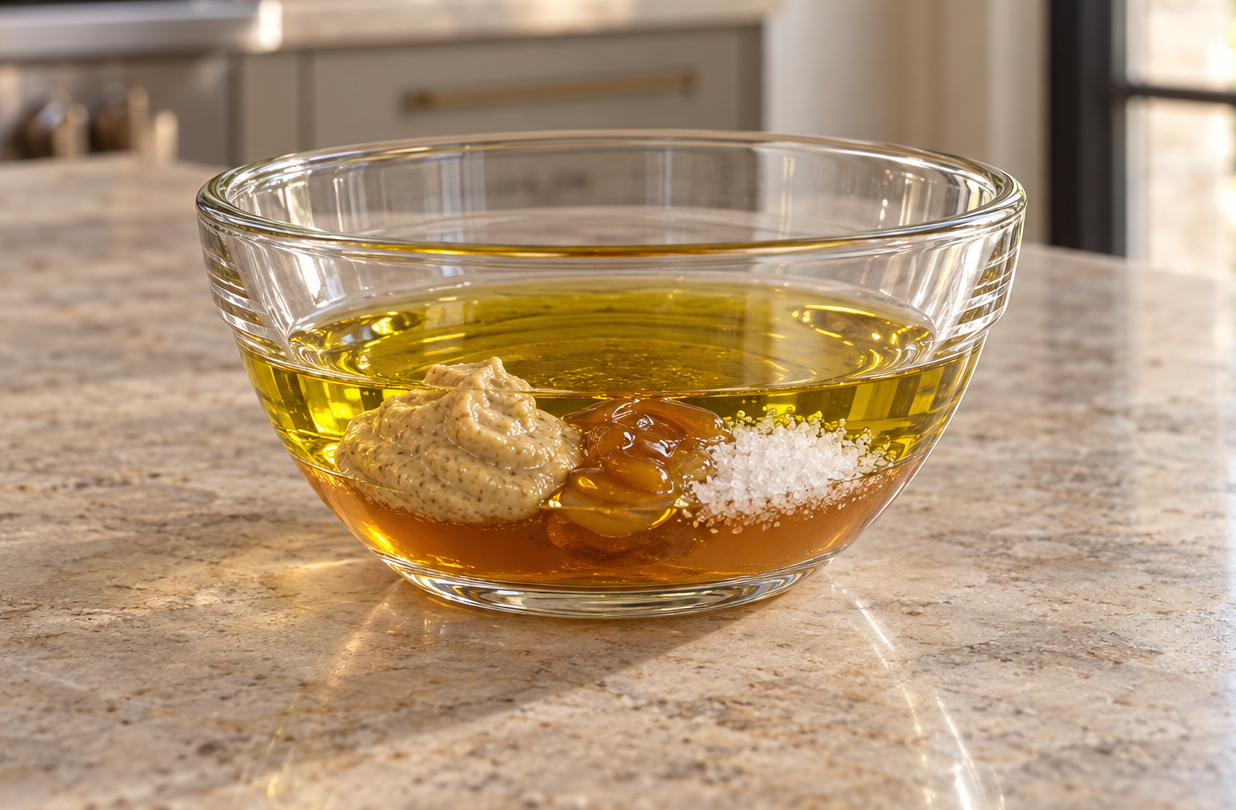
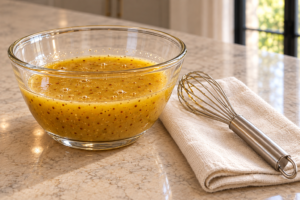
Whisk steadily until the mixture looks evenly golden. The sharp line between oil and vinegar should disappear. The mustard helps the liquids hold together, and the honey should no longer be sitting in a sticky streak on the bottom.
Look at the surface and sides of the bowl. A few small bubbles are normal after whisking. The dressing should move as one pourable mixture, with tiny mustard specks distributed through it. If a dense ribbon remains at the bottom, keep whisking and scrape that area into the moving liquid.
Give the whisk a final pass around the outer edge where oil can hide against the glass. Lift it just above the bowl and watch the dressing fall back in a thin, continuous stream. Separate clear drops of oil mean it needs more whisking. An even golden stream means it is ready to coat the salad.
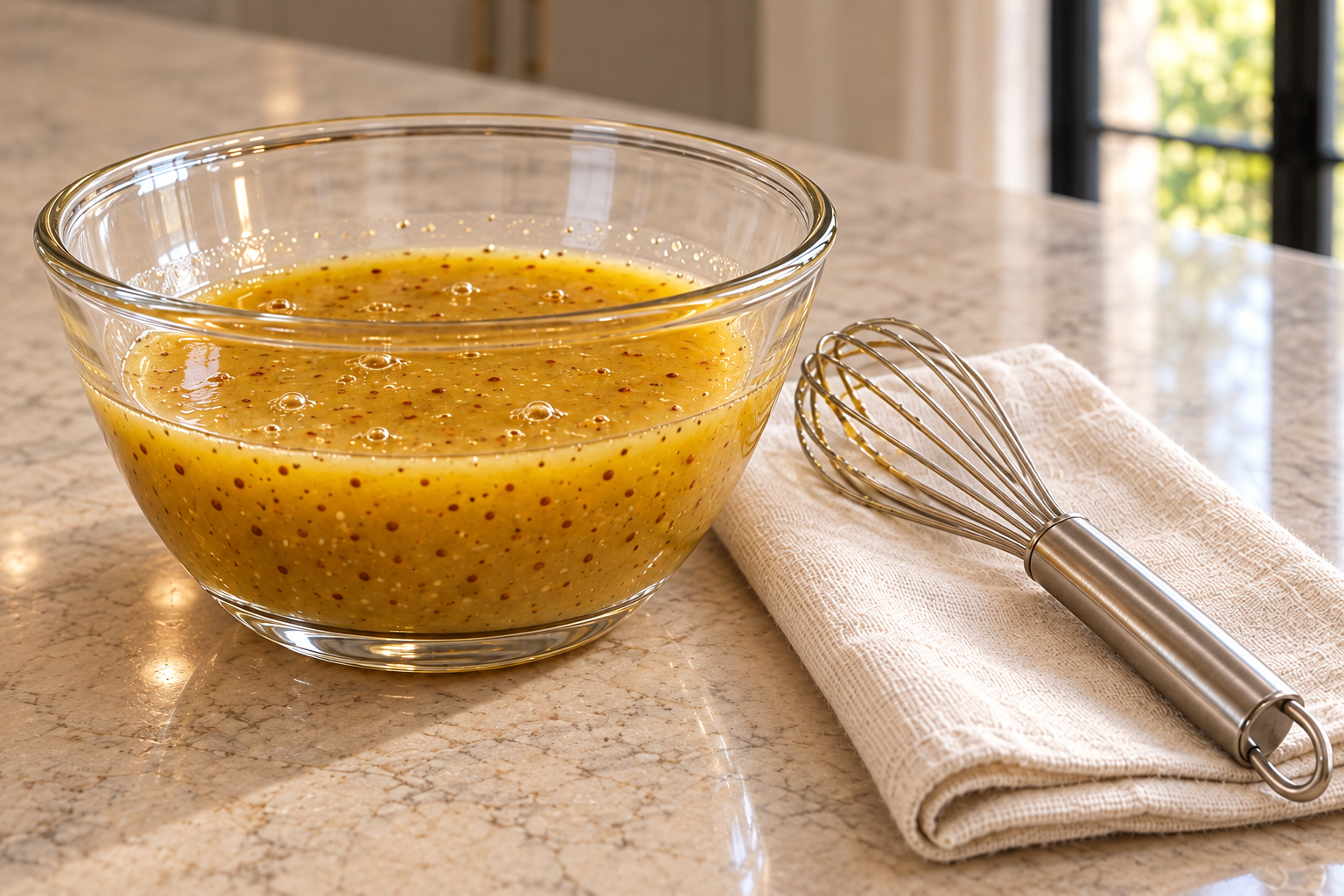
Taste a small drop only after the ingredients are fully combined. Tasting separated oil or vinegar will not tell you how the finished dressing is balanced. The final flavor should be tart, lightly sweet, and savory enough to season the food it coats.
Where This Fits On GAPS
This is a Full GAPS dressing. The GAPS food guidance includes cold-pressed olive oil used raw, raw apple cider vinegar, raw honey, and pure mustard or gourmet mustard without non-allowed ingredients. The form of each ingredient matters more than a broad label on the package.
This is not an early Introduction Diet recipe. It is a raw vinaigrette built around vinegar, mustard, honey, and uncooked olive oil. Use it with Full GAPS meals after raw salads and these ingredients fit the individual person’s progression.
It is also not a No-Plant GAPS condiment because every main ingredient comes from plants. It contains no dairy, eggs, nuts, or coconut. That makes it useful when you want a cold dressing without those foods, while still keeping the recipe itself within Full GAPS.
Maple syrup is not the sweetener for this version. Raw honey is the measured GAPS option. Do not swap in rice syrup, refined sugar, or a commercial “sugar-free” sweetener and assume the stage placement stays the same.
How Much Dressing To Use
This formula makes one small batch. The exact amount you need on a salad depends on how much lettuce and how many chopped ingredients are in the bowl. Start with part of the dressing, toss thoroughly, and look at the leaves before adding more.
Properly dressed lettuce looks lightly glossy. You should not see a puddle under the salad. Chopped chicken, cucumber, celery, and fruit all add surfaces for the dressing to coat, so a loaded salad may need more than a bowl of plain greens.
Reserve any garnish before dressing the main bowl. Toss the sturdy ingredients first, then add delicate berries or herbs at the end if the recipe calls for them. This keeps the final pieces visible instead of crushing everything during a long toss.
Other Ways To Serve It
Use the vinaigrette on lettuce, cucumber, celery, or a cold chicken salad. It also works over cooled cooked vegetables when you want acidity without reheating olive oil. Add it after the vegetables are off the heat and no longer steaming hard.
For a complete salad with a different measured dressing, the Greek Salad with Feta and Cider Vinaigrette gives you its own ingredient list and dairy placement. Follow that card rather than combining its feta dressing with this mustard-and-honey formula.
If you need a creamy condiment rather than a pourable vinaigrette, use the separate Full GAPS immersion-blender mayonnaise. It is an egg-based emulsion with a different method, so it should not be turned into this dressing by guessing at extra vinegar.
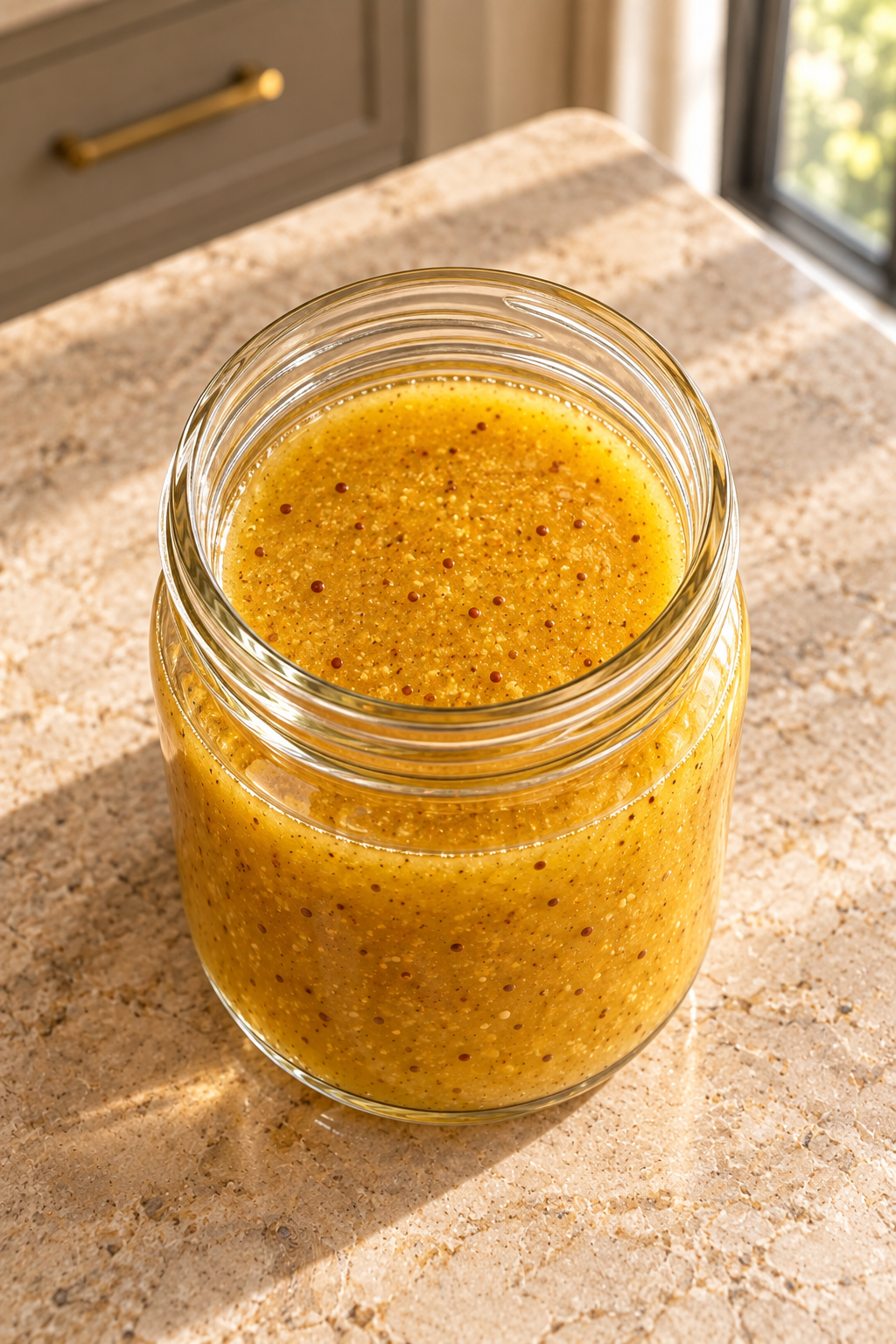
Storage And Separation
Transfer the finished dressing to a clean covered glass jar and refrigerate it between uses. Label the jar with the recipe name and date so it does not become another mystery condiment at the back of the refrigerator.
Natural separation is normal. Olive oil can also become cloudy or thicker when chilled. Let the covered jar stand briefly at room temperature, then shake or whisk until the dressing is evenly golden again before measuring it onto food.
This formula does not include a tested long-storage window. Make it close to the meals you plan to use it with. Use a clean spoon if you remove a portion, and keep salad pieces or chicken out of the storage jar.
Equipment For A Small Batch
A liquid measuring cup or small glass bowl gives you room to whisk without spreading the dressing across a large surface. Use measuring cups and spoons for every ingredient. A small stainless whisk works well for the emulsion.
A covered glass jar is useful for storage and for mixing the dressing again after it separates. Choose one with enough empty space above the vinaigrette to shake it comfortably. Set the jar on the counter while opening and closing it; no balancing act is needed for a five-minute dressing.
Frequently Asked Questions
Can I Use Maple Syrup?
No. Use the measured 2 teaspoons raw honey for this Full GAPS version. Maple syrup is not the GAPS sweetener in this formula.
Can I Use Any Dijon Mustard?
Check the entire ingredient list. Use a pure additive-free Dijon made only with GAPS-allowed ingredients. Skip products with sugar, starch, preservatives, artificial flavors, or an ingredient you cannot verify.
Why Did My Dressing Separate?
Oil and vinegar naturally separate over time. Whisk until the mixture is evenly golden before serving. For a stored batch, let chilled olive oil loosen briefly, then shake the covered jar or whisk again.
Why Is Honey Stuck At The Bottom?
The honey has not been fully incorporated. Keep whisking through the bottom of the bowl until no dense amber ribbon remains.
Can I Double The Recipe?
Yes. Use the card’s 2× control to double every measured ingredient. Choose a bowl or jar with enough room for the larger amount and whisk until the same even golden texture appears.
Honey Mustard Vinaigrette Recipe
Honey Mustard Vinaigrette for Full GAPS
Ingredients
Equipment
Method
- Place the olive oil, raw apple cider vinegar, pure Dijon mustard, raw honey, and sea salt in a small glass bowl or liquid measuring cup. Before whisking, the oil will sit above the vinegar while the mustard and honey rest in thicker ribbons near the bottom.
- Whisk steadily until the sharp line between oil and vinegar disappears and the dressing looks evenly golden. The finished vinaigrette should move as one pourable mixture with tiny mustard specks throughout and no sticky honey ribbon on the bottom. Whisk again before serving if it naturally separates.
Notes
Tried this recipe?
Let us know how it was!Make Lunch Easier To Pack
A dressing you can find quickly makes a packed salad much easier to plan. Our upcoming Lunchbox Planner is designed for keeping those meal pieces visible before an outing or a busy weekday. You can find our current kitchen resources and catalog updates in the WFLI shop.

Leave a comment