

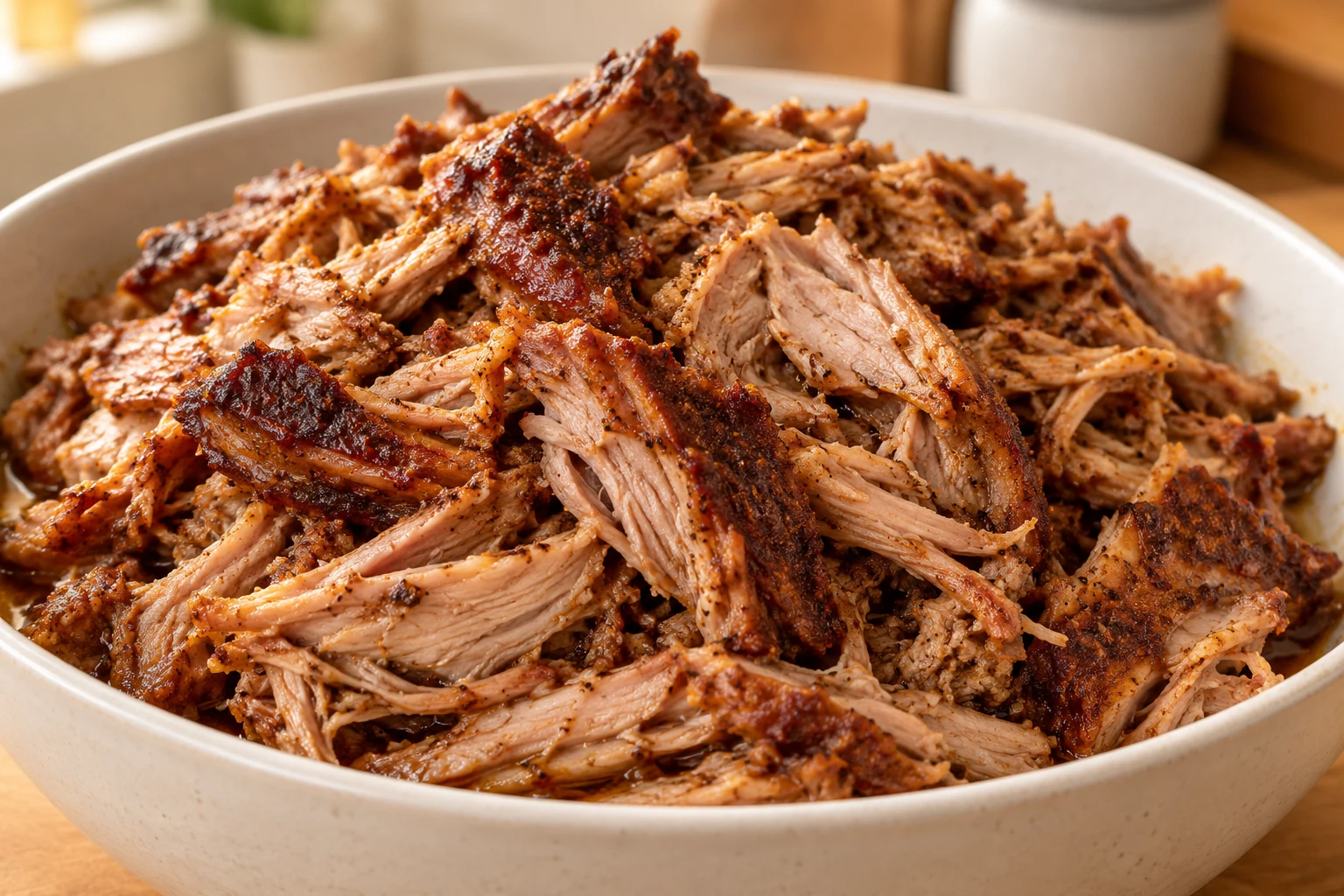
This spice-rub crock pot pork shoulder is a seven-ingredient Full GAPS dinner built for the days when the slow cooker needs to carry most of the work. A pure ancho-chile and paprika rub covers a 2½-pound shoulder, then the meat cooks slowly until two forks slide through the fibers and pull them apart without effort.
For our family of eight, pulled pork works best when the method is clear enough to repeat without watching the clock every few minutes. The slow cooker gives the shoulder time to soften while I handle the rest of the day. The important part happens at the end: I test the meat itself instead of assuming six hours makes every shoulder ready.
Where This Pork Shoulder Fits on GAPS
This recipe is for Full GAPS. It uses fresh pork shoulder and six single-ingredient seasonings: ancho chile powder, coarse sea salt, paprika, onion powder, dry mustard powder, and cayenne pepper.
The recipe is not for the Introduction Diet. Its dry spice rub and slow-cooked pulled-pork presentation belong on Full GAPS. Choose unprocessed pork without injected solution, sugar, smoke flavoring, starch, or preservatives.
Keep the Rub Pure and Simple
A spice jar’s front label does not tell you enough. Read the ingredient list. Ancho chile powder should contain ancho chile. Paprika should contain paprika. Onion powder, dry mustard, and cayenne should each be the named spice without starch, sugar, flour, seed oils, anti-caking agents, or manufactured flavoring.
This is a dry rub, so every seasoning sits directly against the meat. There is no sauce to dilute a hidden additive. Mixing the rub yourself also lets you see whether the salt and finer powders are distributed evenly before they touch the pork.
Choose the Right Cut
Use about 2½ pounds pork shoulder. Shoulder may be labeled pork butt or Boston butt. It contains more fat and connective tissue than a loin, which is why it becomes tender during a long, low cook.
Do not substitute pork tenderloin and expect the same result. A lean cut lacks the structure this method depends on. The raw shoulder should show pale seams of fat through pink meat, and it should fit inside the slow cooker without being wedged tightly against every side.
This Is a Dry Slow-Cooker Formula
The source formula contains the spice rub and the pork shoulder. It does not measure added water, broth, stock, vinegar, juice, sweetener, or sauce. Keep it that way. Moisture and rendered fat will collect in the crock as the covered shoulder cooks.
Adding an unmeasured liquid changes the formula and can wash the rub off the surface. If you want pork cooked in meat stock, use a separate tested recipe written for that method, such as the linked carnitas salad bowl once it is published.
How to Make Spice-Rub Crock Pot Pork Shoulder
1. Measure the Rub
Put one tablespoon ancho chile powder, one tablespoon coarse sea salt, one-half tablespoon paprika, one-half tablespoon onion powder, one-half tablespoon dry mustard powder, and one-half teaspoon cayenne in a small bowl.
Break up any clumps with dry fingers or a small whisk. The finished rub should look evenly red-brown, without a pale pocket of salt or a dark streak of cayenne.
2. Rinse and Dry the Pork
Rinse the pork shoulder under filtered water, then pat every surface completely dry with clean towels. Check the folds and crevices, where water can hide.
The meat should feel damp but not slick when you finish. A dry surface helps the spice mixture cling instead of turning into wet streaks at the bottom of the cooker.
3. Rub Every Surface
Set the shoulder in a large glass or stainless-steel bowl. Sprinkle the rub over the top, turn the meat, and press the seasoning into every broad side, edge, fold, and seam.
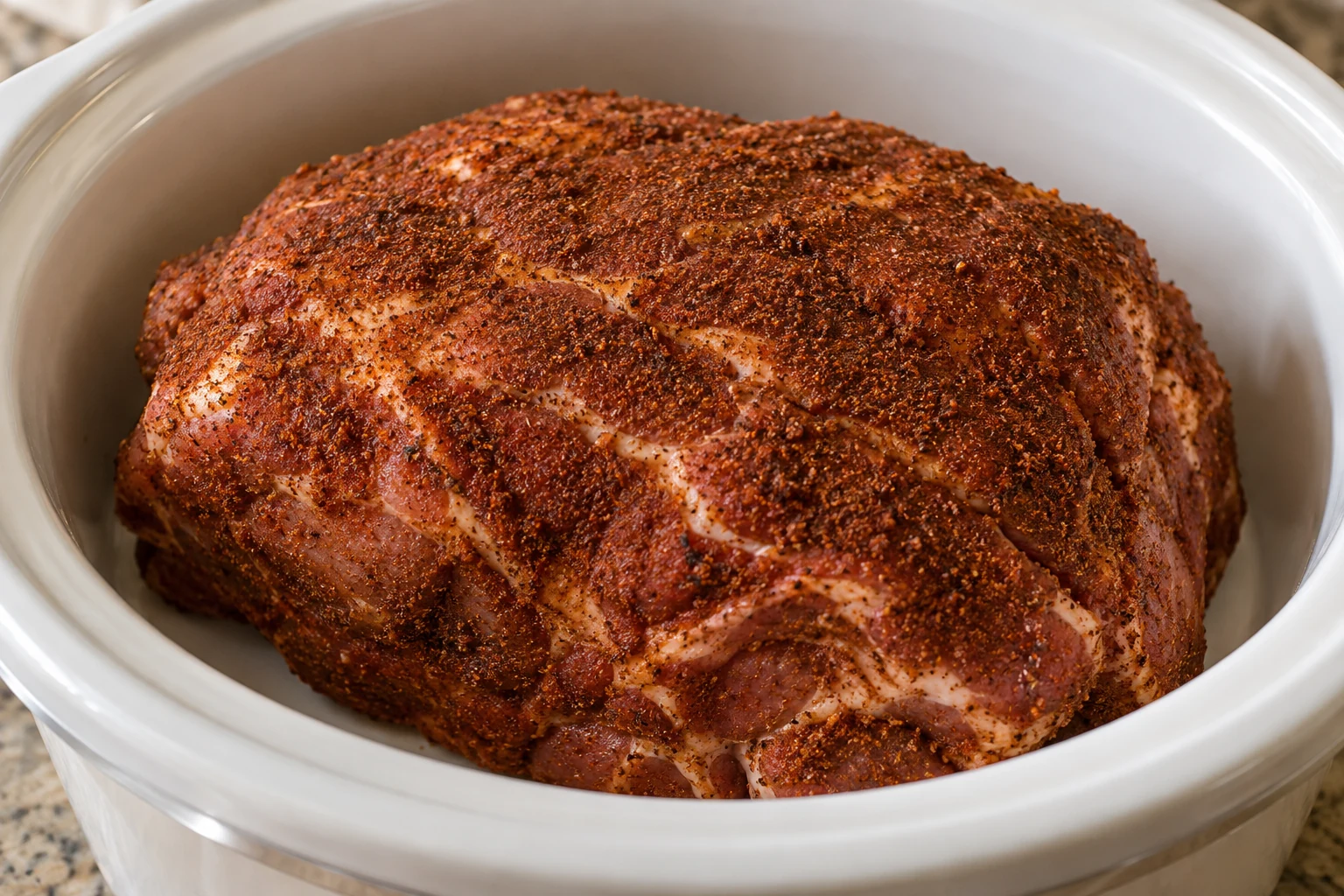
The surface should look evenly coated in a rusty red-brown layer. If a patch still looks like bare wet pork, lift seasoning from the bowl and press it onto that area. Use all the measured rub.
4. Put the Shoulder in the Slow Cooker
Place the coated shoulder in the ceramic slow-cooker insert. Keep the thickest section centered so heat can circulate as evenly as possible.
Do not add water or stock. Cover the slow cooker promptly so the surface does not dry while the cooker comes to temperature.
5. Cook Low and Slow
Cook on low for six hours. Avoid lifting the lid repeatedly. Each opening releases heat and steam and makes the clock less useful.
As the shoulder cooks, the rub darkens and moisture collects around the meat. The kitchen should smell savory and mildly smoky from the ancho and paprika, without a scorched-spice smell.
6. Test With Two Forks
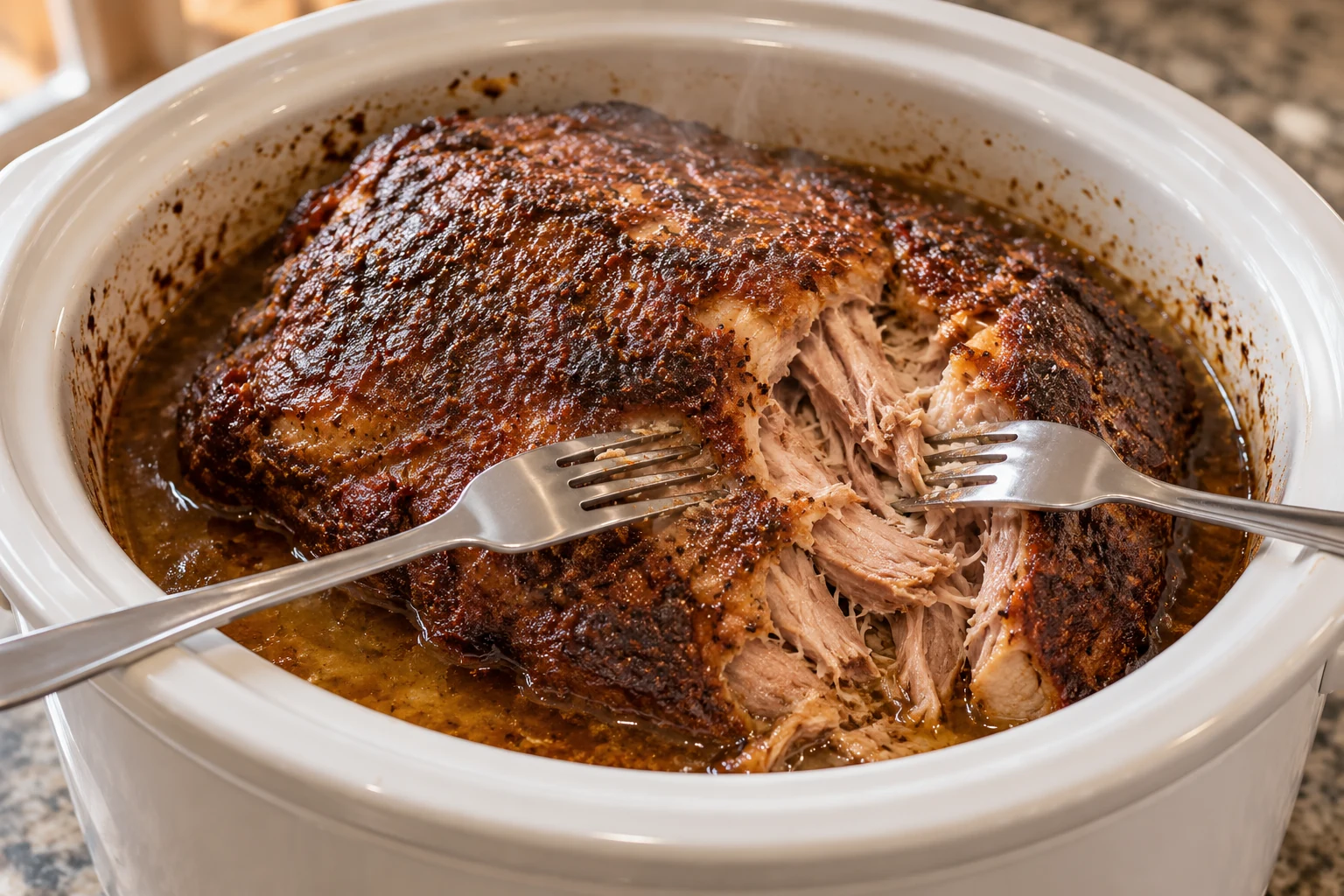
At six hours, insert two forks into a thick edge and pull in opposite directions. Ready pork separates into moist strands with almost no resistance.
If the fibers stretch, the forks leave only shallow marks, or the chunk springs back together, cover the cooker and continue. Test again later. The texture of the meat controls completion.
7. Cool Before Shredding
When the shoulder is tender, lift it into a large bowl or onto a rimmed platter. Let it cool completely before shredding, as the source directs.
Cooling firms the juices and makes the meat easier to handle. The shoulder should remain visibly moist, with tender fat and connective tissue that pull apart with the meat.
8. Shred and Serve
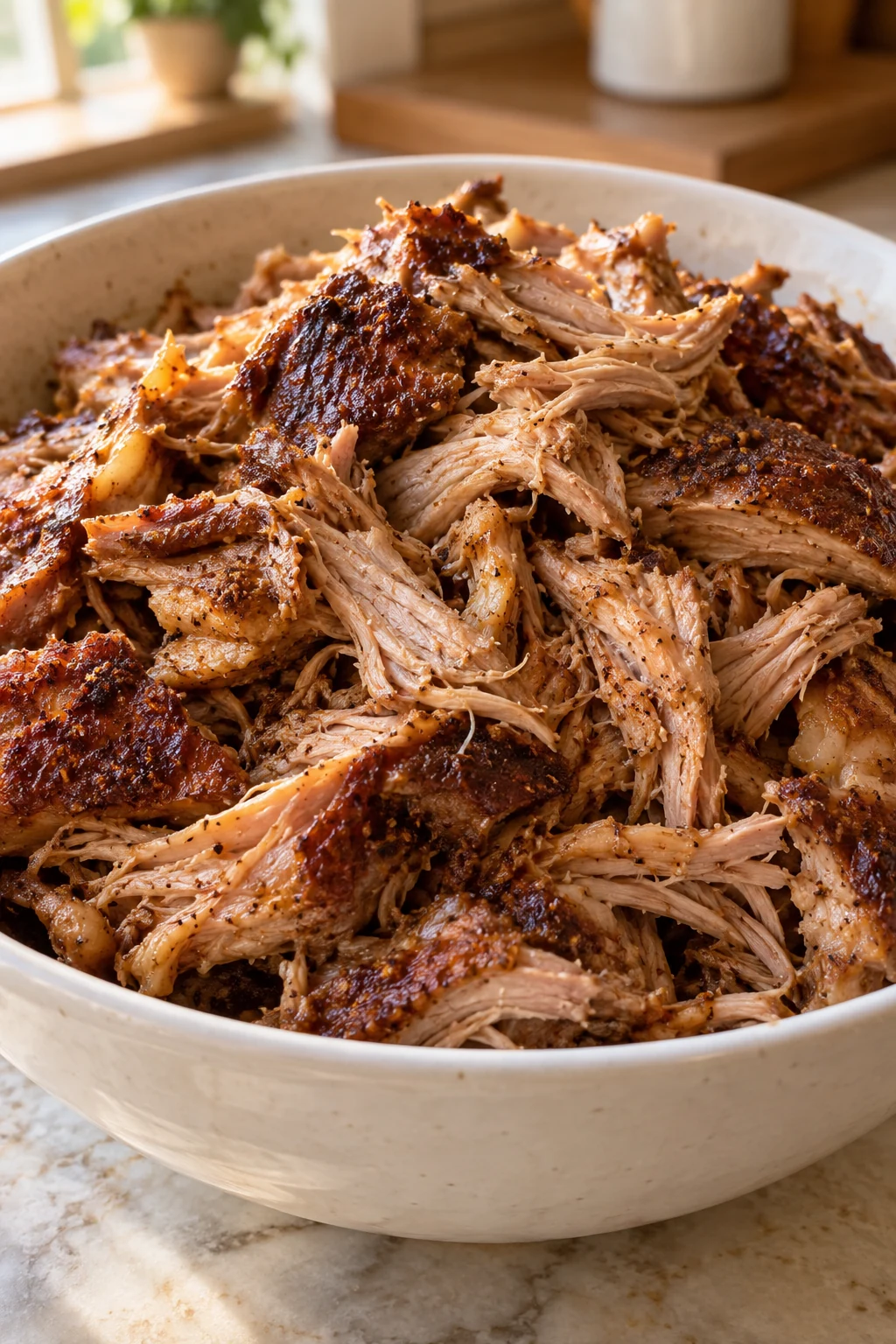
Remove any large pieces of bone or rind if present, then pull the pork into bite-size strands with two forks. Fold the darker seasoned exterior through the softer interior so every serving gets some rub.
Spoon a little of the rendered cooking liquid over the meat if needed for moisture. Serve the pork warm beside cooked Full GAPS vegetables, over a salad, or as the protein in another clearly measured meal.
What the Finished Pork Should Look and Taste Like
The outside should be darker than the center, with a red-brown spice coating that has absorbed pork fat. The interior should separate into distinct, juicy fibers rather than firm slices.
Ancho chile and paprika bring warm earthy flavor, mustard and onion add depth, and cayenne supplies a modest finish. The pork should taste seasoned throughout once the exterior strands are folded into the center.
Common Problems and Their Physical Cues
The Pork Will Not Shred
It needs more cooking time. A cooked but not yet tender shoulder can be safe to eat and still resist the forks. Cover it again and continue until the collagen has softened enough for the fibers to separate.
The Rub Slid Into the Bottom
The pork may have been too wet before seasoning, or an unmeasured liquid may have been added. Pat the shoulder thoroughly dry and keep this formula dry when it goes into the cooker.
The Spices Smell Burned
The cooker may be running unusually hot or the shoulder may be too small for the vessel. A scorched smell is different from the deep toasted aroma of cooked chile and paprika. Stop and inspect before serving meat with blackened, bitter seasoning.
Serving Ideas
Serve the pork with braised cabbage, roasted squash, cooked greens, or another Full GAPS vegetable. For a fresher bowl, add it to lettuce with Classic Pico de Gallo and Three-Ingredient Avocado-Lime Guacamole.
The separate Slow Cooker Carnitas Salad Bowl uses a different four-pound formula with browned pork, garlic, oregano, and measured chicken meat stock. Link the two as alternatives, but do not merge their ingredient lists or cards.
Storage and Reheating
Cool the shredded pork promptly in shallow glass containers. Include enough of the rendered cooking liquid to keep the meat moist, then cover and refrigerate.
The captured source does not establish a tested storage duration, so this post does not invent one. Reheat only the portion needed in a covered skillet or saucepan over low heat. Add a spoonful of the pork’s own liquid if the strands look dry.
Frequently Asked Questions
Do I Add Water or Stock?
No. The exact source formula is a dry spice-rub shoulder cooked covered in the slow cooker. It does not measure added liquid.
Can I Use Boneless Pork Shoulder?
Use the same 2½-pound measured amount if the cut is otherwise comparable and unprocessed. The doneness cue remains fork-shred tenderness.
Is Dry Mustard Powder Allowed on Full GAPS?
Pure mustard powder is allowed. Check that the jar contains mustard only and no starch, flour, sugar, or anti-caking blend.
How Spicy Is the Rub?
The ancho chile is earthy and the measured one-half teaspoon cayenne provides the sharper heat. Keep the measured balance for this exact formula.
Why Cool the Pork Before Shredding?
The source directs complete cooling because the shoulder is easier to handle and pull apart once it is no longer steaming hot.
Can I Turn This Into Carnitas?
Use the separate linked carnitas formula. It browns four pounds of pork in fat and cooks it with garlic, oregano, and two cups meat stock, so it needs its own post and recipe card.
Recommended Equipment
- Measuring spoons
- Small glass or stainless-steel bowl
- Large glass or stainless-steel bowl
- Slow cooker with a ceramic insert
- Rimmed platter
- Two forks
- Shallow glass storage containers
Spice-Rub Crock Pot Pork Shoulder for Full GAPS Recipe
Spice-Rub Crock Pot Pork Shoulder for Full GAPS
Ingredients
Equipment
Method
- Combine the ancho chile powder, sea salt, paprika, onion powder, dry mustard, and cayenne in a small bowl. Break up clumps until the rub is evenly red-brown.
- Rinse the pork shoulder under filtered water and pat every surface, fold, and crevice completely dry.
- Press all of the rub over every broad side, edge, fold, and seam of the shoulder until no bare wet patches remain.
- Place the coated shoulder in the ceramic slow-cooker insert, keep the thickest section centered, and cover. Do not add water or stock.
- Cook on low for 6 hours without repeatedly lifting the lid. The rub should darken and rendered liquid should collect around the meat.
- Test a thick edge with two forks. If the fibers resist or spring back, cover and continue cooking. The pork is ready when it pulls apart with almost no resistance.
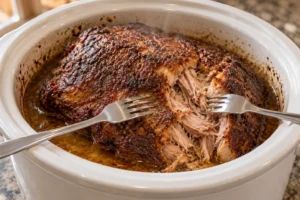
- Lift the tender shoulder to a rimmed platter or large bowl and let it cool completely before shredding.
- Remove any large bone or rind pieces, shred the pork with two forks, fold the darker seasoned exterior through the softer center, and moisten with a little rendered cooking liquid if needed.
Notes
Tried this recipe?
Let us know how it was!Keep Full GAPS Slow-Cooker Meals Organized
The planned Dinner Cookbook will organize slow-cooker meals, roasts, soups, skillets, and family-size mains by method and preparation needs. Find current resources and upcoming releases in the WFLI shop.

Leave a comment