

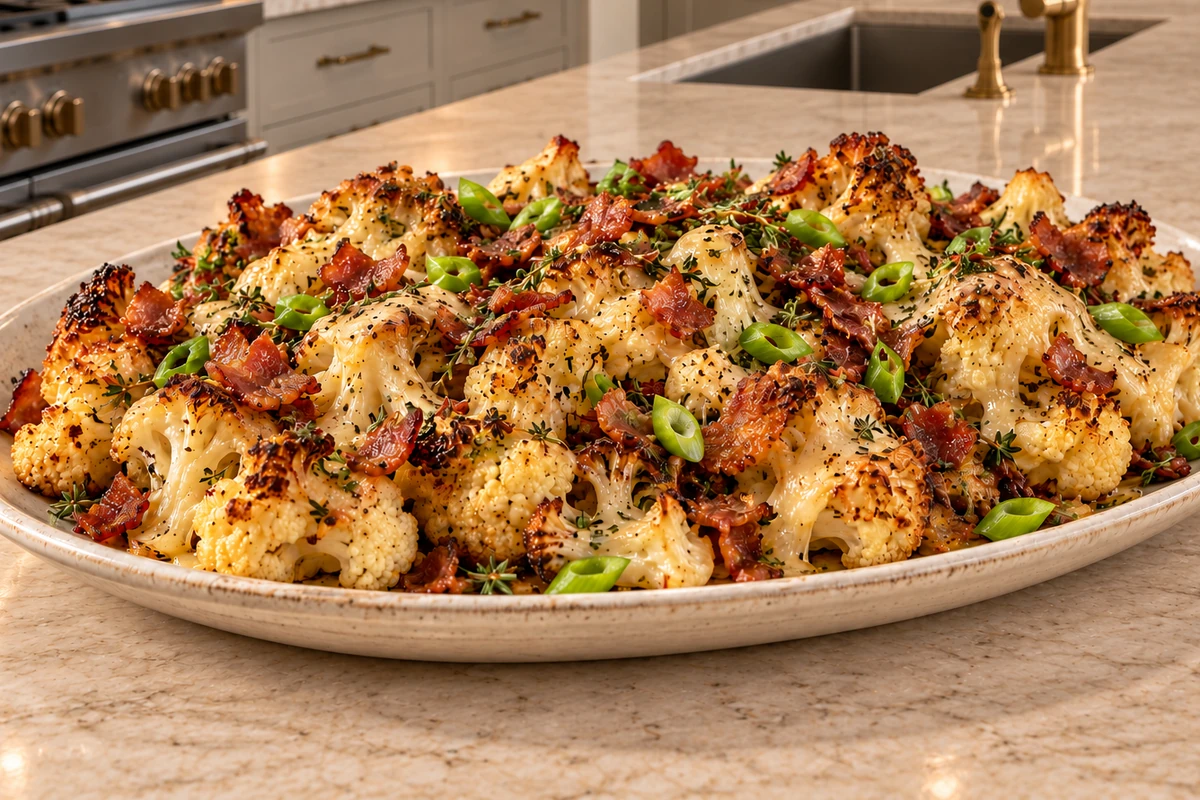
This loaded cauliflower sheet pan dinner turns one head of cauliflower and a pan of bacon into a deeply browned, savory Full GAPS meal. The florets roast in the rendered bacon fat, then finish with crisp bacon, scallions, fresh thyme, and optional aged cheese. You get plenty of contrast without a separate sauce or a pile of dishes.
I cook most weekday meals in the morning before homeschooling and leaving for second shift. A recipe that keeps the work on one pan gives me room to finish everything else that has to happen before I walk out the door. The order matters here. Bacon goes first because its fat becomes the cooking fat for the cauliflower, and the fresh toppings wait until the end so they stay bright.
This is also an easy recipe to read with your eyes instead of trusting the timer alone. The bacon needs to look crisp rather than merely cooked. The cauliflower should be glossy before it goes into the oven, then deep gold at the exposed edges when it comes out. Those cues will give you a better result than chasing an exact minute when bacon thickness and floret size can vary.
Where Loaded Cauliflower Fits on GAPS
This is a Full GAPS dinner after cauliflower, bacon, scallions, fresh thyme, black pepper, and any optional aged cheese are introduced and tolerated. It is not an Introduction Diet recipe. The roasted bacon, caramelized cauliflower, and optional aged cheese belong later, when your household is eating the wider Full GAPS range.
Read the bacon label closely. Choose bacon without added sugar, starch, soy, smoke flavor, or other non-GAPS ingredients. Bacon can look simple from the front of the package and still hide an ingredient that changes whether it fits. The ingredient list is the part that counts.
For a dairy-free pan, leave out the cheese. The bacon fat, scallions, and thyme already give the cauliflower plenty of flavor. When dairy fits your version of Full GAPS, use grated aged cheddar or Gruyère. Aged cheese melts over the hot florets without turning this into a heavy cheese sauce.
You do not need a replacement for the omitted cheese. Add a little more fresh thyme and scallion greens at the table if you want a stronger finish. That keeps the dairy-free version simple and avoids adding an unrelated ingredient just to fill the space.
Cook the Bacon on the Sheet Pan
Heat the oven to 400°F. Cut or separate 10 to 12 ounces of bacon into pieces and spread them in one layer on a large uncoated stainless-steel half sheet pan. Give the pieces enough room for the hot air to move between them. A thick pile steams and cooks unevenly.
Bake the bacon for 10 to 20 minutes, depending on thickness. Begin checking thin bacon near the early end of the range. Thick slices may need the full time. The pieces are ready when they look browned and crisp at the edges, the fat has turned clear, and there are no soft pale sections folded underneath.
The smell changes as the bacon moves from warm to properly browned. You will first smell salty pork, then a deeper roasted aroma as the edges crisp. Pull the pan before that aroma turns sharp or smoky. Burned bacon fat will carry through the entire cauliflower pan.
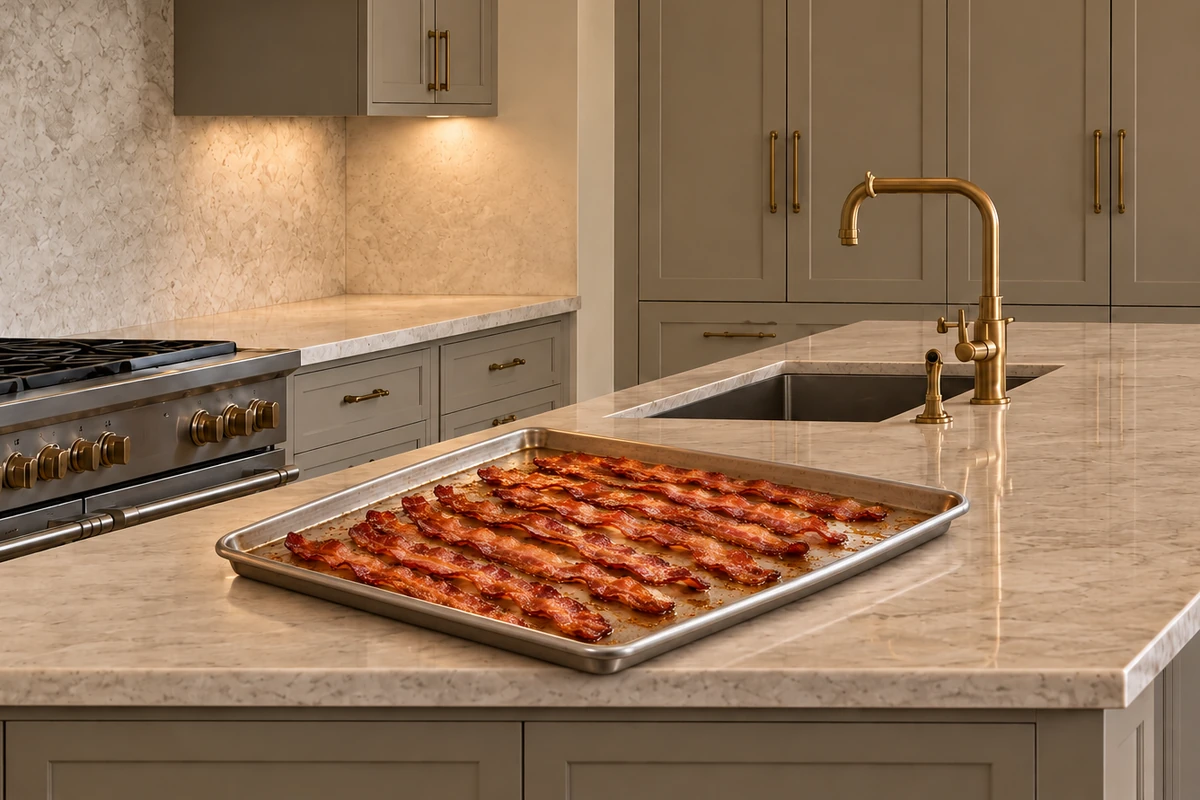
Move the bacon to a plate and leave every spoonful of rendered fat on the pan. The bacon should be firm enough to chop after it cools. The fat should form a thin clear layer across the metal. Do not wipe the pan or replace that fat with another cooking fat. It is what coats and seasons the cauliflower.
Coat Every Cauliflower Floret
Cut one large cauliflower into bite-size florets. Keep the pieces reasonably close in size so the stems become tender at the same time. Very small crumbs can burn before the larger florets brown, so save the loose crumbs for another meal or keep them toward the center of the pan.
Add the cauliflower to the warm pan with one teaspoon mineral sea salt and optional pure black pepper. Toss with two wooden or silicone spoons until every surface looks glossy. Turn the pieces over as you toss. Dry, chalky patches mean that some florets have not picked up enough bacon fat yet.
Spread the coated florets into one layer with cut sides touching the pan where possible. Those flat surfaces develop the strongest browning. If the cauliflower is piled in the middle, moisture collects between the pieces and the pan steams instead of roasting.
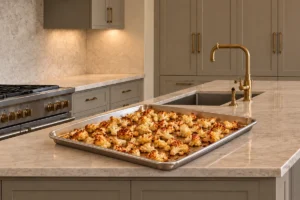
Roast for about 22 minutes. The cauliflower is ready for the final toppings when a fork slides into the stem pieces without resistance and the exposed edges have turned deep golden brown. Pale cauliflower needs more time. Dark brown pinpoints are fine, but black tips and a bitter smell mean it has gone too far.
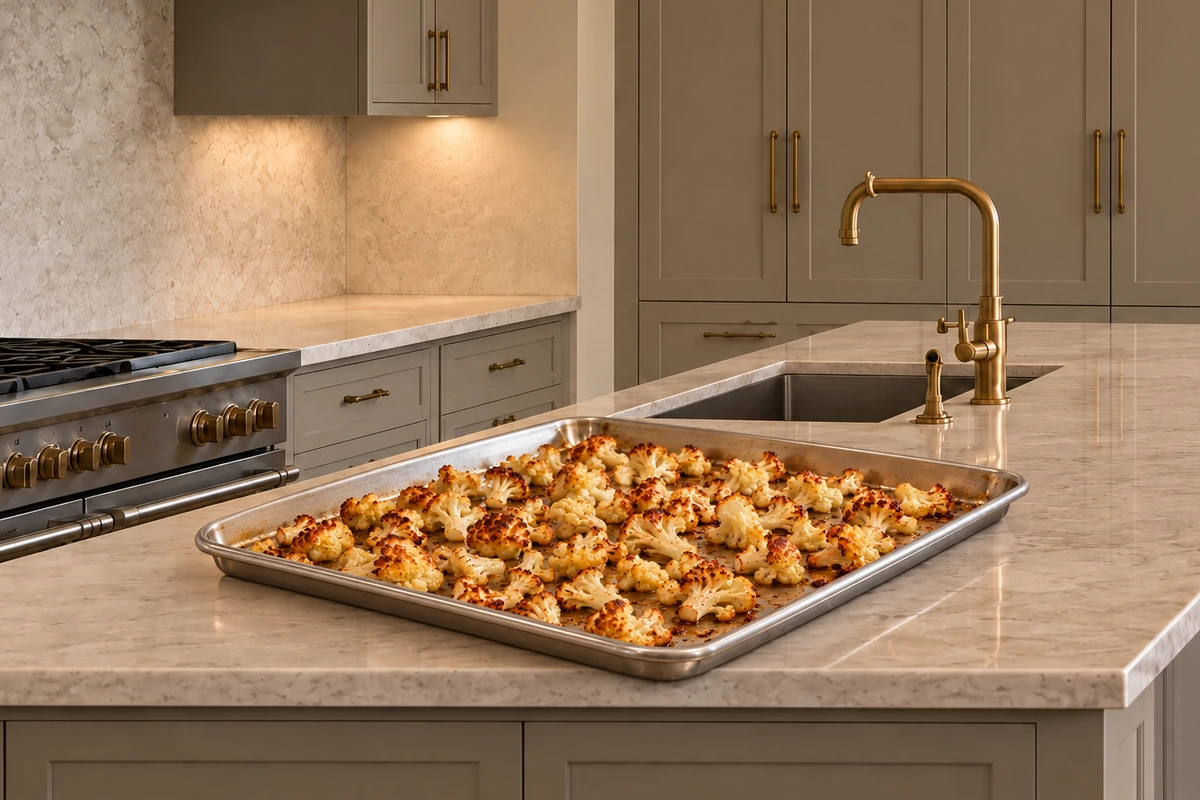
If the stems are tender but the edges are still pale, spread the florets farther apart and give them a few more minutes. If the edges brown before the stems soften, your pieces are probably too large. Cover the darkest pieces loosely and continue only until the stems are tender.
Add the Scallion Whites and Optional Cheese
Slice the green onions and keep the white and green portions separate. The whites need a short pass through the oven to soften their raw bite. The green slices stay out of the heat so they keep their fresh flavor and color.
Scatter the scallion whites and optional grated aged cheese over the browned cauliflower. Reduce the oven to 200°F and return the pan for five minutes. You are only softening the whites and melting the cheese. Do not keep roasting at 400°F or the already-browned edges can burn while you wait for the cheese to melt.
Finely grated cheese melts more evenly than thick shreds. It should relax over the hot florets and look glossy, not form a thick blanket across the entire pan. If you are skipping the cheese, still give the scallion whites their five-minute finish.
Finish With Bacon, Scallion Greens, and Thyme
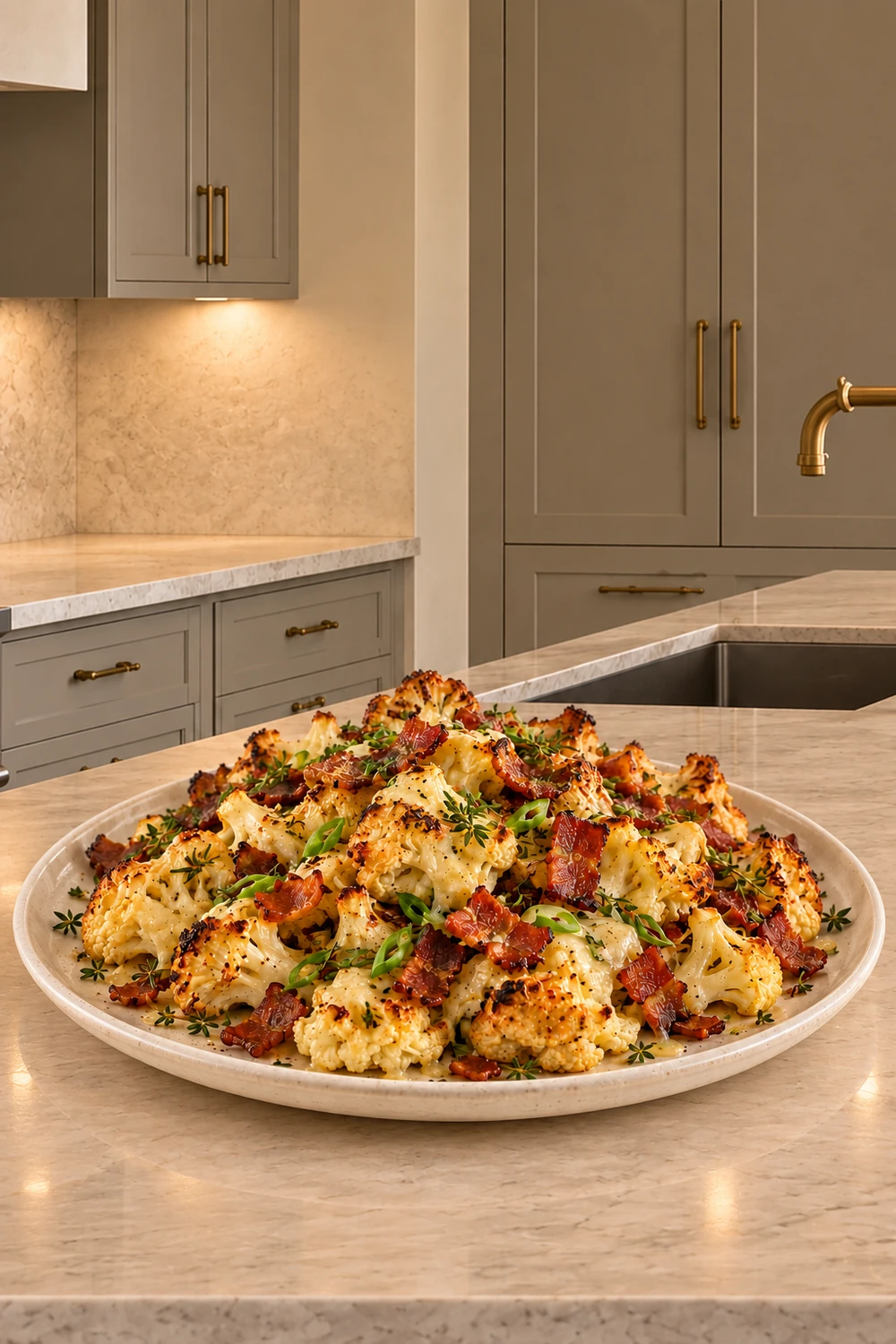
Chop the cooled bacon into bite-size pieces. Transfer the cauliflower to a platter or plates and top it with the bacon, green scallion slices, and plenty of fresh thyme leaves. Strip the thyme leaves from the woody stems before scattering them over the pan.
The finished cauliflower should be tender through the stems, browned at the edges, and coated rather than greasy. You should taste the bacon first, then the mild onion and fresh thyme. If the pan tastes flat, add a small pinch of mineral salt at the table instead of covering it with more cheese.
Serve it as the main dish for a lighter meal or add a simple protein. For a complete chicken version with its own timing and method, use the separate Chicken and Loaded Cauliflower Sheet Pan Dinner. For a simpler cauliflower side without bacon or cheese, make Herb-Roasted Crispy Cauliflower.
Storage and Reheating
Let leftovers stop steaming before covering them in a glass container and moving them to the refrigerator. Trapping a large amount of steam softens the browned edges. Keep any extra fresh scallion greens and thyme separate so you can add them after reheating.
Reheat the cauliflower on an uncoated stainless sheet pan at 350°F until it is hot through and the edges begin to crisp again. Spread it out rather than piling it in a small dish. A microwave will warm it, but it will not restore the roasted surface.
I have not included freezer directions because this formula depends on the texture of freshly roasted cauliflower. Make only what your household will use from the refrigerator rather than assuming the browned texture will survive freezing.
Recommended Equipment
Use one large uncoated stainless-steel half sheet pan, a cutting board, a sharp stainless knife, two wooden or silicone spoons, a large spatula, and a serving platter. Add a grater if you are using aged cheese.
The half sheet pan matters because the cauliflower needs room to sit in one layer. A smaller pan can work for a half batch, but do not force the full head of cauliflower into a crowded pan. Use two stainless pans if you double the recipe. Rotating two pans is still better than steaming a double batch in one.
Frequently Asked Questions
Is the Cheese Required?
No. The bacon fat, browned cauliflower, scallions, and fresh thyme carry the dish without cheese.
Which Cheese Works on Full GAPS?
Use grated aged cheddar or Gruyère after it is introduced and tolerated. Leave it out when dairy is not part of your current Full GAPS routine.
Why Cook the Bacon First?
The bacon renders the cooking fat that coats the cauliflower. Keeping that fat on the same pan builds the flavor and keeps this a true one-pan method.
Can I Use Dried Thyme?
Fresh thyme is the finishing herb here. Dried thyme has a different strength and texture, so use fresh leaves for this version.
Why Is My Cauliflower Pale?
The usual causes are crowding, wet florets, or too little contact with the hot pan. Spread the pieces into one layer with their cut sides down and keep roasting until the edges are deep gold.
Can I Double the Recipe?
Yes, but use two half sheet pans. A double batch on one pan will trap moisture and soften the cauliflower. Rotate the pans between racks as needed for even browning.
Can I Prepare Anything Ahead?
You can cut the cauliflower, slice the scallions, grate the optional cheese, and strip the thyme leaves ahead. Keep them in separate covered containers. Cook the bacon and roast the cauliflower when you are ready to serve so the edges stay crisp.
Loaded Cauliflower Recipe
Loaded Cauliflower Sheet Pan Dinner for Full GAPS
Ingredients
Equipment
Method
- Heat the oven to 400°F.
- Spread the bacon in one layer on a large uncoated stainless-steel half sheet pan. Bake for 10 to 20 minutes, depending on thickness, until crisp but not burned.
- Move the bacon to a plate and leave all rendered fat on the pan.
- Add the cauliflower, sea salt, and optional black pepper. Toss with two spoons until every floret is glossy, then spread into one layer.
- Roast for about 22 minutes, until the stem pieces are tender and the exposed edges are deeply golden brown.
- Add the scallion whites and optional aged cheese. Reduce the oven to 200°F and bake for 5 minutes, just until the whites soften and cheese melts.
- Chop the cooled bacon. Transfer the cauliflower to a platter or plates and top with bacon, scallion greens, and plenty of fresh thyme leaves.
Notes
- Full GAPS: Use after every included ingredient is introduced and tolerated.
- Bacon: Choose bacon without added sugar, starch, soy, smoke flavor, or other non-GAPS ingredients.
- Dairy-free: Omit the cheese.
- Cheese: When included, use aged cheddar or Gruyère.
- Scaling: The 11-ounce card amount sits in the middle of the 10-to-12-ounce bacon range and scales cleanly.
Tried this recipe?
Let us know how it was!Make Sheet Pan Nights Easier
The planned Weekly Kitchen Rhythm Planner will help organize sheet-pan dinners, advance prep, and leftovers across a busy week. Find current resources in the WFLI shop.

Leave a comment