

This chicken and loaded cauliflower sheet pan dinner gives the bacon-fat roasted cauliflower a complete protein on the same pan. Bone-in chicken gets a head start, then the cauliflower joins it for the final roast. Crisp bacon, scallions, fresh thyme, and optional aged cheese finish the meal.
The sequence solves the timing problem. Chicken needs longer than bite-size cauliflower, so putting both on the pan at the beginning would leave you with pale vegetables or undercooked chicken. The 30-minute head start lets the final 22-minute roast brown the florets while the chicken finishes safely.
On weekdays I cook before leaving for second shift, after the morning homeschool work is underway. I need dinner instructions that tell me what to look for when the schedule gets noisy. Here, you will watch for crisp bacon, golden chicken skin, glossy cauliflower, caramelized edges, and a thermometer reading of at least 165°F in the thickest part of every chicken piece.
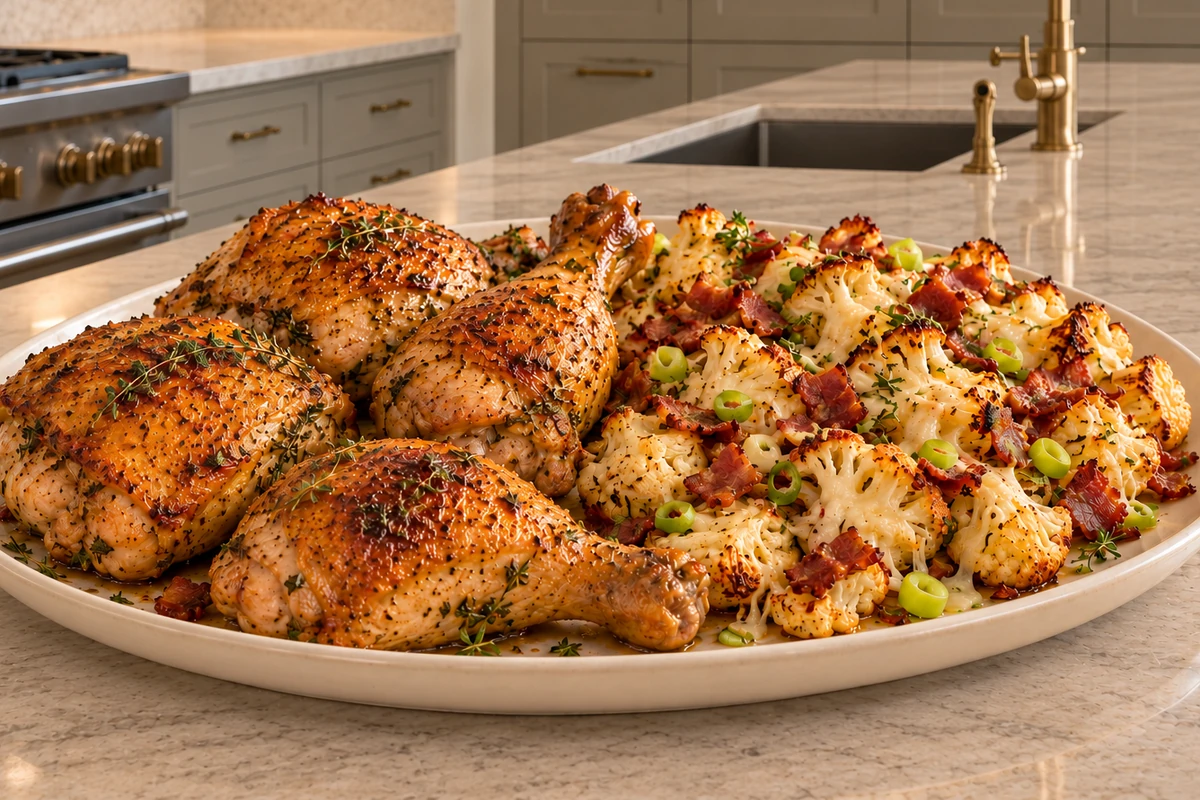
Where This Chicken Dinner Fits on GAPS
This is a Full GAPS dinner after chicken, cauliflower, bacon, scallions, fresh thyme, black pepper, and any optional aged cheese are introduced and tolerated. It is not an Introduction Diet recipe. The crisp bacon, roasted skin, caramelized vegetables, and optional cheese make it a later meal.
Choose bacon without added sugar, starch, soy, smoke flavor, or other non-GAPS ingredients. The front label does not tell the whole story. Read the ingredient list before it goes into the cart.
For a dairy-free dinner, leave out the cheese. You do not need to replace it. Crisp bacon, scallion greens, and fresh thyme give the finished cauliflower enough flavor. When dairy fits, use one cup grated aged cheddar or Gruyère.
Use bone-in, skin-on thighs, drumsticks, or a mix. Bone-in pieces hold up well through the two-stage roast and give you a clear visual cue as the skin turns gold. Keep pieces similar in size when you can so they finish close together.
Render the Bacon Before the Chicken Goes In
Heat the oven to 400°F. Spread 10 to 12 ounces bacon in one layer on an uncoated stainless-steel half sheet pan. Bake for 10 to 20 minutes, depending on thickness. Thin bacon can finish near 10 minutes. Thick slices often need longer.
The bacon is ready when the edges are crisp, the center sections no longer look pale or soft, and the rendered fat is clear. You should smell a deep roasted bacon aroma without smoke. Move the bacon to a plate before it burns and leave all the fat on the pan.
The 11-ounce recipe-card amount sits in the middle of the 10-to-12-ounce range, so the card can scale cleanly. In your kitchen, a package anywhere in that range works. What matters is having enough rendered fat to coat both the cauliflower and chicken.
Coat the Cauliflower and Chicken
Cut one large cauliflower into bite-size florets. Toss the florets in the warm bacon fat with one teaspoon mineral sea salt and optional black pepper. Use two wooden or silicone spoons and turn the pieces until every surface looks glossy.
Move the coated cauliflower to a large glass or stainless bowl. Scrape any extra fat from the bowl back toward the pan. The cauliflower waits here while the chicken gets its head start.
Arrange about one and one-half pounds bone-in, skin-on chicken thighs, drumsticks, or a mix across the sheet pan. Roll each piece lightly through the bacon fat, then set it skin-side up. Season with the remaining one teaspoon sea salt and optional black pepper.
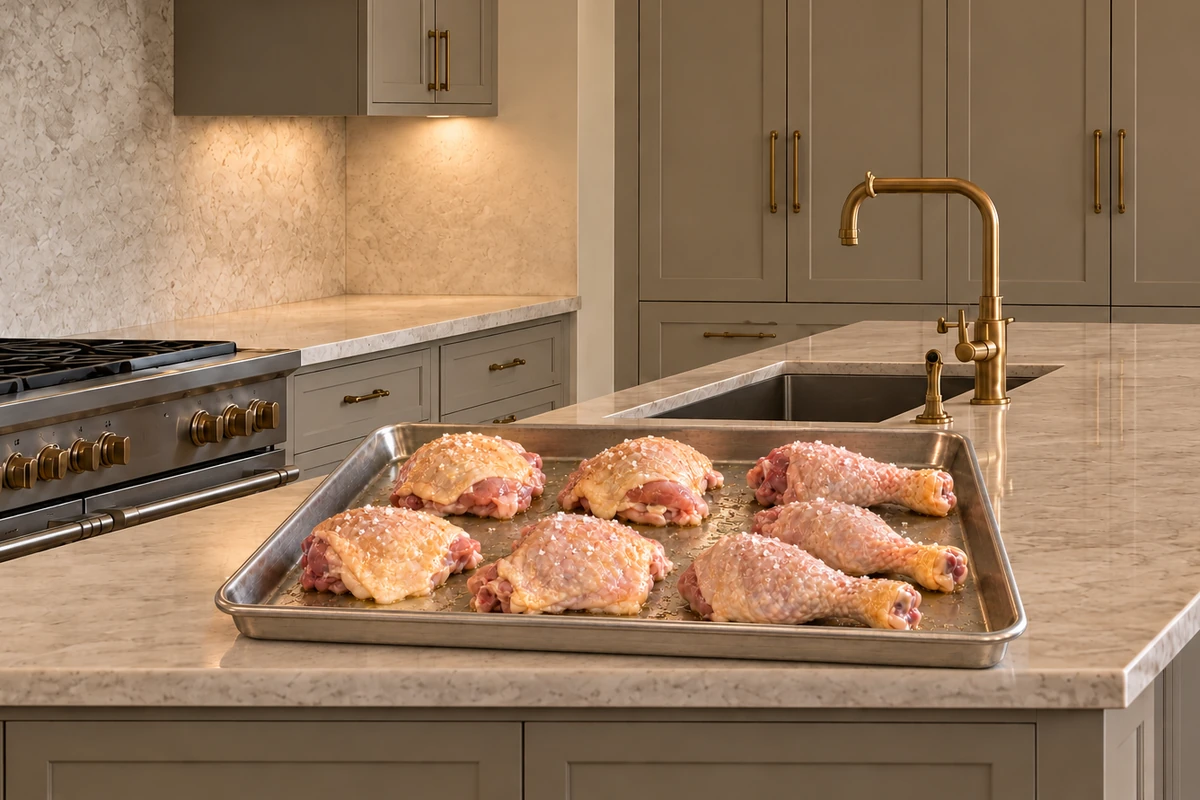
The chicken skin should look lightly coated rather than submerged. If fat pools in one corner, level the pan before it goes into the oven. Keep a little space between pieces so the skin roasts instead of steaming.
Roast the Chicken Before Adding Cauliflower
Reduce the oven to 375°F and roast the chicken for 30 minutes. The skin should begin to turn gold and the fat should sizzle around the pieces. The meat is not finished yet. This first stage only gives the chicken the time it needs before the vegetables join it.
Raise the oven to 400°F. Move the chicken to one side of the pan and spread the reserved cauliflower in one layer on the other side. Scrape any bacon fat left in the bowl over the chicken. Keep the two zones clear enough that cauliflower is not hidden underneath the chicken.
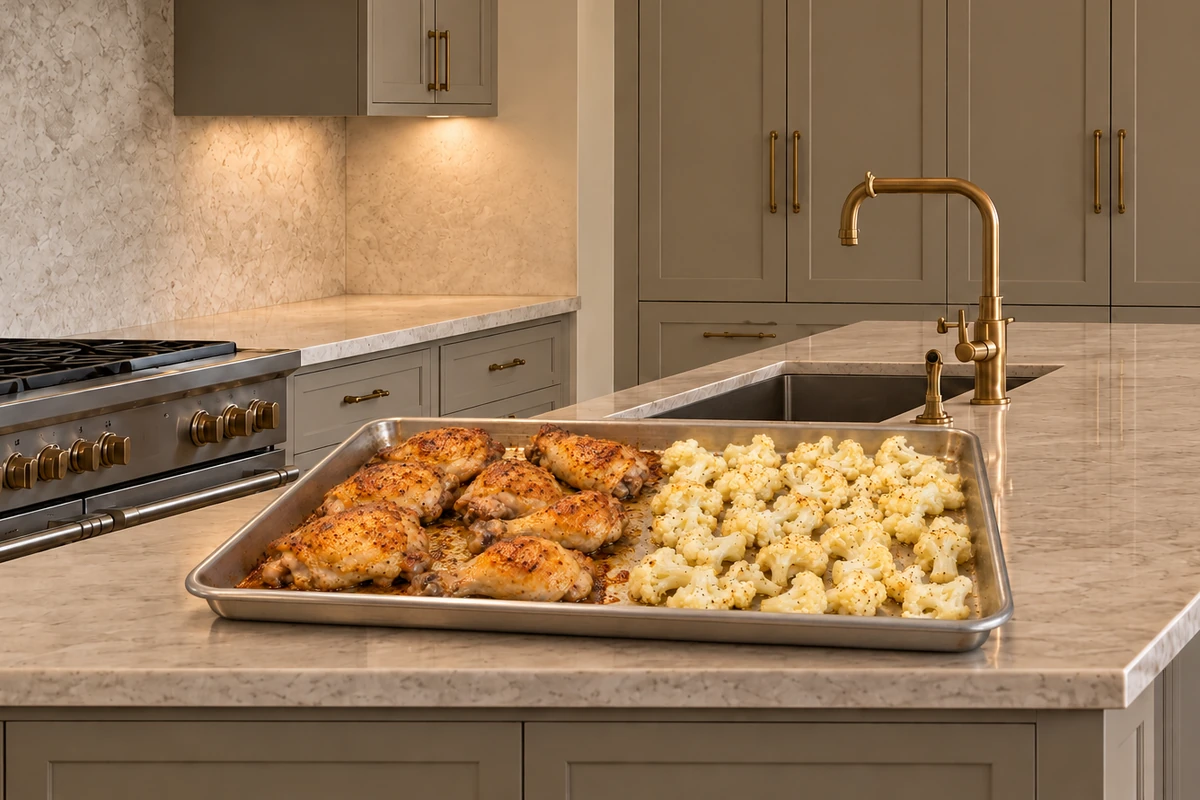
Roast for about 22 minutes. The cauliflower should have deep golden edges and tender stems. The chicken skin should be browned, and the juices should run clear when the thickest piece is pierced.
Check every chicken piece with an instant-read thermometer. Insert it into the thickest part without touching bone. Every piece must reach at least 165°F. If smaller pieces are done first, move them to a warm platter while the larger pieces continue cooking.
Do not rely on skin color alone. Bacon fat can brown the surface before the thickest chicken piece is ready. The thermometer gives you the answer.
Melt the Optional Cheese and Add Fresh Toppings
Slice the green onions and separate the whites from the greens. Scatter the whites and optional grated aged cheese over the cauliflower. Reduce the oven to 200°F and bake for five minutes, just until the cheese melts and the scallion whites soften.
Keep the cheese over the cauliflower rather than the chicken skin. That preserves the crisp surface you built during roasting. Finely grated cheese melts quickly, which helps you avoid overcooking the chicken during this last short step.
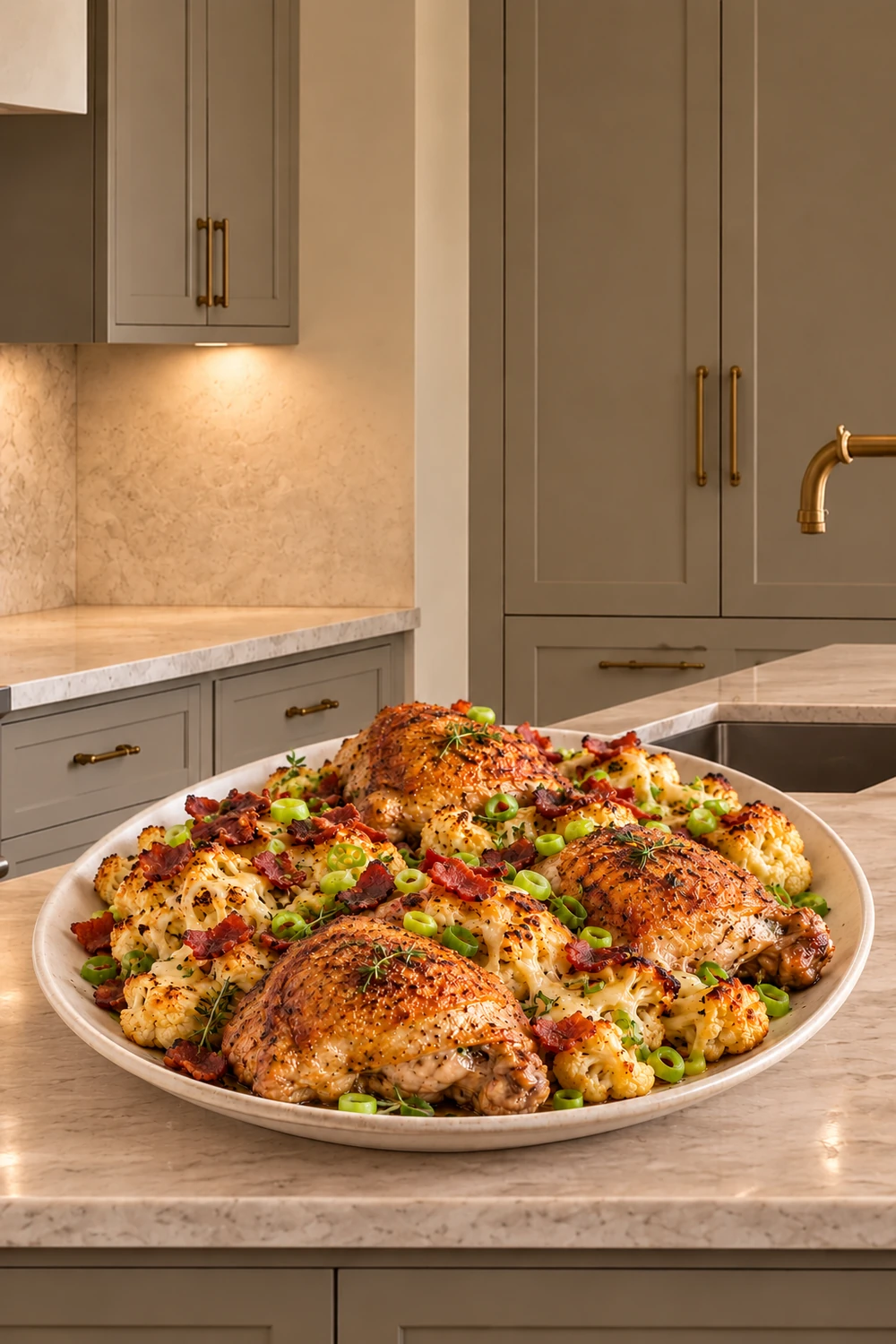
Chop the cooled bacon. Move the chicken and cauliflower to a platter, then top the cauliflower with bacon, scallion greens, and plenty of fresh thyme leaves. Rest the chicken briefly before serving so the juices settle into the meat instead of running across the platter.
The finished chicken should be juicy near the bone with browned skin. The cauliflower should be tender in the stems and crisp at the edges. You should taste roasted chicken and bacon first, followed by fresh thyme and mild scallion.
For the faster cauliflower-only version, use Loaded Cauliflower Sheet Pan Dinner. It keeps the same bacon-fat roasting method without the chicken timing.
Storage and Reheating
Let leftovers stop steaming before covering them in glass and moving them to the refrigerator. Keep extra scallion greens and thyme separate so they stay fresh. If possible, place the chicken beside the cauliflower rather than directly on top of it.
Reheat the chicken and cauliflower in one layer on an uncoated stainless pan at 350°F until the chicken is hot through and the cauliflower edges begin to crisp again. Check a thick chicken piece before serving. Add fresh scallion greens and thyme after reheating.
I have not included freezer directions because the best part of this dinner is the contrast between browned chicken skin and crisp-edged cauliflower. Use refrigerator leftovers for another lunch or dinner instead of assuming the texture will remain the same after freezing.
Recommended Equipment
Use one large uncoated stainless-steel half sheet pan, a cutting board, a sharp stainless knife, a large glass or stainless bowl, two wooden or silicone spoons, an instant-read thermometer, and a large spatula. Add a grater if you are using aged cheese.
The pan must be large enough to hold chicken on one side and cauliflower in one layer on the other. If your pieces do not fit without crowding, use a second uncoated stainless pan. The thermometer is not optional for the chicken version because size and bone placement change the actual cooking time.
Frequently Asked Questions
Can I Use Only Thighs or Only Drumsticks?
Yes. Use about one and one-half pounds of bone-in, skin-on pieces. Check every piece and cook each one to at least 165°F in the thickest part without touching bone.
Why Start the Chicken Before the Cauliflower?
Bone-in chicken needs more time. Its 30-minute head start lets the final 22-minute roast brown the cauliflower without leaving the chicken underdone.
Is the Cheese Required?
No. Omit it for a dairy-free dinner. Bacon fat, crisp bacon, scallions, and thyme still finish the dish.
What If One Chicken Piece Finishes First?
Move a finished piece to a warm platter and return the pan to the oven. Continue checking the remaining pieces until each one reaches at least 165°F.
Why Is My Cauliflower Soft Instead of Browned?
It was probably crowded or wet. Spread the florets in one layer, keep them out from under the chicken, and place cut sides against the hot pan where possible.
Can I Double This Dinner?
Yes, but use two half sheet pans. Divide the chicken and cauliflower so each pan has open space. Rotate the pans between racks and still check every chicken piece with the thermometer.
Can I Prepare the Vegetables Ahead?
You can cut the cauliflower, slice the scallions, grate optional cheese, and strip the thyme leaves ahead. Keep each component covered separately. Coat the cauliflower in warm bacon fat only when you are ready to cook.
Chicken and Loaded Cauliflower Recipe
Chicken and Loaded Cauliflower Sheet Pan Dinner
Ingredients
Equipment
Method
- Heat the oven to 400°F. Spread the bacon in one layer on an uncoated stainless half sheet pan and bake for 10 to 20 minutes, depending on thickness, until crisp.
- Move the bacon to a plate and leave all rendered fat on the pan.
- Toss the cauliflower in the bacon fat with 1 teaspoon sea salt and optional black pepper. Move the coated cauliflower to a large bowl, scraping excess fat back toward the pan.
- Spread the chicken across the pan, roll each piece lightly in bacon fat, set skin-side up, and season with the remaining 1 teaspoon sea salt and optional pepper.
- Reduce the oven to 375°F and roast the chicken for 30 minutes, until the skin begins to turn golden.
- Raise the oven to 400°F. Move the chicken to one side of the pan and spread the reserved cauliflower in one layer on the other side. Scrape any fat left in the bowl over the chicken.
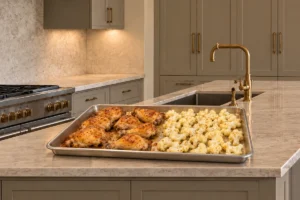
- Roast for about 22 minutes, until cauliflower edges are caramelized and every chicken piece reaches at least 165°F in the thickest part without touching bone.
- Add scallion whites and optional aged cheese over the cauliflower. Reduce the oven to 200°F and bake for 5 minutes, just until the cheese melts and whites soften.
- Chop the cooled bacon. Transfer chicken and cauliflower to a platter and top the cauliflower with bacon, scallion greens, and plenty of fresh thyme leaves. Rest the chicken briefly before serving.
Notes
- Full GAPS: Use after every included ingredient is introduced and tolerated.
- Chicken: Cook every piece to at least 165°F.
- Bacon: Choose bacon without added sugar or non-GAPS additives.
- Dairy-free: Omit the cheese.
- Timing: Cook time includes 15 minutes within the bacon’s 10-to-20-minute range, 30 minutes for the chicken head start, 22 minutes for chicken and cauliflower, and 5 minutes for the optional cheese finish.
Tried this recipe?
Let us know how it was!Plan More One-Pan Family Dinners
The planned Weekly Kitchen Rhythm Planner will help organize sheet-pan dinners, protein prep, and leftovers across the week. Find current resources in the WFLI shop.

Leave a comment