

Herb-Roasted Crispy Cauliflower is the kind of side dish that earns its place beside an ordinary weeknight dinner. The florets roast hot enough to develop crisp golden-brown spots while the centers become tender, and the dried ginger, garlic, oregano and basil cling to every surface.
This Full GAPS side dish goes into the oven with ghee, coconut oil or rendered animal fat. The result is a five-serving batch with clear physical cues at every step.
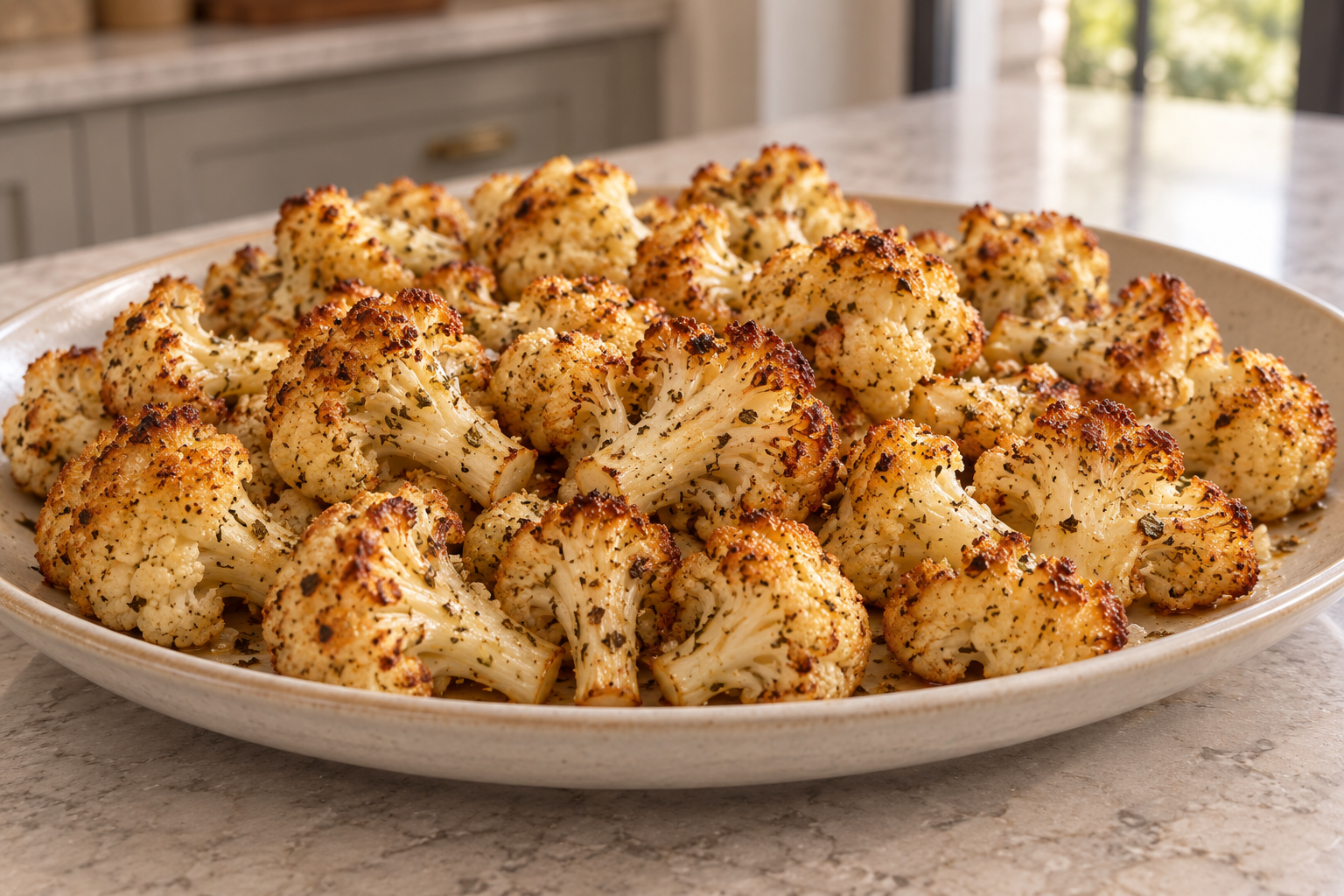
A Side Dish That Scales With Dinner
In a household with six children, a side dish needs to fit around the rest of dinner instead of creating another round of stovetop work. This one uses a bowl, one or two sheet pans and the oven. Once the florets are coated and spaced, the pan does the work.
The second sheet pan is useful rather than fussy. One large cauliflower head can vary in size even when it weighs about two pounds, and an uncrowded layer matters more than forcing every piece onto one pan. If the florets touch or overlap, moisture stays between them and they steam instead of developing browned contact spots.
Set both pans out before cutting the cauliflower. If the full batch fits comfortably on one, leave the second clean. If it does not, the extra pan is already ready and you do not have to rearrange coated florets after they have been piled too closely.
With eight places at our table, a five-serving vegetable side can be the smaller part of dinner. For a double batch, keep the same spacing rule instead of making a deeper layer. Use enough separate sheets to give every floret direct contact with the pan or parchment.
Choose a Full GAPS Cooking Fat
The recipe needs one-quarter cup of cooking fat. Use gently melted homemade ghee, coconut oil or rendered animal fat. The photographed batch uses ghee.
Whichever fat you choose, melt it only enough to pour and measure. It should be liquid but not fiercely hot. Very hot fat can begin cooking the fine cauliflower tips while you are still tossing, making the coating uneven before the pan reaches the oven.
Each option works at the same one-quarter-cup measure. Ghee gives the finished florets a buttery flavor. Coconut oil and rendered animal fat provide a dairy-free path. Keep the amount steady so the two-pound batch receives the intended coating.
Use one-half teaspoon mineral salt for lighter seasoning or up to three-quarter teaspoon to taste. The flavor concentrates as moisture leaves the cauliflower in the oven.
Cut Even Florets and Leave Out the Stalk
Start with one large cauliflower head, about two pounds. Remove the leaves and fibrous central stalk, then separate the head into bite-size florets. The pieces do not need to match perfectly, but they should be close enough in size to reach tenderness together.
Use the floret portion for this Full GAPS recipe. Very large pieces may brown on the tips while staying firm in the center. Tiny crumbs can darken before the rest of the pan is tender. Break the largest florets through the stem so their cut faces remain broad enough to touch the pan.
A useful batch has mostly compact florets with short stems. If a piece is twice the size of its neighbors, divide it. If a piece has only loose crumbs and no stem to hold it together, save those crumbs for another preparation rather than scattering them over the roasting sheet.
Coat Every Floret With Fat and Herbs
Put the cauliflower in a large stainless-steel, glass or ceramic bowl. Pour over the melted fat, then add one teaspoon dried ginger, one teaspoon garlic powder, three-quarter teaspoon dried oregano, three-quarter teaspoon dried basil and one-half teaspoon mineral salt.
Toss until every floret has a light sheen and the dried herbs are distributed across the rounded tops, cut faces and short stems. Look at the cauliflower at the bottom of the bowl before stopping. There should not be a puddle of clear fat or a pile of seasonings left behind.
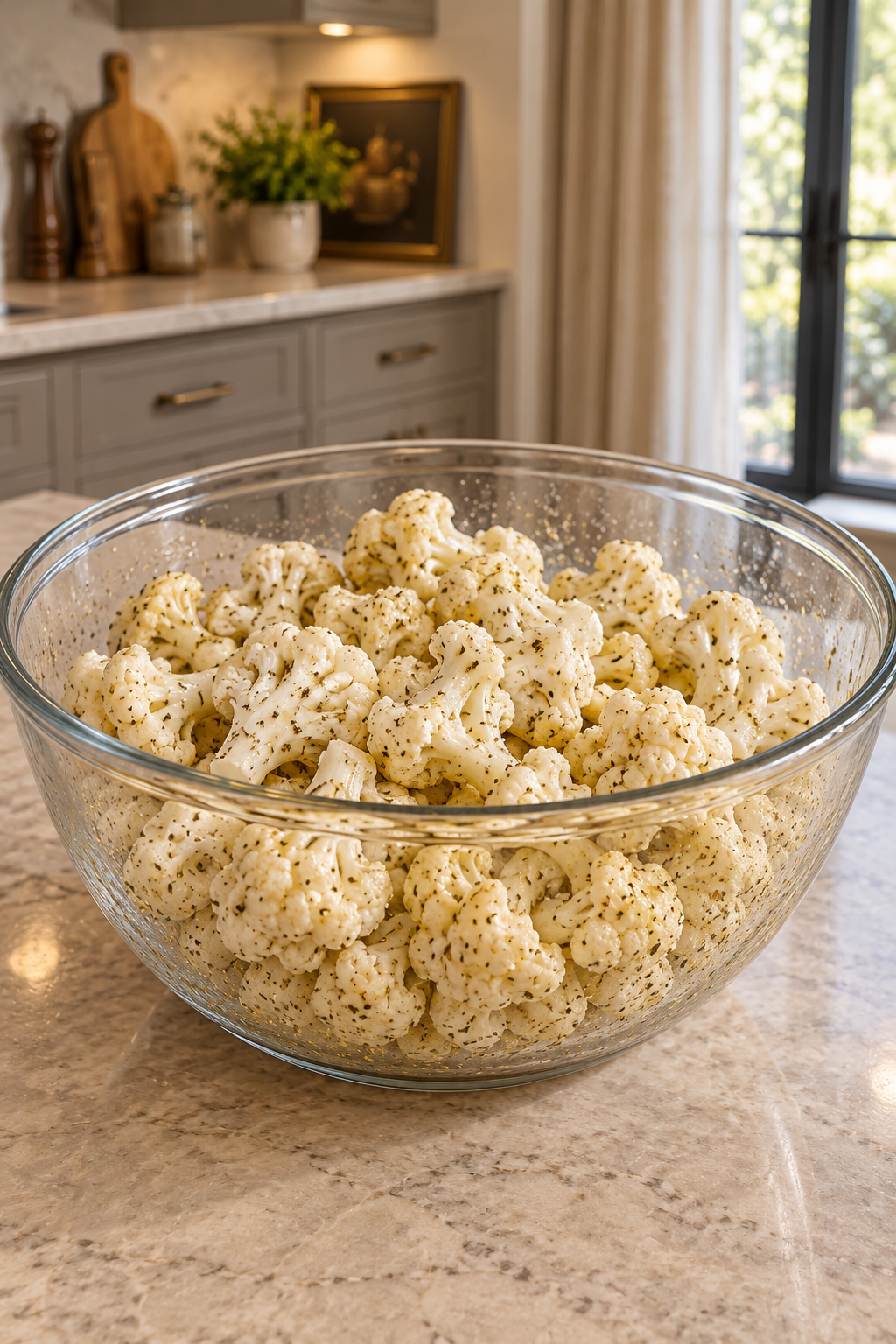
The raw cauliflower remains ivory-white at this stage. The visible change is the thin ghee sheen and fine specks of ginger, garlic, oregano and basil. Browning belongs to the oven, so do not mistake a glossy surface for doneness.
Give the Cauliflower Enough Pan Space
Spread the coated florets over an uncoated stainless-steel rimmed sheet pan. Unbleached parchment is optional. A clean bare sheet can brown the contact surfaces well, while parchment makes cleanup easier.
Arrange one uncrowded layer. Each floret should touch the pan or parchment, and none should sit on top of another. Leave visible gaps between pieces. If the batch fills the sheet edge to edge or forces florets together, divide it between two pans.
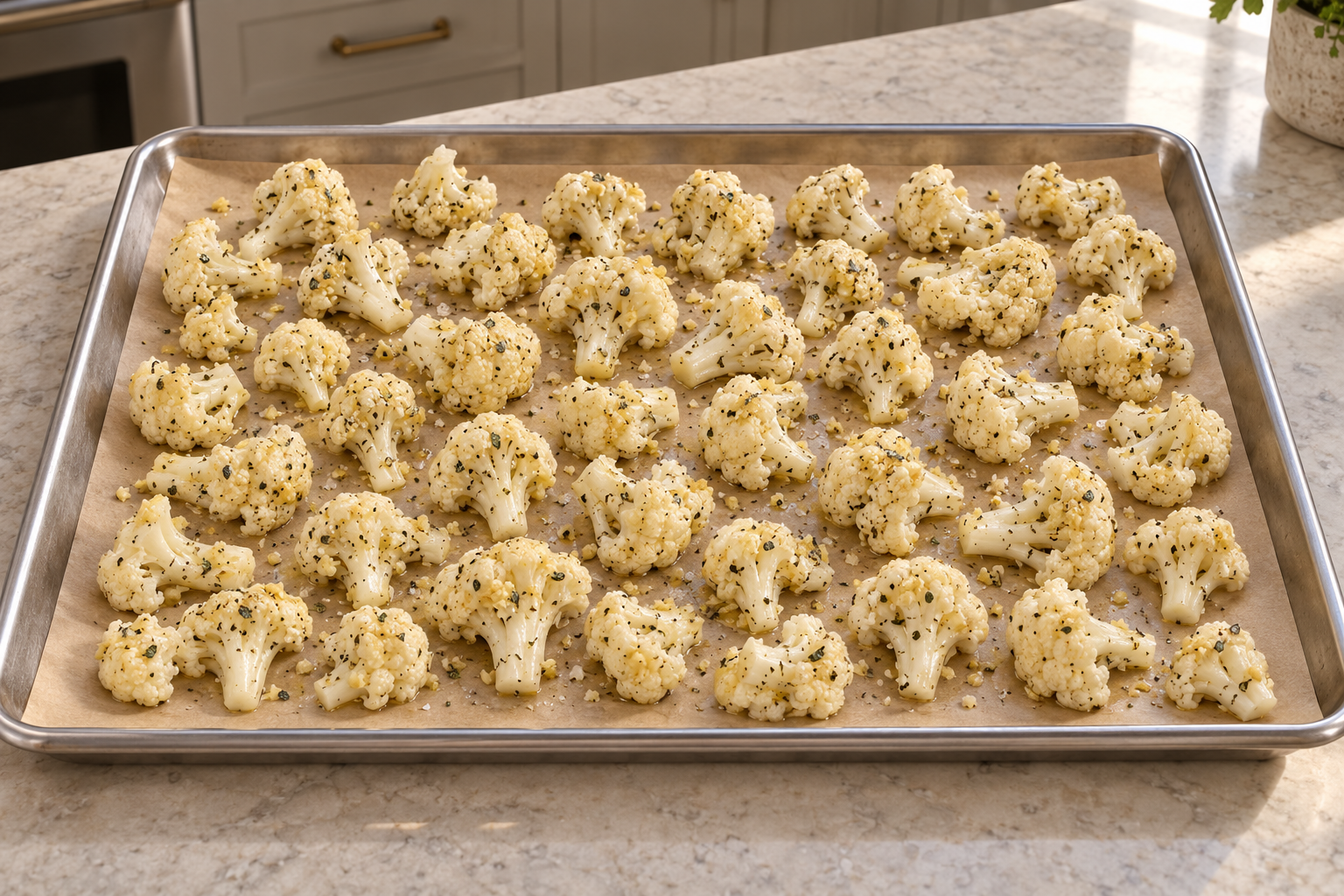
This is the most important setup cue in the recipe. A deep pile traps steam. A single layer exposes more cauliflower to the hot pan and moving oven air, allowing the edges and contact spots to brown.
Roast Until Tender and Browned in Spots
Roast at 425°F for 25 to 30 minutes. Begin checking at 25 minutes. The endpoint is physical: the florets are tender and browned in spots. Some edges will be crisp and golden-brown while the thicker centers remain ivory-gold and moist.
The pan does not need to become uniformly dark. A few brown contact patches and crisp tips are enough. Stop before the small edges burn or the florets dry throughout. The finished cauliflower should lift from the pan as distinct pieces rather than collapsing into mash.
Serve it warm. Add lemon wedges alongside or scatter one-quarter cup chopped fresh parsley or basil over the top if you want the optional finish. Both are optional, and the photographed batch leaves them off so the roast color and dried-herb coating remain easy to see.
What the Finished Cauliflower Should Be Like
The finished florets are tender through the center with irregular crisp edges and caramel-brown contact spots. Fine herb specks remain visible. The fat has coated the cauliflower rather than pooling on the serving platter.
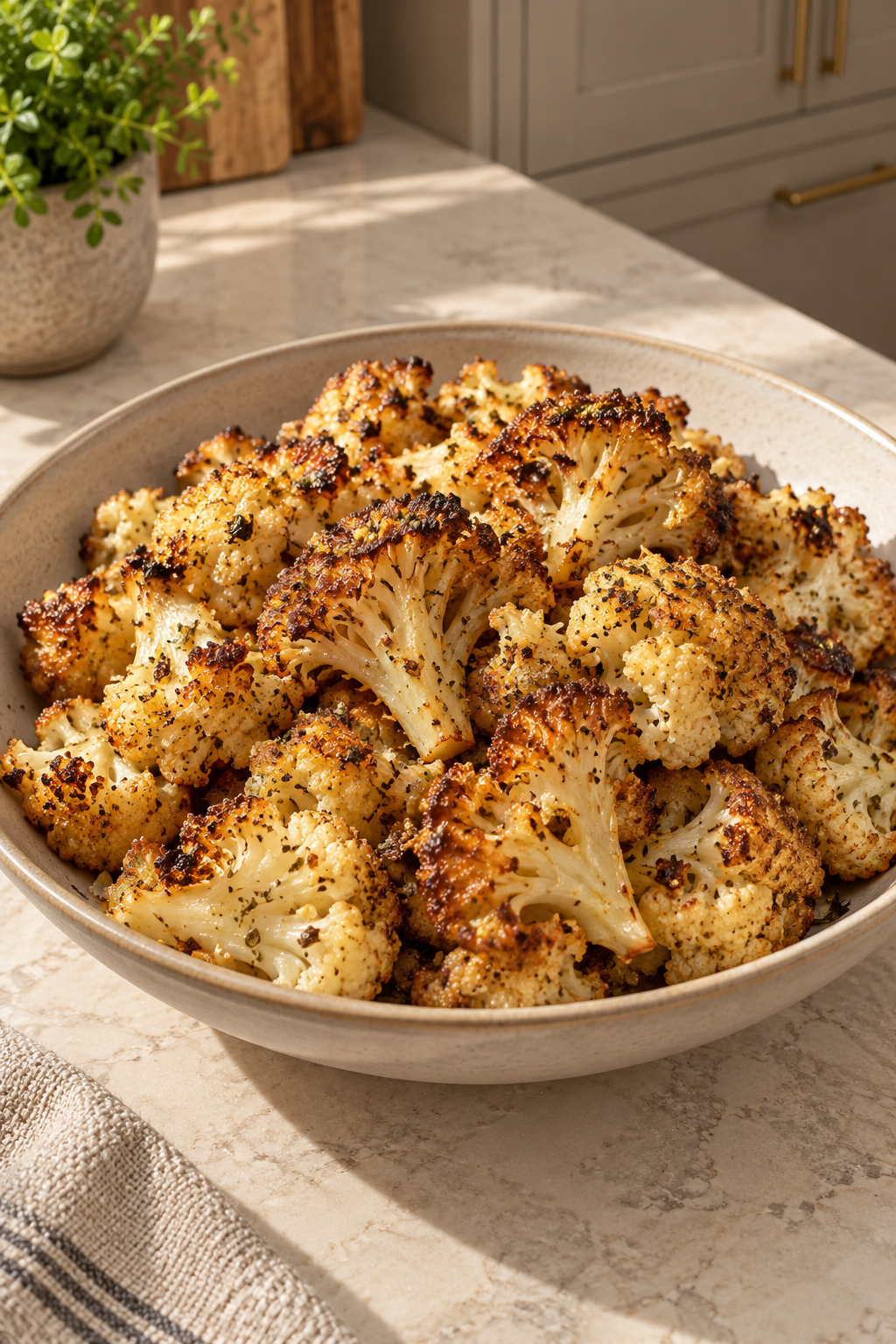
The ginger and garlic sit behind the oregano and basil instead of turning the dish into a sauce. Mineral salt sharpens the herb mixture. If the cauliflower looks pale and wet, it was probably crowded or removed before the browned-spots endpoint.
Where This Recipe Fits on GAPS
This is a Full GAPS side dish. Cauliflower florets, the measured dried herbs, mineral salt and these cooking fats fit Full GAPS. Cook it with animal fat, coconut oil or ghee; keep plant oils raw.
This roasted version is not an Introduction Diet recipe. Cauliflower can appear in Intro soups with its fibrous stalk removed and cooked until very soft, but that is a different preparation. Do not treat a high-heat crisp-edged roast as a stage adaptation of the same dish.
For a dairy-free Full GAPS version, use coconut oil or rendered animal fat at the same one-quarter-cup measure. The ginger, garlic, oregano, basil, mineral salt, pan spacing and roast endpoint stay the same.
Serve It With a Full GAPS Meal
Use the cauliflower as the vegetable side beside a simple protein. It works naturally with Full GAPS roasted chicken wings or alongside the Full GAPS sheet-pan meatballs.
If you need a softer cauliflower preparation, make Full GAPS steamed cauliflower rice instead. That recipe uses a different texture and method, so it remains its own post rather than being folded into this one.
Storage and Reheating
For the crispest texture, serve the cauliflower after roasting. If there are leftovers, let them cool, cover them in a glass or ceramic container and refrigerate. Reheat the florets in a single layer on the stainless sheet until they are hot and the edges have regained some crispness.
A covered container keeps the herbs and fat with the cauliflower, but cold storage softens the crisp edges. Reheating on a pan works better for texture than piling the florets into a deep dish.
Recommended Equipment
Use one or two uncoated stainless-steel rimmed sheet pans, optional unbleached parchment, a large stainless-steel, glass or ceramic bowl, a sturdy knife, a wood cutting board, measuring cups and spoons and a large wooden spoon for tossing.
Use an uncoated stainless-steel sheet pan for this flat roasting surface. Do not use a nonstick-coated or reactive unlined aluminum pan for this recipe.
Frequently Asked Questions
Is Cauliflower Allowed on Full GAPS?
Yes. This recipe uses the floret portion and removes the fibrous stalk.
Why Does the Recipe Use Only Florets?
The central stalk is more fibrous. Removing it also helps the remaining pieces cook at a similar rate.
Do I Have to Use Parchment?
No. Use unbleached parchment for easier cleanup or place the coated florets on a clean ungreased stainless sheet.
Can I Use Coconut Oil Instead of Ghee?
Yes. Use the same one-quarter-cup measure. Coconut oil or rendered animal fat also provides the dairy-free route.
How Do I Know Whether I Need Two Pans?
Use two when the florets overlap, touch their neighbors or cover the sheet without visible gaps. Pan space is part of the roast method.
Can I Add Fresh Herbs?
Yes. Add one-quarter cup chopped fresh parsley or basil after roasting. Keep the measured dried oregano and basil in the coating.
Herb-Roasted Crispy Cauliflower Recipe
Herb-Roasted Crispy Cauliflower for Full GAPS
Ingredients
Equipment
Method
- Preheat the oven to 425°F.
- Set out one or two uncoated stainless-steel rimmed baking sheets. Line them with unbleached parchment if desired, or leave the clean sheets ungreased.
- Remove the fibrous stalk and cut the cauliflower into somewhat even bite-size florets.
- Place the florets in a large stainless-steel, glass or ceramic mixing bowl.
- Pour the gently melted ghee, coconut oil or rendered animal fat over the cauliflower. Add the dried ginger, garlic powder, oregano, basil and mineral salt.
- Toss thoroughly until every floret has a light sheen and the dried herbs are distributed across the surfaces.
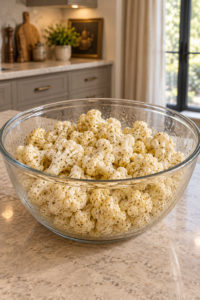
- Spread the florets in one uncrowded layer so every piece touches the pan or parchment without overlapping another piece. Divide the batch between two sheets if one sheet is crowded.
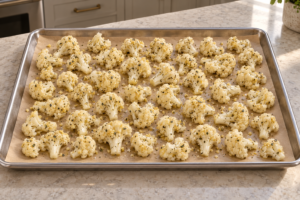
- Roast for 25 to 30 minutes, until the florets are tender and browned in spots.
- Serve warm, with optional lemon wedges alongside and optional chopped fresh parsley or basil over the top.
Notes
Tried this recipe?
Let us know how it was!More Full GAPS Sheet-Pan Meals
The planned One-Pot & Sheet Pan Cookbook will collect practical Full GAPS dinners and sides that keep cleanup manageable. Find current resources and release updates in the WFLI shop.

Leave a comment