

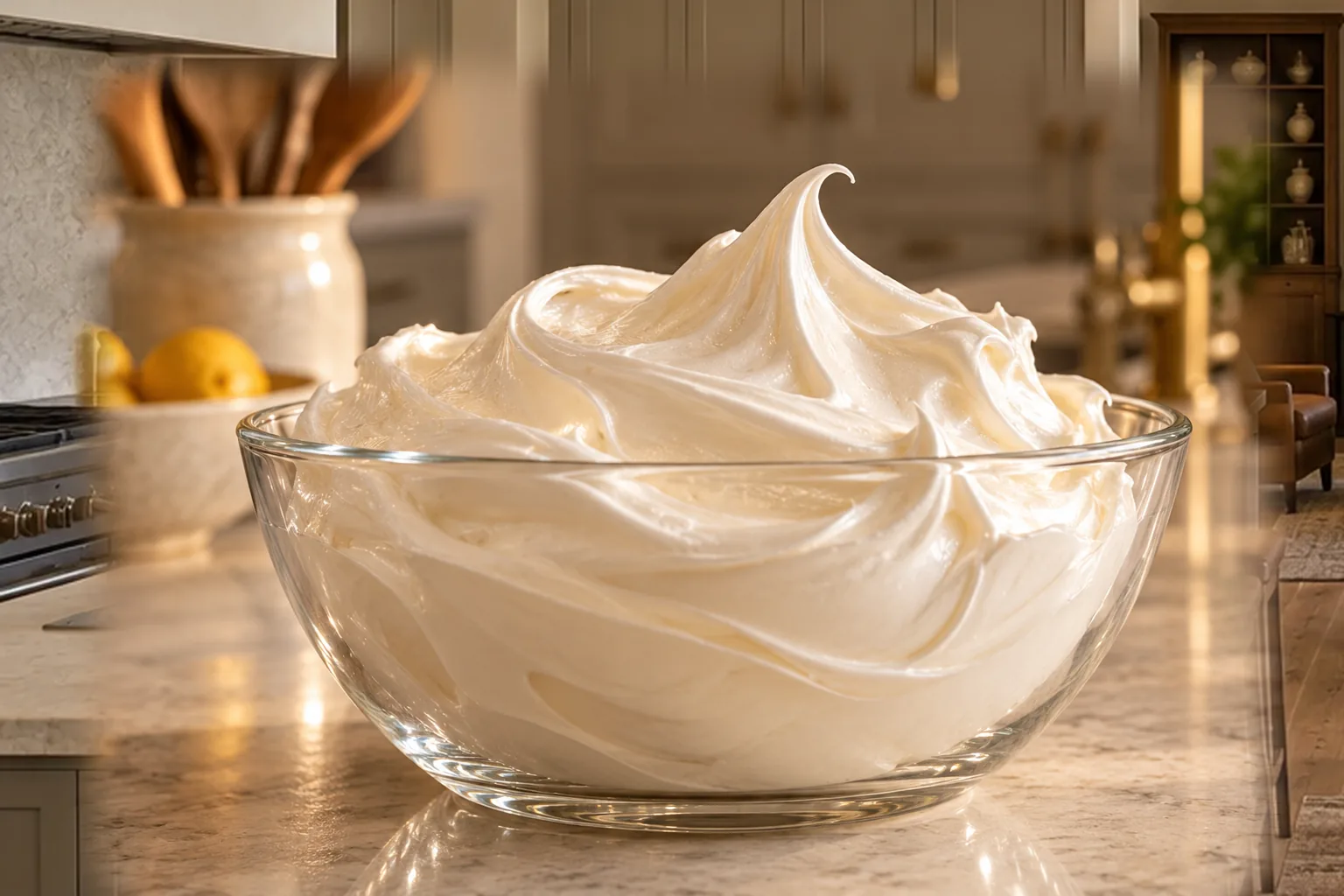
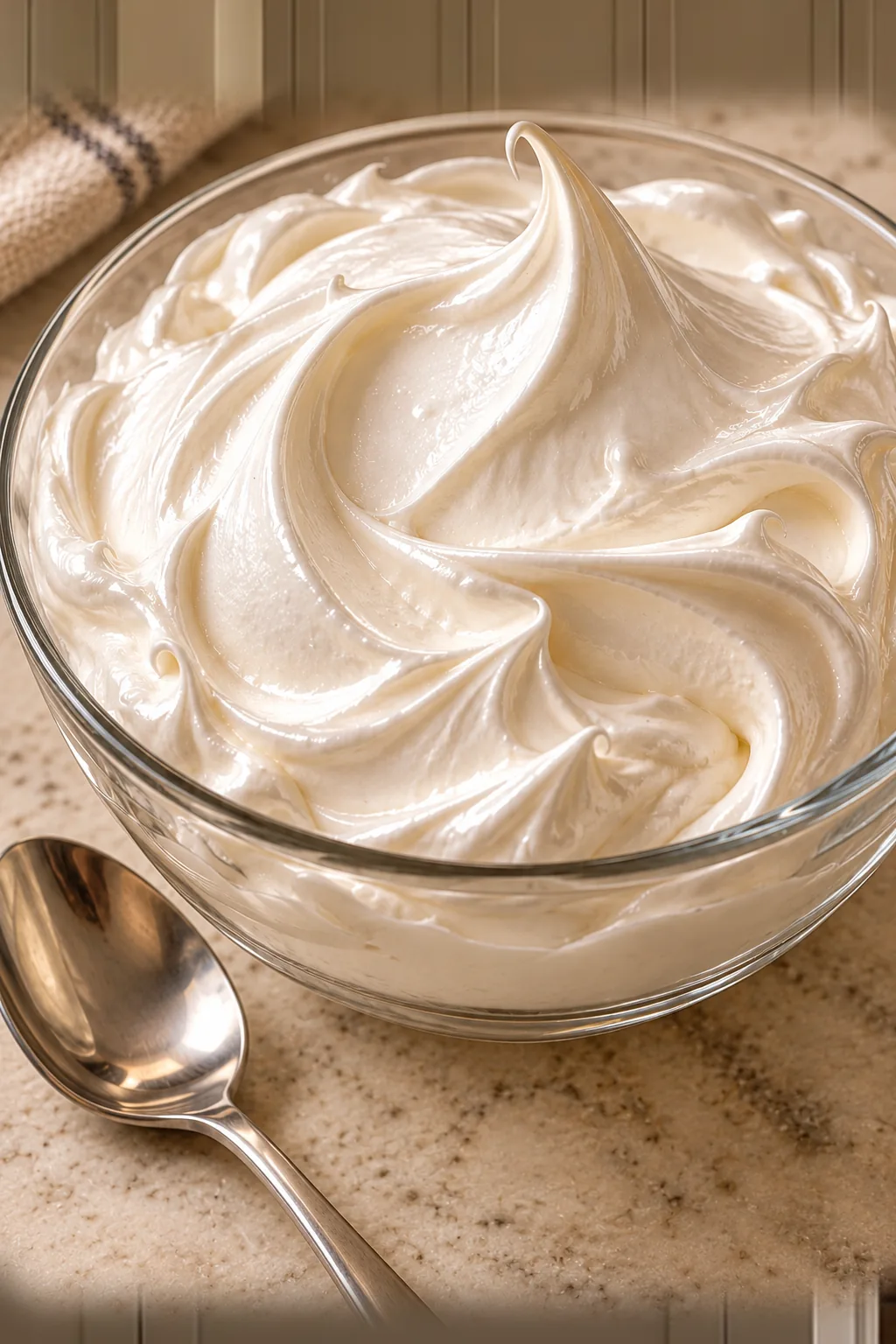
This gelatin-free honey Italian meringue turns two egg whites, raw honey, filtered water, lemon juice, and homemade vanilla into about two cups of glossy Full GAPS topping. The structure comes from a honey-and-water syrup cooked to 235 to 240°F, not from gelatin.
That thermometer range defines this formula. The syrup needs enough concentration to support the whipped whites, while the slow stream and continued beating build the satiny peaks. It is a different recipe from the Honey Gelatin Marshmallow Meringue, with different honey, water, vanilla, and technique.
In a working, homeschooling household with six children, I want the setup complete before sugar work begins. I separate the whites, measure the lemon and vanilla, clip the thermometer to the saucepan, and place a heat-safe trivet beside the mixer. Once the syrup enters its final temperature range, there is no useful pause for searching through a drawer.
Use the physical cues with the thermometer. The whites reach soft peaks before the syrup arrives. The honey syrup stays amber and fluid rather than dark caramel. The bowl cools toward room temperature while the meringue becomes glossy enough to hold a curved peak.
How This Formula Holds Without Gelatin
The recipe cooks one-quarter cup raw honey with one-quarter cup filtered water to 235 to 240°F. That hot concentrated syrup is streamed into two softly whipped egg whites, then beaten until the bowl and meringue cool.
One teaspoon fresh lemon juice supports the egg-white foam without cream of tartar. Two teaspoons homemade vanilla are added only after the meringue has cooled to room temperature.
Do not borrow the boiling-only honey step from the gelatin recipe. Do not add gelatin to this formula. The temperature-controlled syrup and the continued beating are the structure here.
Where Honey Italian Meringue Fits on GAPS
This is an occasional Full GAPS treat after fresh egg whites, raw honey, lemon juice, and homemade vanilla extract are introduced and tolerated.
The formula contains no refined sugar, corn syrup, maple syrup, coconut sugar, cream of tartar, gelatin, or commercial vanilla flavoring. Use filtered water and vanilla with no added sugar.
Honey remains a sweet food. Serve the meringue as a small topping between meals rather than using it to make an otherwise unsuitable dessert fit the protocol.
Prepare the Mixer and Thermometer
Use a large clean dry stainless-steel or glass mixer bowl. Separate two egg whites carefully so no yolk enters the bowl.
Fit a small unbranded stainless-steel saucepan with a clean candy thermometer. The sensor should sit in the syrup without resting against the bottom of the pan, which can give a misleading reading.
Measure one teaspoon lemon juice and two teaspoons homemade vanilla into separate small containers. Place a heat-safe trivet beside the mixer for the hot saucepan.
Whip the Egg Whites to Soft Peaks
Begin beating the egg whites with a stand mixer or electric hand mixer. When peaks begin to form, add the fresh lemon juice.
Continue only to soft peaks. When the whisk is lifted, the peak should rise and then bend gently at the tip. The whites should look even and foamy, with no clear liquid at the bottom.
If the whites are ready before the syrup reaches temperature, turn the mixer to low or stop it briefly. Do not keep driving them toward dry stiff peaks while the saucepan catches up.
Cook the Honey Syrup to 235 to 240°F
Combine one-quarter cup raw honey and one-quarter cup filtered water in the small stainless-steel saucepan. Bring the mixture to a boil and watch the thermometer closely as the temperature rises.
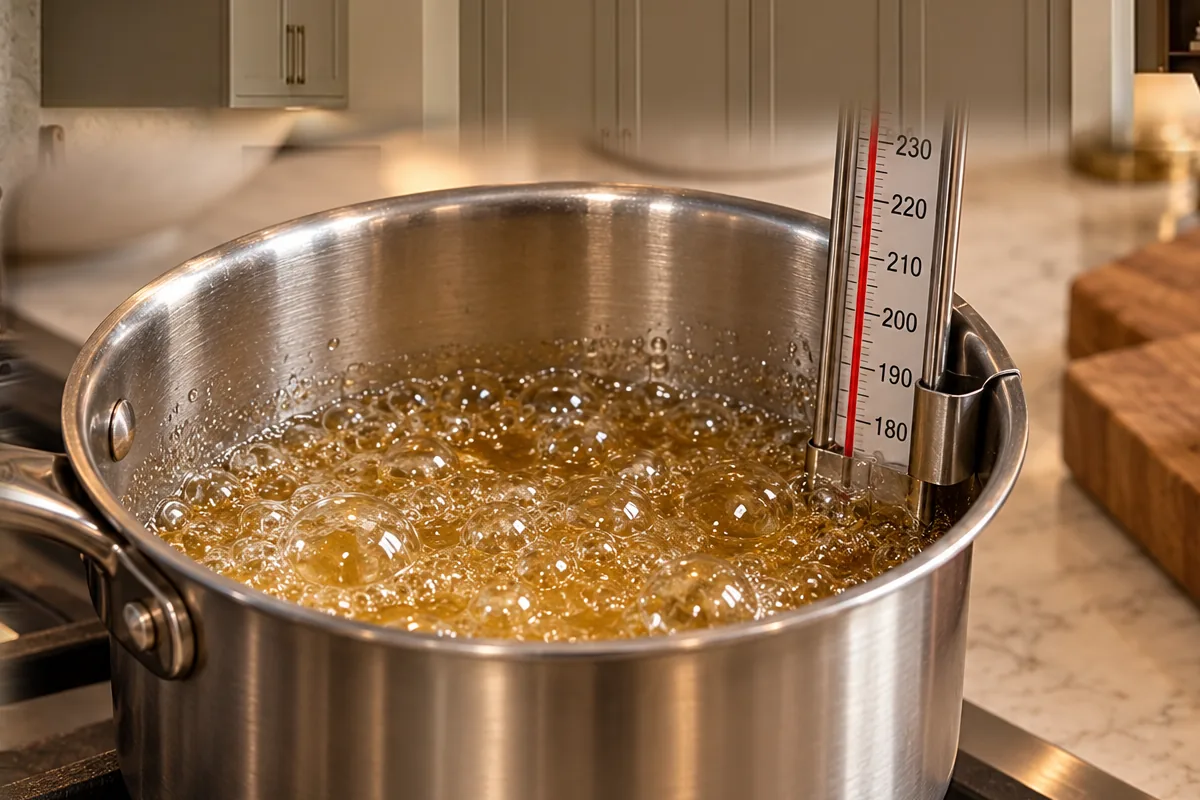
The syrup is ready between 235 and 240°F. It should be actively bubbling, amber, and fluid. Remove the pan from the heat within that range rather than cooking until the honey darkens into caramel.
Move directly to the mixer. The photographed syrup stage shows a clean thermometer near 238°F with the honey-water mixture bubbling evenly in stainless steel.
Stream the Syrup Into the Whites
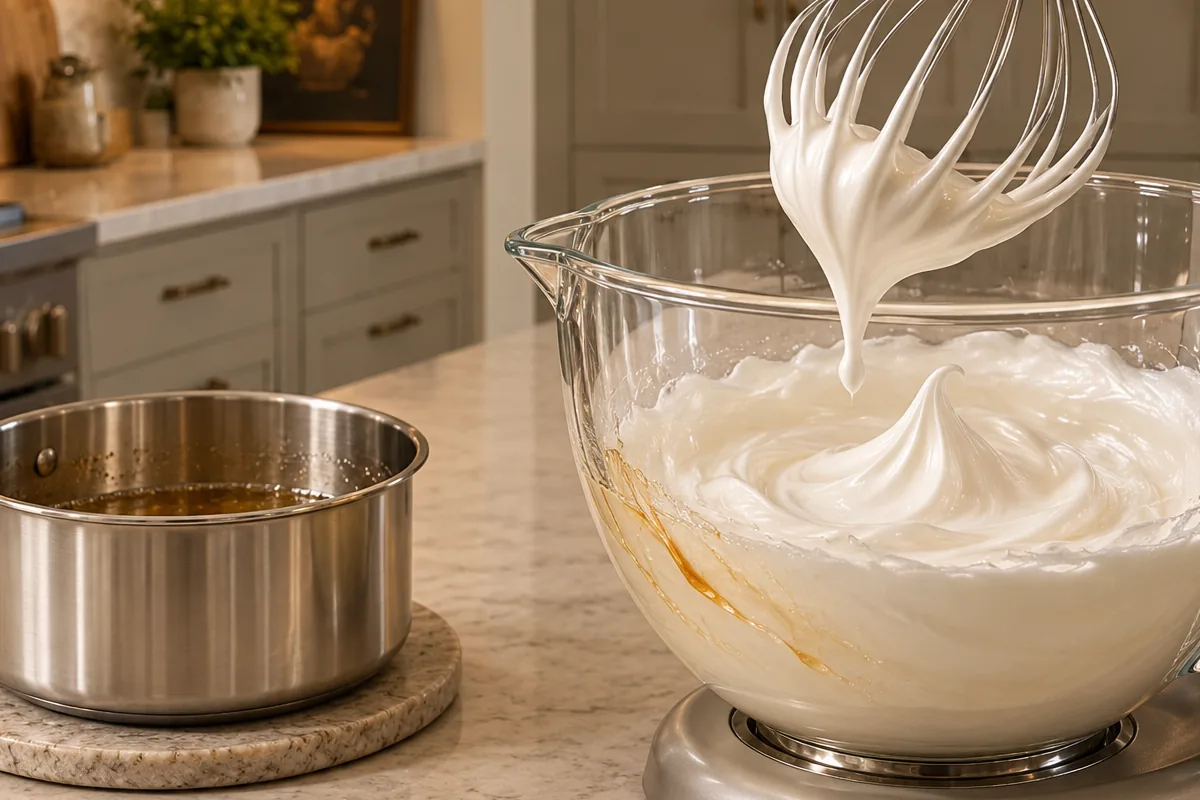
Turn the mixer to low. Pour the hot syrup into the whites in a very slow narrow stream aimed between the whisk and the side of the bowl.
Do not pour directly onto the moving whisk, which can throw syrup against the bowl. Do not dump the syrup in one pool, which can weigh down and partially cook one area of the foam.
After the saucepan is empty, place it on the trivet. Turn the mixer to medium-high and keep beating. The mixture should become more opaque, glossy, and substantial as the syrup disperses.
Beat Until the Bowl Reaches Room Temperature
Continue beating at medium-high until the meringue and the outside of the bowl cool to room temperature. The mixture should stand in glossy curved peaks rather than sliding back into the bowl.
Cooling is part of the method. Adding vanilla to a hot mixture can drive off its aroma, and stopping while the bowl is still warm leaves the meringue less settled.
Once cool, add two teaspoons homemade vanilla and beat only until it is evenly mixed. The finished batch makes about two cups.
Serve the Meringue Promptly
Spoon or spread the meringue after the vanilla is incorporated. This gelatin-free version is at its best while freshly made.
Honey meringue can begin to separate as it sits. If that happens, whip it again once for immediate serving. Do not keep repeating the cycle or combine separated liquid with a new batch.
Cover and refrigerate any portion that must wait briefly, then bring it back together before serving. Use it promptly rather than planning it as a multi-day storage dessert.
Recommended Equipment
Use a large clean stainless-steel or glass mixer bowl; stand mixer with whisk attachment or electric hand mixer; small stainless-steel saucepan; clean candy thermometer; dry and liquid measuring cups and spoons; small containers for lemon juice and vanilla; silicone or wooden scraper; and heat-safe trivet.
A stand mixer makes the syrup stream easiest because both hands remain available. With a hand mixer, stabilize the bowl and arrange the cord before lifting the hot saucepan.
Frequently Asked Questions
Does This Meringue Contain Gelatin?
No. Its structure comes from honey-water syrup cooked to 235 to 240°F and beaten into soft-peaked egg whites.
Can I Stop When the Honey First Boils?
No. That boiling-only method belongs to the linked gelatin meringue. This formula requires the thermometer range.
Why Add Lemon Juice?
The teaspoon of fresh lemon juice supports the whipped whites without using cream of tartar.
When Do I Add Vanilla?
Add two teaspoons after the meringue and bowl have cooled to room temperature, then beat only until combined.
Can I Use Maple Syrup?
No. Keep the measured one-quarter cup raw honey and one-quarter cup filtered water. Another sweetener changes both the formula and its GAPS scope.
Why Did the Meringue Separate?
Honey meringue is best served promptly. Whip a separated batch again once and serve it immediately.
Gelatin-Free Honey Italian Meringue Recipe
Gelatin-Free Honey Italian Meringue
Ingredients
Equipment
Method
- Beat the egg whites in a clean dry stainless-steel or glass mixer bowl. When peaks begin to form, add the fresh lemon juice and continue to soft peaks. If ready before the syrup, turn the mixer to low or stop briefly.
- Combine the raw honey and filtered water in a small stainless-steel saucepan. Bring to a boil and cook until a candy thermometer reads 235 to 240°F; keep the amber syrup fluid and remove it before it darkens.
- Turn the mixer to low. Pour the hot syrup into the whites in a slow narrow stream aimed between the whisk and the side of the bowl, not directly onto the moving whisk.
- Set the saucepan on a heat-safe trivet. Turn the mixer to medium-high and beat until the meringue becomes glossy and the bowl and mixture cool to room temperature.

- Add the homemade vanilla only after the meringue has cooled. Beat just until evenly mixed.
- Serve promptly. If the honey meringue separates while waiting, whip it again once and serve immediately.
Notes
- Full GAPS: Serve as an occasional treat after every ingredient is introduced and tolerated.
- No gelatin: The 235-to-240°F honey syrup and continued beating provide the structure.
- No cream of tartar: Use the measured fresh lemon juice.
- Serve promptly: Honey meringue may separate as it sits; rewhip once for immediate use.
Tried this recipe?
Let us know how it was!Choose the Right Meringue Method
The planned Sweet Snack Recipe Card Deck will keep distinct formulas and their kitchen cues easy to compare. Find current resources and release updates in the WFLI shop.

Leave a comment