

Coconut peanut butter balls are a five-piece Full GAPS treat made from five simple ingredients: homemade coconut butter, properly prepared fermented peanut butter, unsweetened shredded coconut, raw honey, and sea salt. There is no baking, melting, or special equipment. Mix, portion, roll, and serve them soft, or chill them until firmer.
The small yield is part of what makes this recipe useful. A full batch is only five tablespoon-size balls, so it can fit into a regular kitchen rhythm without leaving a large container of candy-like treats in the refrigerator. The measurements are compact enough that the texture can be judged in the bowl before any portion is shaped.
With six children in the house, five pieces will not cover a family dessert night by themselves. I treat a batch this size as a formula to make intentionally: a small shared plate, a parent treat, or a quick texture check before doubling. If I need ten, I double every measured ingredient and still portion with the same tablespoon so the size stays consistent.
Why This Five-Ingredient Mixture Holds Together
Homemade coconut butter supplies the firm coconut solids. Fermented peanut butter provides the creamy body and roasted-looking tan color without using commercial sweeteners or seed oils. Shredded coconut absorbs and reinforces the mixture, while one teaspoon of raw honey adds a small amount of sweetness and tack.
The sea salt is only a finely ground pinch, but it keeps the coconut and peanut flavors from tasting flat. Fine salt disappears into the paste more evenly than coarse crystals and prevents one bite from receiving the entire pinch.
These balls do not need gelatin, flour, eggs, or a freezer to hold their shape. The mixture should be thick enough to mound on a spoon and stay where it is pushed. Chilling firms the coconut butter and peanut butter further, but refrigeration is a serving choice rather than a missing structural step.
Where Coconut Peanut Butter Balls Fit On Full GAPS
This is a Full GAPS recipe after properly prepared peanuts, fermented peanut butter, coconut, homemade coconut butter, raw honey, and sea salt are established. It is not an Introduction Diet recipe.
Use the linked homemade coconut butter for Full GAPS in place of a branded coconut cream concentrate. The component recipe uses additive-free dried coconut and gives the thick, spoonable coconut base this formula needs.
Use properly prepared fermented peanut butter, not ordinary jarred peanut butter. The linked method handles the peanut preparation before the finished butter is measured into this recipe. Choose unsweetened additive-free shredded coconut with no starch, preservative, flavoring, or added sugar.
Measure The Small Batch Carefully
Small recipes magnify measuring differences. Level the two tablespoons of coconut butter and two tablespoons of peanut butter instead of leaving a large mound above the spoon. Measure four tablespoons shredded coconut for the mixture, then keep a little additional coconut in a shallow dish only if you want the finished coating.
Measure one teaspoon raw honey and add one small pinch of finely ground sea salt. The honey is not meant to make the mixture loose or syrupy. It should disappear into the nut and coconut paste while helping the shreds cling together.
If the coconut butter is very firm from a cool room, stir it until evenly creamy before measuring. Do not heat the whole candy mixture. Warm coconut butter can make the paste look softer than it will be at room temperature and can make the five portions harder to compare.
Choose finely shredded coconut rather than long, wide flakes. Fine shreds distribute through two tablespoons of peanut butter and two tablespoons of coconut butter without leaving dry pockets. Long flakes can catch on the measuring spoon, make the portions look larger than they are, and create weak gaps when the balls are rolled. If your coconut is very coarse, pulse only the plain dry shreds briefly before measuring; do not process the completed candy mixture into a different paste.
Mix Until The Paste Holds A Groove
Stir the coconut butter, fermented peanut butter, four tablespoons shredded coconut, raw honey, and sea salt together. Scrape the sides and bottom of the bowl until no separate streaks of white coconut butter or dark peanut butter remain.
The finished mixture should be tan with visible white shreds. It should mound around the spoon and hold a groove where the spoon passes through. It may look softly glossy from the nut and coconut fats, but it should not pour or leave a pool of oil in the bowl.
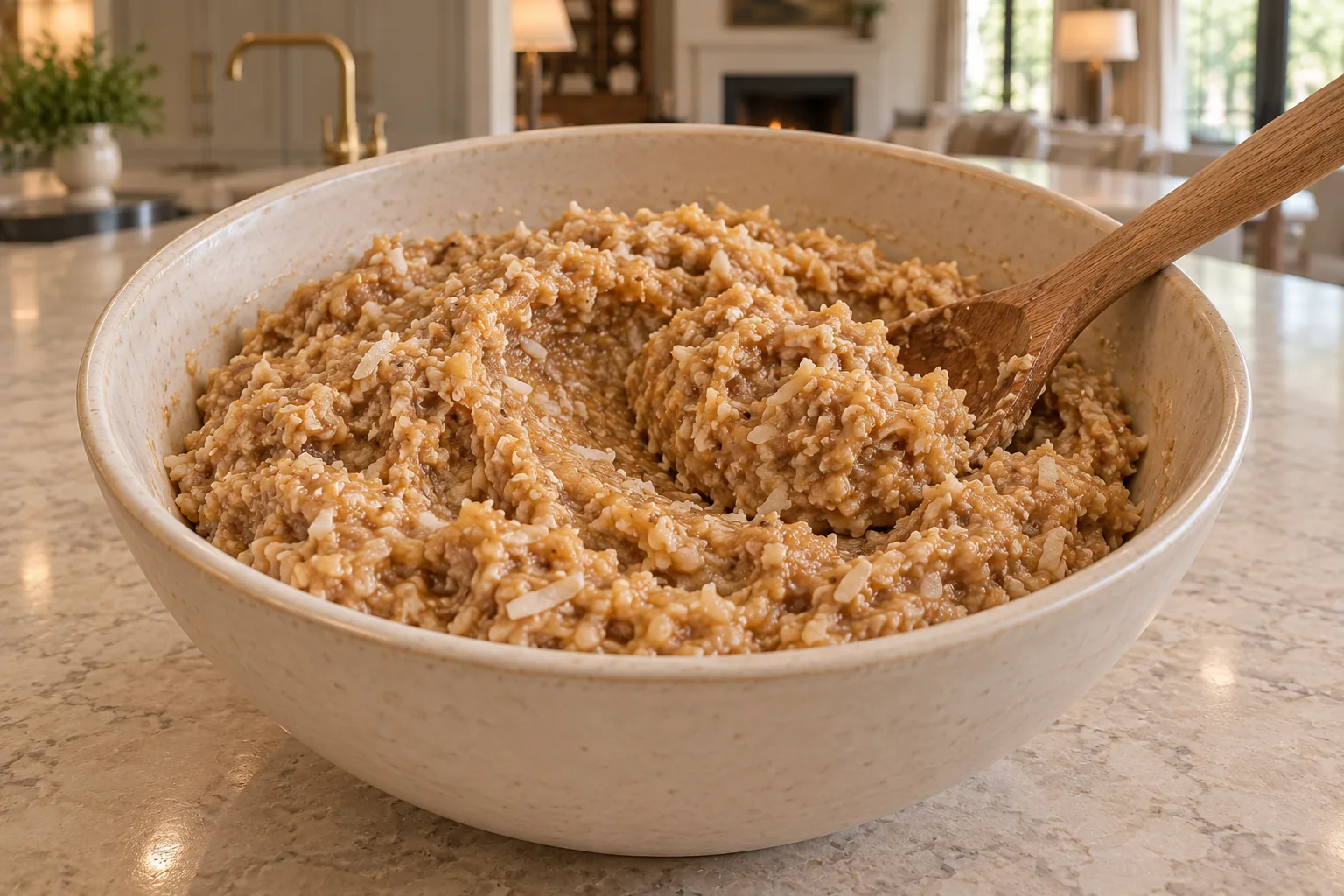
Press a small amount between two fingers or against the side of the bowl with the spoon. It should compact instead of crumbling apart. Keep mixing before changing anything; the coconut butter and honey often need another minute to coat the shreds evenly.
Portion Exactly Five Balls
Use a tablespoon measure to divide the paste into five portions. Scrape each portion level enough that one ball is not dramatically larger than the others. Compress each portion, then roll it between clean palms into a slightly irregular sphere.
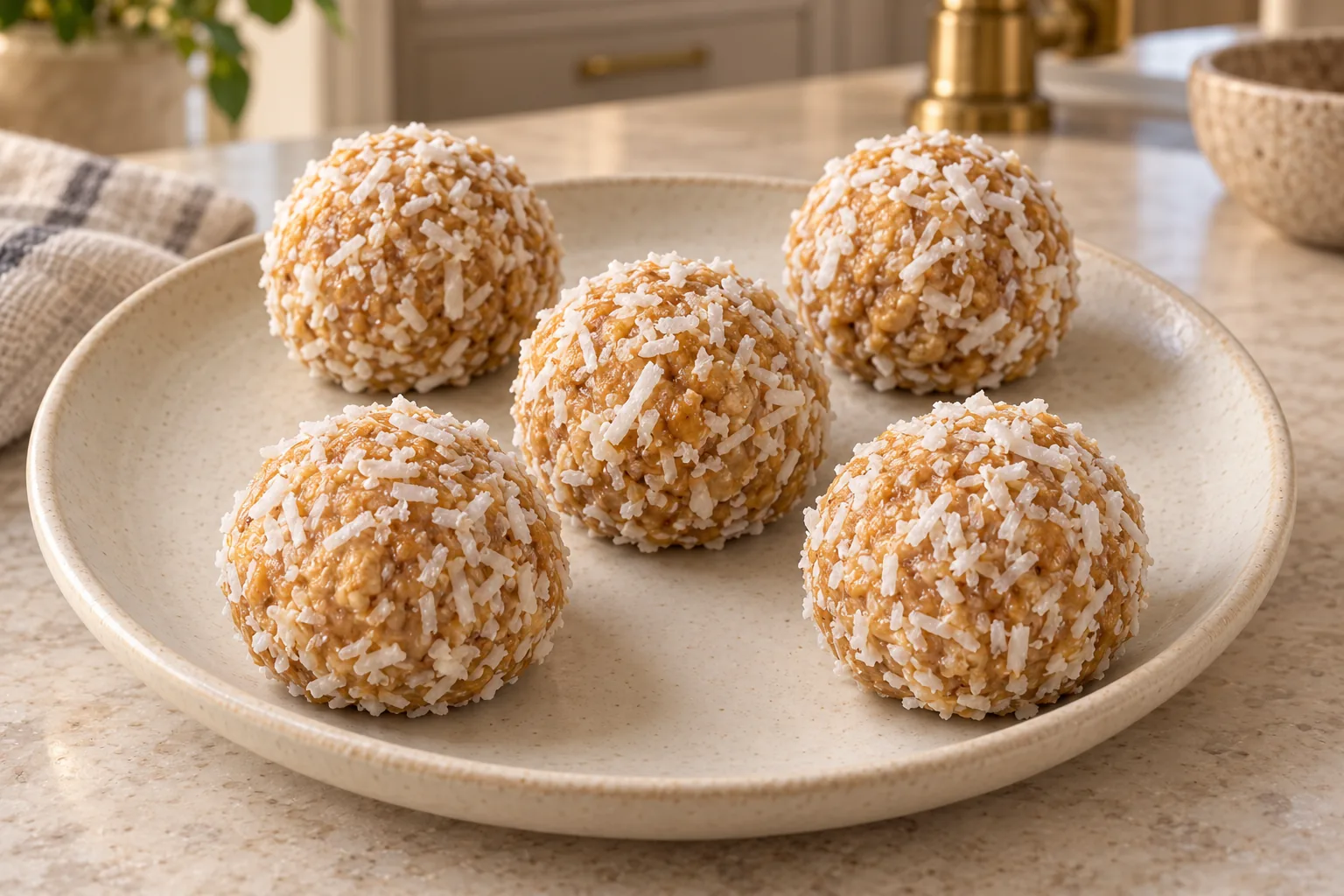
If using the optional coconut finish, place a little shredded coconut in a shallow dish and roll each shaped ball until the shreds cling to the outside. Press lightly where needed. The coating should remain thin enough that the peanut-butter center is still visible between the white shreds.
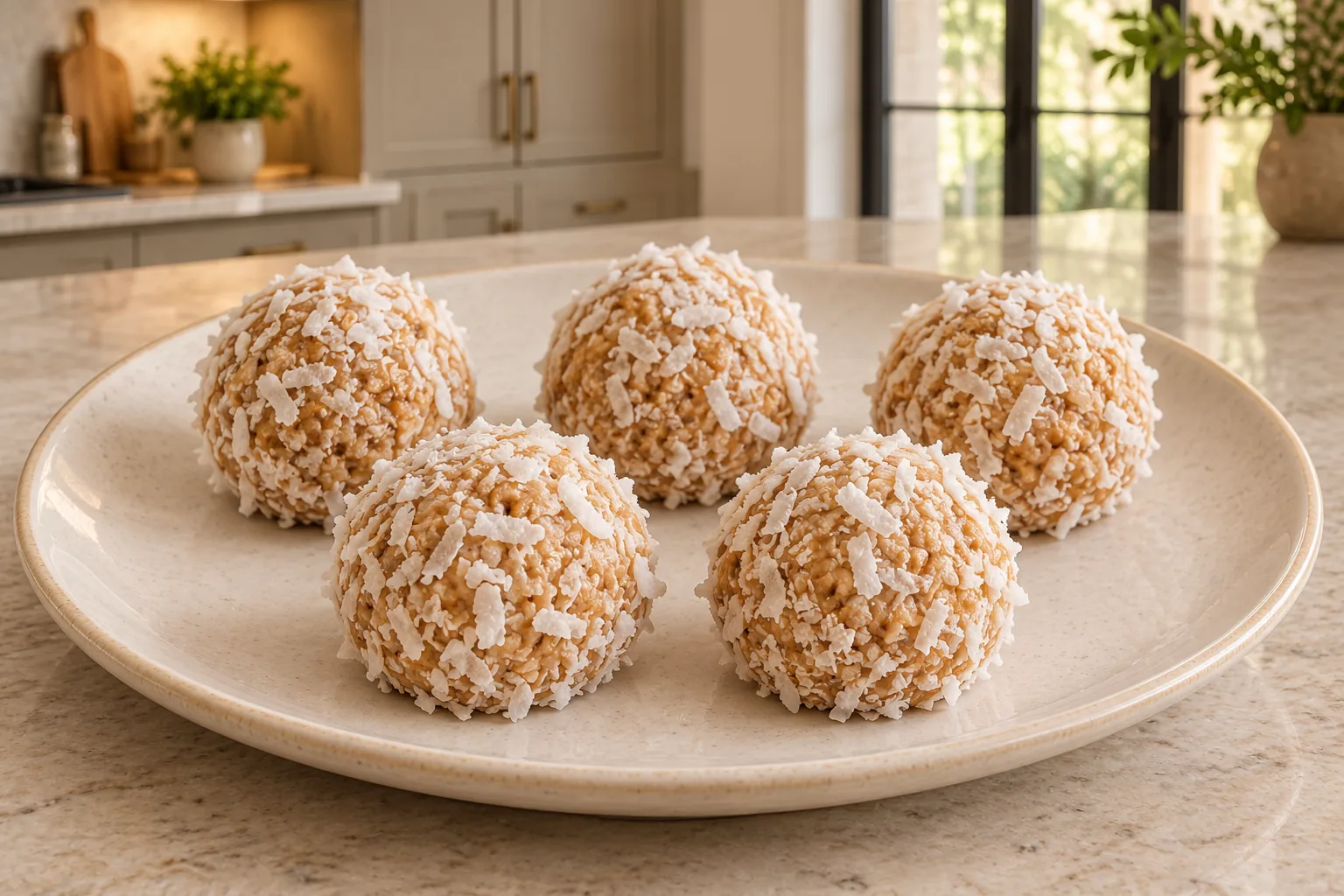
The freshly shaped balls should feel soft but stable on the plate. If a ball slumps immediately, place the plate in the refrigerator until the coconut butter firms. If it holds its round shape, it can be served at once.
Serve Them Soft Or Chilled
At room temperature, the balls are soft, creamy, and easy to bite. The center tastes first of peanut butter, followed by coconut and a light honey sweetness. The shredded coconut adds a gentle chew without turning the mixture dry.
Refrigeration gives the outside a firmer feel and makes the center denser because the coconut butter sets. There is no required chill time in the source formula. Check the physical texture and serve when it is as firm as you want it.
Arrange all five on a small plate rather than adding unrelated garnishes, sauces, or chocolate. This recipe is the plain coconut-peanut formula. A chocolate-coated truffle belongs in its own recipe and card.
Storage And Make-Ahead Notes
Store the balls in a covered glass container in the refrigerator. Separate layers with a small piece of unbleached parchment if stacking so the coconut coating stays attached. Let a very firm refrigerated ball sit briefly at room temperature before serving if you prefer the softer center.
For longer storage, freeze the shaped balls in one layer, then transfer them to a covered freezer container. Thaw in the refrigerator. Freezing is a make-ahead option; it is not needed to set the fresh batch.
Double The Batch Without Changing The Ball Size
For ten balls, double the measured ingredients to four tablespoons coconut butter, four tablespoons fermented peanut butter, eight tablespoons shredded coconut, two teaspoons raw honey, and two finely ground pinches of sea salt. Mix in a bowl with enough room to scrape the bottom clean.
Portion with the same tablespoon measure used for the five-ball batch. A doubled recipe should make twice as many balls, not five oversized ones. Keeping the original portion size preserves the expected soft center, coconut coating, serving size, and chilling behavior.
If the larger mixture softens while you work, divide all ten portions first and chill the plate briefly before the final rolling. Do not add an invented amount of extra coconut just to force a warm mixture to set.
For a different small coconut treat with its own measured formula, see Coconut Almond Candy Clusters for Full GAPS. For a baked option, the Soft Cinnamon Almond Butter Cookies use a separate egg-and-almond-flour formula.
Keep Full GAPS Ingredient Swaps Easy To Find
The upcoming GAPS Food Swap Guide is the most useful WFLI companion for this recipe because it keeps prepared nut butters, coconut ingredients, legal sweeteners, and common packaged-food replacements in one place. It will be available through the WFLI shop.
Recommended Equipment
Use a medium neutral ceramic or glass mixing bowl, sturdy spoon, measuring tablespoons and teaspoon, one shallow plate for optional coconut coating, and a serving plate or covered glass storage container. No blender, food processor, stovetop pan, or special candy mold is required.
A standard tablespoon measure controls the five-piece yield more reliably than guessing portions by eye. Use a small silicone or metal scraper only if it can rest securely on the counter; keep plastic food-contact tools out of the method.
Frequently Asked Questions
Is Coconut Cream Concentrate The Same As Coconut Milk?
No. This formula needs a thick coconut-butter-style concentrate made from coconut solids. Homemade coconut milk contains much more water and would not preserve the measured texture.
Can I Use Regular Store-Bought Peanut Butter?
Use the linked properly prepared fermented peanut butter. Ordinary jarred peanut butter does not establish the required peanut preparation and may contain added sugar, seed oil, or stabilizers.
Do I Have To Roll The Balls In Coconut?
No. The source makes the exterior coconut optional. The four measured tablespoons still stay in the mixture; the extra coating is only a finish.
Why Is My Mixture Too Soft?
First keep mixing until the coconut butter, peanut butter, honey, and shreds are fully combined. If the room or ingredients are warm, chill the shaped portions until the coconut butter firms.
Can I Use Almond Butter Instead?
This post preserves the peanut-butter formula named by the source. An almond-butter version changes the central flavor and should be handled as its own tested formula rather than hidden inside this card.
Can I Add Chocolate?
Not within this recipe. Chocolate creates a materially different candy and needs its own exact ingredients, method, stage placement, photos, and card.
Why Are My Balls Crumbly?
Scrape and mix longer so the coconut butter, peanut butter, and honey coat every shred. Coarse coconut can also interrupt the paste, so use fine unsweetened shreds and keep the measured ratio unchanged.
Coconut Peanut Butter Balls Recipe
Coconut Peanut Butter Balls for Full GAPS
Ingredients
Equipment
Method
- Measure the homemade coconut butter, fermented peanut butter, 4 tablespoons shredded coconut, raw honey, and finely ground sea salt into a mixing bowl.
- Stir and scrape the bowl until no separate coconut-butter or peanut-butter streaks remain. The tan paste should show white coconut shreds, mound on the spoon, and hold a groove instead of pouring.
- Divide the mixture with a tablespoon measure into exactly 5 portions. Compress each portion and roll into a slightly irregular ball.
- If desired, roll each ball lightly in additional shredded coconut and press the shreds where needed. Place all 5 on a serving plate.
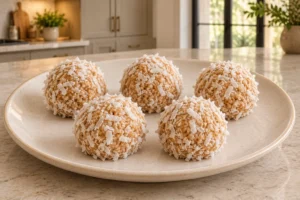
- Serve immediately for a soft texture, or refrigerate until the coconut butter firms to your preferred texture.
Notes
Tried this recipe?
Let us know how it was!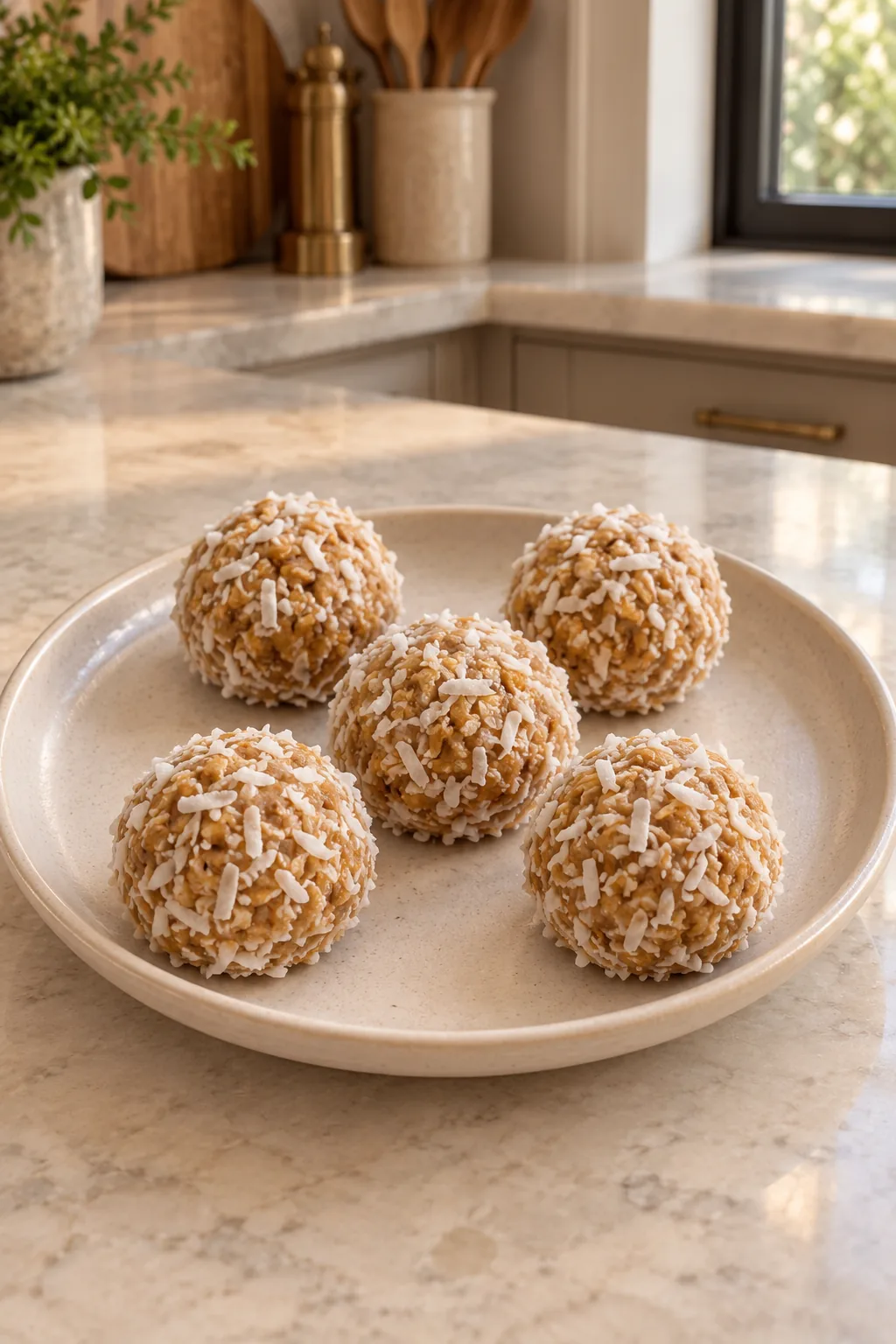

Leave a comment