

The Full GAPS dinner instruction is one line: choose one of the dishes from the breakfast or lunch options.[1] The Full GAPS lunch pattern and five breakfast formats therefore supply the dinner rotation too.
In our weekday routine, dinner has to be ready before I leave for second shift unless something is already made. Because the book allows dinner to repeat a breakfast or lunch dish, a reserved portion can be a planned dinner instead of one more separate cooking job.
Why Repetition Works for Dinner
Meat stock, soups, stews, and natural fats aren’t optional extras on Full GAPS, they’re staples, the foods the diet is built around.[2] Because the book allows dinner to repeat a breakfast or lunch dish, a family can plan reliable dishes more than once instead of requiring a new recipe every night.
Dinner can also share a grocery list and cooking session with another meal. Meat, fish, vegetables, and fermented foods that were prepared in enough quantity can cover two planned meals instead of one.
What Dinner Can Actually Be
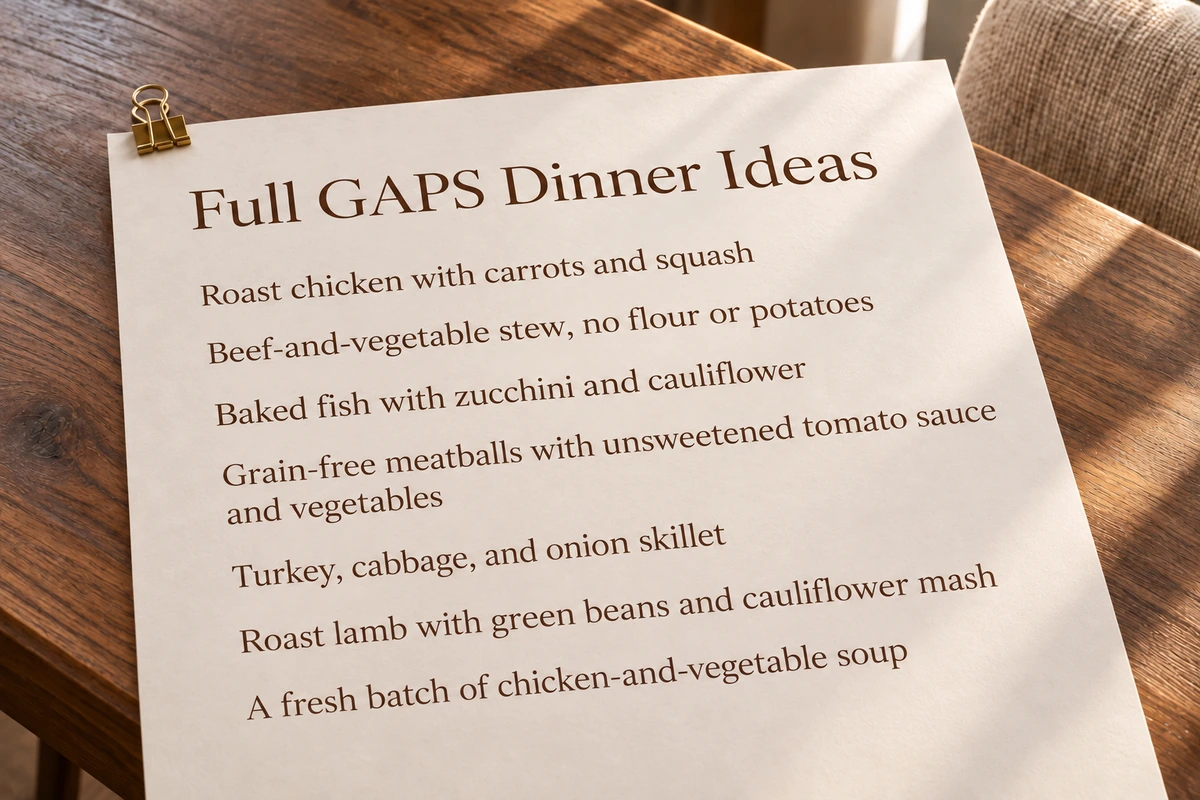
Pulled from the same formats already used for lunch and breakfast, a Full GAPS dinner can be homemade soup or stew with sour cream and meat or fish; meat, fish, or shellfish with raw or cooked vegetables, olive oil, and lemon, served with warm meat stock; homemade soup with sour cream and gelatinous meat; or eggs and vegetables in whatever combination worked that morning.[1][3] Baked goods remain snacks between meals and do not replace the main meal, in keeping with the diet’s 85 percent daily emphasis on meats, fish, stock, eggs, fermented dairy, and vegetables.[2]
Make those choices with foods already introduced. For any dairy, use the book’s Dairy Introduction Structure and its allergy exceptions.[6]
A Low-Energy Dinner Formula
Choose a dish from the breakfast or lunch options using food you have already prepared. Soup with gelatinous meat and introduced sour cream is one example; the meat-and-vegetable lunch option is another. Include the accompaniments named for the option you choose.
If Diarrhea Shows Up at Dinner
The same fallback applies here as at any other meal: meat stock, soups, meat and vegetable stews, fish, eggs, fermented dairy, and well-cooked vegetables until the diarrhea completely clears. After stools have been normal for a few days, bring raw vegetables back slowly, one at a time and in small amounts, followed gradually by nuts, oily seeds, and fruit.[4] A soup-and-sour-cream dinner can fit that fallback when it uses permitted well-cooked vegetables and fermented dairy that is already tolerated.
The book deals separately with profuse watery diarrhea and temporarily excludes even well-cooked vegetables in that situation. My diarrhea guide explains that advice alongside the other food choices and care signs.[5]
If You’re Hungry Before Bed
For a snack before bed, the book lists hot meat stock, homemade yogurt, kefir, or sour cream with a little honey.[1]
Frequently Asked Questions
Is It Really Fine for Dinner to Be the Exact Same Thing as Lunch?
Yes, when the lunch dish is one you want to repeat. GAPS’s dinner guidance allows one of the dishes from the lunch or breakfast choices. Reserving an extra portion is one practical way to use that option without adding another cooking job.[1]
Do I Need to Cook a Separate Dinner from Scratch Every Night?
No. You can reserve a portion of a lunch or breakfast dish for dinner. Check the recipe’s yield and how many people will eat at each meal before relying on one batch for both. Increase the batch only when your cookware and storage can hold it, or plan a different dinner.[1]
Can Baked Goods Be the Main Part of Dinner?
No. About 85 percent of what you eat daily should come from meats, fish, stock, eggs, fermented dairy, and vegetables. Baked goods stay a snack between meals, not the meal itself.[2]
What Does the Book List Right Before Bed?
Hot meat stock, homemade yogurt, kefir, or sour cream with a little honey.[1]
Where to Start
Choose one repeatable low-effort dinner built from prepared GAPS staples. Use the breakfast formats, lunch pattern, and two-week meal plan to choose a dinner you can reserve and repeat.
If you would like more dinners to choose from, my Dinner Cookbook is listed in the WFLI shop.
References
- Campbell-McBride, N. Gut and Physiology Syndrome (2020), Chapter 14, “A Typical Menu on the Full GAPS Diet,” section “Dinner”: dinner repeats a breakfast or lunch dish, with the listed before-bed options.
- Campbell-McBride, N. Gut and Physiology Syndrome (2020), Chapter 14, “The Full GAPS Diet,” page 177: staples, the 85 percent daily emphasis, and baking or fruit as snacks between meals.
- Campbell-McBride, N. Gut and Physiology Syndrome (2020), Chapter 14, “A Typical Menu on the Full GAPS Diet,” sections “Breakfast Choices” and “Lunch.”
- Campbell-McBride, N. Gut and Physiology Syndrome (2020), Chapter 14, “The Full GAPS Diet,” page 179: diarrhea setback route and gradual food return.
- Campbell-McBride, N. Gut and Physiology Syndrome (2020), Chapter 13, “GAPS Introduction Diet,” First Stage, probiotic-food temperature and the profuse watery diarrhea exception; Chapter 26, “Bowel Management,” “Diarrhea”.
- Campbell-McBride, N. Gut and Physiology Syndrome (2020), Chapter 14, “Dairy Introduction Structure,” its applicable starting groups, sequence and dairy-allergy exceptions.

Leave a comment