

A GAPS diet meal plan should make the next meal easier to answer, not harder. Its job is practical: answer what is for breakfast, which dinner becomes tomorrow’s lunch, and what needs to be ready before a busy day begins.
This is a two-week GAPS meal plan for Full GAPS, using foods you’ve already introduced. You’ll get fourteen days of meals, a shopping outline, and a way to share ingredients without expecting food from the beginning of the plan to last until the end.
How This GAPS Diet Meal Plan Works
This menu uses Full GAPS food choices and ordinary meal ideas, not a rigid script. If you want the fuller picture of how GAPS is structured before you commit to a stage, the basics guide walks through the whole protocol. Full GAPS itself is outlined on the GAPS Diet site as a wider phase with its own food choices and introduction requirements. Some people start on Full GAPS rather than completing Intro first.
Use complete recipes with ingredients that fit your stage, and adjust the portions for the people actually eating. Where dairy shows up, use a preparation you’ve already introduced. The table includes an alternative breakfast for the days that call for it. Treat every line in the table as a starting point for a complete recipe, with quantities and ingredients adjusted to your household.
If you’re on Intro right now, this specific menu isn’t the one to follow yet. Full GAPS opens up more foods than Intro allows, so the same two-week plan does not work for both phases. Use the six-stage Intro overview to find your current stage, and come back to this menu once you’ve moved to Full.
A two-week GAPS meal plan is a kitchen rotation, not a fourteen-day timetable for finishing GAPS. Use foods already introduced and tolerated, and keep the structure flexible enough to fit your household.
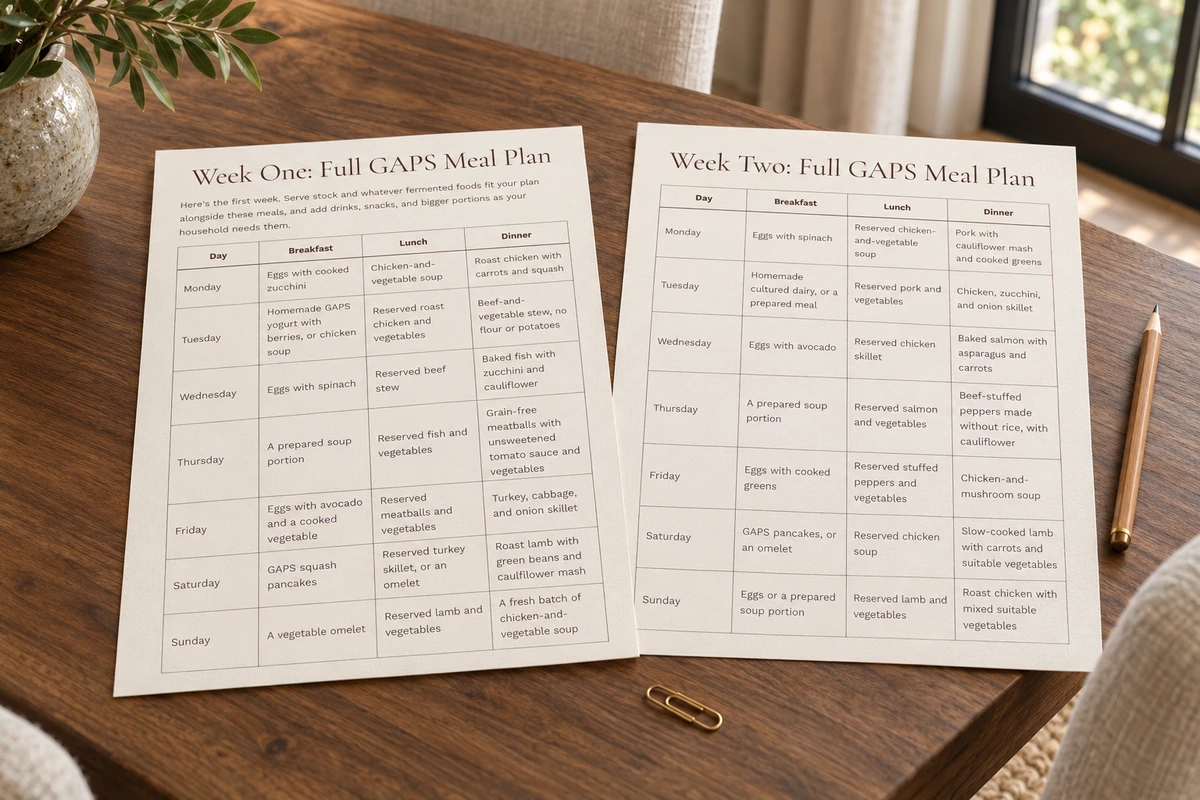
Week One: Full GAPS Meal Plan
Here’s the first week. Serve stock and whatever fermented foods fit your plan alongside these meals, and add drinks, snacks, and bigger portions as your household needs them.
On a phone, swipe across a meal table to see every column.
| Day | Breakfast | Lunch | Dinner |
|---|---|---|---|
| Monday | Eggs with cooked zucchini | Chicken-and-vegetable soup | Roast chicken with carrots and squash |
| Tuesday | Homemade GAPS yogurt with berries, or chicken soup | Reserved roast chicken and vegetables | Beef-and-vegetable stew, no flour or potatoes |
| Wednesday | Eggs with spinach | Reserved beef stew | Baked fish with zucchini and cauliflower |
| Thursday | A prepared soup portion | Reserved fish and vegetables | Grain-free meatballs with unsweetened tomato sauce and vegetables |
| Friday | Eggs with avocado and a cooked vegetable | Reserved meatballs and vegetables | Turkey, cabbage, and onion skillet |
| Saturday | GAPS squash pancakes | Reserved turkey skillet, or an omelet | Roast lamb with green beans and cauliflower mash |
| Sunday | A vegetable omelet | Reserved lamb and vegetables | A fresh batch of chicken-and-vegetable soup |
This sample uses Full GAPS foods and preparations that have already been introduced and tolerated; it is not an Intro schedule.[1][2]
Monday: Chicken and Vegetables
Get breakfast and the lunch soup ready before the day starts. The roast dinner does double duty: it gives you a planned lunch for Tuesday and a second use for the vegetables already on your shopping list.
Carrots and squash can sit right next to the chicken without needing several separate sides. If Tuesday’s lunch depends on the roast, set those portions aside as soon as you cook, instead of hoping there’s enough left after everyone eats.
The chicken and the soup don’t have to come from the same cooking method. A meat stock recipe and a roast are two different preparations. Track how much food each one actually provides, and don’t count the same meat twice when you’re deciding how many meals you’ve covered for the week.
Tuesday: A Stew for Two Meals
Lunch is the roast portion you set aside on Monday. Dinner is a beef stew made with Full GAPS ingredients, with another portion held back for Wednesday.
Pick a stew recipe built for the cut and vegetables you actually want to buy. A tougher stewing cut needs a different cooking method than a quick-cooking steak. Conventional stew recipes can contain flour or potatoes, so use a recipe written for the ingredients on this plan instead.
A workable stew usually comes down to beef, stock, onions, carrots, and whatever other vegetables you already have on hand. That doesn’t mean every stew has to taste the same. Herbs and your choice of vegetables change the meal without making the shopping list any harder to manage.
Wednesday: Fish and a Fresh Side
The reserved stew covers lunch, which leaves dinner as the main fresh-cooking job of the day. Plain fish with zucchini and cauliflower gives the week a different main ingredient, and it reuses vegetables that already show up elsewhere in the plan.
Buy fish close to the day you plan to cook it, or use fish you’ve frozen and thawed safely. A fresh-food plan still has to account for how long anything’s actually been sitting in your refrigerator.
Keep the preparation simple. A store-bought coating, marinade, or bottled sauce can quietly add ingredients that don’t belong on GAPS. Lemon, herbs, and the fat you’re already using in your recipe can flavor the dish, but still need the same ingredient and suitability checks.
Thursday: Meatballs and Tomato Sauce
Lunch uses Wednesday’s fish and vegetables, if you reserved and stored them safely. Dinner is a grain-free meatball meal with vegetables and a tomato sauce made without sweeteners or thickeners that don’t fit GAPS.
Read the meatball recipe before you shop for it. Eggs, ground nuts, vegetables, and other binders aren’t interchangeable, and a recipe might call for something that doesn’t work for everyone eating it. Swapping one binder for another isn’t a straight one-for-one trade, so check the recipe against your own food choices before you commit to it.
Tomato products deserve the same attention. Plain tomato purée and a jarred pasta sauce can have completely different ingredient lists. This is a good night to use a sauce you already know well, and to set aside a portion for Friday’s lunch once you’ve cooked it.
Friday: A Simple Skillet Meal
By Friday, I’d want the plan to be as easy to follow as possible. You’ve already got lunch covered, and dinner uses ground turkey, cabbage, and onion in a straightforward skillet recipe.
One cabbage can stretch across more than one meal, but decide which meals before you buy it. If a recipe only calls for half a head, plan somewhere for the other half to go instead of leaving it in the fridge with no job.
If turkey isn’t part of your current food choices, swap in another main ingredient and a recipe you already trust and know fits Full GAPS. Changing the main protein is easier than trying to improvise several unfamiliar substitutions once you’re already mid-recipe.
Saturday: More Time to Cook
If Saturday gives you more time, use it for GAPS squash pancakes at breakfast and a roast at dinner. If it’s actually one of your busiest days, move those two meals somewhere else and pick something simpler instead.
The pancake recipe needs to be a GAPS preparation made with ingredients you’ve already introduced. A conventional pancake made with a gluten-free flour blend can still carry starches that don’t fit GAPS.
For dinner, lamb with green beans and cauliflower mash sets up a planned lunch for Sunday. Cauliflower mash uses a different method than Wednesday’s cauliflower side, so one vegetable ends up doing two different jobs across the week.
Sunday: Soup for the Next Day
Sunday’s lunch is the reserved lamb meal. Dinner is a fresh batch of chicken-and-vegetable soup, with a portion set aside for the next day if you made enough.
This closes the loop between one week and the next. It’s also a good use for whatever suitable vegetables are still hanging around from the week, as long as you keep the ingredients clear in the recipe.
Before you shop again, check what actually got used. If the soup made fewer portions than you expected, adjust the quantity next time. If a vegetable never got touched, give it a job in the next plan or just buy less of it. Small adjustments like that are what turn a repeated menu into something genuinely useful.
Week Two: Full GAPS Meal Plan
| Day | Breakfast | Lunch | Dinner |
|---|---|---|---|
| Monday | Eggs with spinach | Reserved chicken-and-vegetable soup | Pork with cauliflower mash and cooked greens |
| Tuesday | Homemade cultured dairy, or a prepared meal | Reserved pork and vegetables | Chicken, zucchini, and onion skillet |
| Wednesday | Eggs with avocado | Reserved chicken skillet | Baked salmon with asparagus and carrots |
| Thursday | A prepared soup portion | Reserved salmon and vegetables | Beef-stuffed peppers made without rice, with cauliflower |
| Friday | Eggs with cooked greens | Reserved stuffed peppers and vegetables | Chicken-and-mushroom soup |
| Saturday | GAPS pancakes, or an omelet | Reserved chicken soup | Slow-cooked lamb with carrots and suitable vegetables |
| Sunday | Eggs or a prepared soup portion | Reserved lamb and vegetables | Roast chicken with mixed suitable vegetables |
Week Two follows the same Full GAPS boundaries and does not change protocol timing or individual food tolerance.[1][2]
Week two changes the dishes while keeping a lot of the same ingredients. You’re still working with eggs, chicken, beef, fish, and vegetables, plus whatever fats and seasonings your recipes call for. The variety comes from how you put the meals together, not from restocking an unfamiliar pantry.
If there isn’t a saved portion for a soup breakfast on a given day, fall back on a breakfast you already know works. A saved portion has to actually exist, and you have to store it safely. It can’t be something the table just assumes will show up.
The Shopping Outline for This GAPS Menu
Write your actual quantities from the recipes and the portions your household needs. The categories below organize the shop. They’re not a list of everything to buy regardless of appetite or what’s already in your kitchen.
| Category | Foods Used in This Example |
|---|---|
| Main ingredients | Eggs, chicken, stewing beef, ground meat for meatballs, ground turkey, pork, salmon, and lamb |
| Vegetables | Zucchini, carrots, squash, spinach and other suitable cooked or mixed greens, cauliflower, cabbage, onions, green beans, asparagus, peppers, and mushrooms |
| Other produce | Avocado, berries if used, lemons, and suitable herbs |
| Recipe ingredients | Appropriate fats, stock ingredients, plain tomato products, and whatever your pancake and meatball recipes call for |
| Already prepared or introduced | Suitable ferments, cultured dairy if used, and any portions already stored safely |
The shopping outline follows the same Full GAPS food boundaries and requires complete recipes for every dish.[1][2]
Check your freezer before you buy more meat. If something you need later in the week is already frozen, note when it needs to move to the fridge to thaw. A midweek shop can also help with fresh produce and fish, instead of expecting every ingredient to hold up for seven days straight.
Two Prep Sessions Each Week
Use one short prep session before each Monday to make the start of that week possible. That might mean making the lunch soup, checking that you have the roast ingredients, or just making sure breakfast food is on hand. Repeat the same preparation when Week Two begins.
A second short session in the middle of each week covers the next stretch: refresh produce, move one frozen item to the refrigerator to thaw, or make another soup. You do not need to cook every meal in advance; put the advance work next to the meal that actually needs it and leave room for cooling, storage, and cleanup.
A few habits make the rest of the plan easier too:
- Confirm recipe yields before you shop. A dinner recipe that serves four doesn’t automatically cover dinner and lunch for a bigger household. If you’re planning to double a batch, make sure your pot, pan, and storage space can actually handle it.
- Keep containers and labels within reach. Write the food and the date on anything you save, along with which meal it’s for. Anyone else in the kitchen should be able to tell what’s available without having to ask you to remember every container.
- Start ferments and stock early. Both need their own lead time. If you start a jar Sunday evening, it won’t be ready for Monday’s lunch, so plan backward from when you actually need it. Follow the complete preparation and storage instructions for each food.
Snacks and Drinks on Full GAPS
Snacks can come straight from foods already in this plan: a suitable fruit portion, cultured dairy, avocado, or a small serving of something already prepared. Whole nuts need real attention paid to age, allergies, and choking risk. My GAPS snacks and packed lunches guide gives more stage-aware options.
Don’t let a menu table override actual hunger. People have different appetites and needs, and some people at your table will need more food or a different meal pattern than what’s written here. Increase portions and repeat accepted foods as needed instead of trimming the menu further.
Water, suitable herbal teas, and stock cover most of the drinks on this plan. If you use anything else on Full GAPS, treat its ingredients the same way you’d treat a meal, and check them against your stage. A sweetened drink from the store isn’t the same thing as a homemade version with ingredients you actually know.
Storing Your GAPS Meals
Cool and divide cooked food as part of the same kitchen session, label each saved portion with its dish and date, and freeze portions that are not part of the next meals. A two-week menu is a cooking map, not permission to hold one batch in the refrigerator for the full plan.
Keep planned leftovers physically separate before serving the first meal. If a saved lunch portion does not exist, use another completed meal instead of stretching the original dish beyond what it produced.
Adjusting a Two-Week GAPS Plan for Your Family
You can swap days, repeat a meal, or pick a different recipe as long as it fits Full GAPS. What actually matters is the practical structure underneath it: a dinner that supplies lunch, ingredients that show up in more than one dish, and fresh cooking arranged around the week you actually have.
Keep individual exclusions clear when several people are eating from the same plan. One person might need a dairy-free breakfast, another an egg-free meal or a different side. Follow each person’s established allergy guidance rather than treating a recipe label as the only check you need, and don’t assume one ingredient swaps for another in equal amounts without checking the recipe first.
After you’ve run the plan once, keep whatever made your life easier. If a dinner worked well on a hard night, put it back into the next rotation. You can also repeat Week One or use only one week when fourteen days is more planning than you need.
Frequently Asked Questions
Can I Follow This GAPS Diet Meal Plan While I’m Still on Intro?
Not as written. This menu assumes Full GAPS foods you haven’t introduced yet if you’re still on Intro. Use a plan built around your current stage instead, and come back to this one once you’ve moved to Full.
Do I Need to Cook Something Completely New Every Single Night?
You can repeat dinners when adapting the menu. As written, this example has a different dinner each day, with portions reserved for the following lunch. Roast chicken becomes Tuesday’s lunch, beef stew covers Wednesday’s lunch, and so on through the week.
How Do I Keep a Week of GAPS Meals From Spoiling Before I Finish It?
Cook fresh several times through the week instead of relying on one big batch to last all seven days. Label the saved portions, freeze the meals assigned to later days, and use the menu as a cooking sequence rather than a storage promise.
Can I Substitute Proteins or Vegetables in This GAPS Menu?
Yes, as long as the substitute fits Full GAPS and your household’s food choices. Swap turkey for another protein you trust, or trade a vegetable for one you already have, and keep the same basic structure: a dinner that sets up the next day’s lunch.
Start This Week’s GAPS Meal Plan
Pick one meal from Monday, write down exactly what it needs, and add those ingredients to this week’s shopping list before you do anything else with this plan.
Make Full GAPS Easier to Run
If you would like a separate planning tool alongside this article, my Two-Week Full GAPS Meal Plan is listed in the WFLI shop.
References
- Campbell-McBride, N. Gut and Physiology Syndrome (2020), Chapter 14, “The Full GAPS Diet,” including the meal structure and allowed food forms.
- GAPS Diet. “Full GAPS Diet: Recommended Food List and Foods to Avoid List.”

Leave a comment