

GAPS names five specific Full GAPS breakfast formats. My Full GAPS daily meal schedule shows where breakfast fits in the day. Here are those breakfast choices, with the book’s adjustments for diarrhea.
Choose from these options using ingredients you have already introduced. For butter and cultured dairy, follow the book’s Dairy Introduction Structure, including its allergy exceptions.[6]
In our house, breakfast still has to happen around my job, homeschooling and six children. These five breakfast choices give you a short list to plan from instead of treating every morning as a new recipe search.
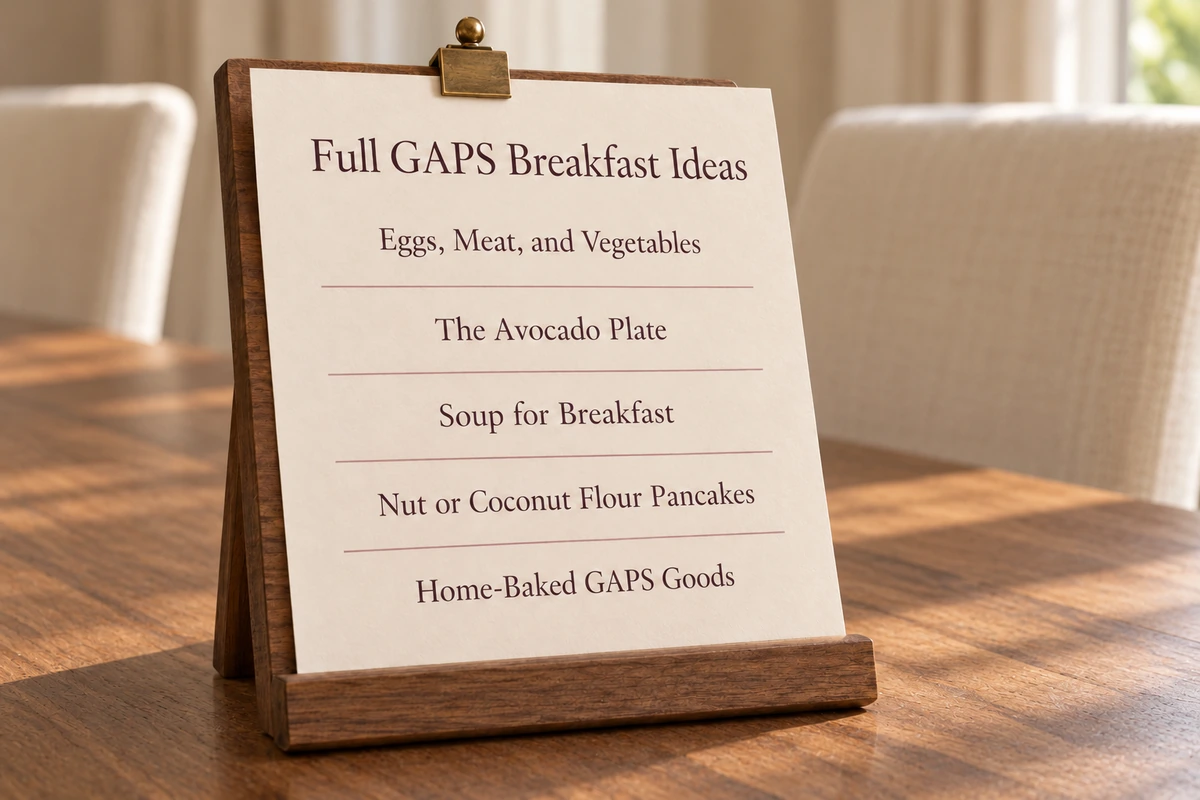
Eggs, Meat, and Vegetables
The first Full GAPS breakfast choice is eggs cooked to personal liking, served with meat and vegetables, some cooked, some fresh as a salad, tomato, cucumber, onion, celery, or any fresh salad greens, and some fermented. Egg yolks are best left uncooked and whites cooked lightly. Avocado is a nice addition. Dress the salad and eggs generously with cold-pressed olive oil. A tablespoon of presoaked or sprouted sunflower, sesame, or pumpkin seeds can be mixed into the salad.[1]
Cooked meat, fish, bacon made with salt only, or sausages can round it out. GAPS is specific about sausages: they need to be pure minced meat and fat with only salt and pepper added, chopped onion, garlic, or fresh herbs are fine too, but no commercial seasoning, chemical additives, or MSG. Finding a local butcher who will make pure meat sausages to order is the book’s recommendation.[1]
Serve a cup of warm homemade meat stock with this breakfast. If diarrhea is present, keep the vegetables well cooked and leave out seeds.[2]
The Avocado Plate
Serve avocado with meat, fish or shellfish and raw, fermented and cooked vegetables, dressed with lemon and cold-pressed olive oil. A cup of warm meat stock as a drink goes with this one too.[2] It’s a good option on mornings when there’s genuinely no time to cook eggs, since most of it can be assembled rather than cooked.
Soup for Breakfast
Homemade soup, served with sour cream and gelatinous meat, is a fully legitimate Full GAPS breakfast, not just a lunch or dinner food.[2] If homemade soup with gelatinous meat is already prepared, warm a portion. Let it cool before adding homemade sour cream you have already introduced; the book says probiotic foods should not be added when food is too hot.[5]
Nut or Coconut Flour Pancakes
Pancakes made with nut flour or coconut flour, fermented before cooking, are on the list too. They’re delicious with butter, sour cream, and honey, or served savory as a snack. Blending fresh or defrosted berries with honey makes a quick jam to go with them, and a cup of herbal tea, lemon and ginger tea, or fresh mint tea rounds out the meal.[2] The book requires the flour to be fermented before the pancakes are made, so a regular grain-free pancake does not automatically match this preparation.
Home-Baked GAPS Goods
Any of the home-baked GAPS goods, such as muffins, fruit cake, or bread, round out the five formats.[2] On Full GAPS, baking is listed as a breakfast option, though the diet’s 85 percent daily emphasis remains on meats, fish, stocks, eggs, fermented dairy, and vegetables rather than fruit and baking. Someone starting directly on Full GAPS keeps fruit and baking out for the first few weeks, then introduces them slowly while watching for returning symptoms.[3]
Frequently Asked Questions
Do the Egg Yolks Really Need to Stay Uncooked?
GAPS’s guidance is that yolks are best uncooked and whites cooked lightly.[1]
Can I Buy Sausages from the Grocery Store for a Full GAPS Breakfast?
Read the ingredient list rather than relying on a front label such as “gluten-free.” The book specifies minced meat and fat, salt and pepper, with optional onion, garlic or fresh herbs, and excludes commercial seasoning, chemical additives and MSG. If you cannot find that combination, its suggested alternative is a local butcher who will make the sausages to order.[1]
Can I Use Any Grain-Free Pancake Recipe?
Not automatically. Choose a complete recipe that uses fermented nut or coconut flour for this breakfast option. A recipe labeled grain-free does not, by itself, tell you whether the flour has been fermented.[2]
What Should Breakfast Look Like If Someone in the House Has Diarrhea?
Return to Intro Stage 1 or 2 foods for a few days: meat stock, soups, meat and vegetable stews, fish, eggs, fermented dairy, and well-cooked vegetables, until the diarrhea completely clears. After stools have been normal for a few days, add raw vegetables slowly, one at a time and in small amounts, then gradually bring back nuts, oily seeds, and fruit.[4] Within the egg breakfast itself, keep vegetables well cooked, skip seeds, and serve warm homemade meat stock.[2]
The book deals separately with profuse watery diarrhea and temporarily excludes even well-cooked vegetables in that situation. My diarrhea guide explains that advice alongside the other food choices and care signs.[5]
Where to Start
Choose one of the five formats as a reliable default, then rotate the others when they fit. A repeatable breakfast removes one daily decision while keeping every meal within the Full GAPS meal pattern.
For the whole-day context around these choices, use my Full GAPS daily meal schedule and two-week Full GAPS meal plan.
If breakfast is the meal you would like more help with, my Breakfast Cookbook is listed in the WFLI shop.
References
- Campbell-McBride, N. Gut and Physiology Syndrome (2020), Chapter 14, “A Typical Menu on the Full GAPS Diet,” page 185, “Breakfast Choices”: eggs, meat, vegetables, sausage ingredients, seeds, diarrhea adjustment, and meat stock.
- Campbell-McBride, N. Gut and Physiology Syndrome (2020), Chapter 14, “A Typical Menu on the Full GAPS Diet,” “Breakfast Choices”: avocado, soup, fermented-flour pancakes, and home-baked GAPS goods.
- Campbell-McBride, N. Gut and Physiology Syndrome (2020), Chapter 14, “The Full GAPS Diet,” page 177: the 85 percent daily food emphasis.
- Campbell-McBride, N. Gut and Physiology Syndrome (2020), Chapter 14, “The Full GAPS Diet,” page 179: the general diarrhea setback route and gradual food return after stools have been normal for a few days.
- Campbell-McBride, N. Gut and Physiology Syndrome (2020), Chapter 13, “GAPS Introduction Diet,” First Stage, probiotic-food temperature and the profuse watery diarrhea exception; Chapter 26, “Bowel Management,” “Diarrhea”.
- Campbell-McBride, N. Gut and Physiology Syndrome (2020), Chapter 14, “Dairy Introduction Structure,” its applicable starting groups, sequence and dairy-allergy exceptions.

Leave a comment