

Homemade fermented almond flour from whole almonds starts with three measured ingredients: raw almonds, homemade whey, and filtered water. The whole nuts ferment for 24 hours before they are drained and pulsed into a fresh, moist flour for GAPS baking.
In a household feeding eight people, a component recipe has to be labeled clearly enough that I know which version belongs in the next recipe. This is the whole-almond method. It is not dry commercial almond flour, crispy-nut flour, or the separate method that begins with flour already ground.
What This Fermented Almond Flour Is
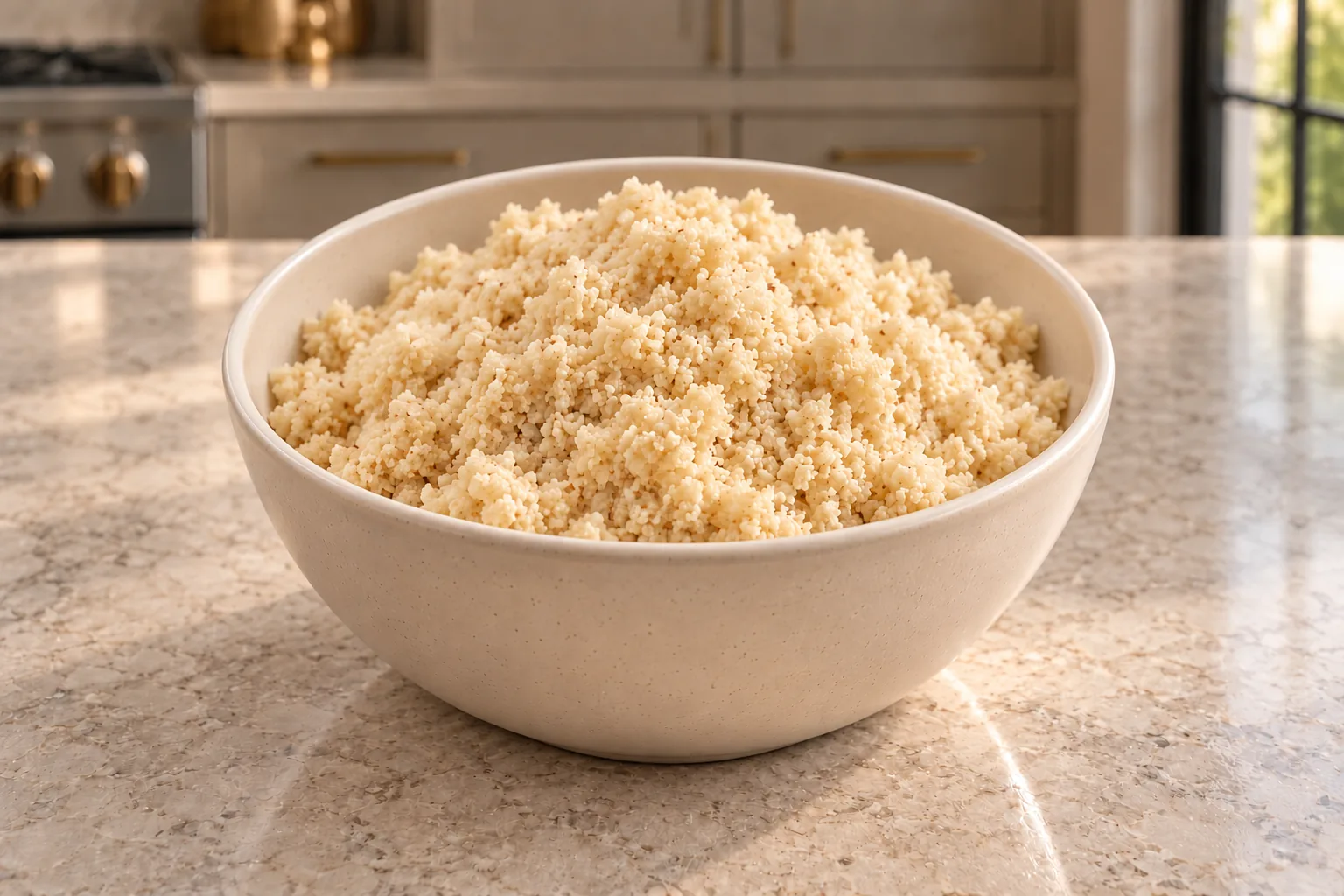
This formula begins with three cups raw almonds. One-half cup fresh homemade whey supplies the fermentation starter, and warm filtered water covers the nuts by about two inches. After 24 hours at room temperature, the almonds are drained, optionally rinsed, peeled for a finer texture, drained again, and pulsed into a moist crumb.
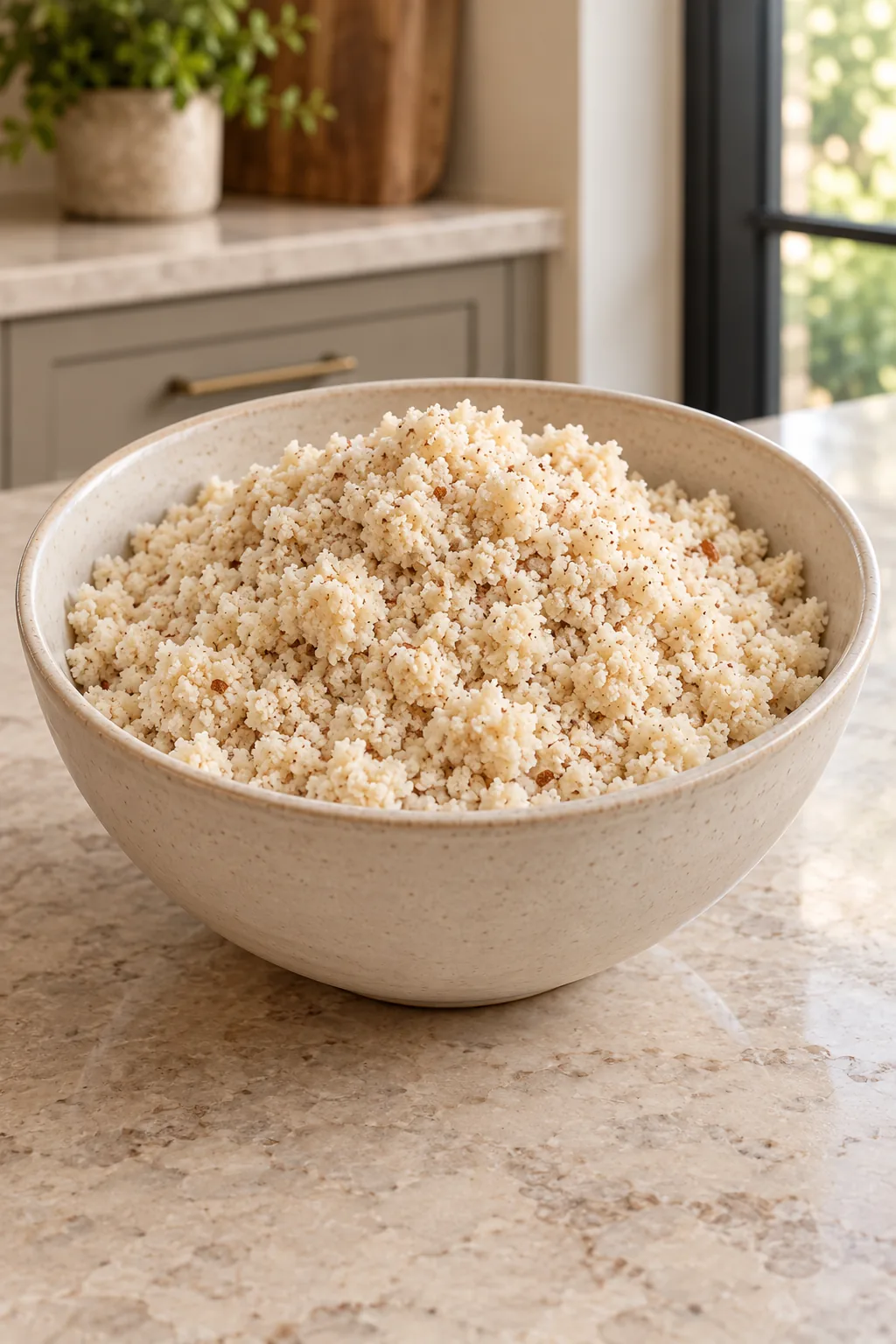
The finished product looks like fine almond meal that has been lightly dampened. It should hold together when pressed and fall apart when rubbed between your fingers. It is not a loose, powdery pantry flour. That distinction matters when another recipe is balancing eggs, fat, cultured dairy, or other liquid around it.
Where It Fits on GAPS
Almonds are a Full GAPS food, and GAPS preparation guidance treats soaking, sprouting, and fermentation as ways to prepare nuts and seeds before using them. Fermented nuts are then ground into flour for baking.
For the Introduction Diet, the finished flour fits different uses at different points. Nut or seed flour is used for pancakes and basic bread from Stage 4. Other baked goods made with the flour belong from Stage 6 and on Full GAPS. This component is not an Introduction Diet Stage 1, 2, or 3 food.
Nuts and baked goods still need to be introduced in a form and amount the individual tolerates. The flour does not become an everyday replacement for meat, eggs, stock, vegetables, and the other foods that make up the center of the protocol.
Use the Right Kind of Whey
The half cup of whey in this formula means fresh liquid whey drained from properly fermented homemade yogurt, kefir, or raw milk. Commercial whey powder, protein isolate, concentrate, and packaged liquid whey are different products and do not belong in this card.
If you need the starter first, make Homemade 24-Hour GAPS Yogurt, then follow the Homemade GAPS Whey method. The collected whey should smell fresh and cultured, with a clean sour aroma rather than a stale or rotten odor.
Why the Whole-Almond Route Stays Separate
This recipe ferments the whole nuts and grinds them afterward. A separate method begins with almond flour and moistens that flour with whey. Those two preparations do not have the same texture, drainage, or liquid distribution, so they should not share one recipe card.
A dry flour ground from fully dehydrated soaked almonds is another distinct product. It pours and measures more like bagged flour. This whole-almond ferment remains moist after draining. Use it only where the recipe calls for fresh fermented whole-nut flour, or adjust the receiving formula from tested evidence rather than assuming an automatic cup-for-cup swap.
How to Make Fermented Almond Flour From Whole Almonds
1. Cover the Almonds With Warm Water and Whey
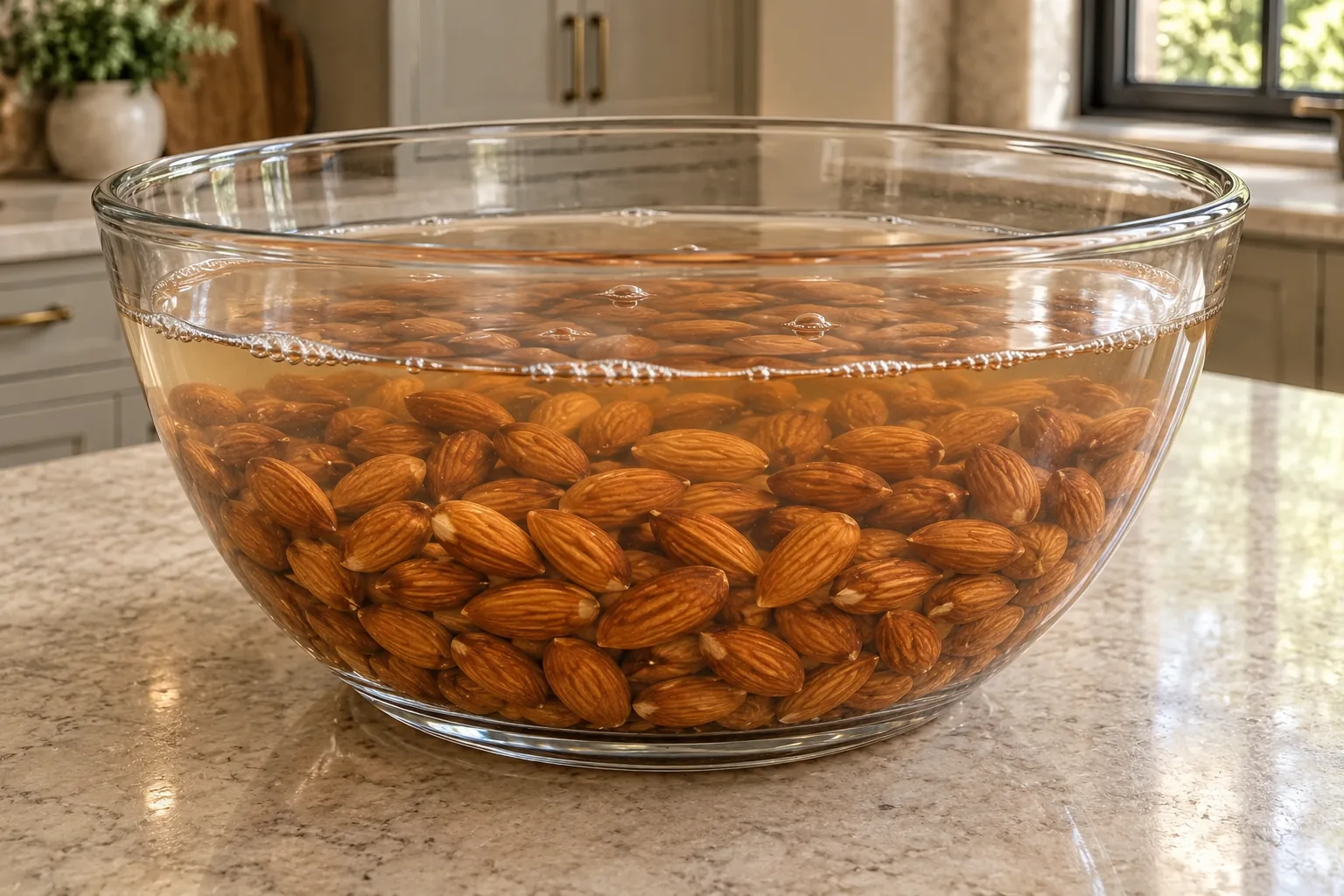
Put three cups raw almonds in a large glass, ceramic, or stainless-steel bowl. Pour in one-half cup fresh homemade whey. Add enough warm filtered water to cover the almonds by about two inches, then stir so the whey is distributed through the liquid.
The almonds should remain completely below the waterline with room to swell. Cover the bowl loosely with a plate or clean kitchen towel. Do not seal it into an airtight pressure vessel.
2. Ferment for 24 Hours
Leave the covered bowl at room temperature for 24 hours. As the almonds hydrate, they become plumper and slightly softer. The liquid may turn cloudy, and the bowl may smell mildly cultured or tangy.
There should be no colored fuzz, rotten smell, or putrid odor. If the batch shows obvious spoilage, discard it rather than trying to rinse the problem away.
3. Drain and Rinse
Pour the almonds into a stainless-steel colander. Let the fermenting liquid run off completely. Rinsing with fresh filtered water is optional for this method, but it can remove whey clinging to the surface if you want a milder flavor.
Shake the colander and leave it over the sink or a bowl until there is no steady drip. Extra surface liquid makes the ground meal slushy and changes the moisture carried into the next recipe.
4. Peel the Almonds for the Finest Result
For the easiest, finest flour, squeeze each swollen almond gently between two fingers so the skin slips off. The peeled nut should look smooth, ivory-colored, and moist.
Peeling takes time, but it removes the darker fibrous skin and gives the final meal a paler, more even texture. Keep the peeled almonds in the colander while you work so released water can continue to drain.
5. Drain the Peeled Almonds Thoroughly
When peeling is finished, shake the colander again and spread the almonds briefly on a clean lint-free towel. Blot away surface droplets. The nuts do not need to be dehydrated for this fresh fermented-flour method, but they should not be dripping.
Pick up a small handful before grinding. The almonds should feel plump and damp without leaving water in your palm.
6. Pulse in One-Second Bursts
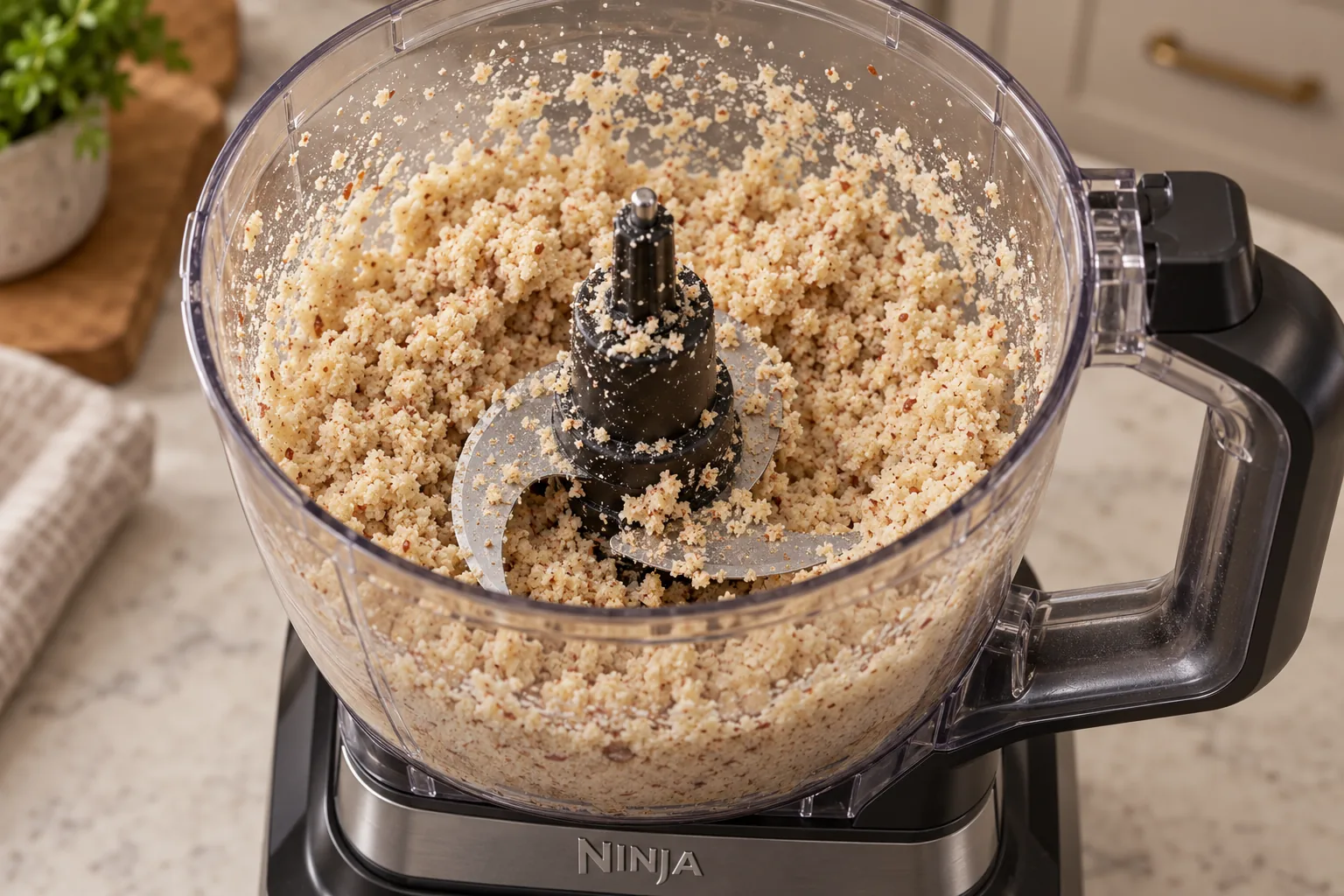
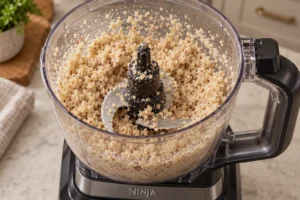
Fit the food processor with its chopping blade and add the drained almonds. Pulse in one-second bursts for about 60 seconds total. Stop every 15 to 20 seconds to scrape the sides and move larger pieces back toward the blade.
At first the almonds break into uneven pebbles. Those pieces become a pale, moist crumb as pulsing continues. Stop when the largest visible pieces are gone and the batch looks evenly ground.
7. Stop Before the Oils Turn It Into Butter
Watch the surface closely near the end. Fresh fermented almond flour looks granular and crumbly. Almond butter begins to look pasty, shiny, and smeared along the bowl as the oils release.
Short pulses give you control. If you are uncertain, stop, rub a pinch between your fingers, and pulse again only when obvious almond pieces remain. Once the mixture becomes oily paste, it cannot be returned to flour.
What the Finished Flour Should Look and Smell Like
The finished almond flour should be pale cream with a fine, naturally irregular crumb. It will clump lightly because it is moist, but it should not contain puddled water or turn into a smooth paste. Small flecks of skin are normal if a few skins remain.
The aroma should be fresh almond with a mild cultured tang. A sharp rancid-oil smell, rotten odor, visible fuzz, or unusual color means the batch should not be used.
How to Measure It in Another Recipe
Loosen the fresh meal with a fork before measuring. Spoon it into the measuring cup and level the top without packing it hard. Packing compresses the moist crumb and can add more almond solids than the receiving formula expects.
Use the quantity and preparation named by the receiving recipe. If a recipe specifies dry flour made from soaked and fully dehydrated almonds, use that dry component. If it specifies fresh fermented almond flour from whole nuts, use this one. The shared word “almond flour” does not make the moisture levels interchangeable.
Storage
This is a fresh, damp fermented food rather than a shelf-stable pantry flour. Use it as soon as possible after grinding. If the next batter is not ready, put the flour in a clean covered glass container and refrigerate it promptly.
The source formula does not establish a tested refrigerator or freezer storage duration, so this post does not invent one. Make the batch for a planned baking session instead of grinding it for long storage. Keep dry prepared-almond flour as a separate component when you need a longer-lived baking staple.
Frequently Asked Questions
Can I Replace the Whey With Plain Water?
Not in this exact fermented formula. Plain water does not supply the same starter. A salt-water soak is a separate GAPS preparation method with its own ratio and timing.
Can I Use Commercial Whey Protein?
No. Use fresh homemade liquid whey drained from properly fermented yogurt, kefir, or raw milk. Powder, isolate, concentrate, and commercial protein products are not the ingredient in this recipe.
Do I Have to Peel Every Almond?
Peeling gives the finest, palest result and follows the source route for the easiest almond flour. A few stubborn flecks will not ruin the batch, but leaving every skin produces a darker and more fibrous meal.
Why Is My Almond Flour Wet?
This whole-nut ferment is intentionally fresh and moist. Drain until the almonds no longer drip before grinding. If the finished meal is slushy, the nuts carried too much surface water into the processor.
Can I Substitute It for Dry Almond Flour Cup for Cup?
Only when the receiving recipe was written for this fresh fermented component. Its moisture can change a batter built around dry flour. Follow the exact preparation named in the linked recipe rather than making an automatic swap.
Why Did It Turn Into Almond Butter?
The processor ran too long. Stop at a fine moist crumb, before the mixture becomes shiny or smears around the bowl. One-second pulses and frequent checks protect the endpoint.
Can I Use Another Nut?
Other nuts and seeds can be prepared, but their soak and ferment behavior can differ. This measured card is for almonds. Keep species-specific timing and cashew limits in their own recipes.
Recommended Equipment
- Large glass, ceramic, or stainless-steel bowl
- Plate or clean kitchen towel for a loose cover
- Stainless-steel colander
- Clean lint-free towel
- Ninja Professional Plus Kitchen System BN801 food-processing bowl and chopping blade
- Flexible scraper
- Covered glass refrigerator container
Homemade Fermented Almond Flour From Whole Almonds
Ingredients
Equipment
Method
- Put the raw almonds in a large glass, ceramic, or stainless-steel bowl. Add the homemade whey, then enough warm filtered water to cover the almonds by about 2 inches. Stir and cover loosely with a plate or clean kitchen towel.
- Leave at room temperature for 24 hours. The almonds should become plump and the liquid may look cloudy and smell mildly cultured. Discard a batch with colored fuzz, a rotten odor, or other obvious spoilage.
- Drain the almonds in a stainless-steel colander. Rinse with fresh filtered water if a milder flavor is desired. Shake the colander and drain until there is no steady drip.
- For the finest result, peel the almonds by squeezing each one gently between two fingers until the skin slips off. Keep the peeled almonds in the colander.
- Drain again and blot surface droplets with a clean lint-free towel. The almonds should feel plump and damp without leaving water in your palm.
- Fit the Ninja BN801 food-processing bowl with its chopping blade. Add the almonds and pulse in one-second bursts for about 60 seconds total, stopping every 15 to 20 seconds to scrape the sides. Stop when the mixture is a pale, moist, evenly ground crumb before it turns shiny or pasty.
- Use promptly in a recipe written for fresh fermented whole-nut flour. If the next batter is not ready, transfer the flour to a clean covered glass container and refrigerate immediately.
Notes
Tried this recipe?
Let us know how it was!More GAPS Baking Basics
Use this fresh fermented flour only in a formula written for its moisture. For a savory recipe with a distinct dry prepared-almond route, see Almond Flour Herb Bread for Full GAPS Stuffing.
The planned GAPS Food Swap Guide will compare fresh fermented almond flour, dry prepared-almond flour, almond meal, homemade coconut flour, and the recipes each one fits. Find current resources and upcoming releases in the WFLI shop.

Leave a comment