

This almond flour herb bread is a dense, savory square bread made specifically for grain-free stuffing. It uses fresh almond flour, uncreamed dry curd cottage cheese, eggs, ghee or coconut oil, salt, and one tablespoon fresh herbs. There is no baking powder, baking soda, yeast, starch, or grain.
The bread bakes in a 9-by-9-inch pan rather than a loaf pan. Once it is completely cool, it cuts into about six cups of firm cubes. The tight crumb is useful here. It holds together when the cubes are toasted and later folded with stock and the other ingredients in a stuffing recipe.
Holiday cooking for a family of eight is easier when each complete recipe has one job. This bread can be mixed, baked, and cooled without also trying to explain an entire stuffing in the same card. With six children, homeschool, and second-shift work in our week, that separation makes the kitchen plan easier to follow.

GAPS Placement: Full GAPS after prepared almonds, eggs, the chosen fat, and uncreamed dry curd cottage cheese are introduced and tolerated
Prep Time: Not specified in the source
Bake Time: About 35 minutes
Yield: One 9-by-9-inch bread; about 6 cups when cooled and cubed
A Bread Built For Stuffing Cubes
This is not meant to imitate a tall sandwich loaf. The batter is spread into a square pan and bakes into a dense, savory slab.
That shape creates more even pieces. Once the bread is cool, you can cut it into thin strips and then into small cubes without fighting a domed loaf or a fragile crust.
The formula belongs in its own post because it is a complete recipe. The stuffing that uses the cubes has its own ingredients, moisture decisions, bake time, and recipe card.
Ingredient Notes For Full GAPS
Use 2 1/2 cups fresh blanched almond flour. Keep purchased almond flour frozen so it stays fresh, or grind properly prepared and fully dried almonds at home. Measure the finished flour without packing it into the cup.
Use 8 ounces uncreamed dry curd cottage cheese. This is the dry, pressed curd rather than regular creamed cottage cheese. If it releases visible whey or feels wet, drain it through fine mesh or cheesecloth, then weigh the dry curd again before mixing.
Use 1/4 cup melted ghee or natural non-hydrogenated coconut oil. Homemade stovetop ghee is the dairy-fat branch. Coconut oil changes the aroma slightly but keeps the measured fat the same.
Use three eggs, 1/4 teaspoon natural sea salt, and one tablespoon chopped fresh herbs. Choose rosemary, parsley, or thyme and chop it finely enough to move through the batter without creating wet herb clumps.
Drain The Dry Curd If Needed
Dry curd cottage cheese should feel crumbly and pressed. It should not sit in cream or whey.
If your curd is wet, put it in a fine-mesh strainer or a small piece of cheesecloth and let the excess moisture drain. Weigh eight ounces only after that extra liquid is gone.
This correction matters because wet curd loosens the batter. The finished mixture should be thick and sticky, not pour like pancake batter.
Mix The Thick Herb Batter
Heat the oven to 325°F. Put the almond flour, eight ounces dry curd cottage cheese, melted ghee or coconut oil, sea salt, eggs, and chopped herbs into a food processor.
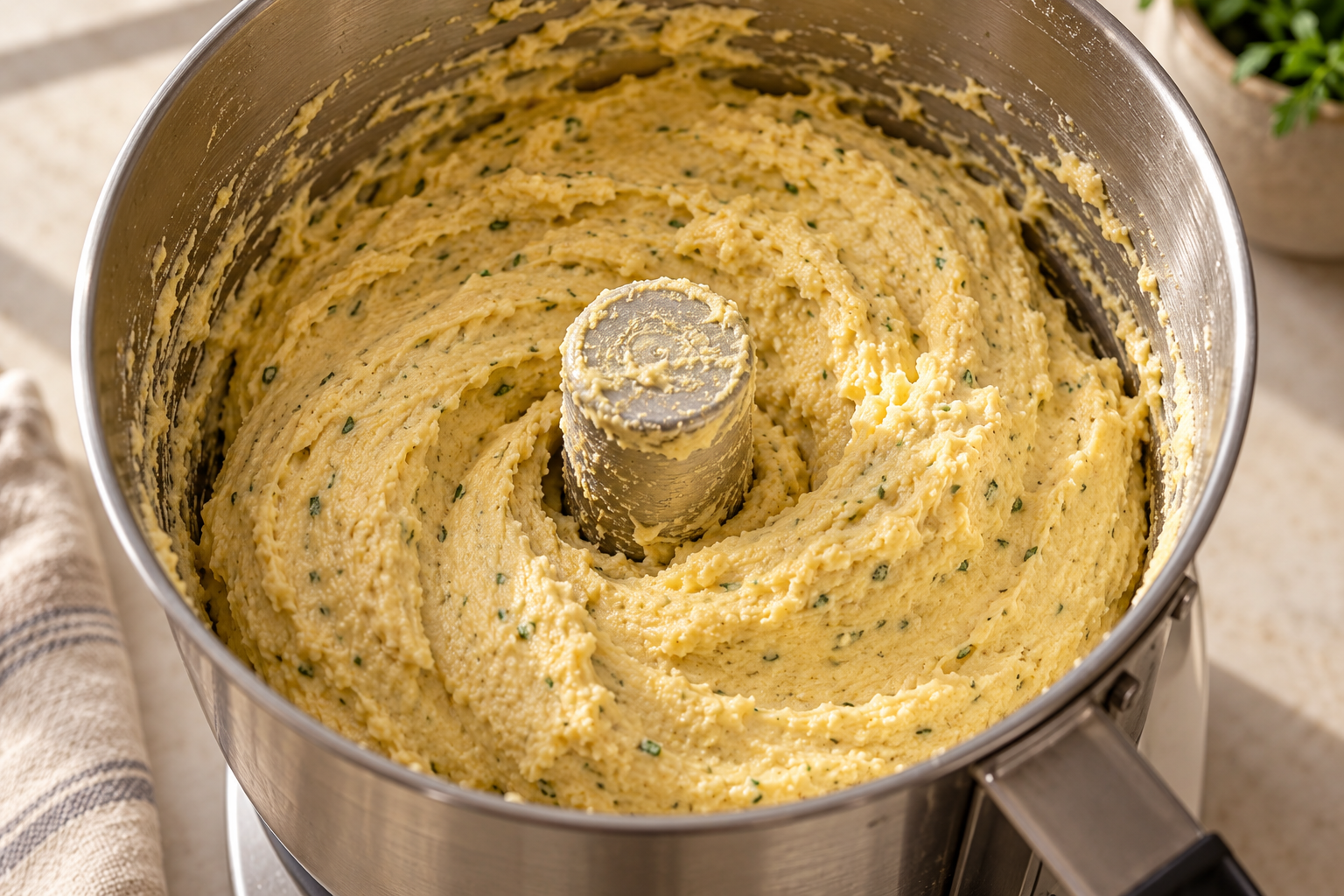
Process until the ingredients look evenly combined and no dry almond-flour pockets or visible cheese lumps remain. Stop and scrape the bowl if needed, then process again briefly.
The finished batter should cling to a spatula and hold a mound for a moment. It should be spreadable, but it should not run or level itself like a liquid cake batter.
Spread The Batter In A Square Pan
Grease a 9-by-9-inch clear glass or neutral ceramic baking dish. Line the bottom with parchment paper and lightly grease the top of the parchment as well.
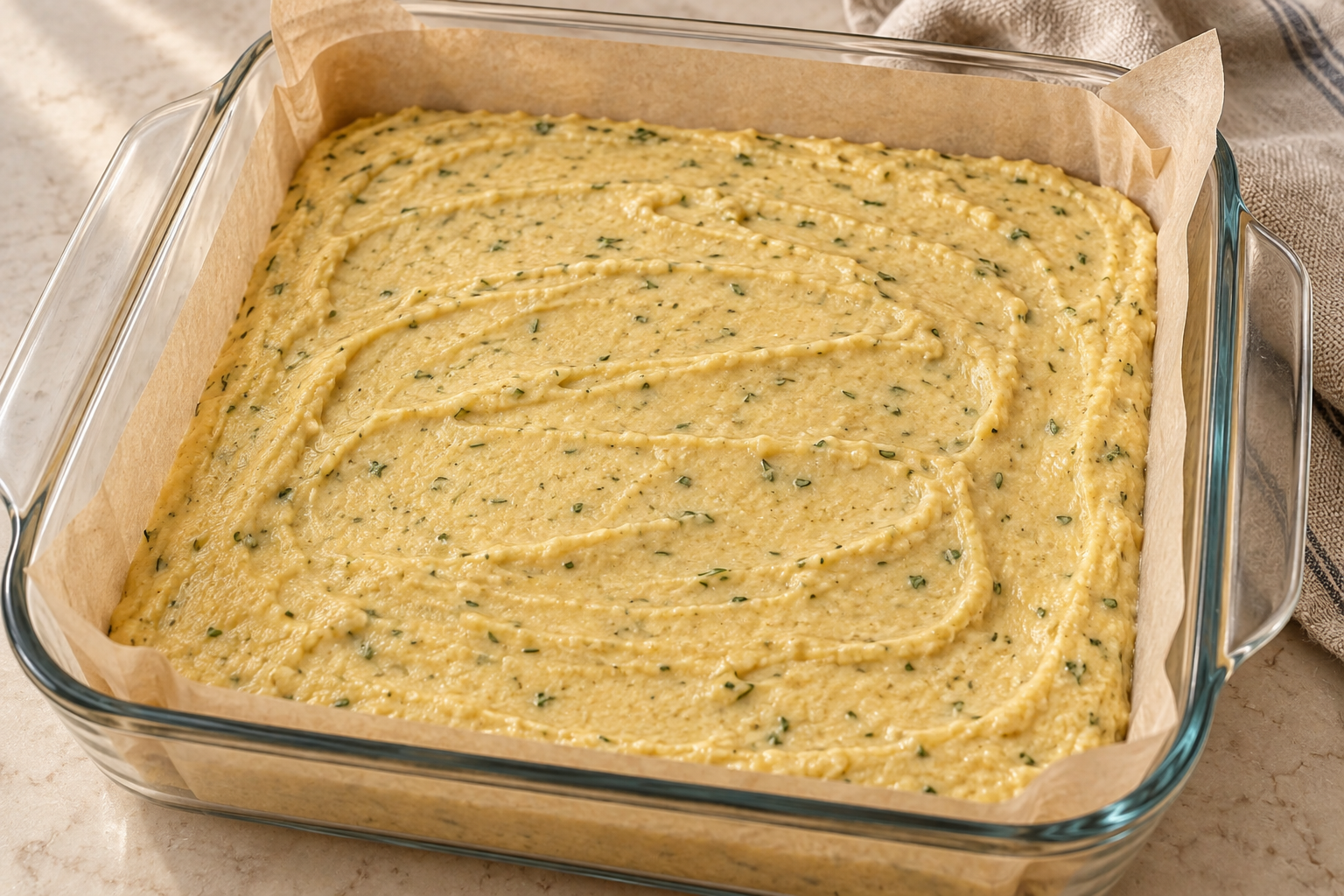
Transfer the thick batter to the pan. Use a heat-safe spatula to press it into the corners and spread the surface to an even depth.
Look across the top before baking. A level surface helps the center and edges finish together and gives you evenly sized cubes after cooling.
Bake And Cool Completely
Bake at 325°F for about 35 minutes. Begin watching the surface near the end so the top does not burn.
The bread is ready when the top is golden, the center looks set rather than wet, and the edges have begun to pull slightly from the dish. Press the center lightly with a clean fingertip or the back of a spoon. It should feel firm enough to spring back instead of leaving a wet impression.
Let the bread cool completely before lifting or cutting it. Warm bread tears and compresses. Fully cooled bread keeps a clean dense crumb and cuts into the firm cubes this recipe is meant to provide.
Almond Flour Herb Bread for Full GAPS Stuffing
Ingredients
Equipment
Method
- Heat the oven to 325°F. Process the almond flour, eight ounces drained dry curd cottage cheese, melted ghee or coconut oil, sea salt, eggs, and finely chopped herbs until evenly combined. Scrape the bowl if needed. Stop when the batter is thick and sticky, holds soft ridges, and has no dry flour pockets or visible cheese lumps.
- Grease a 9-by-9-inch clear glass or neutral ceramic dish. Line the bottom with parchment and lightly grease the top of the parchment. Press the batter into all four corners and spread it to an even depth.
- Bake for about 35 minutes, watching the top near the end. Remove the bread when the top is golden, the center looks set, and the edges pull slightly from the dish. Cool completely before lifting and cutting into firm cubes.
Notes
Tried this recipe?
Let us know how it was!The Physical Cues That Matter
The dry curd is actually dry. No cream or whey pools around it before weighing.
The batter is thick and sticky. It clings to the processor bowl and spatula without pouring.
The herbs are evenly dispersed. Fine green flecks appear throughout rather than sitting in one damp clump.
The pan is filled evenly. Batter reaches all four corners at roughly the same depth.
The top turns golden without scorching. The center looks set, and the edges release slightly.
The bread cools before cutting. A cooled square holds together and produces about six cups of clean cubes.
GAPS Stage And Supported Choices
This is a Full GAPS bread for the point when prepared nuts, eggs, and the relevant dairy foods are already tolerated. It is not an Introduction Diet bread.
Fresh blanched almond flour is permitted for Full GAPS baking. Keep it cold and fresh, or make it from properly prepared almonds. Do not replace it cup for cup with coconut flour because the two flours absorb moisture differently.
Choose ghee or natural non-hydrogenated coconut oil for the measured fat. The dry curd cottage cheese remains essential to the tested formula, so the coconut-oil branch is not dairy-free.
The 2× card doubles every measured ingredient and produces two 9-by-9-inch breads. Use two pans so each batch keeps the tested depth and bake evenly rather than pouring both into one deeper dish.
Cutting And Using The Bread
Once fully cool, lift the bread from the pan and cut it into even strips, then into cubes. The complete square produces about six cups.

This post ends with the finished bread. Toasting, adding stock, and baking a stuffing belong to the separate stuffing recipe so neither card hides another complete formula.
The source does not provide a tested storage window for the standalone bread. Use it once cool, or keep a brief wait covered and chilled before cutting.
Frequently Asked Questions
Can I Use Regular Cottage Cheese?
No. Regular creamed cottage cheese adds too much moisture. Use uncreamed dry curd cottage cheese and drain it further when necessary before reweighing eight ounces.
Can I Use Coconut Flour Instead?
No. Coconut flour absorbs liquid differently and cannot replace almond flour cup for cup in this formula.
Does The Bread Need A Raising Agent?
No. The bread contains no baking powder, baking soda, or yeast. The finished square is intentionally dense enough to hold together as stuffing cubes.
Which Herbs Work Best?
Use one tablespoon finely chopped fresh rosemary, parsley, or thyme. Choose one or combine them while keeping the total at one tablespoon.
Can I Use Coconut Oil Instead Of Ghee?
Yes. Use the same measured quarter cup of natural non-hydrogenated coconut oil, melted and cooled slightly.
Why Must The Bread Cool Completely?
Warm almond-flour bread is more likely to tear and compress. Cooling lets the crumb set so the square cuts into clean, firm cubes.
Recommended Equipment
Use a food processor, kitchen scale, measuring cups and spoons, fine-mesh strainer or cheesecloth when needed, a 9-by-9-inch clear glass or neutral ceramic baking dish, parchment paper, heat-safe spatula, and cooling rack.
Choose The Right Ingredient Form
The upcoming GAPS Food Swap Guide fits this recipe because dry curd cottage cheese, creamed cottage cheese, almond flour, coconut flour, ghee, and coconut oil do not behave the same way. Use it to identify the form the recipe actually needs before mixing. Check the WFLI shop for the current catalog and release updates.

Leave a comment