

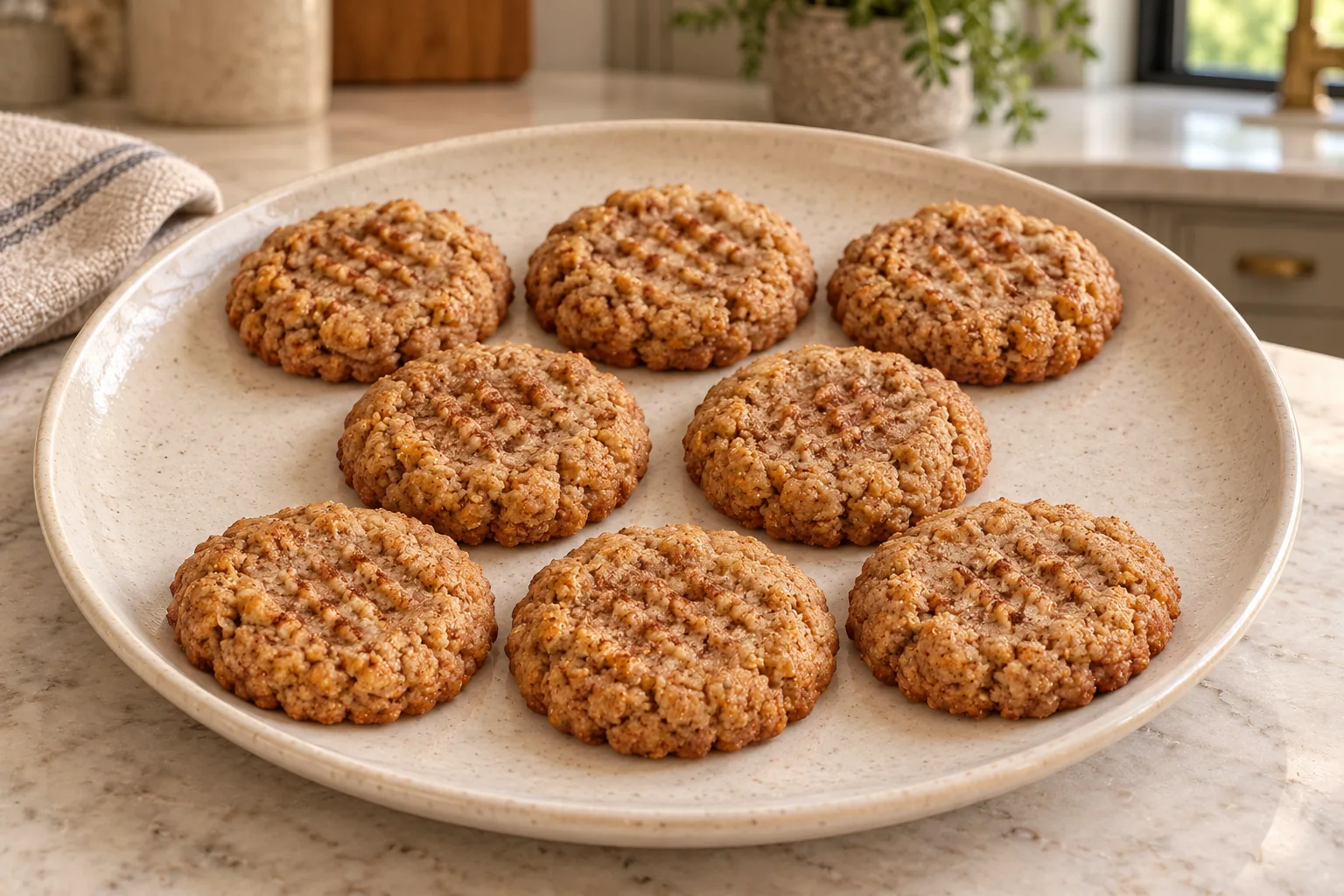
Soft cinnamon almond butter cookies are the kind of small Full GAPS treat that can be mixed in one bowl and baked before the kitchen gets busy again. This batch makes exactly eight cookies with almond flour, almond butter, coconut oil, raw honey, cinnamon, one egg, and homemade vanilla. There is no baking soda or other leavener.
That simple ingredient list gives the cookies their particular texture. They do not rise like a wheat-flour cookie, and they are not meant to become crisp all the way through. After seven minutes, the bottoms should be lightly browned while the centers remain soft. The cookies firm as they cool, but the middle stays tender and slightly moist.
In a household with six children, an eight-cookie batch is useful when I want to make a small amount first instead of committing an entire tray of ingredients. Each person can have one, and I can see how a batch behaves with the almond flour and almond butter I have on hand. Nut flours vary more than conventional flour, so the physical cues matter more than the clock alone.
Why These Cinnamon Almond Butter Cookies Stay Soft
The dough gets its structure from one egg, one cup of almond flour, and two tablespoons of almond butter. Coconut oil keeps the crumb tender, while two tablespoons of raw honey provide just enough sweetness and moisture for a soft cookie. Cinnamon and homemade vanilla make the small amount of honey taste fuller without changing the formula.
Because there is no leavener, the portions will not spread or puff much in the oven. Shape them before baking into the size and thickness you want to serve. The fork marks are useful as well as familiar: they press the sticky dough into an even layer so the center and edges finish at nearly the same time.
The short bake is intentional. Leaving the cookies in the oven until the tops look dry and crisp would overcook the bottoms. Look for lightly browned lower edges and a top that has lost its wet shine but still yields slightly when touched after cooling.
The eight-cookie yield also helps the tray bake evenly. All eight portions fit in one shallow layer with air between them, so the outer cookies are not crowded against the rim while the center portions sit too close together. If you double the recipe, use two sheets or bake two separate trays. Packing sixteen portions onto the same surface changes the air flow and makes the seven-minute cue less reliable.
Where This Recipe Fits On Full GAPS
These cookies belong on Full GAPS after eggs, properly prepared almonds, almond flour, almond butter, coconut oil, raw honey, cinnamon, and homemade vanilla have been introduced and tolerated. They are not an Introduction Diet recipe.
Use almond flour made from properly prepared whole almonds. The almond butter should also be homemade from properly prepared almonds, with no sugar, seed oil, emulsifier, or other added ingredient. This keeps both almond ingredients aligned with the same preparation standard.
Use homemade vanilla extract for Full GAPS. The recipe needs one measured teaspoon. Commercial vanilla flavoring, syrup, or an opaque extract does not substitute for that linked component.
Measure The Ingredients Before Mixing
Measure one cup almond flour without packing it hard into the cup. Break up any compacted areas before adding it to the bowl. A tightly packed cup can make the dough drier and more crumbly than the intended soft, sticky consistency.
Measure two tablespoons almond butter and two tablespoons coconut oil. The coconut oil should be soft enough to mix evenly, but it does not need to be hot. If it is completely melted and warm, let it cool until merely fluid or softly spreadable so it does not start cooking the egg.
Keep a little additional coconut oil available for the baking sheet and the fork. The measured two tablespoons stay in the dough; the extra film is only there to prevent sticking.
Mix Until The Dough Looks Soft And Sticky
Whisk the egg until the white and yolk are completely combined. Add the almond flour, homemade vanilla, almond butter, coconut oil, sea salt, raw honey, and cinnamon. Stir until no dry almond-flour pockets or streaks of egg remain.
The finished dough should be tan, speckled with cinnamon, and soft enough to scoop without crumbling. It should cling to the spoon rather than pour. When the spoon drags through the bowl, it should leave a clear track that slowly relaxes at the edges.
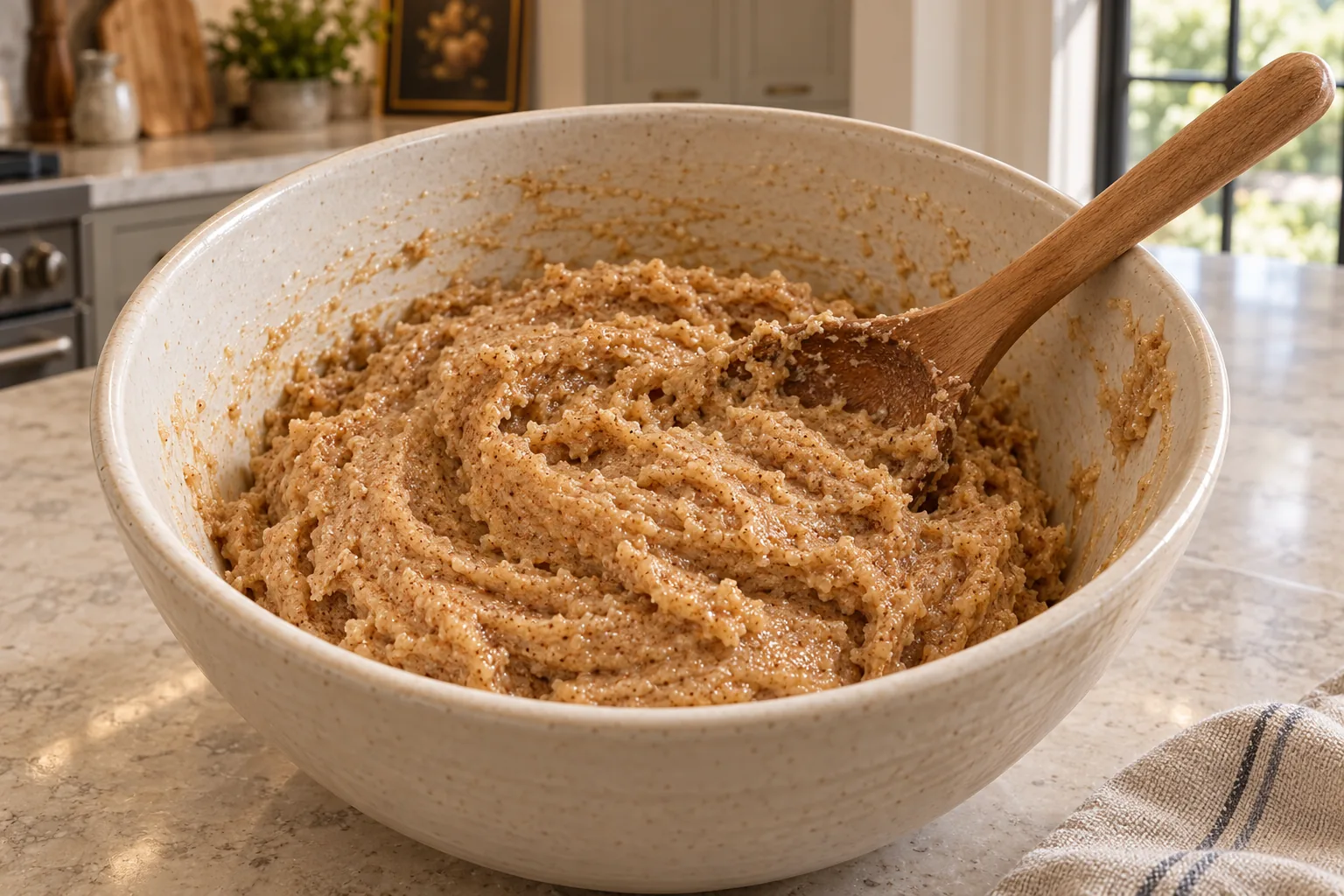
If the mixture looks streaky, keep stirring before deciding it is too loose. Almond butter and coconut oil can take a minute to distribute through the egg and flour. Do not add extra flour just because the dough feels stickier than a conventional cookie dough.
Shape Eight Even Cookies
Lightly grease an uncoated stainless-steel baking sheet with coconut oil. Drop the dough in eight level tablespoon portions, leaving space between them. Dividing the dough evenly matters because the bake is only seven minutes; a much larger portion can stay underdone while the smaller cookies brown.
Coat the back of a spoon or the tines of a fork with a thin film of coconut oil. Flatten each portion into a small, even round. Add light fork marks without pressing the dough paper-thin. Aim for the same thickness from the center to the edge.
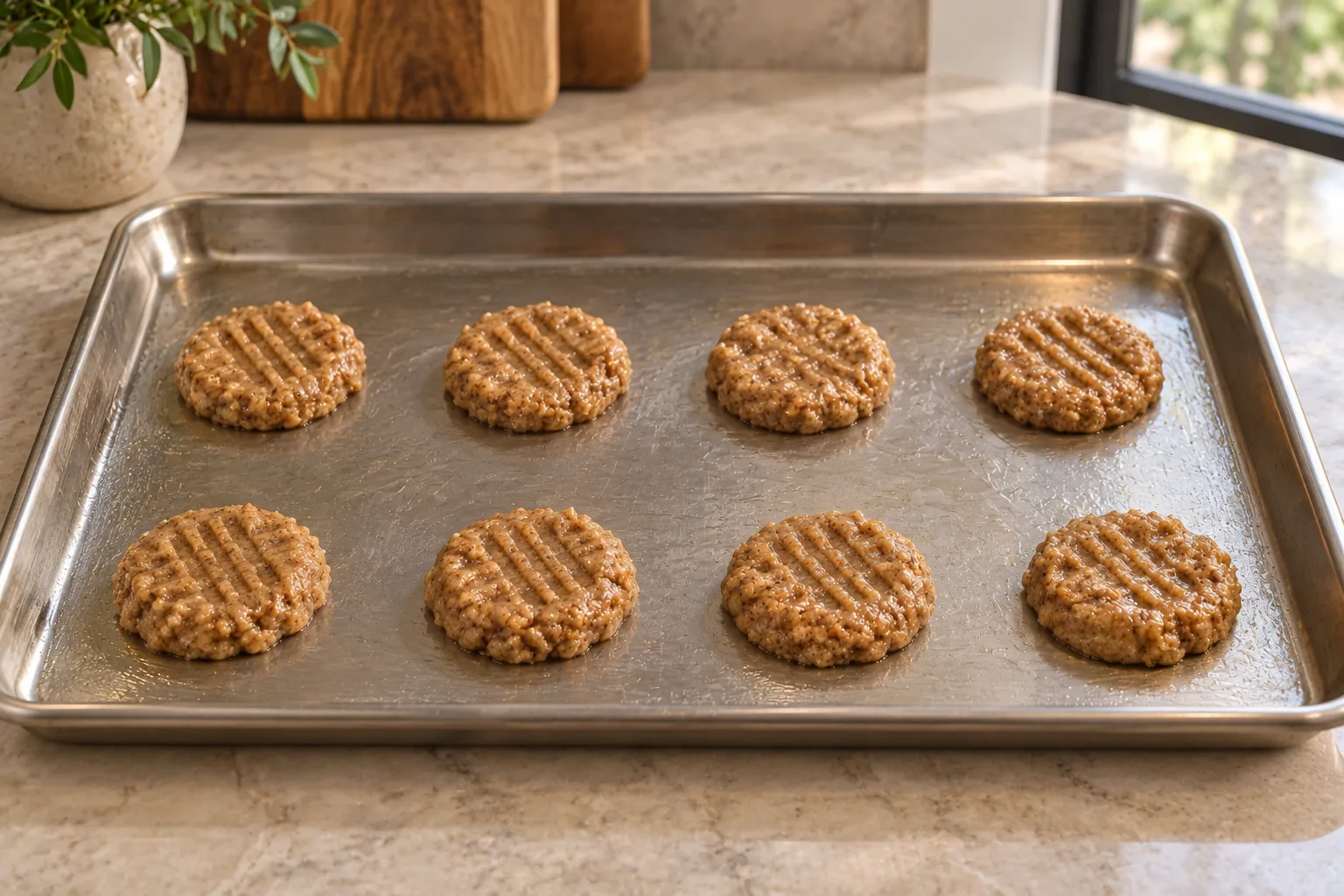
The raw rounds should look glossy and slightly tacky, with visible cinnamon flecks. They should hold the fork pattern instead of flowing back into a puddle. If a portion sticks to the fork, wipe it clean and apply another very thin coat of coconut oil.
Bake For Seven Minutes And Watch The Bottom Edge
Bake at 350°F for seven minutes. Start checking at the end of that exact time rather than waiting for a deeply browned top. The lower edge should show a thin golden-brown line, and the surface should look set instead of wet.
The centers will still feel soft. Leave the cookies on the baking sheet for five minutes so the egg and almond flour can finish setting with the retained heat. Then move them carefully to a rack or plate. A warm cookie may bend if lifted too quickly; a cooled cookie should hold together while staying tender.
The aroma should be distinctly cinnamon-forward with warm almond and vanilla underneath. If you smell sharp toasted nuts before the timer ends, check the bottoms immediately because almond flour can move from browned to scorched quickly.
Serving And Storage
Serve the cookies after they have cooled enough to hold their shape. They are lightly sweet rather than dessert-shop sweet, which suits the two-tablespoon honey measurement and keeps the cinnamon and almond flavors clear.
Store cooled cookies in a covered glass container in the refrigerator. Place a small sheet of unbleached parchment between layers if stacking so the soft surfaces do not stick together. Bring a refrigerated cookie toward room temperature before serving if you want the coconut oil and almond butter to soften again.
For longer storage, freeze the fully cooled cookies in one layer, then transfer them to a covered freezer container. Thaw only the number you need in the refrigerator. A gentle room-temperature rest restores the soft texture without another trip through the oven.
For another small-batch later Full GAPS treat, try Chocolate Coconut Fudge Bites. The formula is completely separate, but the small yield makes it useful for the same kind of planned family treat.
Keep Your Full GAPS Baking Swaps Close
The upcoming GAPS Food Swap Guide is the most useful WFLI companion for this recipe because it keeps legal sweeteners, fats, prepared nut ingredients, and common baking replacements in one place. It will be available through the WFLI shop.
Recommended Equipment
Use a medium mixing bowl, whisk, sturdy spoon, measuring cups and spoons, an uncoated stainless-steel baking sheet, fork, thin spatula, and cooling rack or plate. Avoid nonstick-coated bakeware and plastic food-contact tools.
An actual tablespoon measure helps keep the yield at eight. If you use a spring-loaded scoop, check that its filled volume is one tablespoon rather than assuming every small scoop holds the same amount.
Frequently Asked Questions
Why Did My Cookies Barely Spread?
That is expected. The formula has no leavener, and almond flour dough does not behave like wheat-flour dough. Flatten every portion before baking so the final shape is established on the tray.
How Do I Know The Cookies Are Done?
Look for a thin golden-brown line around the lower edge and a top that no longer looks wet. The center should remain soft at seven minutes and will firm while cooling on the sheet.
Can I Bake Them Longer For A Crisp Cookie?
This formula is built as a soft cookie. Baking longer can scorch the almond flour and overbrown the bottom before the center becomes evenly crisp.
Can I Use Store-Bought Almond Flour?
Use flour made from properly prepared and fully dried almonds. A commercial bag does not automatically establish how the almonds were prepared, so verify the process or make the flour from your prepared nuts.
Can I Use Store-Bought Vanilla?
Use the linked homemade vanilla extract. It preserves the measured vanilla flavor without introducing sugar or opaque additives.
Can I Replace The Almond Butter With Peanut Butter?
Not within this exact formula. Peanut butter changes both flavor and dough behavior, and a flourless peanut-butter cookie is a separate recipe rather than a variation inside this post.
Should The Coconut Oil Be Melted?
Use it softened or just fluid enough to stir smoothly. Hot coconut oil can warm the egg and make the dough look looser than it should. If the oil was heated to melt it, let it cool before mixing.
Soft Cinnamon Almond Butter Cookies Recipe
Soft Cinnamon Almond Butter Cookies for Full GAPS
Ingredients
Equipment
Method
- Heat the oven to 350°F. Lightly grease an uncoated stainless-steel baking sheet with a thin film of coconut oil.
- Whisk the egg until the white and yolk are completely combined. Add the almond flour, homemade vanilla, almond butter, coconut oil, sea salt, raw honey, and cinnamon. Stir until no dry flour or egg streaks remain and the tan, cinnamon-flecked dough is soft and sticky enough to cling to the spoon.
- Drop the dough onto the prepared sheet in 8 level tablespoon portions, leaving space between them.
- Lightly grease the back of a spoon or the tines of a fork with coconut oil. Flatten each portion into a small even round and add light fork marks. The dough will barely spread in the oven, so shape the cookies to their finished thickness now.
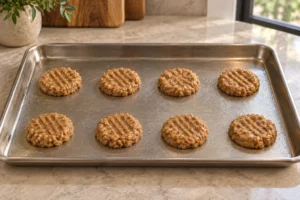
- Bake for 7 minutes. The lower edge should show a thin golden-brown line and the top should look set instead of wet, while the center remains soft.
- Leave the cookies on the baking sheet for 5 minutes to firm, then move them carefully to a cooling rack or plate. Cool until they hold together while remaining tender in the center.
Notes
Tried this recipe?
Let us know how it was!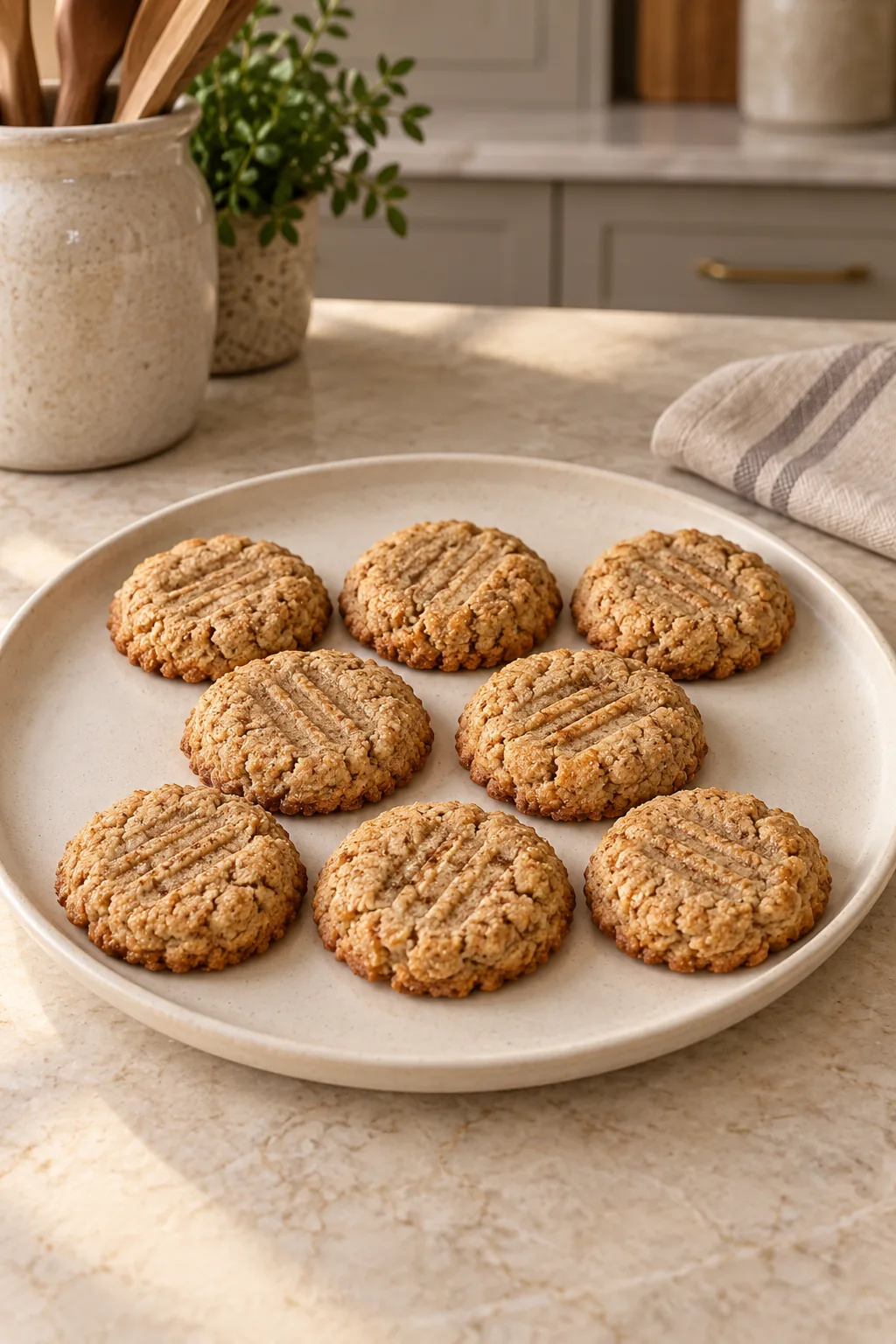

Leave a comment