

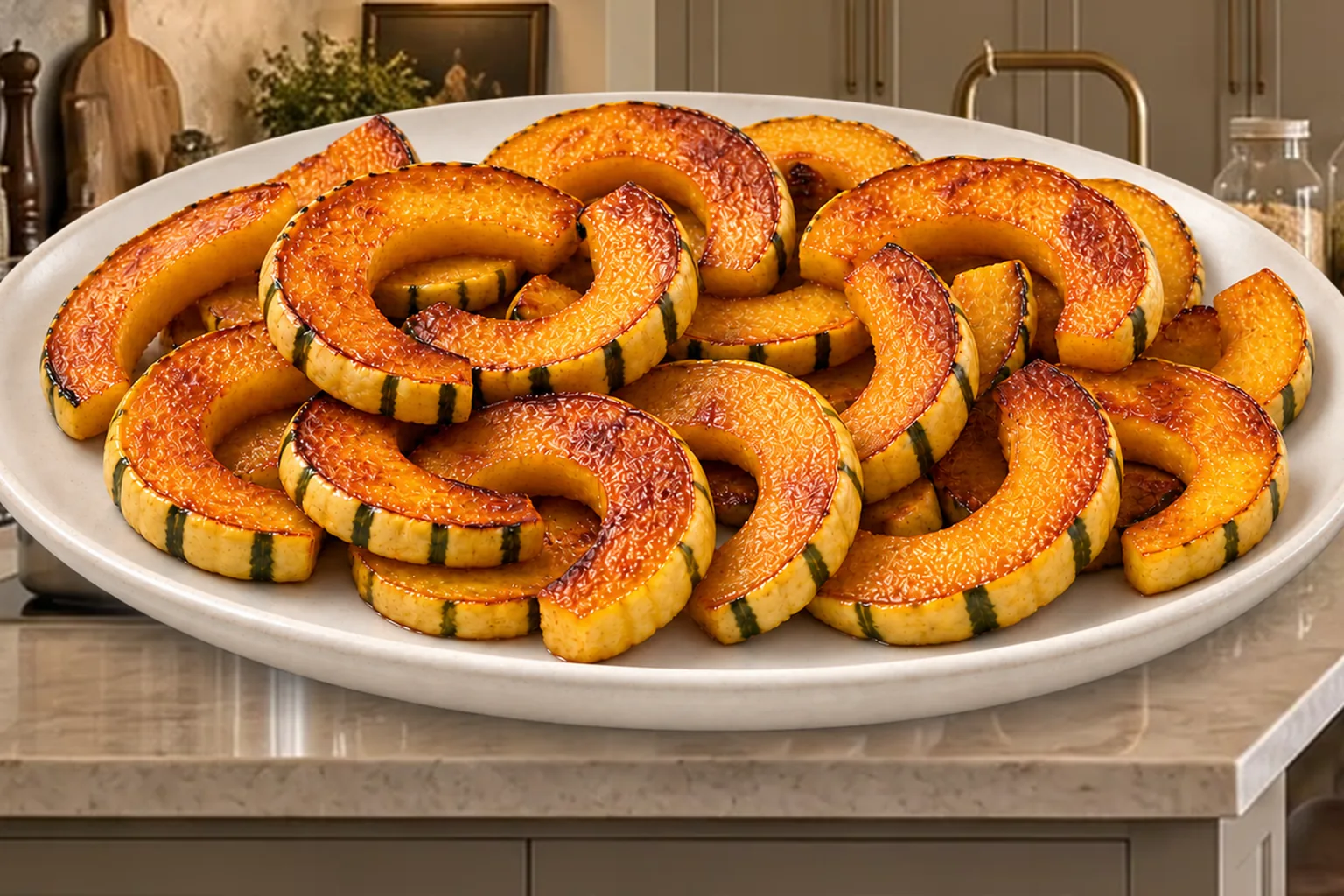
These caramelized roasted delicata squash slices have crisp golden edges, soft centers, and the kind of natural sweetness that makes a two-ingredient side dish feel finished. The skin stays on, so there is no peeling and no pile of slippery squash scraps on the cutting board.
The useful trick happens before the slicing. Bake the squash whole for 25 minutes, then halve it, scoop out the seeds, and cut thin half-rings. That short head start softens the squash enough to make the knife work easier without cooking it all the way through.
For a family of eight, I appreciate a side dish that can fill one or two sheet pans without adding another sauce or topping. The method is simple, but the physical cues matter: even slices, a true single layer, golden undersides before turning, and a close watch near the end.
Where Delicata Squash Slices Fit On GAPS
Delicata is a winter squash, so this recipe fits Full GAPS. Use a permitted cooking fat: ghee, natural non-hydrogenated coconut oil, butter after it has been introduced, duck fat, or another rendered animal fat.
Cold-pressed olive oil and avocado oil stay unheated on GAPS. They are not the roasting fats used in this oven method.
The measured recipe is deliberately plain: delicata squash and fat. It does not need maple syrup, brown sugar, starch, grain, or a commercial seasoning blend to brown.
Why Pre-Bake The Squash Whole
Raw winter squash can fight the knife. The 25-minute whole-squash pre-bake warms and begins softening the flesh, making the lengthwise cut and one-third-inch slices easier to manage.
This is only a head start. After 25 minutes, the squash should be warm and easier to pierce, not collapsed or fully tender. It still needs the two-sided sheet-pan roast to caramelize.
Keep the skin on. Delicata skin is part of the finished slice and helps each half-ring hold together through turning and serving.
Choose The Cooking Fat
For one or two average squash, begin with two tablespoons melted cooking fat. If you use two large squash and the half-rings still have dry faces after coating, the source allows up to one-quarter cup.
Homemade stovetop ghee gives a clean buttery flavor. Natural non-hydrogenated coconut oil works when a dairy-free fat is needed. Butter is an option after it has been introduced, and rendered duck fat or another animal fat gives a savory finish.
Melt a solid fat before measuring. The goal is a thin coat on both faces of every slice, not puddles around the pan.
Give The Whole Squash A Head Start
Heat the oven to 375°F. Set one or two whole delicata squash on an uncoated stainless-steel baking sheet. The source also allows placing them directly on the oven rack, but a pan makes the hot squash easier to move together.
Bake for 25 minutes. The squash will feel hot and slightly more yielding, while the skin remains intact and the shape stays firm.
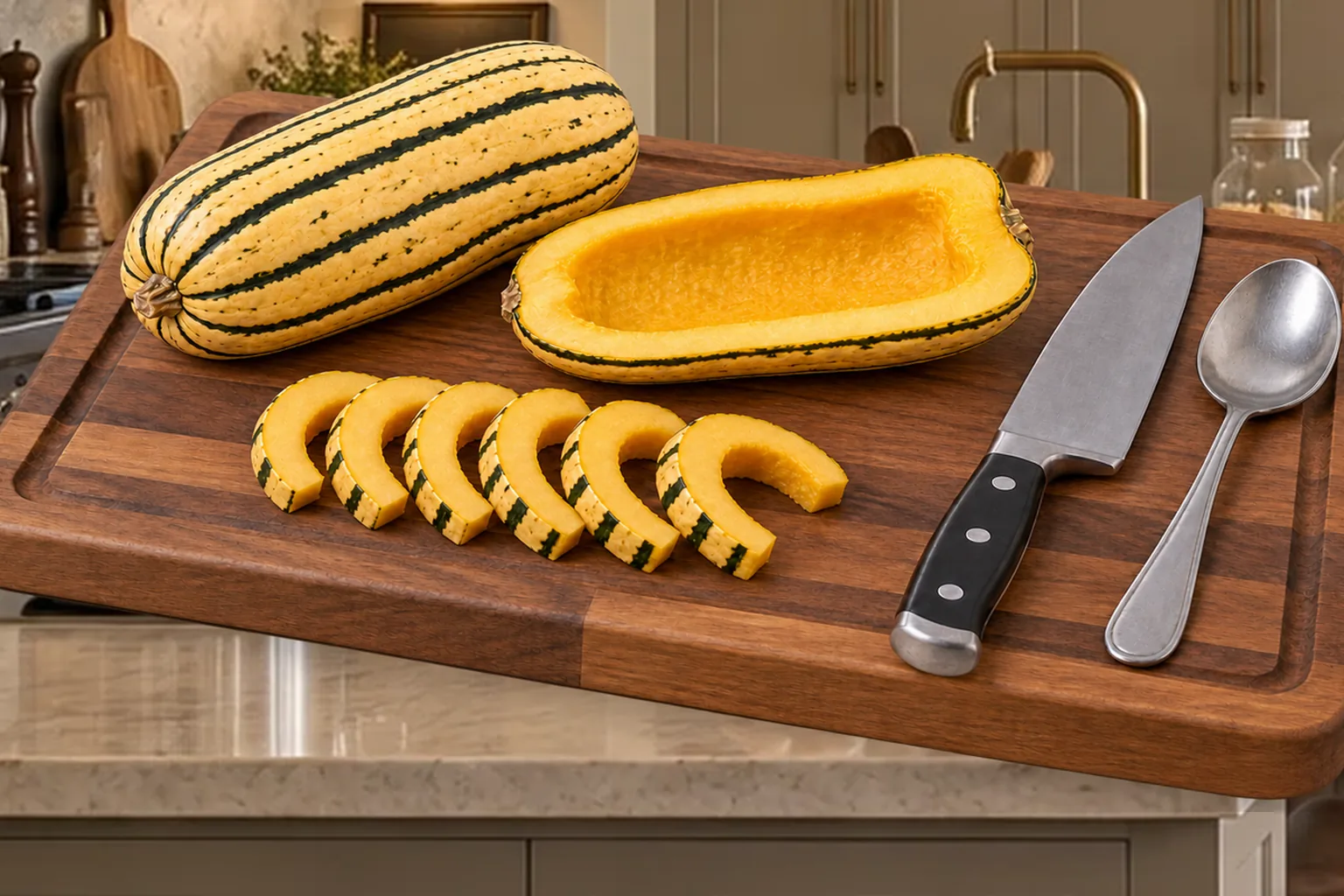
Move the hot squash to a sturdy cutting board and let it stand only long enough to handle safely. Do not leave it to cook down into a soft baked squash; the slices still need structure.
Halve, Seed, And Cut One-Third-Inch Half-Rings
Cut each squash lengthwise. Scoop out the seeds and stringy center with a sturdy spoon, leaving the skin and flesh together.
Turn the halves cut-side down for stability. Cut crosswise into half-rings about one-third inch thick.
Consistency matters more than a perfectly measured ruler line. Very thin tips can burn before the centers brown, while thick pieces stay soft and pale. Keep the half-rings close in thickness so they finish together.
Coat Both Sides And Use A Single Layer
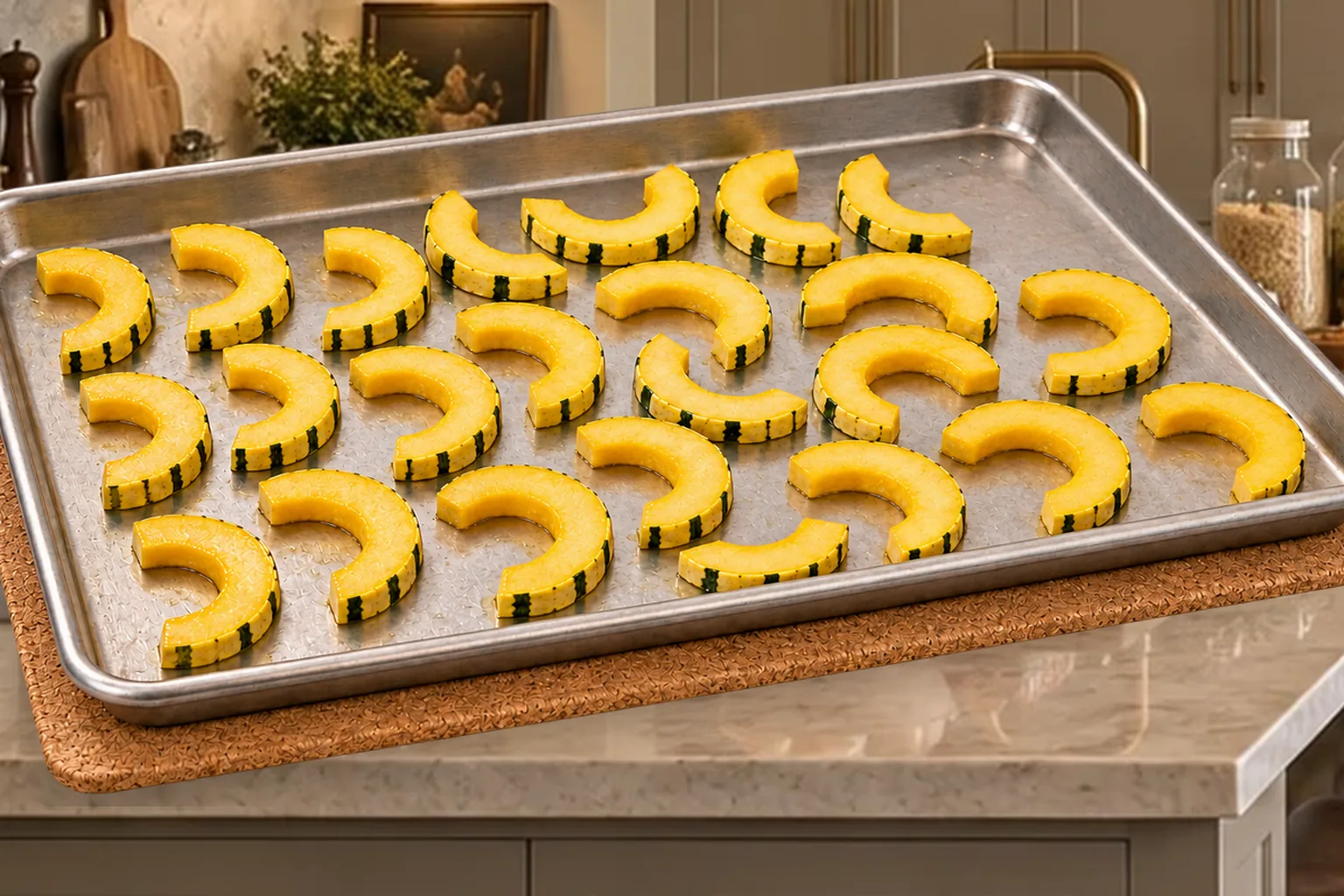
Pour the melted fat onto one or two uncoated stainless-steel sheet pans. Turn every half-ring through the fat so both cut faces receive a light coat.
Arrange the slices in one layer without stacking. Use a second pan when needed. Overlapping pieces trap moisture and block the flat faces from browning against the metal.
The coated slices should look lightly glossy. A dry patch on one face means it still needs to be turned through the fat; a pool around the slice means more fat than it can use is sitting in one place.
Brown The First Side Before Turning
Return the pans to the 375°F oven. Roast for 15 to 25 minutes, until the undersides are golden brown.
Lift one center slice with a thin stainless spatula and look at the face touching the pan. It should show a broad golden patch rather than a pale wet surface.
Do not turn every piece just because the shortest time has passed. Oven heat, squash size, pan color, and the amount of food on the pan all change the browning time.
Turn And Brown The Second Side
Turn each half-ring and roast for another 15 to 20 minutes. Watch closely during the final few minutes.
The second face should become golden, the outside edge should look lightly crisp, and the middle should feel soft when pressed with the edge of a spatula.
Remove smaller pieces as soon as both sides are browned if the larger pieces need more time. Dark golden is the target; black edges and a bitter smell mean the slices have gone too far.
What The Finished Slices Should Be Like
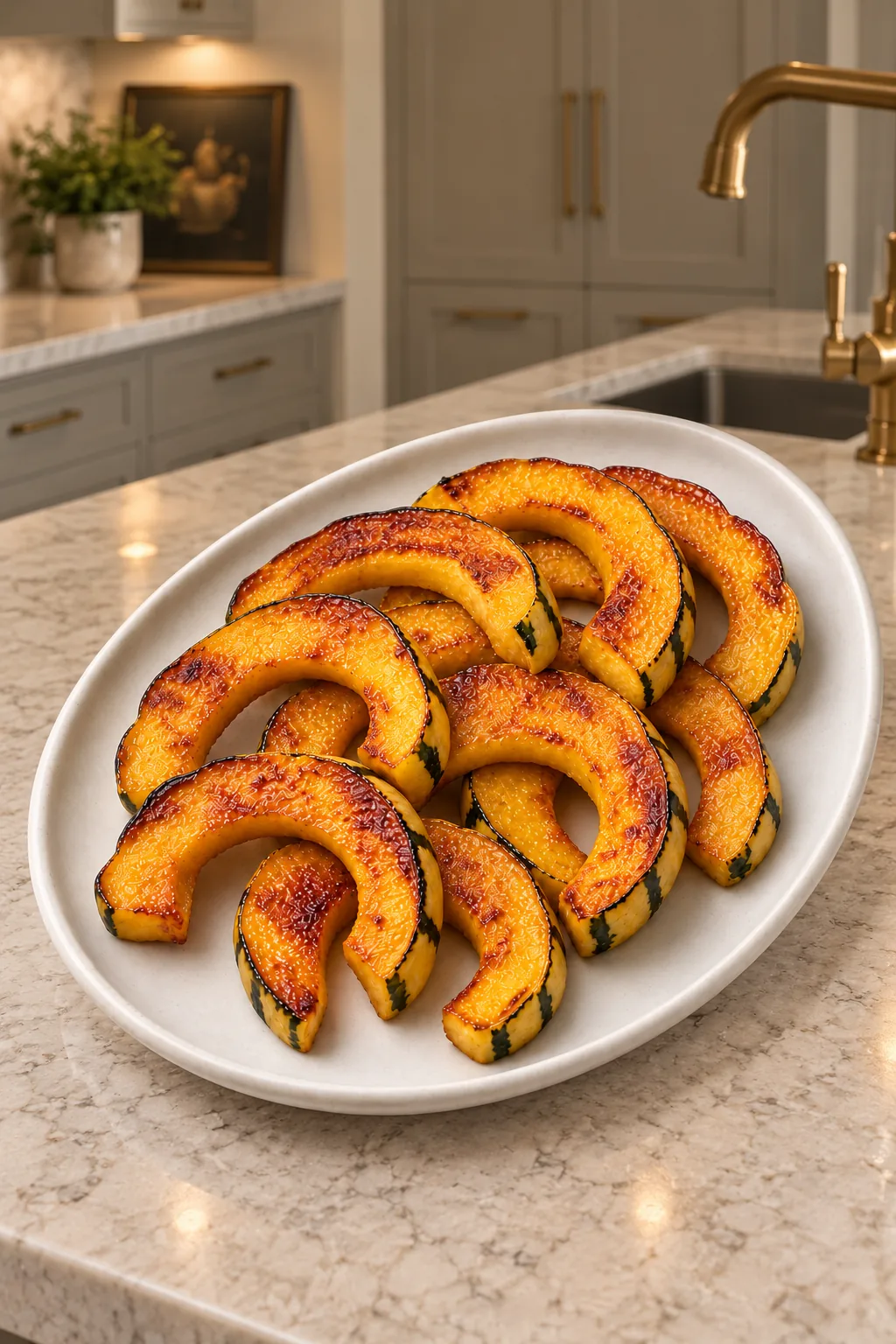
The half-rings should keep their curved shape when lifted. The skin is tender enough to eat, the center is soft, and each flat face has caramelized golden areas.
The aroma is warm squash and the chosen cooking fat. Ghee or butter gives a buttery smell, while rendered animal fat adds a savory note. The squash itself supplies the sweetness.
A good slice bends a little without falling apart. If it is pale and wet on both faces, it needed more pan contact. If the center is dry and the edge shatters, it stayed in too long.
Ways To Serve Roasted Delicata
Serve the slices warm as a side dish or set them out as finger food. Their curved shape also works on top of a fall salad or vegetable bowl.
They can finish a casserole after both sides are already roasted. Add them near the end so the squash warms without losing the browned faces.
For other simple roasted vegetable sides, try Herb-Roasted Crispy Cauliflower, Lemon Roasted Green Beans, or Roasted Artichoke Hearts.
Make Ahead And Store
The source is written for serving the slices warm. You can complete the whole-squash pre-bake earlier, then cut and roast when you want the browned edges.
If the pre-baked squash is cool when you slice it, watch the visual browning cues rather than assuming the first side will match a pan loaded with warm squash.
Store leftovers covered in glass in the refrigerator. The source does not give a fixed storage or reheating duration, so this article does not invent one. Use ordinary freshness cues and expect stored slices to lose some crispness.
Recommended Equipment
- One or two large uncoated stainless-steel sheet pans
- Sturdy cutting board
- Sharp chef’s knife
- Strong metal spoon for removing seeds
- Thin stainless spatula or tongs for turning
- Heat-safe trivets for the hot pans
- Measuring spoons or a liquid measure for melted fat
Frequently Asked Questions
Do I Need To Peel Delicata Squash?
No. Leave the skin on. It becomes tender in the oven and helps the half-rings hold their shape.
Why Bake The Squash Whole First?
The 25-minute pre-bake makes the lengthwise cut, seed removal, and thin slicing easier. It does not replace the two-sided roast.
How Thick Should The Slices Be?
Cut half-rings about one-third inch thick. Similar thickness helps the centers soften while both flat faces brown.
Can I Use Olive Oil Or Avocado Oil?
Not for this heated GAPS method. Choose melted ghee, natural non-hydrogenated coconut oil, introduced butter, duck fat, or another rendered animal fat.
How Much Fat Should I Use?
Use two tablespoons for one to two squash, increasing to as much as one-quarter cup for two large squash when needed to coat both sides lightly.
Why Do The Slices Need A Single Layer?
Each cut face needs direct pan contact. Stacked or overlapping slices hold moisture between them and block even browning.
How Do I Know When To Turn Them?
Lift a center slice and check the face touching the pan. Turn when it shows a broad golden-brown patch rather than a pale, damp surface.
Can I Skip Turning Every Slice?
No. The source method browns both sides. Turning is what gives each half-ring two caramelized faces instead of one browned side and one soft side.
How Many Servings Does This Make?
The measured recipe makes about five servings, depending on squash size and portion size. Use the WPRM 2x control to scale the squash and fat together.
Roasted Delicata Squash Recipe
Caramelized Roasted Delicata Squash Slices for Full GAPS
Ingredients
Equipment
Method
- Preheat the oven to 375°F.
- Place the scaled whole delicata squash on an uncoated stainless-steel baking sheet or directly on the oven rack. Bake whole for 25 minutes, until warm and slightly more yielding but not collapsed or fully tender.
- Carefully move the hot squash to a sturdy cutting board. Halve each squash lengthwise and scoop out the seeds and stringy center, leaving the skin on.
- Place each half cut-side down and cut crosswise into even one-third-inch half-rings.
- Pour the scaled melted fat onto one or two uncoated stainless-steel sheet pans. Turn every slice through the fat to coat both faces lightly, then arrange in a true single layer with no overlap.
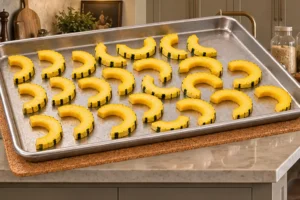
- Roast for 15 to 25 minutes, until the undersides show broad golden-brown patches rather than pale wet surfaces.
- Turn every half-ring and roast for another 15 to 20 minutes, watching closely near the end until the second side is golden, the edges are lightly crisp, and the centers are soft.
- Remove smaller slices when both sides are browned if larger pieces need more time. Do not let the edges turn black or smell bitter.
- Serve warm.
Notes
Tried this recipe?
Let us know how it was!Make Sheet-Pan Prep Easier
The planned Weekly Kitchen Rhythm Planner will help you place head-start steps, roasting windows, and side dishes into the week without rebuilding the plan every afternoon. Find current resources and upcoming releases in the WFLI shop.

Leave a comment