

Roasted artichoke hearts are a three-ingredient Full GAPS side that goes straight from the freezer to the oven. You do not need to thaw, drain, or trim anything. Give the frozen hearts enough room on a small stainless sheet pan, turn them once, and keep an eye on the loose leaves as the edges become crisp.
This is the kind of side I need on a weekday when I am cooking before homeschool and second shift. Frozen artichoke hearts remove the prep work without turning the recipe into packaged convenience food. The bag still needs a clean ingredient list, but once that is settled, the rest is five minutes of hands-on work.
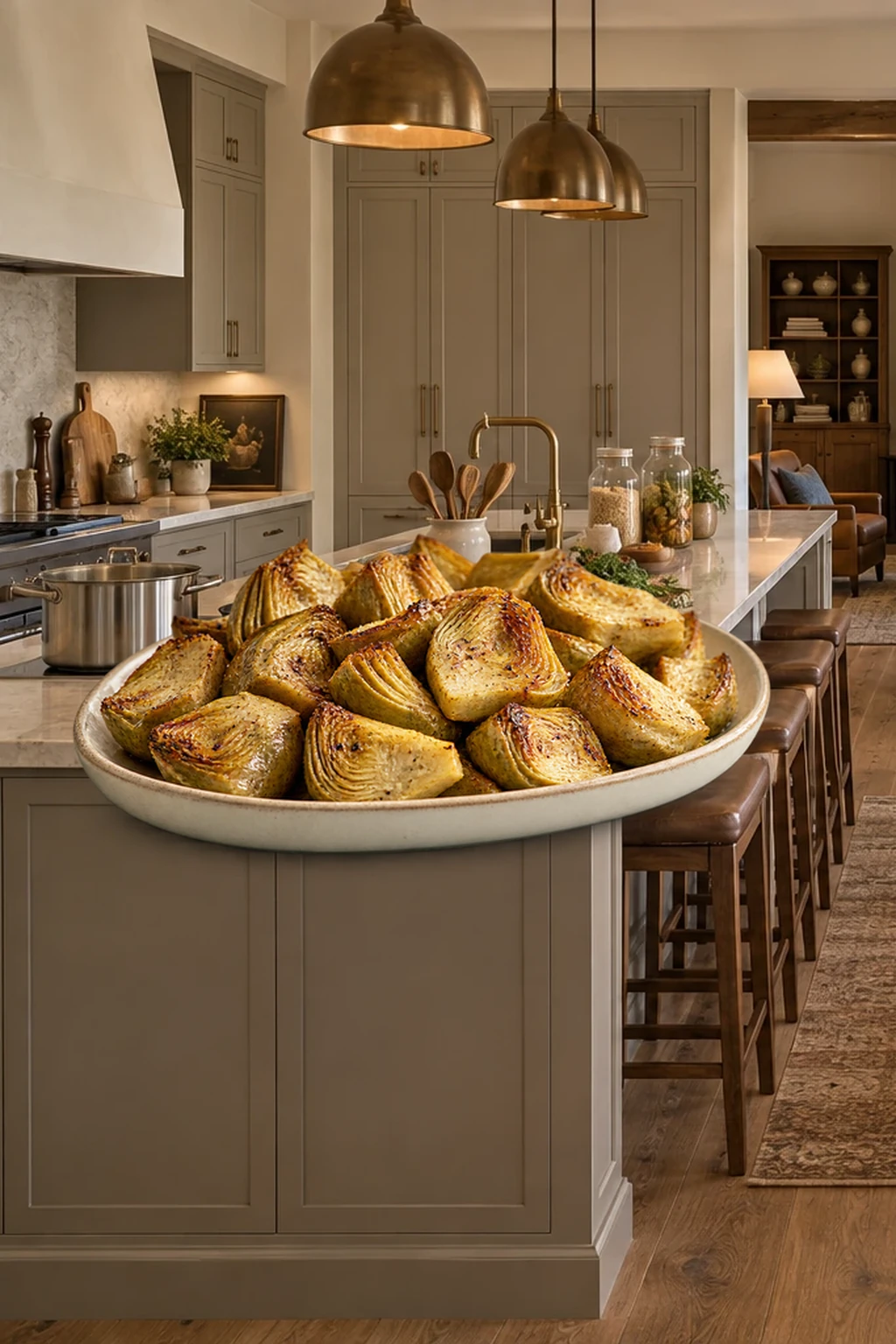
The useful cues are easy to see. The hearts begin pale green and frosty. After the first 20 minutes, the outside leaves start to color. After you turn them and roast for another 15 minutes, the cut surfaces should be golden and the thin loose leaves should look crisp rather than wet.

Where Roasted Artichoke Hearts Fit on GAPS
This recipe fits Full GAPS after artichoke hearts and your chosen cooking fat are introduced and tolerated. French artichoke is a Full GAPS vegetable. The frozen hearts must be plain, without starch, sugar, seasoning, citric acid, or another coating.
Use one measured tablespoon of ghee, coconut oil, or rendered animal fat for the roasting step. If you enjoy olive oil with artichokes, drizzle it raw over the finished hearts. Keep the heated tablespoon as one of the stable cooking fats used in the GAPS kitchen.
This is not an Introduction Diet recipe. Save the crisp roasted edges for Full GAPS. If you are still working through Intro, use the vegetables and cooking methods for your current stage instead of trying to force this texture into an earlier-stage meal.
The recipe is naturally egg-free, dairy-free when you choose coconut oil or rendered animal fat, gluten-free, and nut-free. Ghee works when it is part of your current dairy routine. You do not need a special replacement for any of the three ingredients.
Choose Plain Frozen Artichoke Hearts
Look for a 12-ounce bag that lists artichoke hearts as the only ingredient. The hearts should be loose enough to spread across the pan. A few pieces frozen together are fine, but break up any large clumps before roasting so moisture does not stay trapped in the center.
Keep the bag frozen until the oven is hot and the pan is ready. Thawing changes the way moisture reaches the pan. This method depends on the frozen pieces roasting from the outside in during the full 35 minutes.
Jarred or canned hearts are not a direct substitute here. They bring extra liquid, a different texture, and often additional ingredients. They would need a separate method rather than the frozen timing in this card.
If some hearts are whole and others are halves or quarters, spread the thicker pieces near the hotter outside area of the pan and keep loose leaves closer to the center. That gives the thin pieces a little protection before the turning checkpoint.
Prepare the Pan Without Thawing
Heat the oven to 400°F. Put one tablespoon ghee, coconut oil, or rendered animal fat on a small uncoated stainless-steel baking sheet. If the fat is solid, place the empty pan in the oven for about one minute, only until the fat melts.
Add the 12 ounces of frozen artichoke hearts straight from the freezer. Sprinkle one-half teaspoon mineral sea salt over the pieces. Toss with two wooden or silicone spoons. The fat does not need to paint every surface. You are looking for a light sheen across the pan and contact points where the pieces can begin browning.
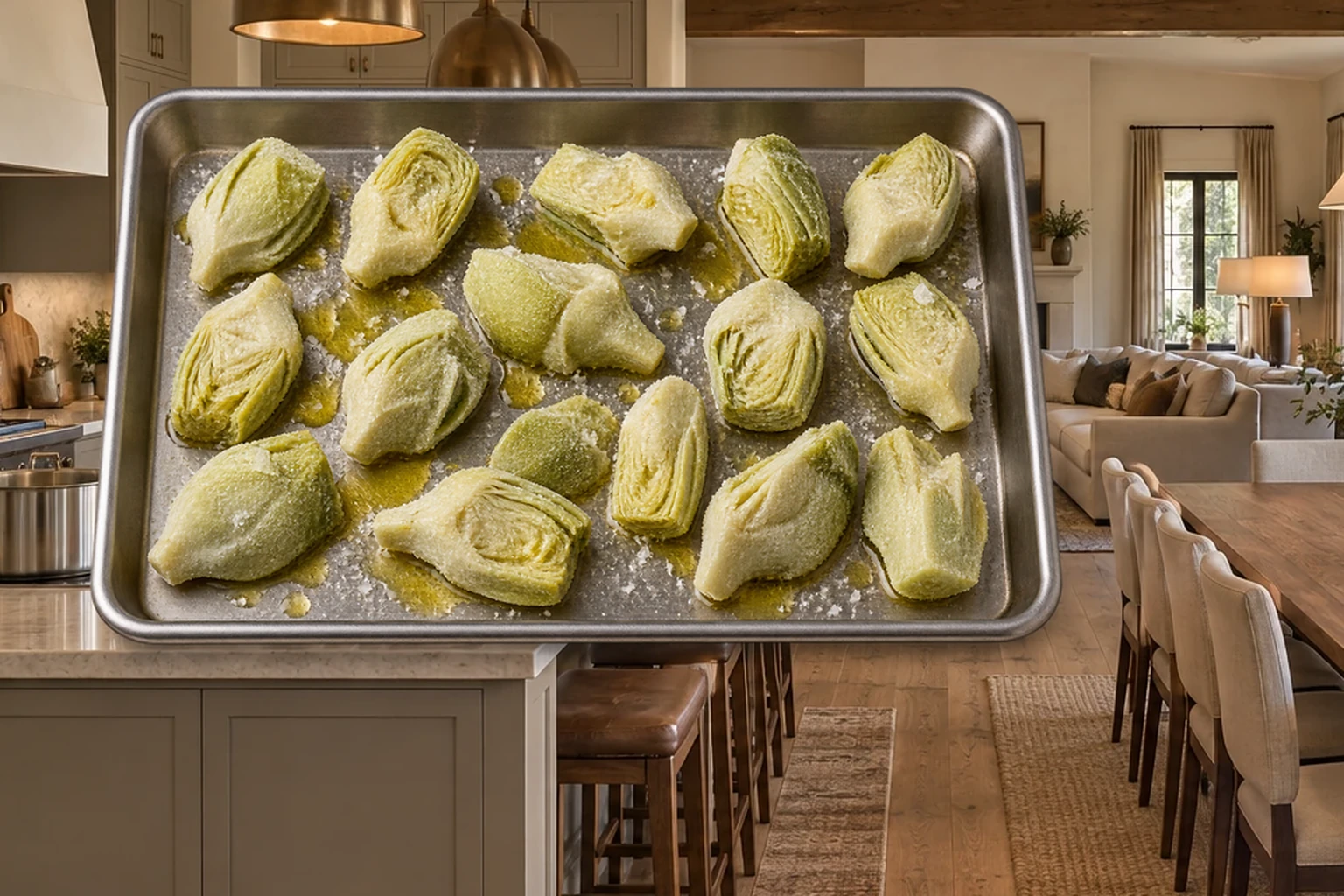
Spread the hearts in one uncrowded layer. Do not stack them. If pieces sit on top of each other, the covered surfaces steam while the exposed pieces roast. A small sheet pan should be large enough for one 12-ounce bag without piling.
Set any detached thin leaves toward the center of the pan now. They can become wonderfully crisp, but they darken faster than the thick hearts. The center gives them a gentler place to start.
Roast for Twenty Minutes Before Turning
Roast the frozen hearts for 20 minutes without stirring. During the early part of the bake they may look pale and damp as the surface frost melts. Leave them alone. Moving them too soon interrupts the contact that creates the browned cut surfaces.
At 20 minutes, pull the pan out and look closely before turning anything. The top surfaces may still be light, but the pieces touching the metal should have begun to color. You should see less loose moisture on the pan than you saw at the beginning.
Use the same two spoons to turn every heart. A spoon on each side gives you control without crushing the layered leaves. Move thin loose leaves that are getting dark toward the center. If a leaf is already very dark and crisp, lift it off and save it rather than leaving it for another 15 minutes.

Spread the turned pieces back into one layer. Put the broadest cut surfaces against the pan when possible. That contact gives you a browned side while the centers finish heating.
Finish the Last Fifteen Minutes
Return the pan to the 400°F oven for 15 minutes. Check the thinnest leaves near the end. The hearts are ready when the thicker pieces are hot and tender and several edges are deep golden brown.
Dark spots on the thinnest leaves do not automatically mean the hearts are burned. Those leaves can become crisp before the dense centers finish. Smell is the useful final check. Toasted edges smell savory and roasted. A sharp burnt smell means a loose leaf needs to come off the pan.
Do not wait for every piece to reach the exact same shade. Frozen hearts vary in thickness. Take out truly dark loose leaves, then let the thicker hearts finish their full time.
Serve the hearts while the edges are still crisp. Taste one before adding anything else. The measured salt may be enough, especially if you use a flavorful rendered fat. Add a raw olive-oil drizzle only after roasting if you want it.
What to Serve With Roasted Artichoke Hearts
Use them as a side with chicken, fish, lamb, beef, or another meat your family enjoys. Their mild center can sit beside a simple roast, while the browned leaves hold up next to stronger seasonings.
For an easy dinner pairing, serve them with One-Pan Rosemary Honey Chicken. The chicken provides the main protein while the artichokes use the same oven-centered kind of meal planning.
You can also serve the hearts as an appetizer with toothpicks or add them to a salad after they cool slightly. If you want the whole fresh-artichoke method instead, use How to Cook French Artichokes on Full GAPS. That recipe starts with whole fresh artichokes and has its own covered-pot method.
Storage and Reheating
Let leftovers stop steaming before covering them in a glass container and moving them to the refrigerator. Trapped steam softens the thin roasted leaves, so do not seal a piping-hot panful.
Reheat the hearts in one layer on an uncoated stainless pan at 350°F until hot and the edges begin to crisp again. A crowded dish will warm them, but it will not bring back the same roasted surface.
Because this side depends on crisp edges, make only what you expect to use from the refrigerator. This recipe does not include freezer directions.
Recommended Equipment
You need one small uncoated stainless-steel baking sheet and two wooden or silicone spoons. The pan should be large enough to hold a 12-ounce bag in one layer, with a little open space between pieces.
A rimmed pan keeps melted fat and loose leaves contained. Use a larger stainless pan if your artichoke pieces do not fit without stacking. More surface area is better than a deeper pile.
Frequently Asked Questions
Do I Need to Thaw the Artichoke Hearts?
No. Put them on the pan frozen. The 20-minute first roast and 15-minute second roast are built around hearts that start frozen.
Can I Use Olive Oil for Roasting?
Use the measured tablespoon of ghee, coconut oil, or rendered animal fat for the heated step. Add olive oil raw after roasting if you want its flavor.
What Should I Look for on the Bag?
Look for frozen artichoke hearts without starch, sugar, seasoning, citric acid, or another coating. The cleanest bag contains only artichokes.
Can I Use Jarred or Canned Artichokes?
Not with this timing. Jarred and canned hearts carry more liquid and have a different texture. This method is for plain frozen hearts.
Why Are the Loose Leaves Getting Dark?
Thin leaves roast faster than thick heart pieces. Move them to the center at the turning checkpoint, or remove them when they are already dark and crisp.
Can I Double the Recipe?
Yes, but use two pans. Two bags piled on one small sheet will steam. Divide them into single layers and rotate the pans between racks if needed.
How Many People Does One Bag Serve?
One 12-ounce bag serves about three to four people as a side. It stretches farther when offered as one part of an appetizer spread.
Roasted Artichoke Hearts Recipe
Roasted Artichoke Hearts for Full GAPS
Ingredients
Equipment
Method
- Heat the oven to 400°F.
- Put the measured cooking fat on a small uncoated stainless-steel baking sheet. If the fat is solid, warm the empty pan in the oven for about 1 minute, only until it melts.
- Add the artichoke hearts straight from the freezer. Do not thaw them first.
- Sprinkle the sea salt over the frozen hearts and toss with two spoons. The fat does not need to coat every surface. Spread the hearts into one uncrowded layer.

- Bake for 20 minutes without stirring.
- Take the pan out and turn every heart with the same two spoons. Move thin loose leaves that are getting dark toward the center, or remove any that are already very dark and crisp.

- Bake for 15 minutes more, checking the thinnest leaves near the end. The hearts are ready when the thicker pieces are hot and tender and several edges are deep golden brown.
- Serve while the edges are still crisp. Add an optional raw olive-oil drizzle only after roasting.
Notes
- Full GAPS: Use after plain artichoke hearts and the chosen cooking fat are introduced and tolerated.
- Frozen: Keep the hearts frozen until they go on the pan.
- Label: Choose hearts without starch, sugar, seasoning, citric acid, or coating.
- Olive oil: Add it raw after roasting rather than using it for the measured heated tablespoon.
- Yield: One 12-ounce bag serves about three to four as a side, or more as part of an appetizer spread.
Tried this recipe?
Let us know how it was!Keep Simple Sides in the Weekly Plan
The planned Weekly Kitchen Rhythm Planner will help you match quick sides like this with the meat, fish, stock, and leftovers already in your week. Find current resources in the WFLI shop.

Leave a comment