

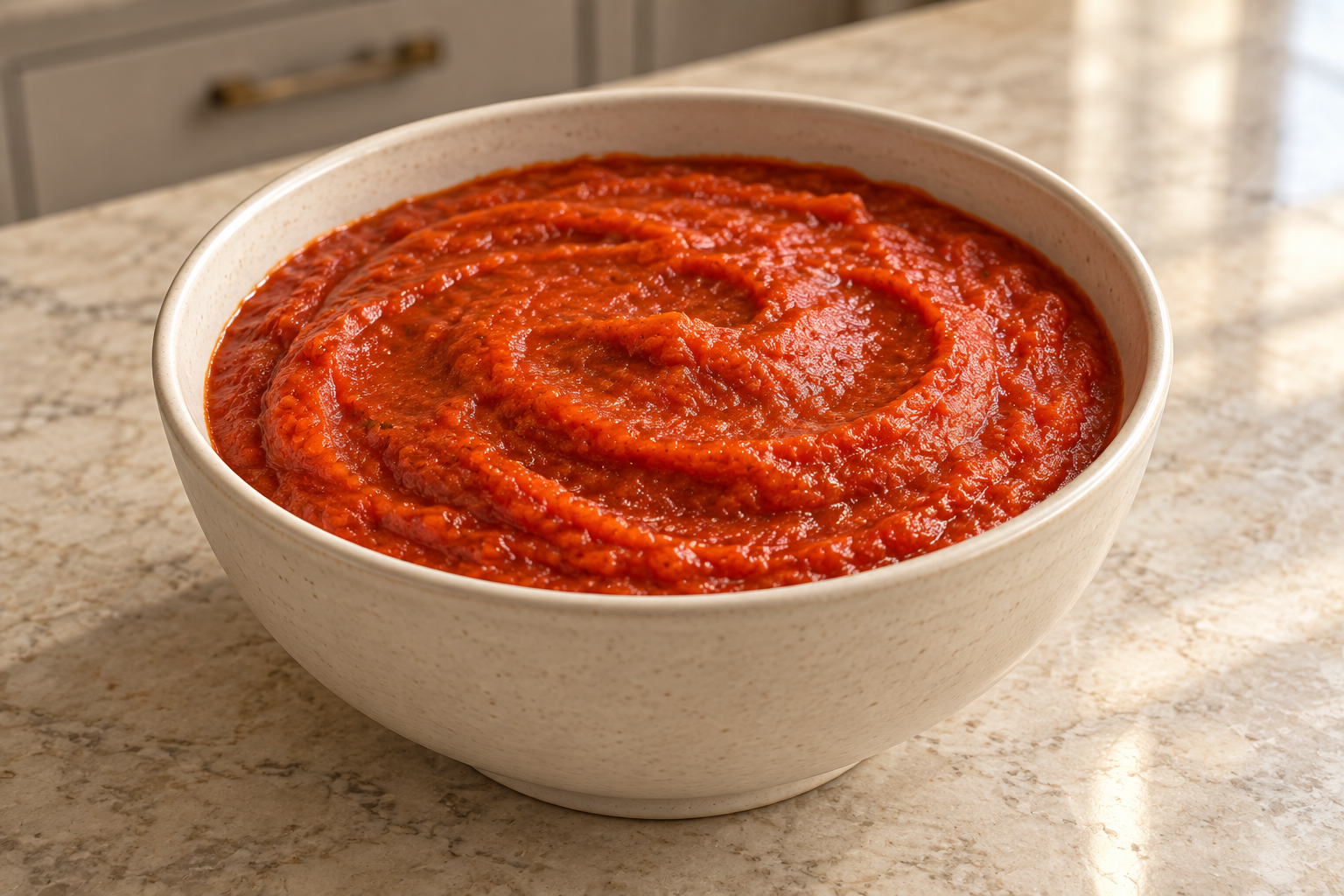
This stovetop nomato sauce gives you a thick, savory sauce without a single tomato. Carrots bring sweetness, a small beet gives it a warm red color, and turnip keeps the flavor from being all carrot. Fresh lime, ginger, and oregano brighten the finished puree. You cook the vegetables until very tender, then blend them with homemade meat stock. There is no flour, starch slurry, or long reduction to manage.
It is a useful Full GAPS option when you want a tomato-free sauce for a bowl of vegetables or meat. Expect a smooth vegetable sauce with a little earthiness from the beet and a noticeable citrus finish. It does not taste exactly like a jar of marinara, and it does not need to. The balance comes from the cooked roots, the lime, and the herbs.
A Sauce That Starts With The Stock Pot
In our house, the stock pot gets started first thing in the morning. What goes into it changes with our budget, the time we have, and what is in the fridge or on sale. That routine is what made GAPS doable for us. Having stock ready means dinner does not have to start from nothing.
This is the kind of recipe that makes sense alongside that routine. You need only ⅔ cup of stock for the blender. You can set that small amount aside before using the rest for soup. With work and homeschooling in the same day, I appreciate a recipe with a clear stopping point: cooked vegetables, measured stock, then a short blend. You do not have to build a second meal just to make the sauce.
What Goes Into Stovetop Nomato Sauce
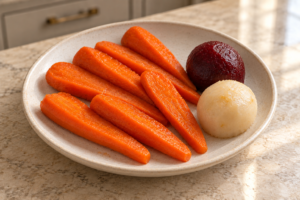
The vegetables are four medium carrots, one small beet, and one small to medium turnip. Keep the beet small. Its flavor and color are strong enough to carry through the batch without making it the largest vegetable on the plate. Cut the carrots in half as the recipe directs. Wash the roots well and remove any tough peel before cooking.
Homemade chicken meat stock works well when you want a mild savory base. Homemade beef meat stock is another option for a sauce you plan to serve with beef. Measure ⅔ cup for this batch. The stock goes into the blender after the vegetables cook; it is not the amount of water for boiling them.
Fresh lime juice supplies the tang. Measure three tablespoons rather than counting limes, because their size and juiciness vary. A one-inch piece of fresh ginger brings a sharper note to the cooked roots. Roughly chop it before blending so the machine has smaller pieces to work with.
The garlic is optional. Use two roughly chopped cloves if you want that flavor, or leave them out. For oregano, choose two teaspoons fresh or one teaspoon dried. Those are alternatives, not two amounts to add together. Finish with ¼ teaspoon sea salt. If your stock is already salted, remember that its seasoning will carry into the sauce.
Cook The Roots Until Very Tender
Steam or boil the carrots, beet, and turnip. A saucepan is enough for this smaller batch. If you boil them, use enough water to cook the vegetables comfortably, then drain them before measuring anything into the blender. If you steam them, keep the water below the vegetables and use a lid.
The important endpoint is very tender, not just barely cooked. Push a fork into the center of the beet and turnip as well as a thick carrot half. It should enter easily. A firm center will leave you chasing little pieces in the blender even after the outside looks soft. If one vegetable is ready sooner, set it aside while the others finish.
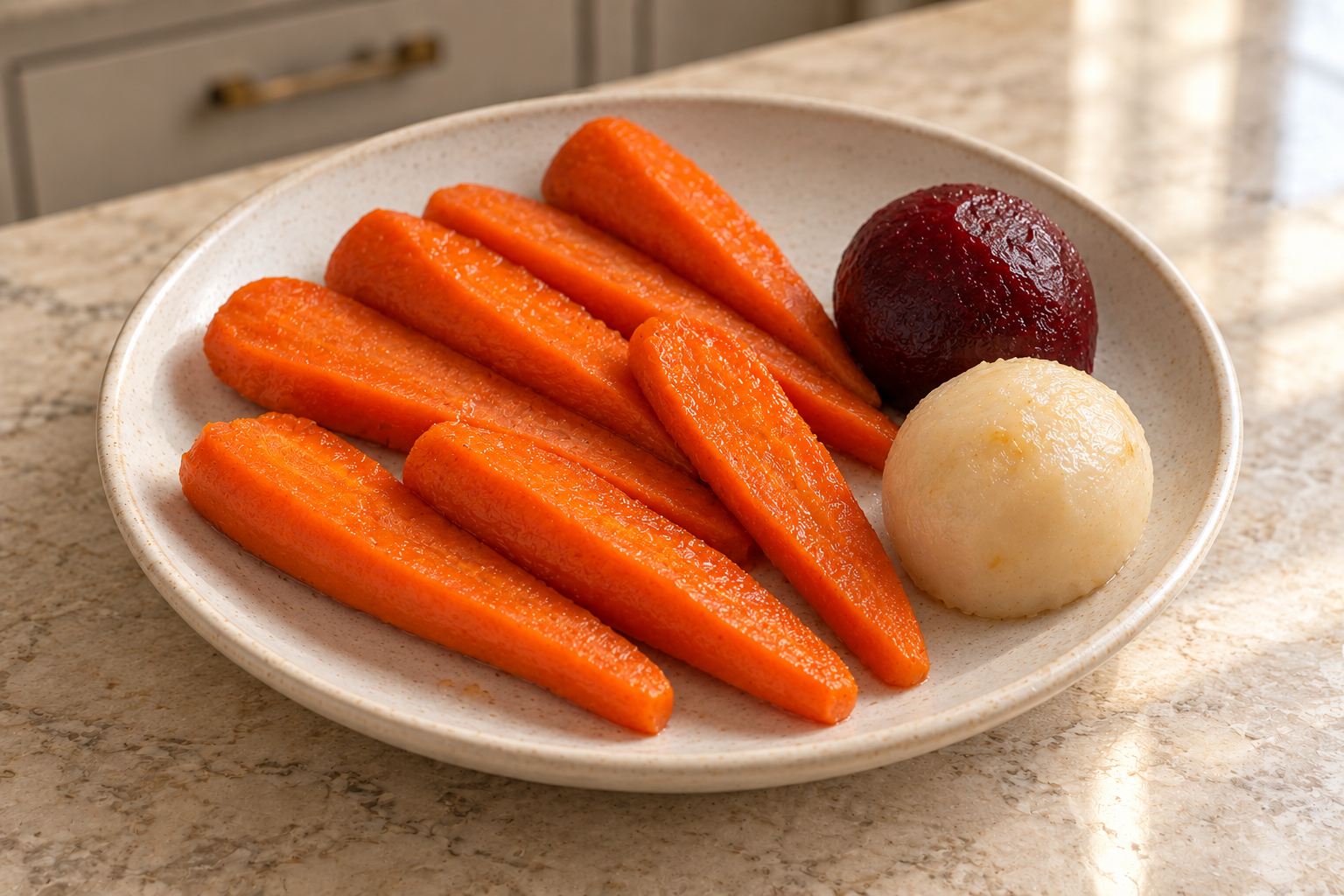
Let the cooked vegetables cool slightly before blending. Follow your blender’s instructions for warm ingredients and its fill limit. This is a thick mixture, so giving the roots time to soften thoroughly matters more than trying to make the blender do the cooking work. Root size and your choice of steaming or boiling affect cooking time, so use the fork test.
Blend The Sauce Smooth
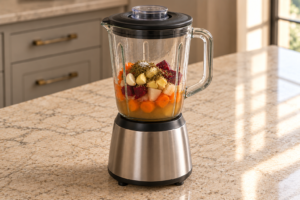
Put the measured meat stock into the blender first. Add the cooked vegetables, lime juice, chopped ginger, optional garlic, oregano, and salt. Starting with the liquid at the bottom helps the blades reach it before working through the soft roots.
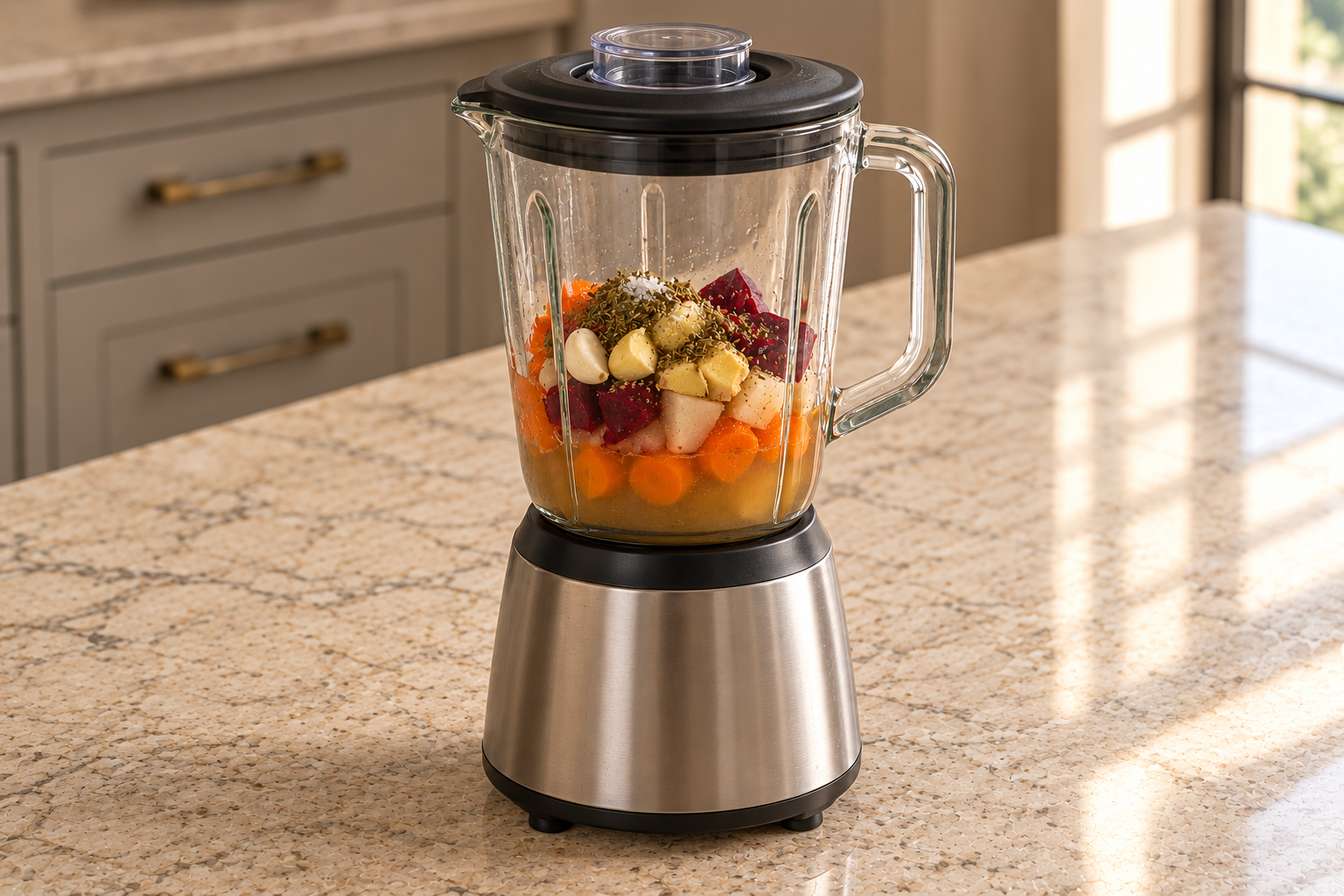
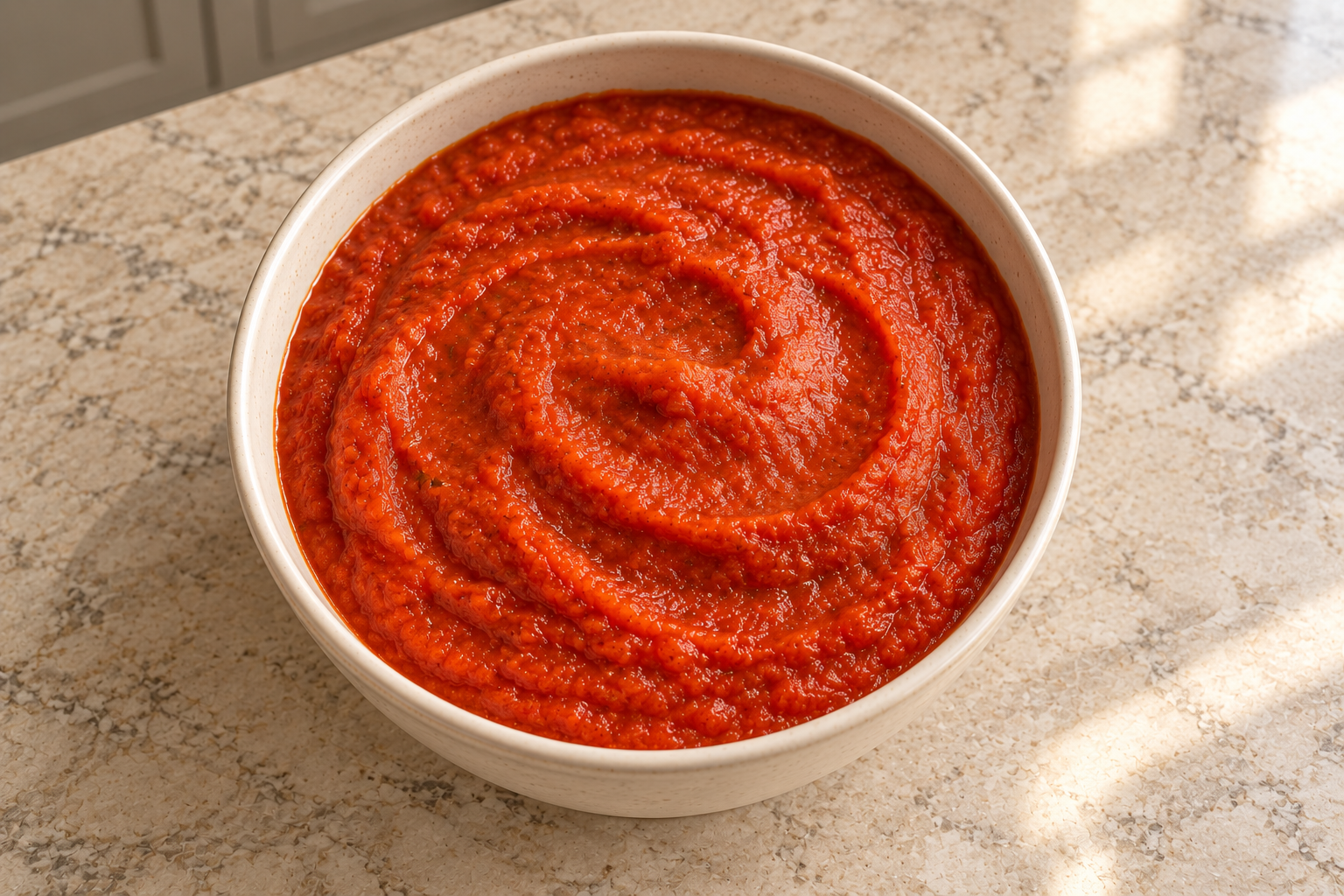
Blend for about 30 to 50 seconds, until the puree is smooth. Look for an even red-orange color with fine herb flecks. You should not see pale turnip pieces or distinct carrot chunks. The sauce is thick rather than watery, and it should hold a soft trail when you move a spoon through it.
If pieces remain, stop the blender and check the mixture. Scrape down the sides with the machine off, then blend again. A vegetable with a firm center needs more cooking, not an automatic splash of extra stock. Keep the recipe’s liquid measurement so the finished sauce stays thick. There is no separate thickener to add.
Where This Fits On GAPS
This is a Full GAPS recipe. Carrots, beets, turnips, fresh ginger, garlic, limes, and additive-free herbs are included in the GAPS food guidance. The vegetables are cooked, but the lime, ginger, and optional garlic are added afterward. That is why I am keeping this sauce labeled Full GAPS rather than treating a blended texture as proof that it belongs in an early Introduction Diet stage.
Use homemade meat stock for the measured liquid. GAPS distinguishes meat stock made with meaty parts from long-cooked bone broth. A sauce does not change that distinction. The linked stock recipes help you prepare the base, then you can use the small amount needed here.
Tomatoes themselves are allowed on Full GAPS. A tomato-free recipe gives you another option; it does not mean everyone on GAPS must avoid tomatoes. Choose it when this ingredient combination suits your household. The sauce contains no dairy, eggs, or nuts, and the optional garlic can be omitted without changing the rest of the measurements.
It does contain vegetables, so it is not a No-Plant GAPS recipe. I would not label a root-vegetable sauce automatically ketogenic either. For earlier Intro meals, choose a stage-specific stock-based sauce. This citrus-and-ginger version is written for Full GAPS.
How To Serve It
Spoon it over cooked zucchini ribbons or another cooked vegetable you already use on Full GAPS. Let the vegetables drain first so their cooking liquid does not thin the sauce. Warm the sauce gently and fold it through, or serve a spoonful beside meat so you can choose how much goes into each bite.
It also works as a savory addition to a bowl of shredded meat and cooked vegetables. Start with the amount you want on the plate instead of treating the whole batch as one serving. The lime and ginger are noticeable, which makes a plain meat-and-vegetable bowl a useful place for it.
If you are looking for a complete tomato-free dinner, the bean-free, nightshade-free beef chili is a separate recipe with its own measured sauce and seasonings. Follow that recipe rather than replacing its liquids cup for cup with this sauce. Different tomato-free recipes can share a place on the menu without being interchangeable formulas.
Storage And Making A Batch Ahead
Set aside what you plan to serve now. Cool the remainder, cover it, and refrigerate it for another meal, or freeze portions for later. Freezing extras is a useful option with this sauce. Portion by the amount you normally use so you can thaw one container without committing to the whole batch.
Use glass containers suitable for the freezer and leave expansion space according to the container’s instructions. Label the sauce and date. Thaw a portion in the refrigerator, then stir and warm it gently. If a little liquid separates after thawing, stir it back through before deciding whether the texture needs anything else.
This is a smaller batch than the pressure-cooker nomato sauce, which has its own onion-based formula. The finished quantity depends on the size of the roots, so the recipe card records one batch rather than promising an exact number of cups. If you double it, double every measured ingredient, including the stock and lime. Cook until the vegetables are equally tender and blend in portions if the full amount exceeds your blender’s limit.
Tools That Help
You need a saucepan with a lid for boiling, or a pot and properly fitted steamer for steaming. I use Le Creuset cookware; stainless steel is useful for this stovetop job. A fork gives you the tenderness check. A blender, measuring cup, and measuring spoons handle the rest.
A strong blender still needs fully cooked roots. Choose one that can handle warm ingredients safely under its manufacturer’s directions. A glass jug lets you see the liquid level and any pieces caught above the puree. You do not need a pressure cooker to make this particular recipe.
Frequently Asked Questions
Will It Taste Like Tomato Sauce?
It fills a similar place on a plate, but the ingredients have their own flavor. Expect sweet cooked carrot, earthy beet, savory stock, and tangy lime with ginger and oregano. It is a thick vegetable sauce, not a tomato concentrate. If you want a smooth, fruit-balanced soup instead of a sauce, use the Nightshade-Free Nomato Soup with Nectarines and Cherries.
Can I Use Dried Oregano?
Yes. Use one teaspoon dried in place of the two teaspoons fresh. Dried oregano is more concentrated by volume, so use the measured alternative in the card.
Can I Leave Out The Garlic?
Yes. It is optional. Keep the ginger, lime, oregano, vegetables, and stock as written so you still have the rest of the flavor balance.
Why Is My Sauce Grainy?
Check whether the roots were very tender in the center. Also check for tough peel or pieces caught against the sides of the blender. Stop the machine before scraping, then blend until the color and texture are even.
Do I Use The Stock To Boil The Vegetables?
Not in this method. Steam or boil the vegetables first, then drain as needed. The ⅔ cup homemade stock is measured separately for blending.
Stovetop Nomato Sauce Recipe
Stovetop Nomato Sauce for Full GAPS
Ingredients
Equipment
Method
- Steam or boil the carrots, beet, and turnip until very tender. A fork should enter their centers easily. Drain if boiled and let cool slightly before blending.
- Pour the measured homemade meat stock into the blender first. Add the cooked vegetables, lime juice, roughly chopped ginger, optional garlic, oregano, and sea salt. Break larger cooked pieces as needed to fit. Follow your blender instructions for warm ingredients.
- Blend until smooth, about 30 to 50 seconds. Look for an even red-orange puree with fine herb flecks and no distinct vegetable pieces. Stop the machine before scraping down the sides if needed.
Notes
Tried this recipe?
Let us know how it was!Make Room For Sauce In Your Week
If dinner keeps reaching the table before the sauce is ready, put the stock and sauce on the plan together. Start with the stock you are already making, then choose the meal that will use this batch. The Weekly Kitchen Rhythm Planner is one of our planned kitchen resources for organizing that kind of routine. You can find our kitchen guides and offers in the WFLI shop.

Leave a comment