

Boiled cabbage noodles are the simplest version of this grain-free vegetable base: one green cabbage, water, and mineral salt. The ribbons simmer for only 3 to 5 minutes, then drain like pasta. They stay mild enough for a sauce or meatballs while giving a Full GAPS meal a tender vegetable foundation.
This is the method I reach for when the rest of dinner already has plenty of flavor. There is no skillet browning, meat stock, fat, or vinegar in this formula. That makes it useful on busy evenings when I need one predictable pot while I finish the main dish, help someone at the table, or get the next part of our school-day routine settled.
This post contains one complete recipe for boiled cabbage noodles. Braised cabbage noodles have their own measured formula and card because they use animal fat and meat stock. The optional meatballs also belong on separate pages. One post, one formula, and one card keeps the times and physical cues clear.
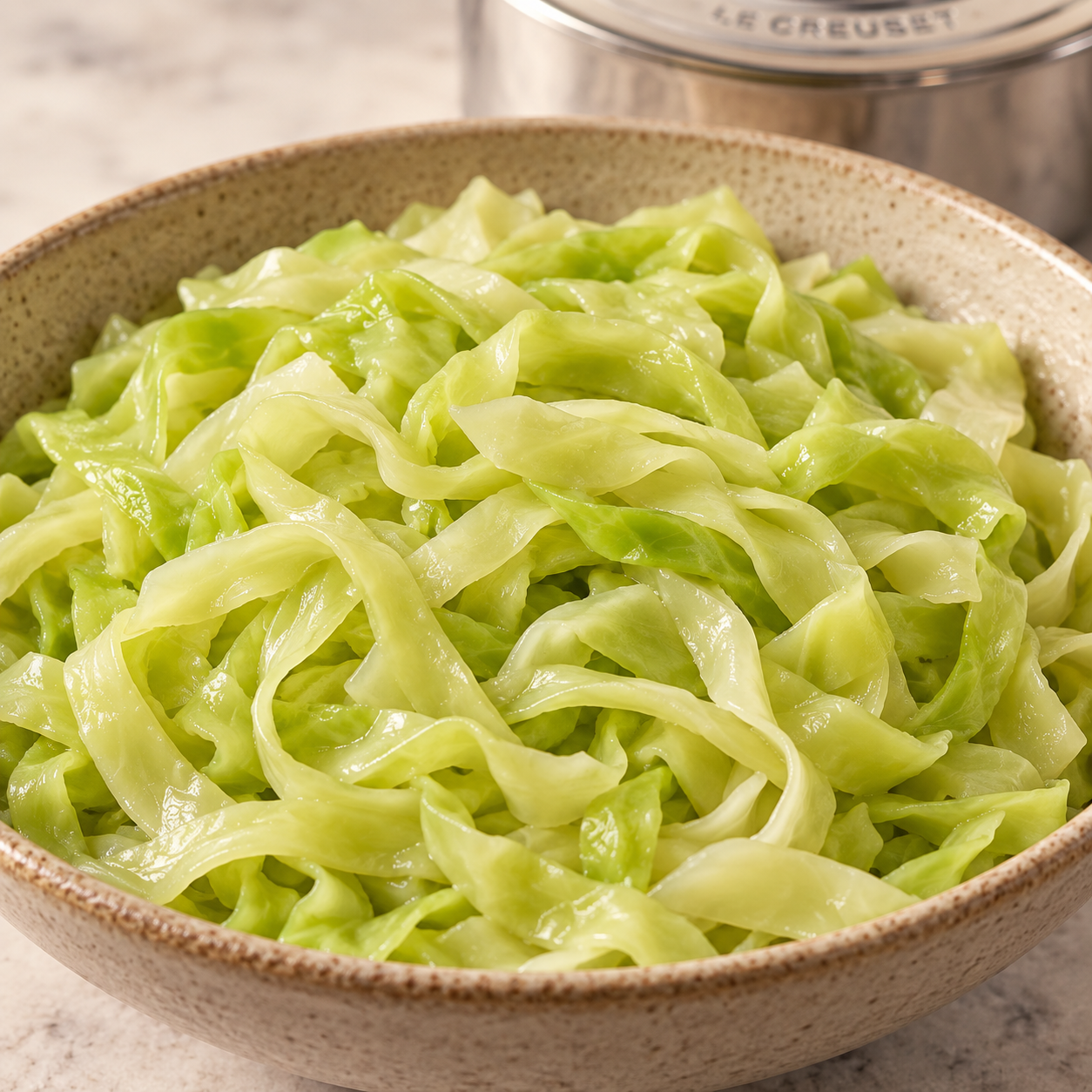
Why Boiled Cabbage Works as a Noodle Base
Green cabbage naturally forms long ribbons when it is quartered and sliced across the leaves. A brief simmer softens the stiff raw texture without cooking the strips until they collapse. The pale inner ribbons become translucent first, while greener outer leaves keep more color and a little more body.
Because the cabbage is cooked in salted water, its flavor stays neutral. It will still taste like cabbage rather than grain pasta, but it does not compete with the food served over it. The finished strips should bend and coil on a fork, hold their separate shape, and carry sauce without releasing a puddle into the bowl.
Choose One Firm Green Cabbage
Use one head of green cabbage with crisp, tightly attached leaves. Avoid a head with wet dark spots, a sour smell, or outer leaves that feel slimy. A medium-to-large head makes four vegetable-side servings once trimmed and cooked.
The exact weight will vary because cabbage heads are not identical. The source measures one head rather than a pound amount, so keep that unit intact. If your cabbage is unusually large and the pot is crowded, cook the ribbons in two batches using the same water.
Cut the Cabbage Into Fettuccine-Width Ribbons
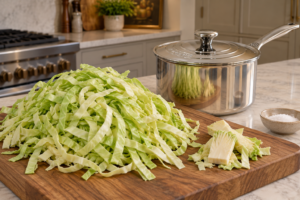
Cut the cabbage in half through the stem, then cut each half in half again. Set a quarter on a flat cut side and slice down at an angle to remove the hard core. Repeat with the remaining quarters.
Slice across each quarter into ribbons about one-third inch wide. Aim for a width similar to fettuccine. Consistent strips matter more than perfect edges: paper-thin shreds become limp before thick chunks soften. Pull apart sections that remain nested together so the hot water can reach each strip.
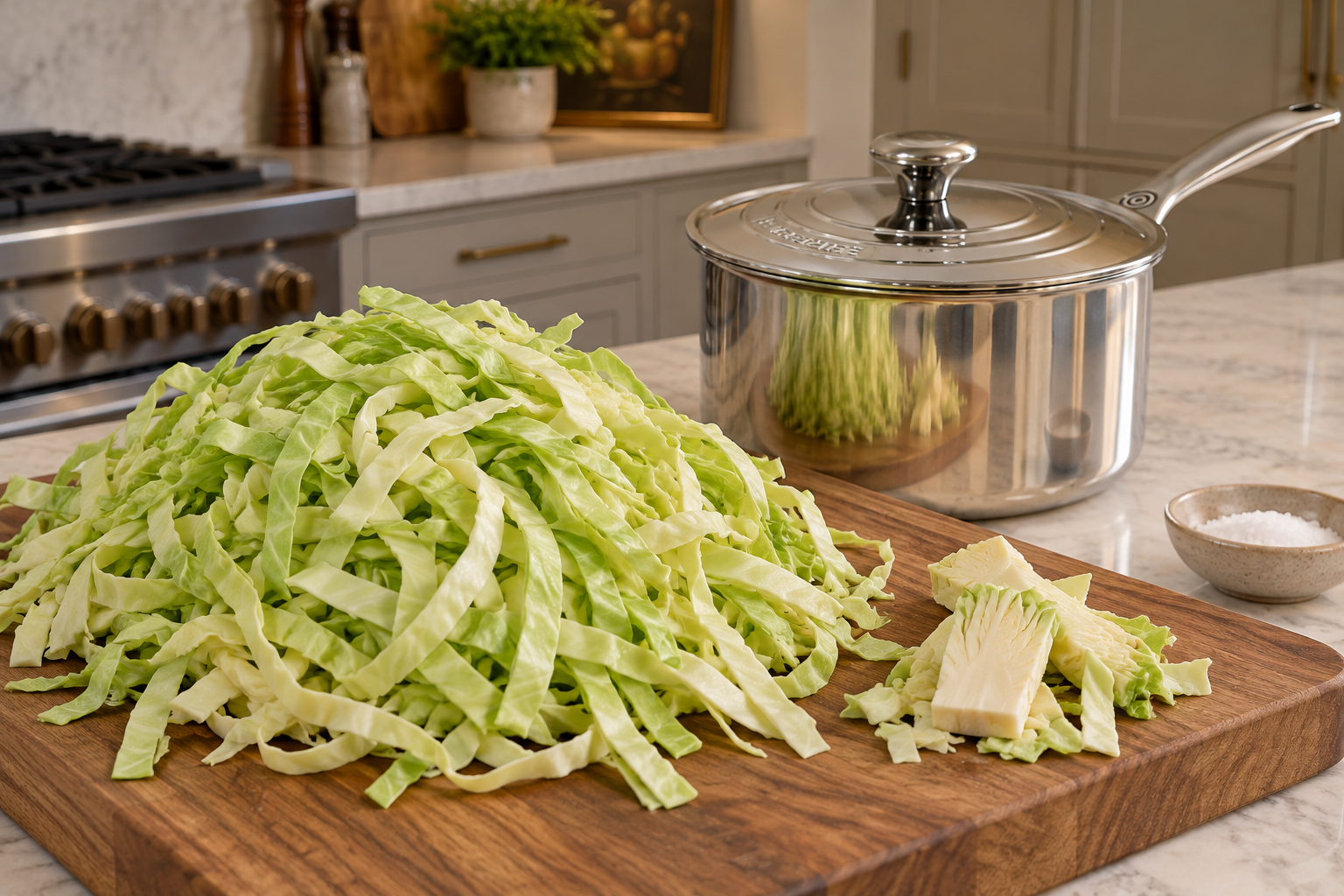
Use a Large Stainless Pot and Plenty of Water
Choose a large uncoated stainless-steel pot that gives the raw ribbons room to move. Fill it with enough water for the cabbage to submerge after it wilts, then bring the water to a full boil before adding the measured teaspoon of mineral salt.
The pot does not need to be filled to the rim. Leave enough space that stirring will not send boiling water over the edge. If the raw cabbage sits above the water at first, press and stir it gently. It will lose volume quickly as the leaves heat.
How to Make Boiled Cabbage Noodles
Bring the Water to a Full Boil
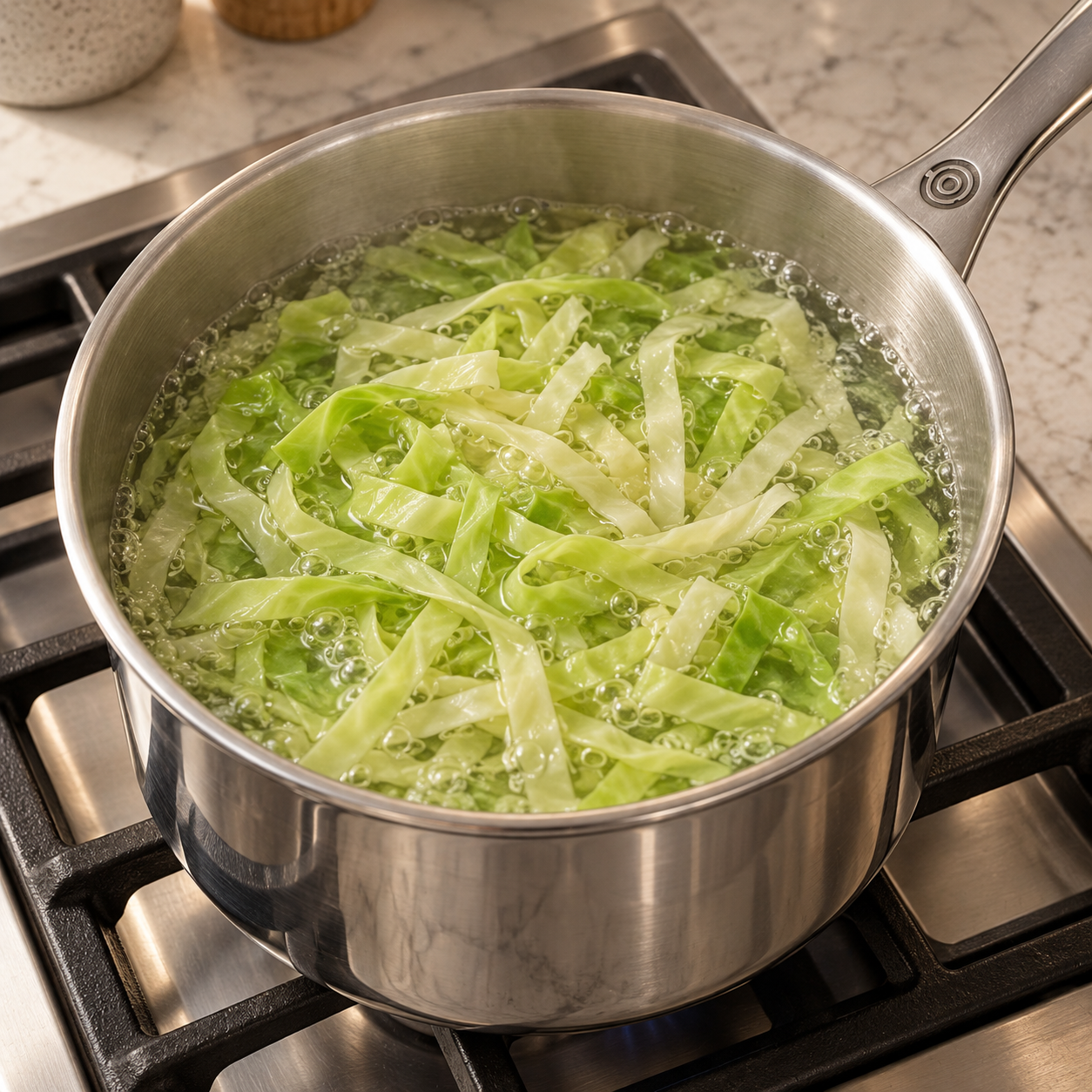
Heat the pot of water over high heat until bubbles rise continuously across the surface. Add one teaspoon mineral salt and stir. Adding the cabbage before the water is ready makes the timing less clear and can soften the outside ribbons before the center of the pile heats.
Add and Separate the Cabbage
Add all the cabbage ribbons. Stir from the bottom so the hot water moves through the pile. The boil will pause briefly when the cool cabbage enters. Let it return to a steady simmer or slow boil, then begin judging the 3-to-5-minute cooking window.
Cook by Texture, Not Color Alone
At about 3 minutes, taste one of the thicker pale ribbons. For a firmer bite, drain when it bends easily but still has a gentle resistance at the center. For softer noodles, continue toward 5 minutes. The strips should look brighter and slightly translucent, not gray, ragged, or dissolved.
Drain Thoroughly
Pour the cabbage into a stainless-steel colander and let the water run off completely. Shake the colander gently and let it stand for a minute. Do not rinse. Rinsing cools the ribbons and leaves more water clinging to them.
Move the drained cabbage to a warm serving bowl. The bowl should not collect a layer of water underneath. If the ribbons still look very wet, leave them in the colander another minute before serving.
What the Finished Noodles Should Look and Taste Like
Finished boiled cabbage noodles are pale green, tender, and clearly separated. The inner-leaf ribbons will be almost translucent, while outer leaves remain a brighter green. They should bend around a fork without turning mushy.
The flavor is clean, lightly sweet, and unmistakably cabbage. Mineral salt seasons the leaves without adding another flavor. This neutral result is the reason to choose the boiled method when the sauce or meat served with it is already rich.
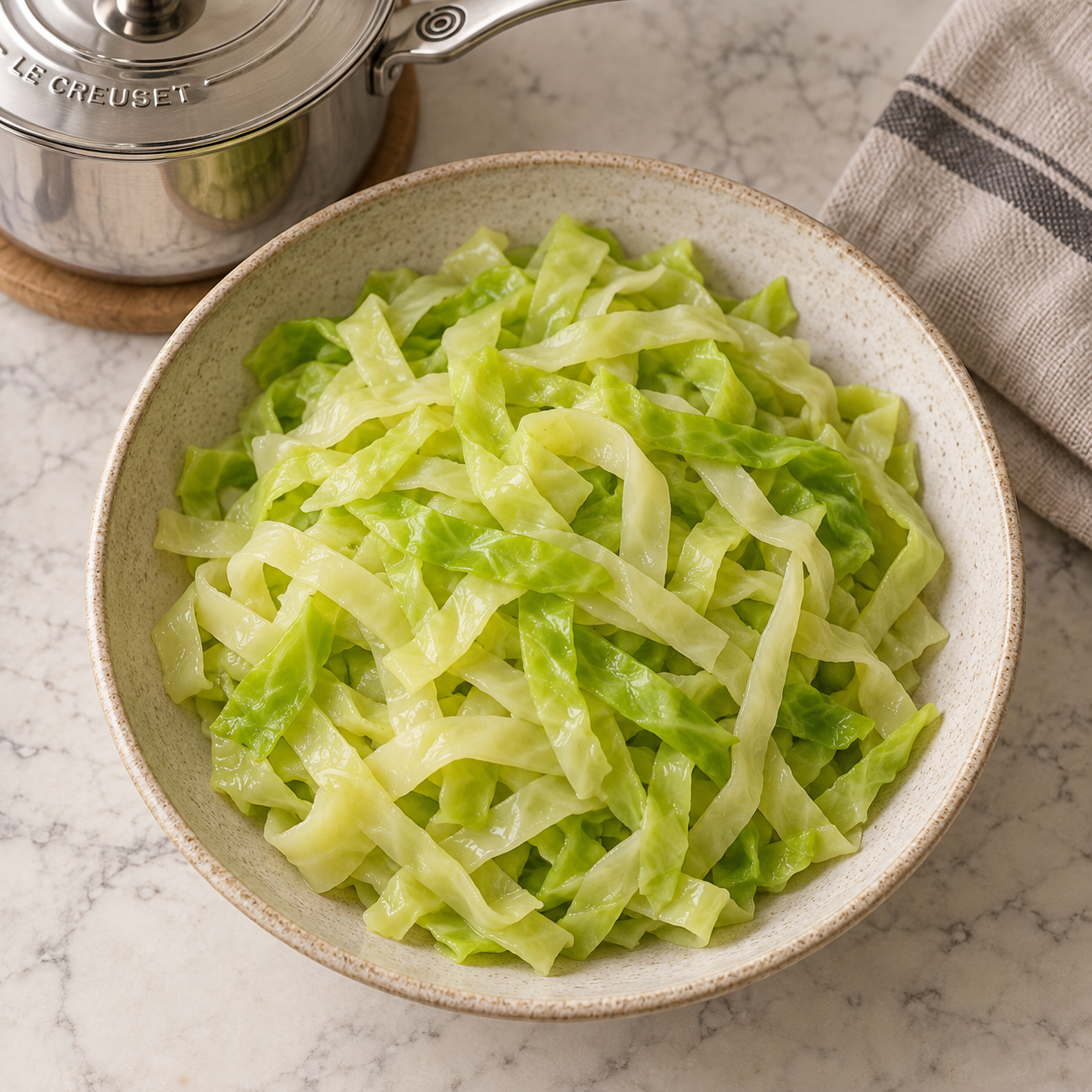
Boiled Cabbage Noodles for Full GAPS
Ingredients
Equipment
Method
- Quarter the cabbage through the stem, remove the hard core from each quarter, and slice into ribbons about 1/3 inch wide. Separate any strips that remain stuck together.
- Bring a large pot of water to a full boil over high heat. Add the mineral salt and stir.
- Add all the cabbage ribbons and stir from the bottom. Let the water return to a steady simmer or slow boil.
- Cook for 3 to 5 minutes. At 3 minutes, taste a thick pale ribbon; drain for a firmer bite or continue toward 5 minutes for softer noodles. The strips should bend easily, look slightly translucent, and remain distinct.
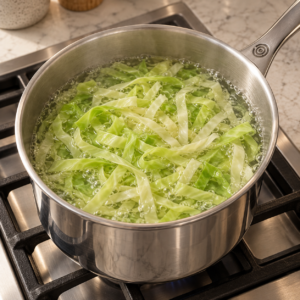
- Drain in a stainless-steel colander. Shake gently and let stand for 1 minute. Do not rinse. Transfer to a warm serving bowl only after no water pools beneath the ribbons.
Notes
Tried this recipe?
Let us know how it was!What to Serve With Boiled Cabbage Noodles
Spoon Stovetop Nomato Sauce over the drained ribbons, or serve them underneath meatballs, slow-cooked meat, or a simple pan sauce after those foods have been introduced and tolerated. The cabbage absorbs some sauce while keeping its own shape.
For a lighter plate, add a compatible cooking fat at the table. Keep that serving choice outside this three-ingredient formula so the card remains accurate for anyone who needs the plain boiled preparation.
Full GAPS Placement
This is a Full GAPS recipe. Cabbage is a Full GAPS vegetable, and the only other measured ingredient is mineral salt. Use the noodles after cabbage has been introduced and tolerated in the form that fits your individual progression.
Water-cooking creates a simple, fully cooked vegetable base. This recipe does not claim that cabbage becomes grain pasta; it gives the meal a long-ribbon shape without introducing grains or a packaged substitute.
That distinction matters at the table. The ribbons are meant to carry the meal, not imitate a wheat noodle in flavor or chew. Describing the texture honestly makes it easier to choose the right preparation: boil them when you want mild, tender cabbage, and use the separate braised recipe when you want browned edges and meat-stock pan juices.
Storage and Reheating
Cool leftovers promptly, cover, and refrigerate. Reheat them in a stainless skillet or saucepan over low heat with a tablespoon or two of water. Cover briefly until steamy, then uncover so excess water can evaporate.
Boiled cabbage is best within the next few days. It will soften further as it sits. If you know a portion is for tomorrow, drain it especially well before storing so condensed water does not make it soggy.
Freezing changes the texture and releases more water during thawing. If you freeze leftovers, thaw them in the refrigerator, drain any liquid, and reheat uncovered until the surface moisture is gone.
Make-Ahead Options
Quarter, core, and slice the cabbage earlier in the day, then keep the raw ribbons covered in the refrigerator. Bring the cooking water to a boil shortly before the meal. This preserves the short 3-to-5-minute cook while removing the knife work from the busiest part of dinner.
You can also boil the cabbage before the main dish is finished, drain it thoroughly, and keep it covered in a warm bowl for a short time. Do not leave it sitting in hot water, where it will continue softening.
Recommended Equipment
- A large Le Creuset Signature stainless-steel saucepan or stockpot
- A stainless-steel colander
- A stable cutting board
- A large sharp chef’s knife
- A heat-safe spoon for separating the ribbons
- Measuring spoon for the mineral salt
Frequently Asked Questions
How Long Do Cabbage Noodles Boil?
Cook them for 3 to 5 minutes after the water returns to a steady simmer or slow boil. Three minutes gives a firmer bite; five minutes makes them softer.
Why Are My Noodles Watery?
They may not have drained long enough, or the ribbons may have been rinsed after cooking. Drain in a colander, shake gently, and let them stand for a minute before moving them to the serving bowl.
Should I Add Oil to the Water?
No. The measured formula is cabbage, water, and mineral salt. If you want to add a compatible fat at the table, treat it as a serving choice rather than changing the cooking water.
Can I Use Red Cabbage?
This formula was accepted with one head of green cabbage. Red cabbage has a different color, density, and cooking behavior, so it should be developed and photographed as its own tested formula rather than silently substituted here.
Are These Intro GAPS Noodles?
No. This page is labeled for Full GAPS. Use it after cabbage has been introduced and tolerated according to the current protocol and your individual progression.
Can I Double the Recipe?
Yes. Double the cabbage and salt, but use a stockpot large enough for the ribbons to move freely or cook two batches. Keep the same 3-to-5-minute texture window for each batch.
More Simple Full GAPS Meal Ideas
If the everyday question is what to serve under a sauce or beside meat without adding another complicated recipe, browse the Well Fed & Lived In shop for the upcoming Dinner Cookbook and kitchen-planning resources. Simple vegetable bases like this are part of making Full GAPS meals repeatable for a real family schedule.

Leave a comment